
Meisn.
Description
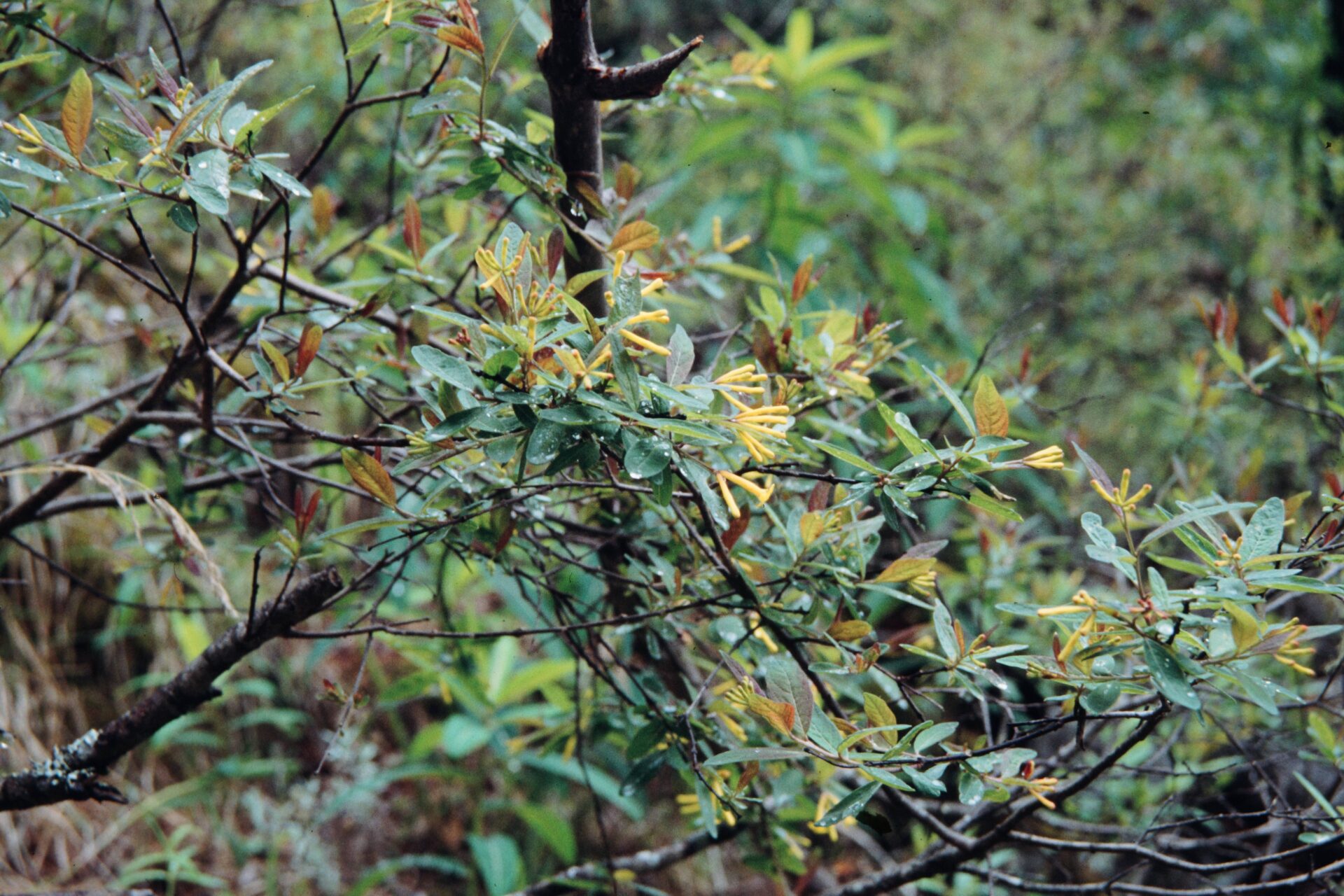
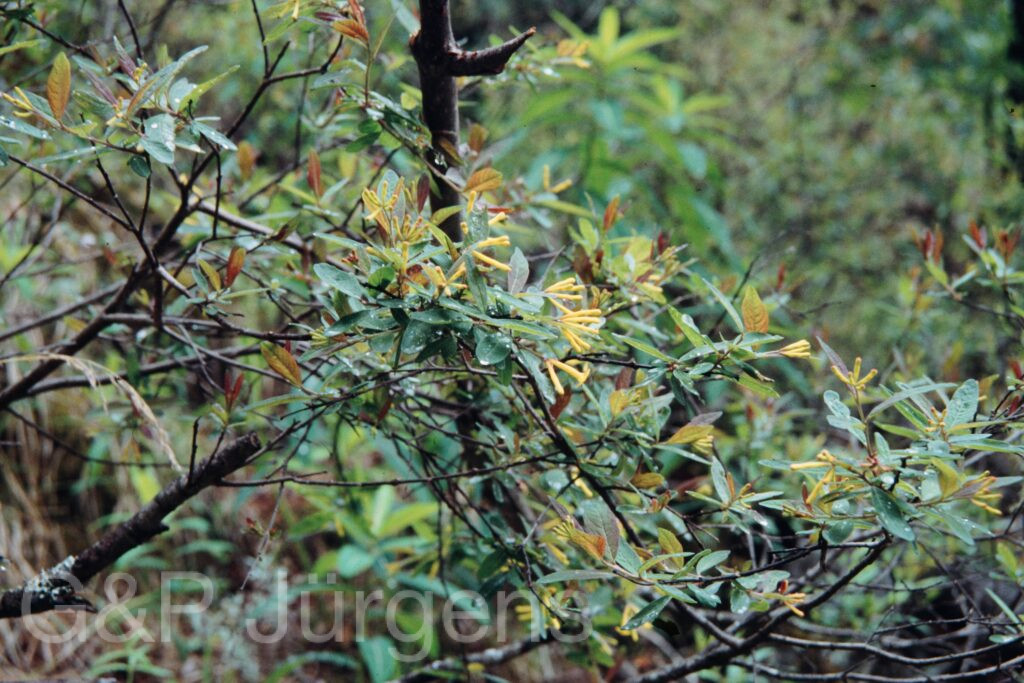
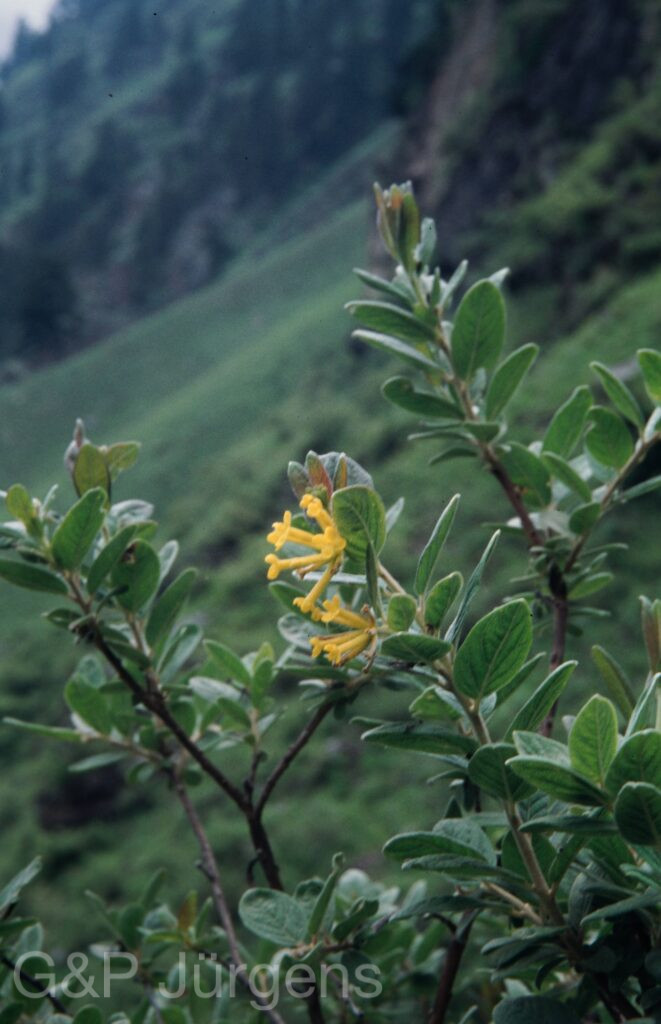
Wikstroemia canescens (Meisn.) is a Himalayan to East Asian shrub of the family Thymelaeaceae, distributed from Pakistan and the northwest Himalaya through India, Nepal and Myanmar to China, Sri Lanka and Japan. The fewer than 600 GBIF records indicate a scattered but characteristically montane occurrence. It inhabits open slopes, forest margins, scrubland and rocky banks in the temperate zone, generally between 1,500 and 3,000 m. The several West Nepal localities at around 2,700 m, recorded from June through July, together with the Garhwal collection from Guni at 2,350 m in September, span its full flowering and fruiting season across the central and western Himalaya.
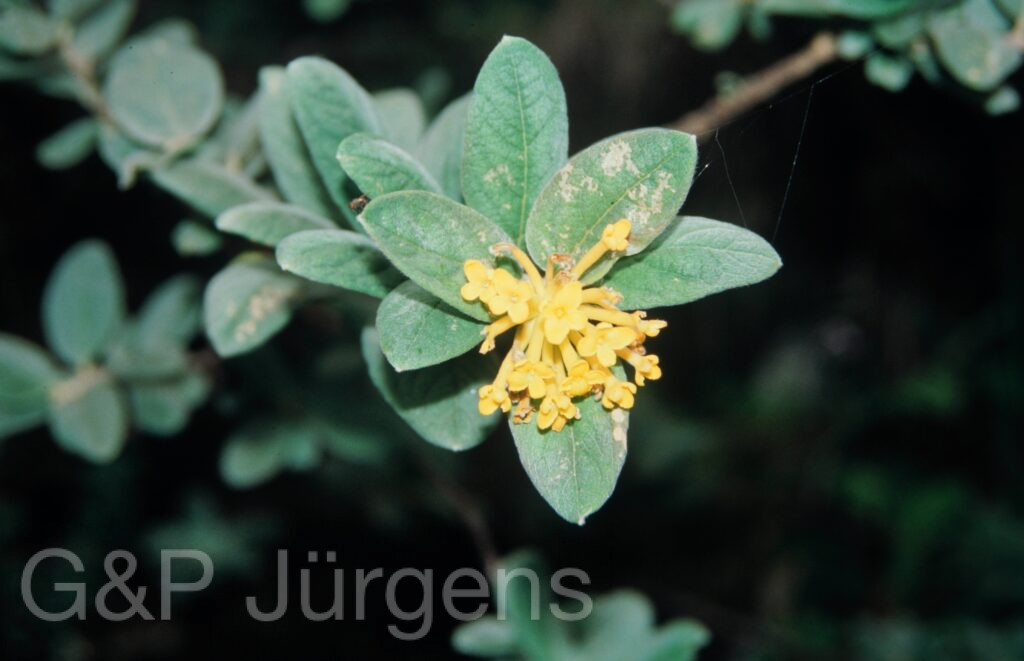
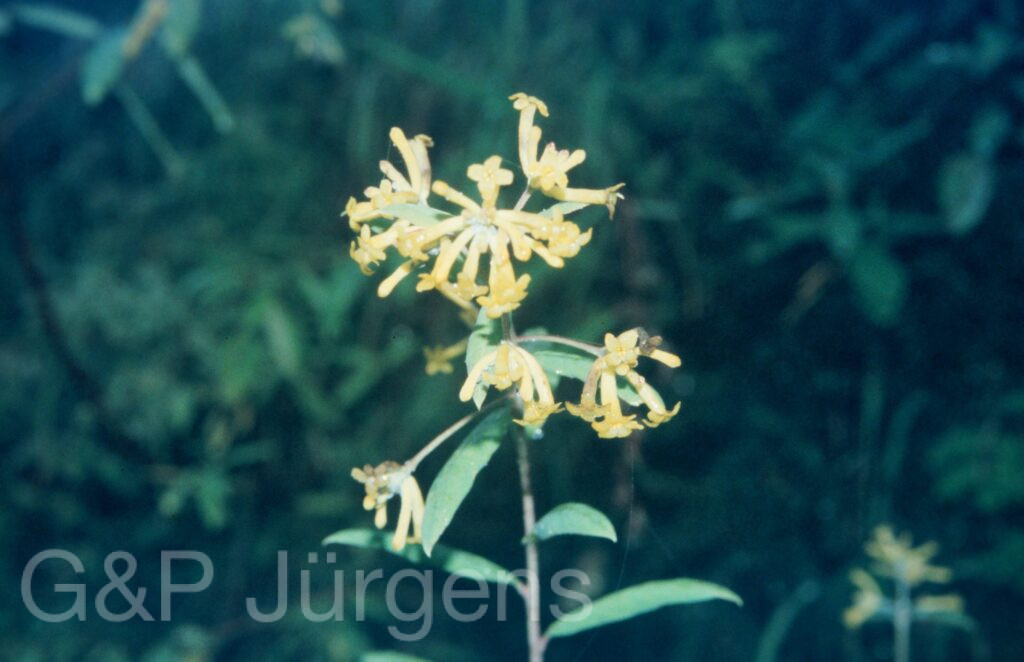
The plant is an erect, branching shrub up to about 2 m tall, with tough, fibrous bark and young branchlets covered in a fine greyish pubescence, hence the epithet canescens. The leaves are subopposite to alternate, shortly petiolate, elliptic to oblong-lanceolate, entire-margined and somewhat silky beneath. The small, tubular flowers lack petals and consist of a yellow to greenish-yellow, four-lobed calyx tube; they are clustered in short, terminal, head-like or umbellate inflorescences. The fruit is a small, dry to fleshy drupe.
Like many Thymelaeaceae, Wikstroemia canescens possesses an exceptionally strong inner bark rich in long fibres, and in the Himalaya it is used locally for cordage and in the traditional manufacture of hand-made paper, a use shared with the related Daphne species. The genus is closely allied to Daphne, the two differing chiefly in floral merosity and indumentum, and generic boundaries within the group remain debated. The species is widespread and not currently considered threatened.
Author: Meisn. · Sources: POWO (Kew), Flora of Nepal, GBIF, Flora of China Vol. 13, Halda: The Genus Daphne and allied Thymelaeaceae (2001)