
(Wall.) Meisn.
2100m April
2100m April
Description
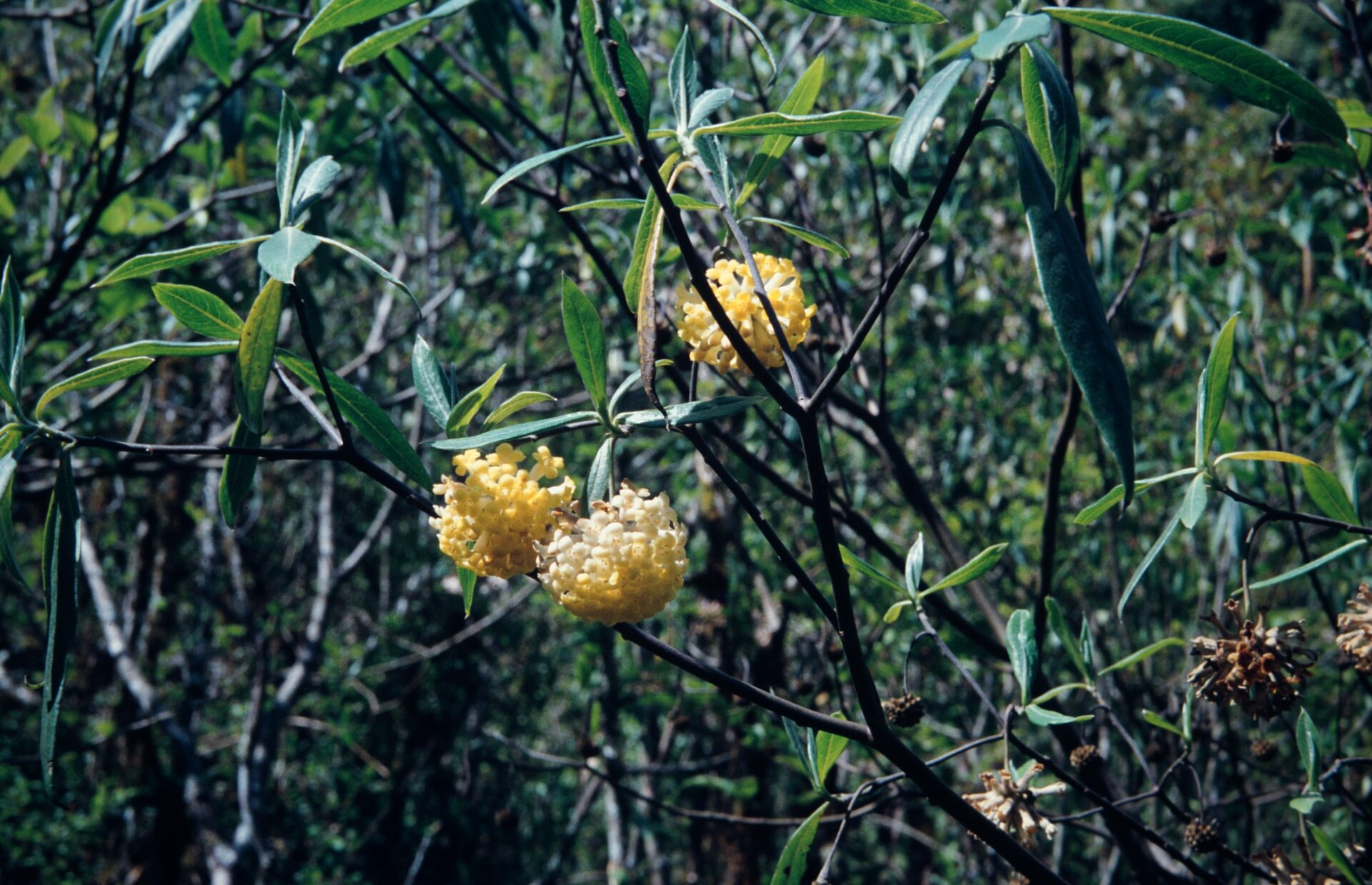
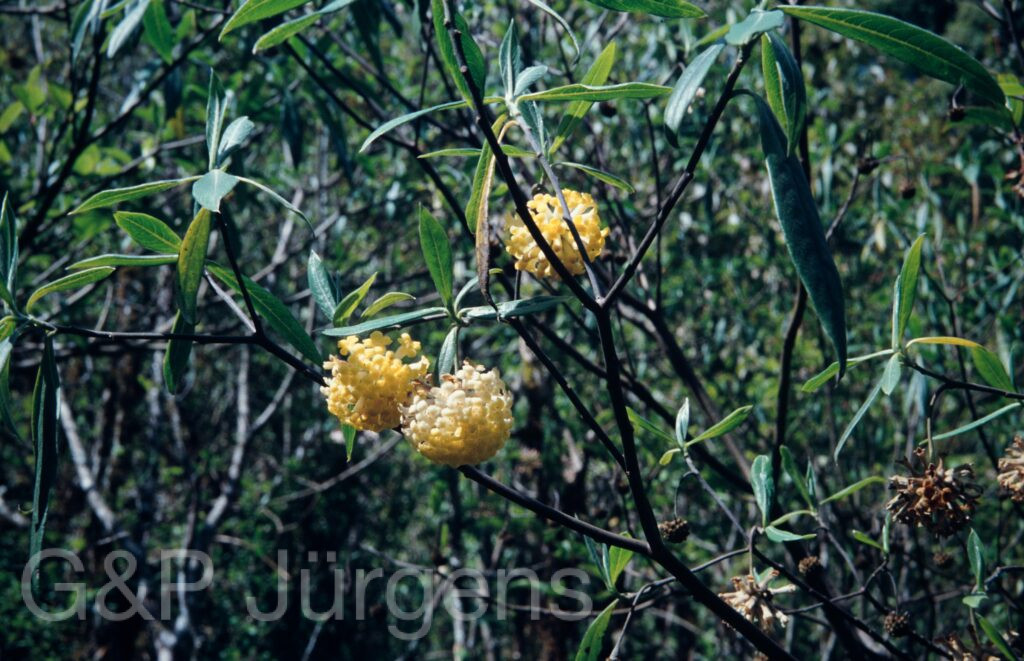
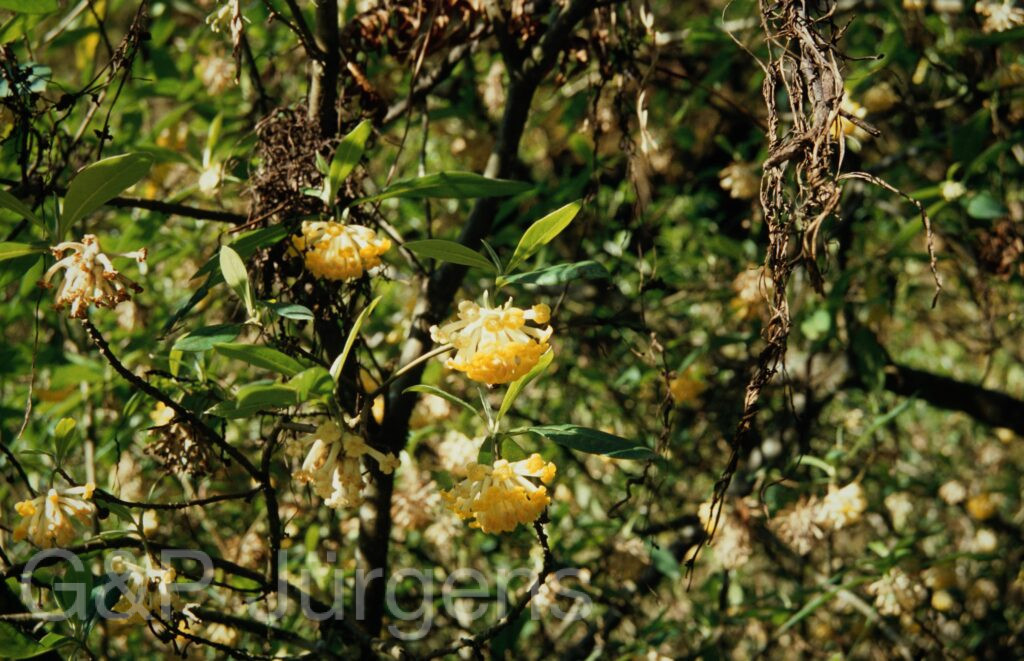
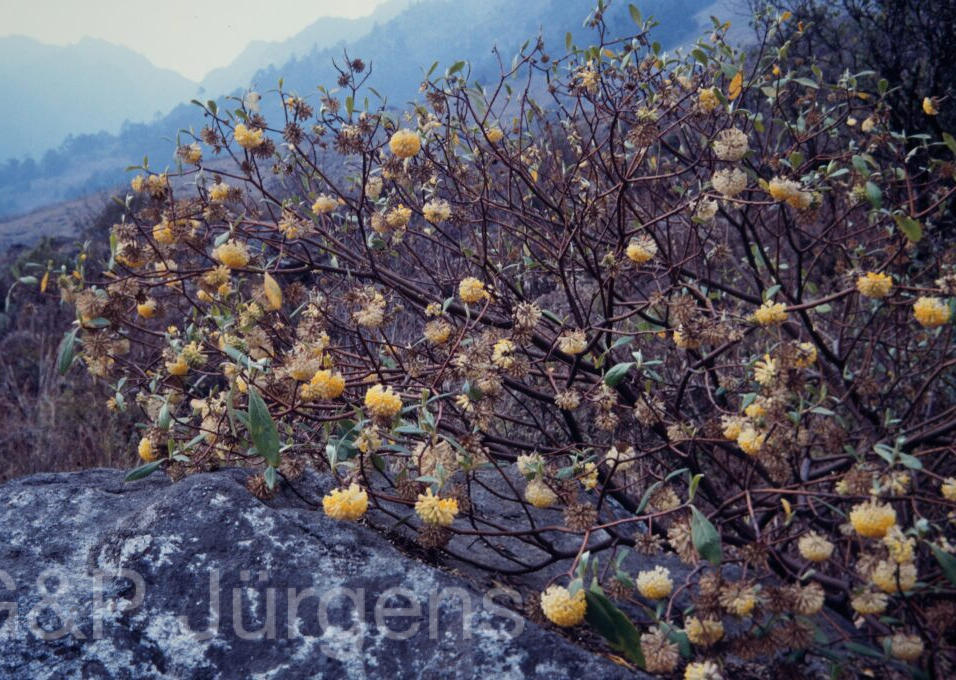
Edgeworthia gardneri is a deciduous to semi-evergreen shrub of the eastern Himalaya and adjacent mountains. GBIF records (some 484 occurrences) place it in China, Nepal, India, Bhutan, Myanmar, Bangladesh and Vietnam, with cultivated material in Japan, France, New Zealand and elsewhere. It grows in moist temperate broadleaved forest, forest margins, ravines and shrubby slopes, typically between about 1,500 and 2,800 m. The illustrated plants are from eastern Nepal at Mewa-Khola (2,100 m, April) and Amjilassa (2,400 m, March), flowering in late winter to early spring before or with leaf flush, characteristic of its phenology in the warm temperate zone.
The plant is a shrub 1–3 m tall with flexible, tough-barked branches that can be tied in a knot without breaking. The leaves are alternate, lanceolate to oblong-lanceolate, entire and somewhat silky beneath. The flowers are aggregated into dense, pendent, hemispherical heads on short peduncles; each flower lacks petals, the floral tube being silky-tomentose outside and yellow within, fragrant. The fruit is a small dry achene-like drupe enclosed in the persistent perianth base.
Like its relative Daphne, Edgeworthia yields strong bast fibre: the bark is an important source of traditional handmade paper (lokta-type) in Nepal and Bhutan, giving the genus economic significance. It is also valued as a winter-flowering ornamental. The species is widespread and not globally threatened, though bark harvesting represents a localised pressure on accessible wild stands.
Author: (Wall.) Meisn. · Sources: POWO (Kew), Flora of China Vol. 13, Flora of Bhutan Vol. 1, GBIF, Halda: The Genus Daphne (and allied Thymelaeaceae)