Tag:

Montane (1500-2500 m)

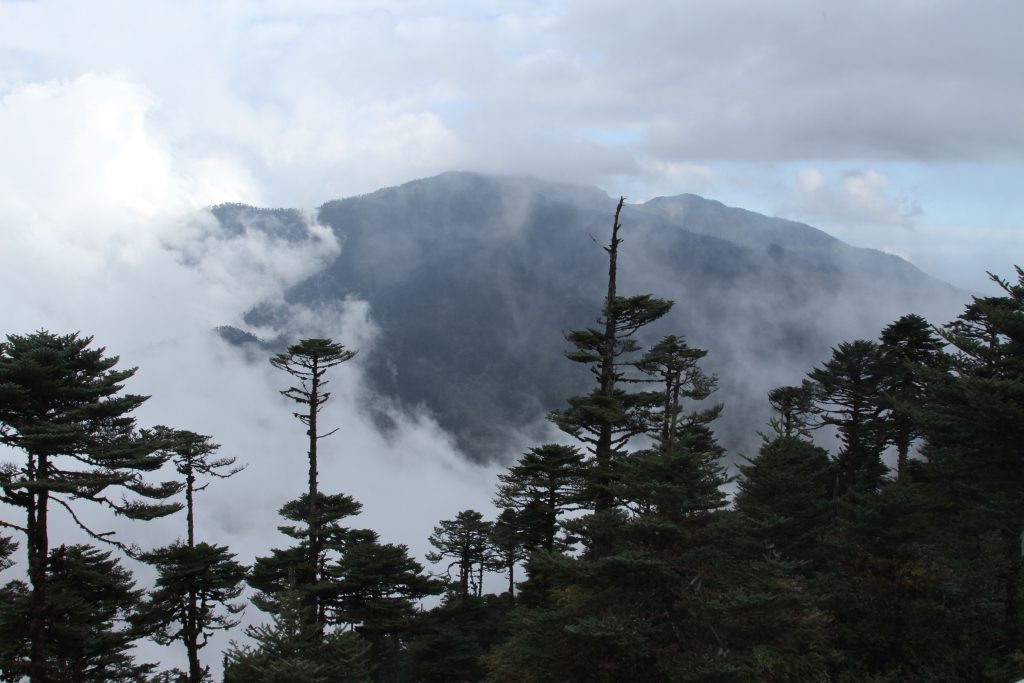
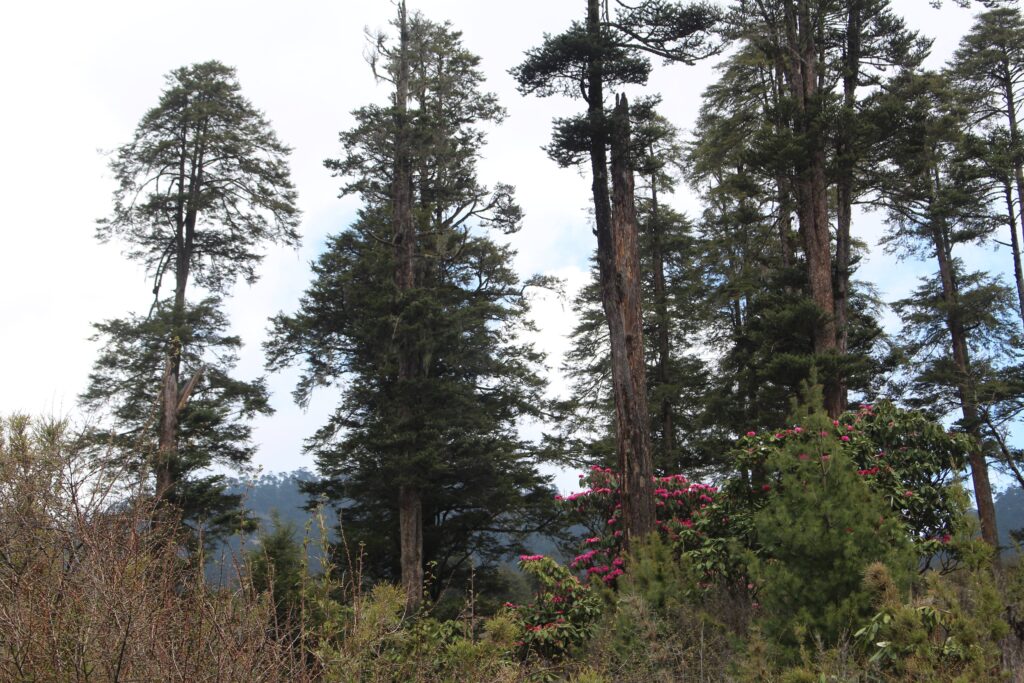
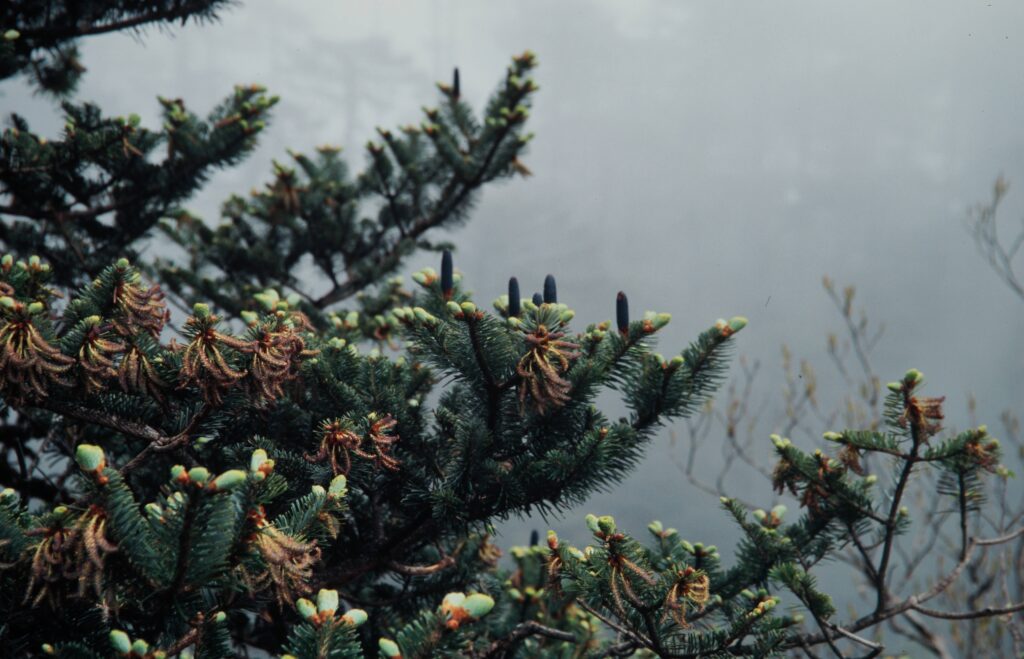
Abies densa

by GP Jürgens

Griff.

Bhutan2015 402
Bhutan Tumching-La 4000m, October
Bhutan2014 420 ergebnis
Bhutan Jakar 2400m, May
Sikkim 2006 82 ergebnis
Sikkim, West-Bengal Kalipokhri 3100m, May

Description

Abies densa, the Bhutan or eastern Himalayan fir, is a large evergreen conifer of the eastern Himalaya, ranging through Bhutan, Sikkim and adjacent India, eastern Nepal, southern China and northern Myanmar (gbif_countries: BT, IN, CN, NP, MM, CA, ZZ, BE), with about 192 GBIF occurrences. It is the dominant tree of the upper subalpine forest belt, forming dense stands often mixed with Rhododendron, birch and juniper and grading into the treeline krummholz. The illustrated records span Jakar in Bhutan at about 2400 m up to Tumching-La near 4000 m and Kalipokhri in the Sikkim–West Bengal borderland at about 3100 m, documenting its occupation of the cool, humid, high-montane to subalpine zone.

The tree reaches considerable height with a straight bole and conical crown, bearing horizontally spreading branches. The needle-like leaves are arranged spirally but pectinately spread, linear and flattened, dark green and glossy above with two whitish stomatal bands beneath, and notched or rounded at the apex. The pollen cones are small and lateral; the seed cones are erect, cylindrical, dark violet to blue-black when young, and, as in all firs, disintegrate on the tree at maturity to release winged seeds, leaving the persistent central axis standing.

Closely allied to Abies spectabilis of the western Himalaya, A. densa is sometimes treated as its eastern vicariant, the two replacing one another along the range. It is an ecologically important timber and watershed species and a keystone of subalpine forest. Though still locally abundant, its treeline populations are sensitive to climate shifts and grazing, and it is assessed as of Least Concern overall while warranting monitoring at range margins.

Author: Griff. · Sources: POWO (Kew), GBIF, Flora of Bhutan, Flora of China, Farjon's A Handbook of the World's Conifers, IUCN Red List conifer assessments
Gled.

Bhutan2014 823
Bhutan Mo-Chu 1600m, May
Bhutan2014 824
Bhutan Mo-Chu 1600m, May

Description

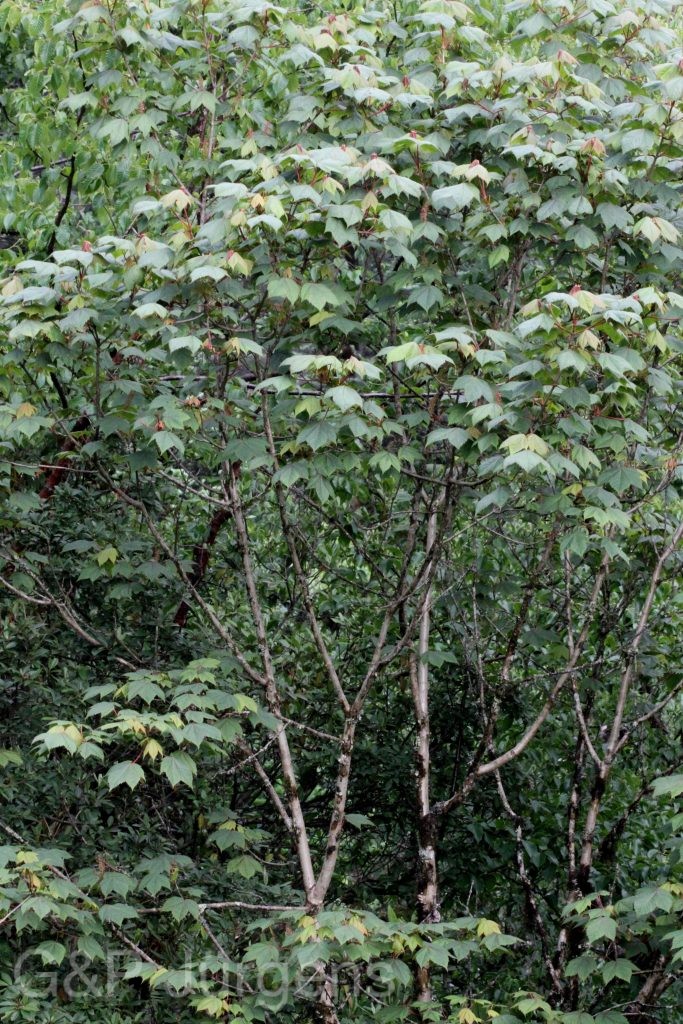
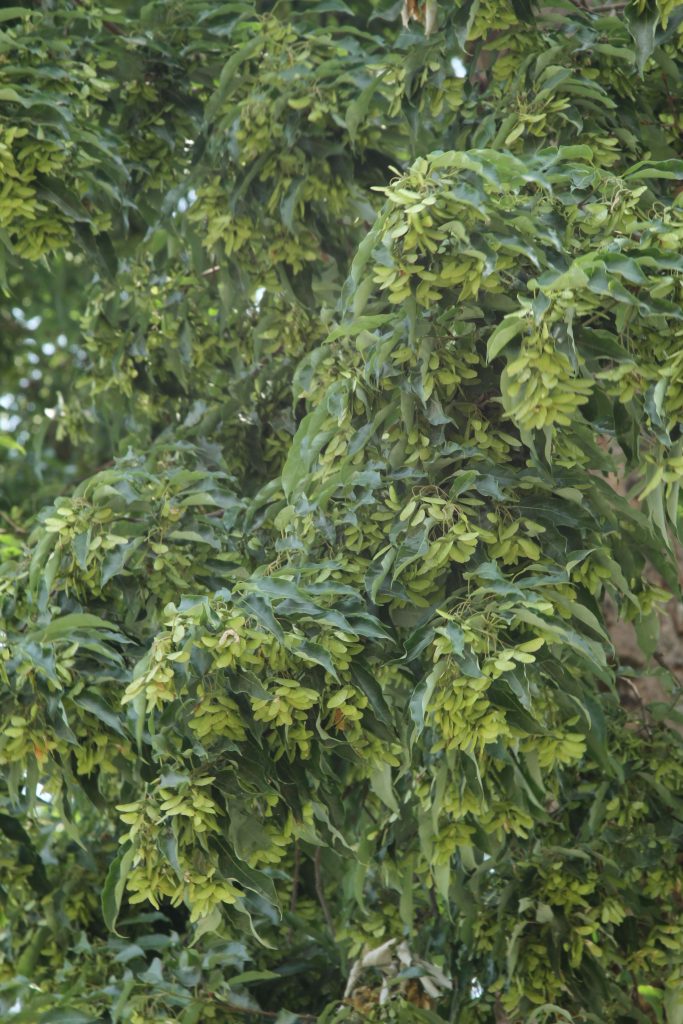
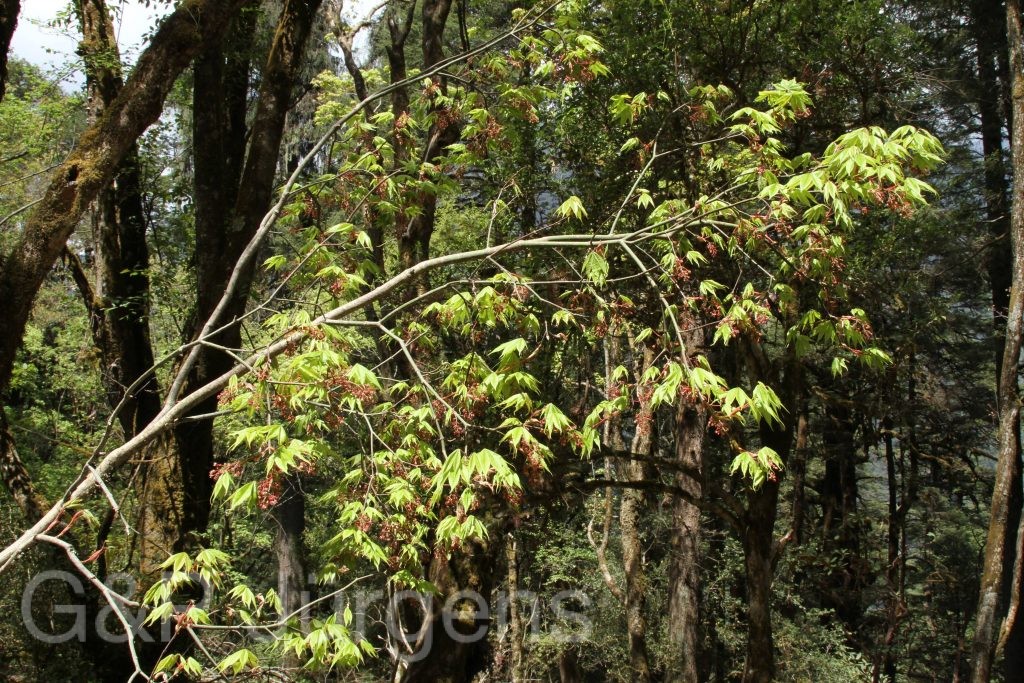
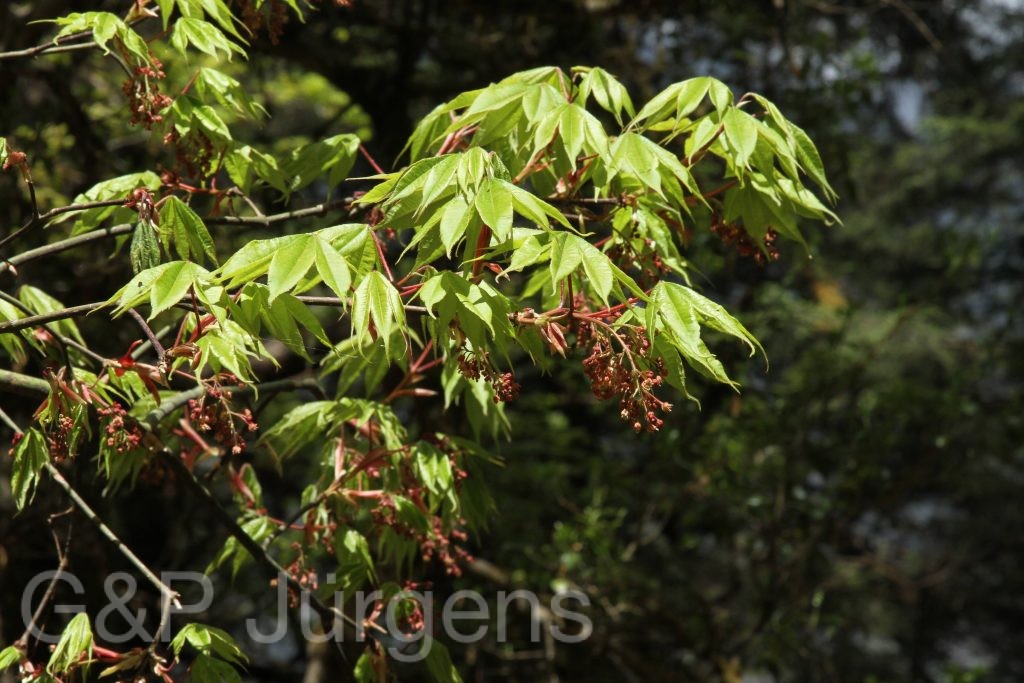
Acer cappadocicum is a deciduous maple with a remarkable disjunct distribution spanning the Caucasus, the western and central Asian mountains and the Himalaya to western China. GBIF (some 4,164 occurrences) records it from the Caucasus (Georgia, Azerbaijan, Turkey, Iran), China, India, Nepal, Pakistan and Russia, alongside extensive cultivated material across Europe and North America. It grows in moist temperate and montane mixed forest, often along streams and on north-facing slopes. The photographed tree is from the Mo-Chu valley in western Bhutan at about 1,600 m, in May, within its eastern Himalayan range of roughly 1,500–3,000 m.

It is a medium to large tree to 20–30 m with smooth greyish bark and reddish young shoots. The leaves are opposite, palmately 5–7-lobed, the lobes triangular-ovate, long-acuminate and entire-margined, glabrous and bright green, turning clear yellow in autumn. The inflorescence is a terminal erect corymb of small yellowish-green flowers. The fruit is the characteristic acerine double samara, the two nutlets bearing widely divergent, nearly horizontally spreading wings.

Acer cappadocicum is variable over its great range and several subspecies are recognised, the Himalayan and Chinese populations sometimes segregated as subsp. sinicum and others. Now placed in Sapindaceae (formerly Aceraceae), it is a widespread and non-threatened species, valued ornamentally for its autumn colour. Its trans-Asian range makes it a classic example of the temperate-forest floristic link between the Himalaya, Central Asia and the Caucasus. The input wp_link erroneously references A. campbellii.

Author: Gled. · Sources: POWO (Kew), Flora of China Vol. 11, Flora of Bhutan Vol. 2, GBIF, van Gelderen et al.: Maples of the World (1994)

Wall.

BhutanPG2011 59
Bhutan Jakar, 2100m June
BhutanPG2011 60
Bhutan Jakar, 2100m June

Description

Acer caudatum is a deciduous maple of the Himalaya and the mountains of China, distributed through China, Nepal, India, Bhutan, Myanmar, Afghanistan and into Russia, with over two thousand recorded occurrences across this broad range. It is a tree of moist temperate and subalpine forest, growing in mixed broad-leaved and conifer woodland, along ravines and on cool shaded slopes on humus-rich soils. In Bhutan it occurs in the middle montane belt, as illustrated by the collection near Jakar in the Bumthang region at about 2100 m in June, when the trees are in full leaf and flower.

The species is a small to medium-sized tree with smooth greyish bark and slender branchlets. The leaves are opposite, long-petiolate and orbicular in outline, palmately five- to seven-lobed with the lobes ovate-acuminate and the margins sharply and doubly serrate, often softly hairy on the veins beneath. The inflorescence is an erect terminal raceme or narrow panicle bearing numerous small yellowish-green flowers. The fruit is the typical maple double samara, the two nutlets each bearing a membranous wing, the wings spreading at a wide to nearly horizontal angle to enable anemochorous dispersal of the seeds.

Acer caudatum, described by Wallich and now placed in Sapindaceae following the merger of the former Aceraceae, is a variable species classified within section Spicata, the group of maples with erect spike-like inflorescences. Several geographical varieties have been recognised across its range, reflecting its wide montane distribution. The species is a normal component of Himalayan temperate forest and is not threatened, contributing to autumn colour and, through its winged fruits, to the regeneration dynamics of mid-elevation woodland.

Author: Wall. · Sources: POWO (Kew), GBIF, Flora of China Vol. 11, Flora of Bhutan Vol. 2, Flora of Nepal, Flora of Pakistan, van Gelderen et al. Maples of the World

Acer oblongum

by GP Jürgens

Wall. ex DC.

Bhutan2014 657
Bhutan Wangdi-Phodrang 2300m, May

Description

Acer oblongum, the evergreen or Himalayan maple, is a broadly distributed tree of the southern and eastern Himalaya and the mountains of southern and central China, recorded by GBIF from China, India, Nepal, Bhutan, Myanmar, Thailand, Vietnam, Pakistan and Taiwan (with numerous cultivated records in Europe and North America) across some 3,600 georeferenced occurrences. It grows in subtropical to warm-temperate broadleaf and mixed forest, on hill slopes, ridges, riverine forest and forest margins, generally between about 600 and 2,500 m. The photographed tree from Wangdi-Phodrang in western Bhutan at around 2,300 m in May represents its upper montane occurrence, where it flowers in spring with the flush of new growth.

Unusually for a maple, A. oblongum is evergreen or semi-evergreen, and equally atypical are its leaves, which are simple, entire and unlobed, oblong-lanceolate to ovate-oblong, leathery, glossy dark green above and conspicuously glaucous or whitish beneath, with pinnate or triplinerved venation rather than the palmate lobing characteristic of most of the genus. The flowers are small, greenish-yellow, andromonoecious or polygamous, borne in corymbose or paniculate clusters. The fruit is the typical maple double samara, the two nutlets each bearing a membranous wing; in this species the wings are spreading at an acute to nearly parallel angle, adapted to autorotating wind dispersal.

Acer oblongum is treated within section Pentaphylla (series Trifida) of the genus Acer, now placed in an enlarged Sapindaceae following the merger of the former Aceraceae. Its entire, evergreen leaves make it one of the most distinctive of the Asian maples and a noteworthy example of foliar reduction within a predominantly palmately-lobed genus, of interest to studies of leaf-form evolution. The species is widespread, locally common, and valued horticulturally and for its timber; it is not considered globally threatened, although particular regional populations face pressure from forest clearance.

Author: Wall. ex DC. · Sources: POWO (Kew), GBIF, Flora of China Vol. 11, Flora of Bhutan Vol. 2, Flora of Nepal, Flora of Pakistan, van Gelderen, de Jong & Oterdoom: Maples of the World

(L.) Kuntze

Bhutan2015 588
Bhutan Mo-Chu 1900m, October
Bhutan2015 589
Bhutan Mo-Chu 1900m, October

Description

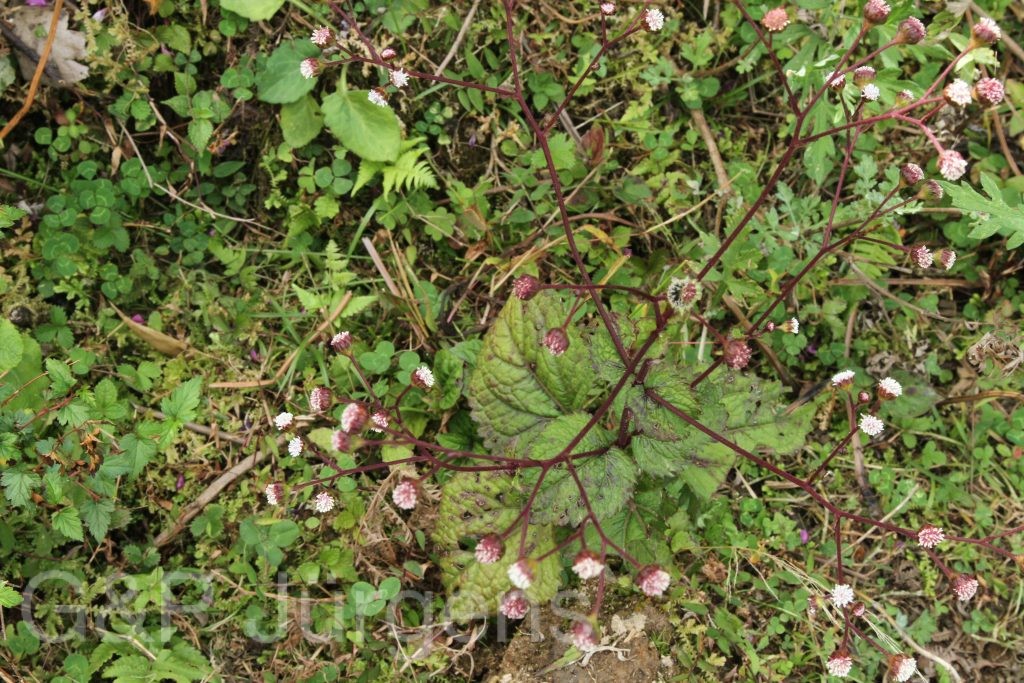
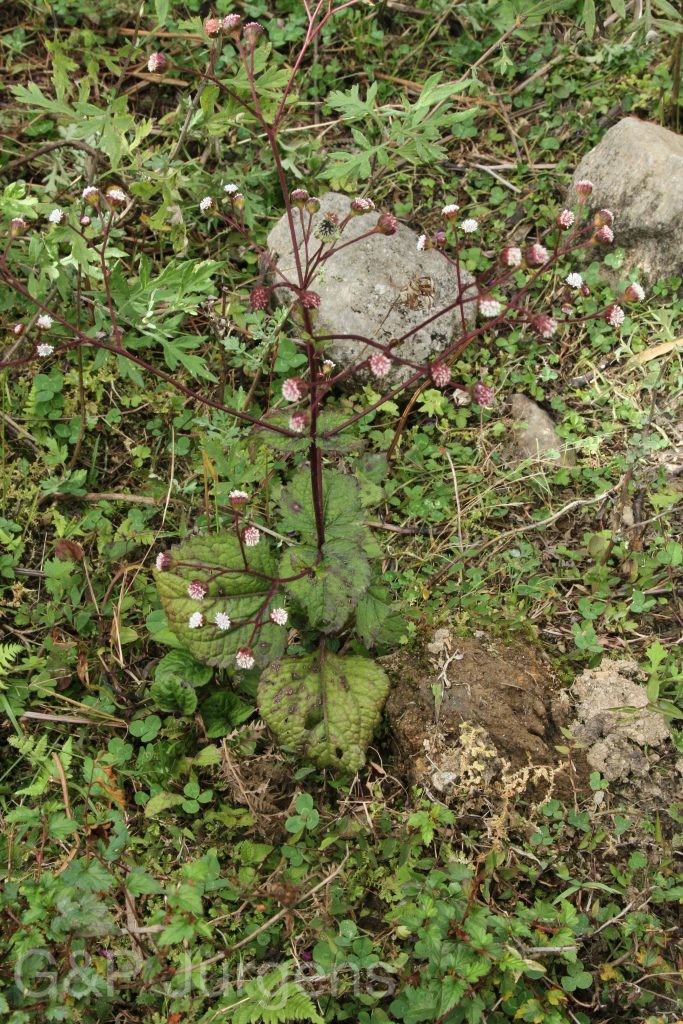
Adenostemma lavenia is a near-pantropical composite of remarkably wide distribution, with GBIF documenting some 4700 occurrences across Asia, Australasia, the Americas, Africa and the Pacific, including China, Japan, India, Nepal, Australia, the Philippines, Brazil and many other countries. It is a weed of moist, shaded habitats, favouring streambanks, wet forest margins, ditches and damp disturbed ground, mostly at low to mid elevations. The photographed plant is from the Mo-Chu valley in Bhutan at 1900 m in October, growing in humid riparian thicket within subtropical hill forest.

The species is an erect to ascending annual or short-lived perennial herb with branched, ridged, sparsely pubescent stems. The leaves are opposite, ovate to deltoid, coarsely crenate-serrate, with a cuneate to truncate base narrowing to a winged petiole. The capitula are small, discoid and white, lacking ray florets, arranged in lax terminal corymbose cymes; each holds few tubular florets within a two-seriate involucre of subequal phyllaries. The most diagnostic feature is the cypsela, which is glandular-tuberculate and crowned by a pappus reduced to a few short, stout, gland-tipped (clavate) bristles that act as a clinging burr.

Adenostemma is a small genus of the tribe Eupatorieae, and A. lavenia is the type and most cosmopolitan species, its sticky fruits readily dispersed on animals and clothing, explaining its global spread. Highly variable and broadly circumscribed, it has long been used in folk medicine. It is abundant and weedy, hence of no conservation concern.

Author: (L.) Kuntze · Sources: POWO (Kew), GBIF, Flora of China, Flora of Bhutan, Annotated Checklist of the Flowering Plants of Nepal, Revision of Adenostemma (Eupatorieae)

Roxb.

Sikkim2004 445 G776
Sikkim/India Tista-Valley 2000m May

Description

Aerides multiflora is an epiphytic orchid of the subtribe Aeridinae, native to the eastern Himalayas and extending into Southeast Asia. Its natural range encompasses Nepal, northeast India (Sikkim, Assam, Meghalaya, Arunachal Pradesh), Bhutan, Myanmar, Thailand, and southwest China (Yunnan). The species inhabits humid, semi-deciduous and evergreen forests at elevations of 200–2,000 m, typically growing on mossy tree trunks and branches in well-lit positions.

The plant produces stout, terete stems 20–40 cm long, clothed with distichous, coriaceous, strap-shaped leaves that are 15–25 cm long and unequally bilobed at the apex. The inflorescence is a densely many-flowered, pendent raceme 15–30 cm long, bearing 20–40 fragrant flowers. Individual flowers are 2–2.5 cm across, white to pale rose-pink with purple spots, the lip trilobed with a prominent forward-pointing spur. The mid-lobe is fleshy and tongue-shaped. Flowering occurs from April to June.

Aerides multiflora is valued in horticulture for its abundant, sweetly fragrant blooms. The species is under pressure from overcollection and habitat degradation across its range. Like all orchids, it is listed under CITES Appendix II, regulating international trade.

Author: Roxb. · Sources: POWO (Kew), Flora of Bhutan Vol. 3, GBIF, Pearce & Cribb: The Orchids of Bhutan (2002)

Wall.ex A.DC.

Bhutan2012 946
Bhutan Trithangebe 2100m, October
Bhutan2012 947
Bhutan Trithangebe 2100m, October

Description

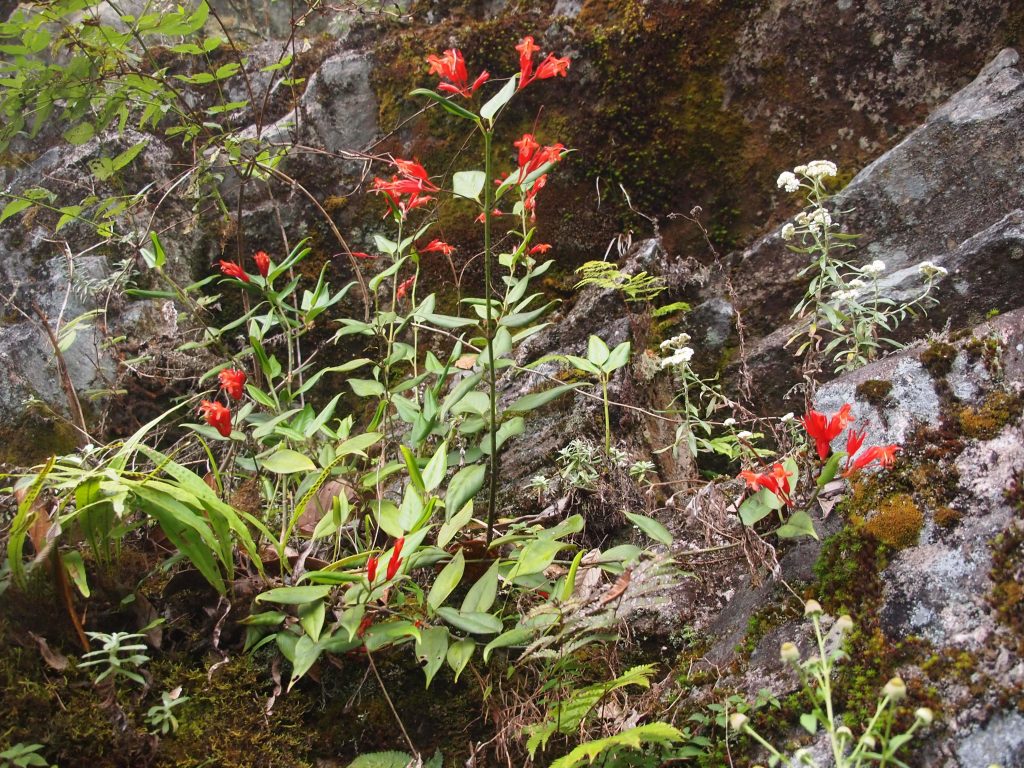
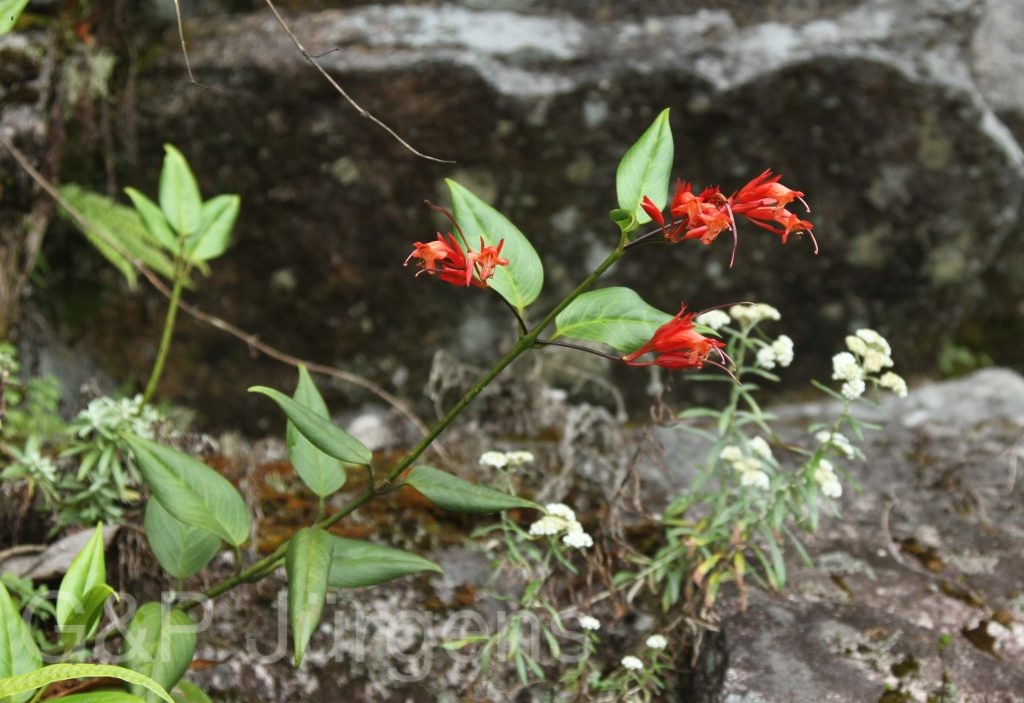
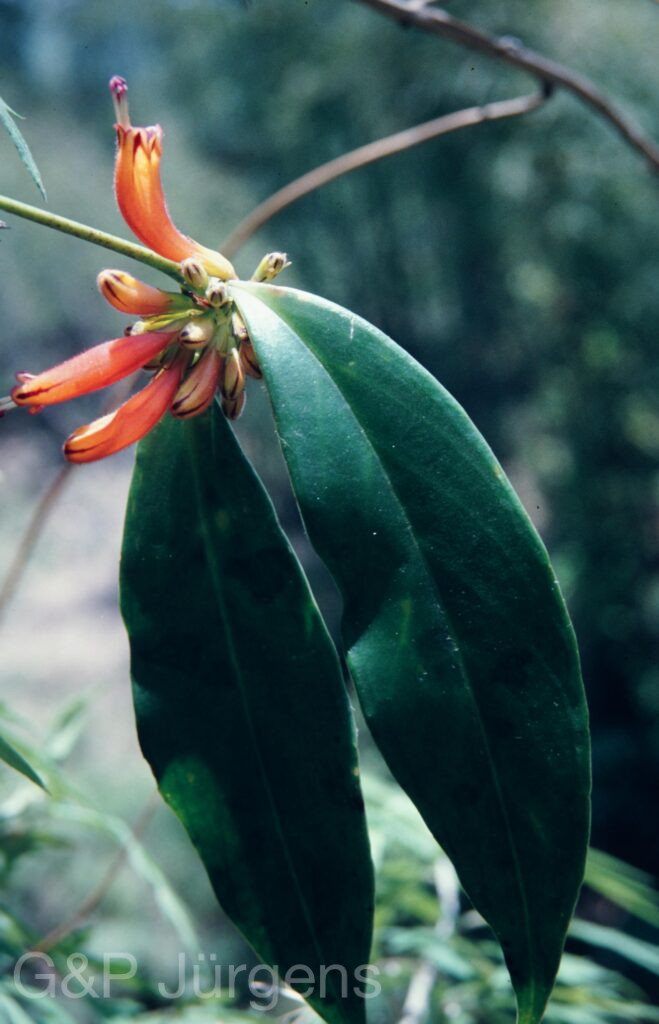
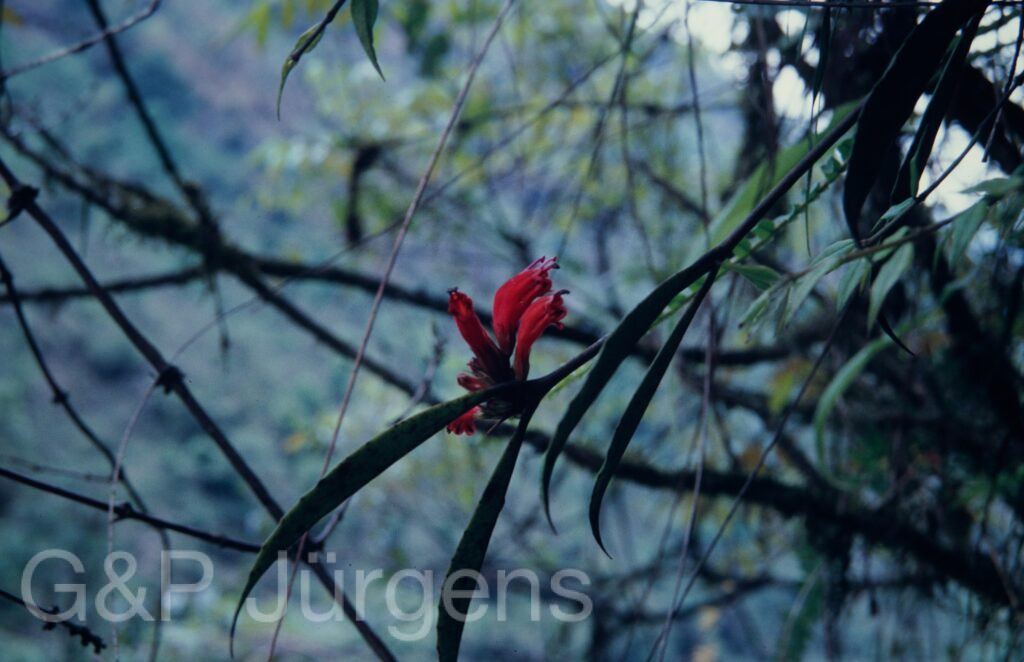
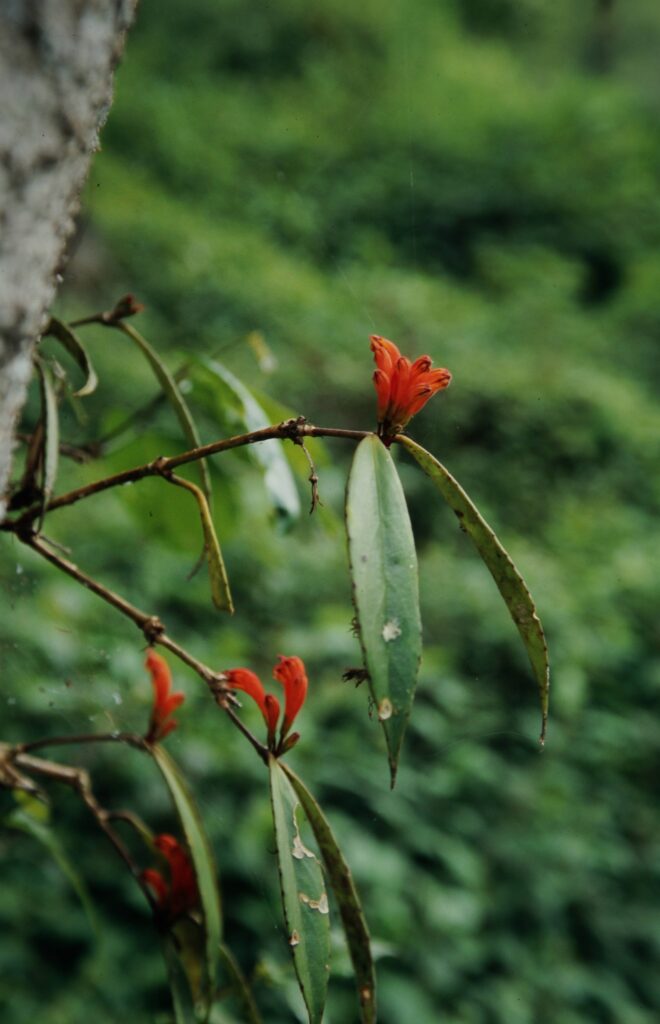
Aeschynanthus bracteatus is an epiphytic subshrub of the eastern Himalaya and Indo-Chinese region, distributed from Nepal and northern India through Bhutan and Bangladesh into Myanmar, south-western China, Laos and Vietnam, with around 906 occurrence records. It grows as an epiphyte or lithophyte on mossy tree trunks, branches and shaded rocks in humid evergreen broad-leaved montane forest, typically between about 1500 and 2500 m. The specimen photographed at Trithangbe in Bhutan at 2100 m in October illustrates its autumn flowering within the moist, mist-laden forests where epiphytic gesneriads thrive.

The plant has trailing to pendulous, somewhat fleshy stems rooting at the nodes, bearing opposite, thick, elliptic to lanceolate leaves that are entire and glabrous, with an obscurely veined, leathery texture suited to its epiphytic life. The inflorescences are terminal or axillary clusters subtended by conspicuous bracts, the feature reflected in the epithet bracteatus. The flowers have a tubular, often dark calyx and a curved, tubular two-lipped corolla in shades of red to orange-red, the throat sometimes marked within. The fruit is a long, slender, capsule splitting to release numerous small seeds furnished with hair-like appendages aiding wind dispersal.

Aeschynanthus (Gesneriaceae) is a large palaeotropical genus of climbing and epiphytic herbs and subshrubs; the input file places it under Didymocarpinae, a subtribal name within Gesneriaceae, whereas the genus is conventionally treated in subtribe Loxonia/Trichosporeae allies. The tubular red flowers and protruding stamens indicate bird (sunbird) pollination, while the plumose-appendaged seeds are wind-dispersed. The species is widespread across the Indo-Burmese hills and is of least conservation concern, serving as a characteristic epiphyte of eastern Himalayan cloud forest.

Author: Wall.ex A.DC. · Sources: POWO (Kew), GBIF, Flora of China, Flora of Bhutan, Annotated Checklist of the Flowering Plants of Nepal, Mendum revision of Aeschynanthus

Spreng.

Nepal 1994 226 ergebnis
Ost-Nepal Mewa-Khola 1900m April 
Nepal 1994 218 ergebnis
Ost-Nepal Mewa-Khola 1900m April 
Sikkim 2006 301 ergebnis
India West-Bengal, Chaana 1750m, May

Description

Aeschynanthus parviflorus is an epiphytic gesneriad widely distributed through the eastern Himalaya and into Southeast Asia, with GBIF records from Nepal, northeast India, Bhutan, Bangladesh, Myanmar, Thailand, Vietnam and southern China (additional codes represent herbaria and cultivation). It grows as an epiphyte or lithophyte on mossy trunks, branches and shaded rocks in humid broad-leaved evergreen and subtropical forest, mainly between 1,000 and 2,200 m. The featured collections come from the Mewa Khola in eastern Nepal at about 1,900 m in April and from Chaana in West Bengal at around 1,750 m in May, within its core mid-montane belt.

The plant has pendent to scrambling, somewhat fleshy stems rooting at the nodes and bearing opposite, coriaceous, elliptic to lanceolate leaves with entire margins and an acuminate apex. The flowers are clustered in the leaf axils or at the branch tips; the calyx is short and cupular, and the corolla is a curved, narrowly tubular structure, red to orange-red, with small spreading lobes, suited to nectarivorous bird and insect pollination. The fruit is a long, slender, two-valved capsule releasing numerous minute seeds, each furnished with a tuft of fine hairs that aids wind dispersal in the canopy.

The species is treated within Gesneriaceae (subtribe Didymocarpinae, genus Aeschynanthus), a large Asian genus of canopy epiphytes whose long-tubed flowers exemplify ornithophily in the Old World tropics. Aeschynanthus parviflorus is common and not regarded as threatened, but as a canopy specialist it depends on intact humid forest and declines where mid-elevation forest is fragmented or logged.

Author: Spreng. · Sources: POWO (Kew), GBIF, Flora of China Vol. 18 (Gesneriaceae), Grierson & Long: Flora of Bhutan Vol. 2, Mendum et al.: Revision of Aeschynanthus (Gesneriaceae)

(Wall. ex Cambess.) Hook.

Nepal 97 610 G1181
Nepal Godawari 1350m May
Garh 07 82 ergebnis
India Garhwal Trijugi Narayan 2300m, June

Description

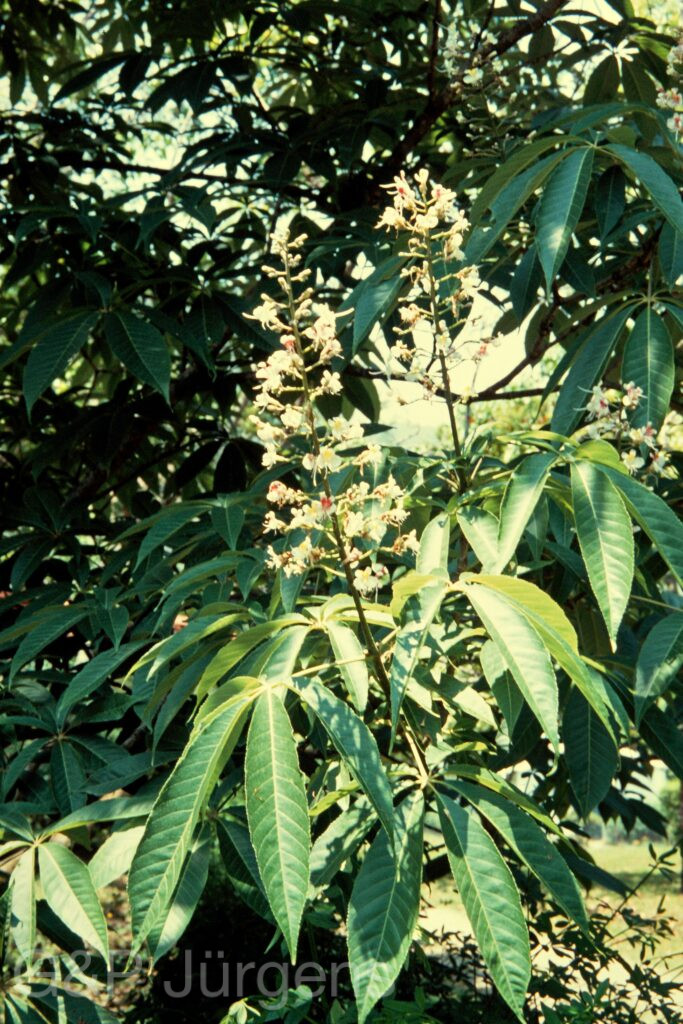
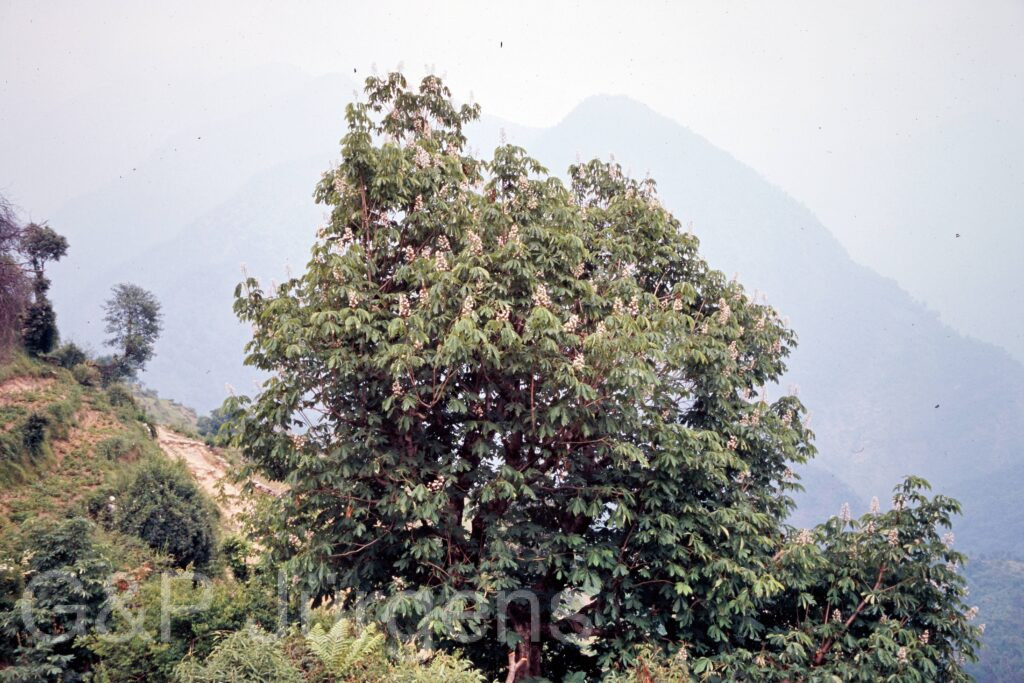
Aesculus indica ((Wall. ex Cambess.) Hook.), the Indian horse-chestnut, is a large deciduous tree endemic to the western and central Himalaya, occurring from Afghanistan and Pakistan through northern India and Nepal to Bhutan. The roughly 1,140 GBIF records, supplemented by numerous cultivated occurrences in Britain, Europe and North America, reflect both its native montane range and its popularity as an ornamental and avenue tree. It is a characteristic component of moist temperate forest, growing along streamsides, in shady ravines and on cool north-facing slopes, generally between 1,200 and 3,000 m, as illustrated by the Nepal record from Godawari at 1,350 m in May and the Garhwal collection from Trijugi Narayan at 2,300 m in June.

The tree reaches 20–30 m, with a broad rounded crown and smooth greenish-grey bark. The leaves are opposite and palmately compound, with five to nine lanceolate, finely serrate, long-acuminate leaflets that are sessile to shortly stalked and taper to the base. The flowers are borne in large, erect, terminal thyrses (panicles) up to 30 cm long; each flower is white to pinkish with a yellow or red blotch at the base of the petals, the stamens long-exserted. The fruit is a large, rough, pyriform, spineless capsule containing one to three glossy dark-brown seeds ("conkers").

The seeds are rich in bitter saponins and, after laborious leaching to remove toxicity, have traditionally been ground into a flour ("tattwakhar" or "bankhor") used as famine food and livestock fodder in the Himalaya. Distinguished from the European A. hippocastanum by its smooth, unarmed fruit and narrower leaflets, A. indica is widely planted for shade and timber. Though locally heavily exploited, the species remains relatively common within its range.

Author: (Wall. ex Cambess.) Hook. · Sources: POWO (Kew), Flora of Pakistan, GBIF, Flora of China Vol. 12, Hardin: A Revision of the American Hippocastanaceae and the genus Aesculus

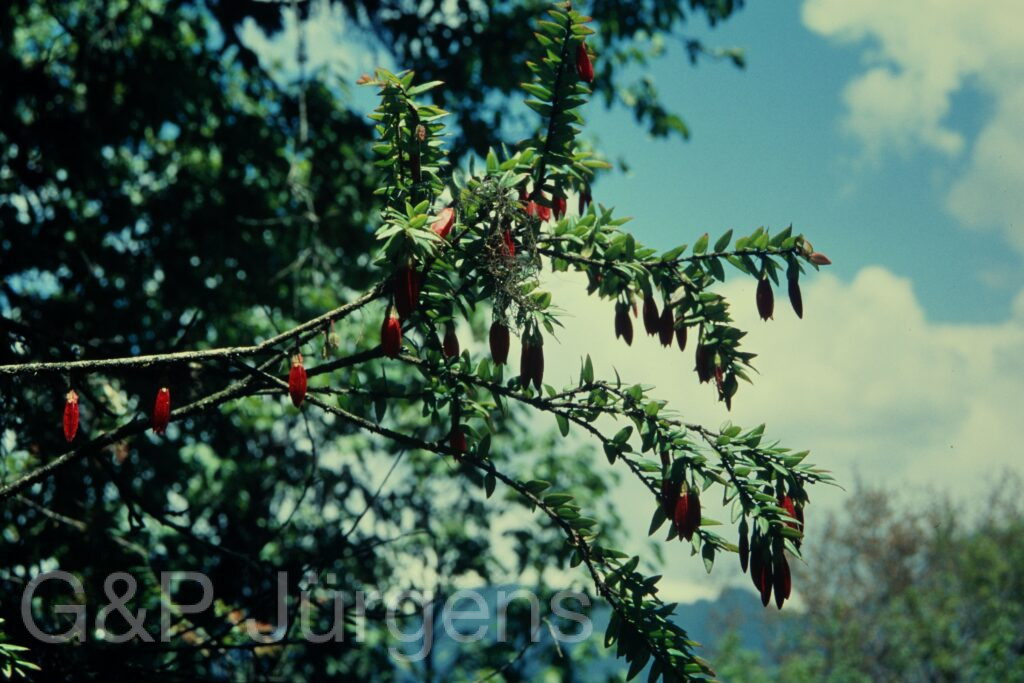
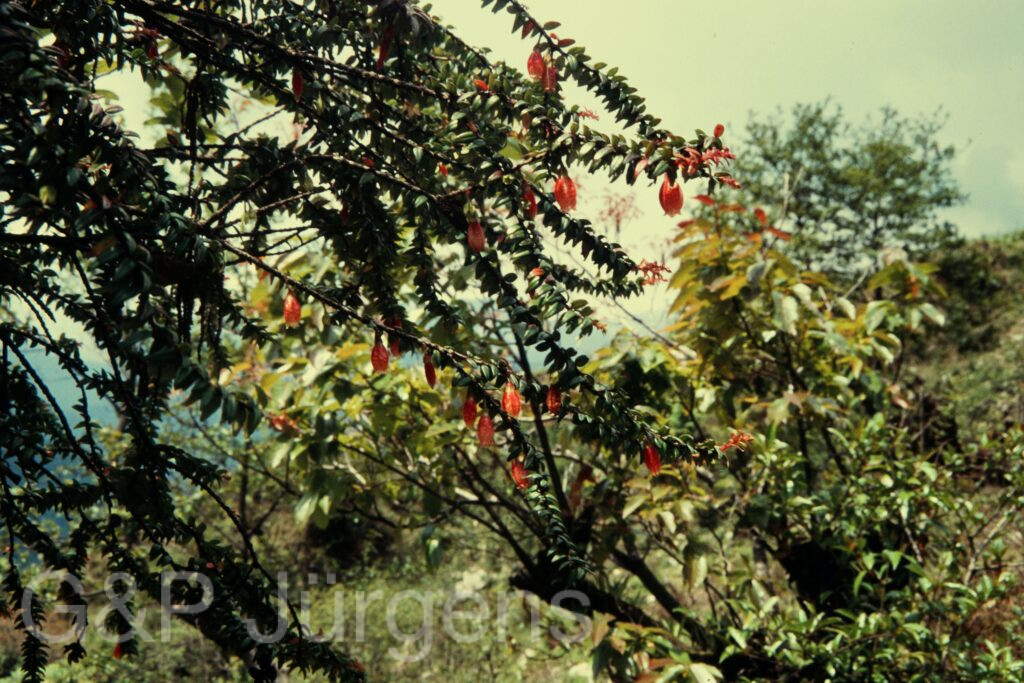
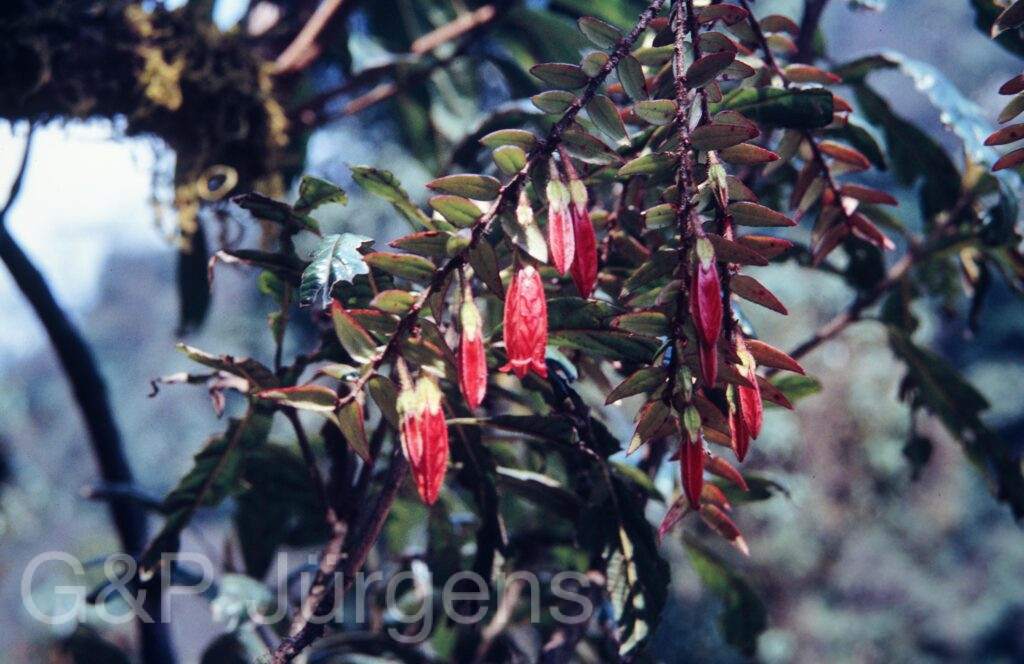
Agapetes serpens

by GP Jürgens

(Wight) Sleumer

Bhutan2014 476
Bhutan Tongsa 2000m, May
Sikkim2004 95 P165
India West-Bengal, Bersay 2700m April
Nepal 97 309 P613
Nepal Honggaon 2360m May
Nepal1992 156 P228 ergebnis
Nepal Simbua-Khola 1800m March 

Description

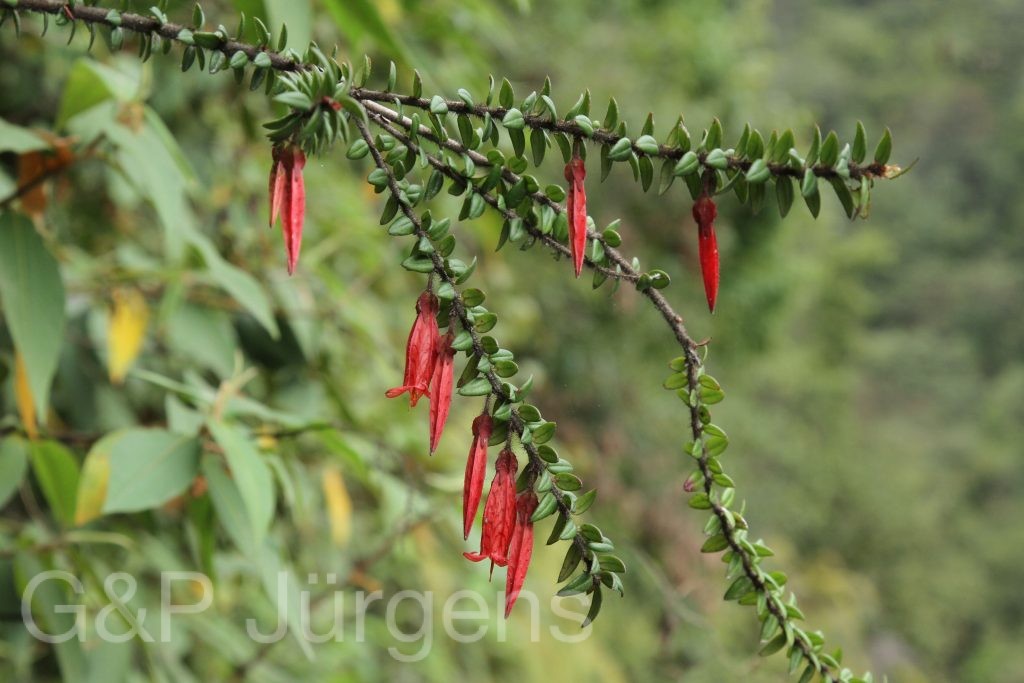
Agapetes serpens is an eastern Himalayan epiphytic shrub distributed across India, Bhutan, Nepal and adjacent China, with around 267 GBIF occurrences; long cultivated for its pendulous flowers, it is recorded in glasshouse collections from Great Britain, Germany, the United States and New Zealand. It grows in humid temperate broad-leaved and mixed forest, perched on mossy tree trunks, branches and shaded rock faces. The images document it across a broad elevational span: Bhutan at Tongsa around 2000 m in May, West Bengal at Bersay near 2700 m in April, and Nepal at Honggaon (2360 m) and the lower Simbua-Khola valley (1800 m).

It is a scrambling to pendent evergreen shrub arising from a swollen, tuberous, woody rootstock, with long arching, bristly-hairy stems. The leaves are small, numerous, lanceolate to elliptic, leathery and arranged distichously along the stems. The flowers hang in profusion from the leaf axils on slender pedicels; the corolla is tubular, five-angled, bright red and marked with darker chevron- or V-shaped lines, with five short reflexed lobes. The stamens are included and the ovary inferior. The fruit is a small fleshy berry.

Agapetes belongs to tribe Vaccinieae of the Ericaceae, the group that includes the blueberries, and the genus is centred on the Sino-Himalayan and Southeast Asian mountains. The tuberous lignotuber is an adaptation to the epiphytic habit, storing water and nutrients, while the tubular red flowers are adapted to bird pollination. Valued as an ornamental, A. serpens is widely grown; in the wild it is locally frequent and not currently regarded as threatened.

Author: (Wight) Sleumer · Sources: POWO (Kew), GBIF, Flora of China, Flora of Bhutan, Flora of Nepal, Airy Shaw revision of Agapetes