Tag:

Montane (1500-2500 m)

Hara

Bhutan2014 205
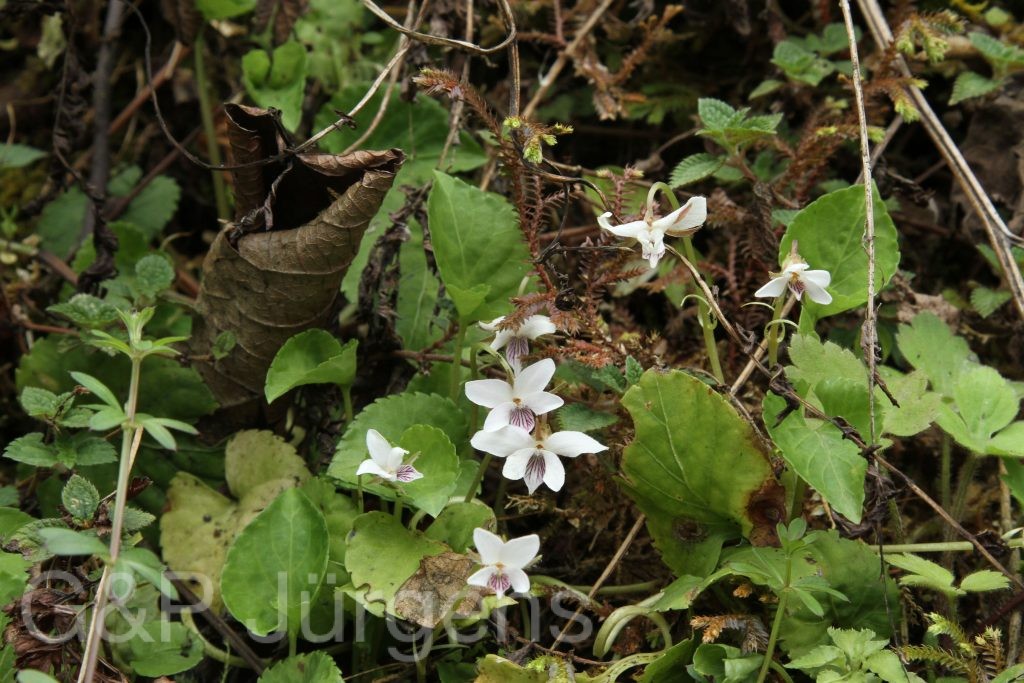
Bhutan Trashyangtse 2100m, May

Description

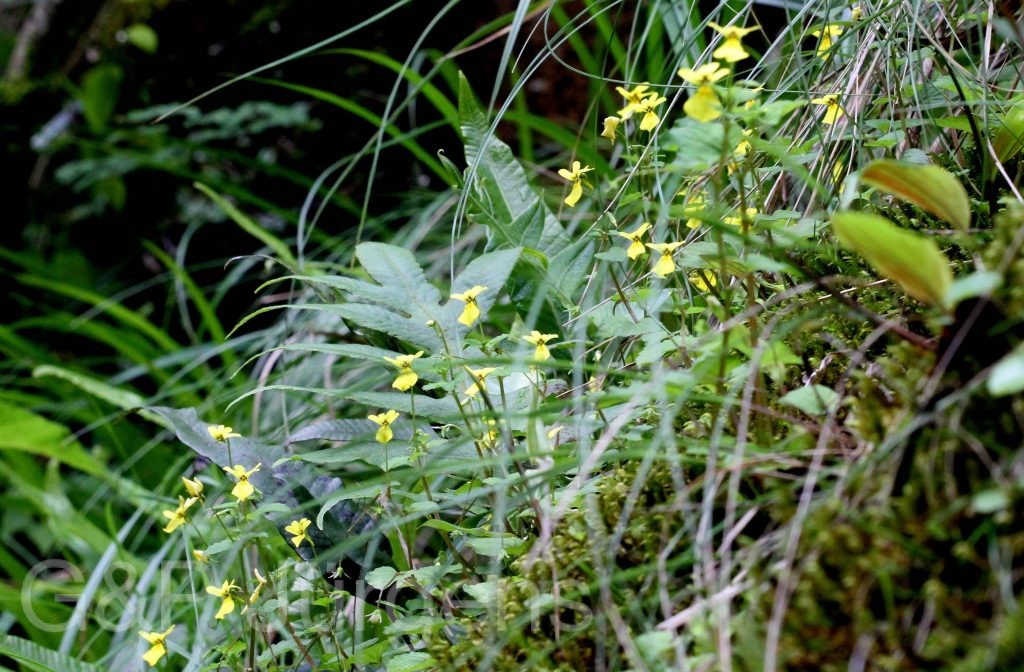
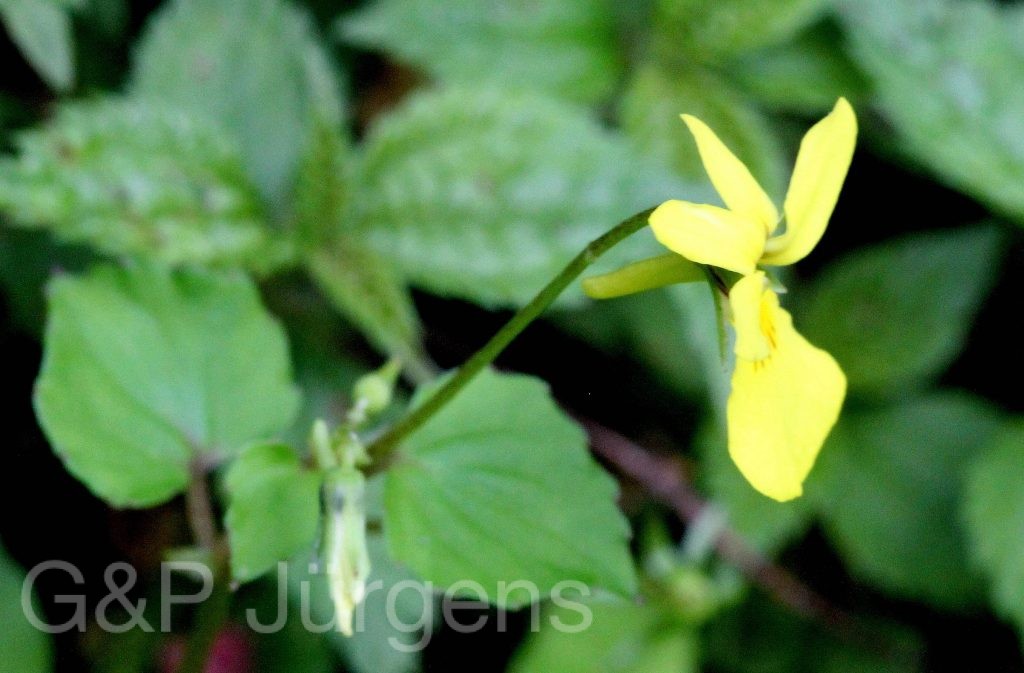
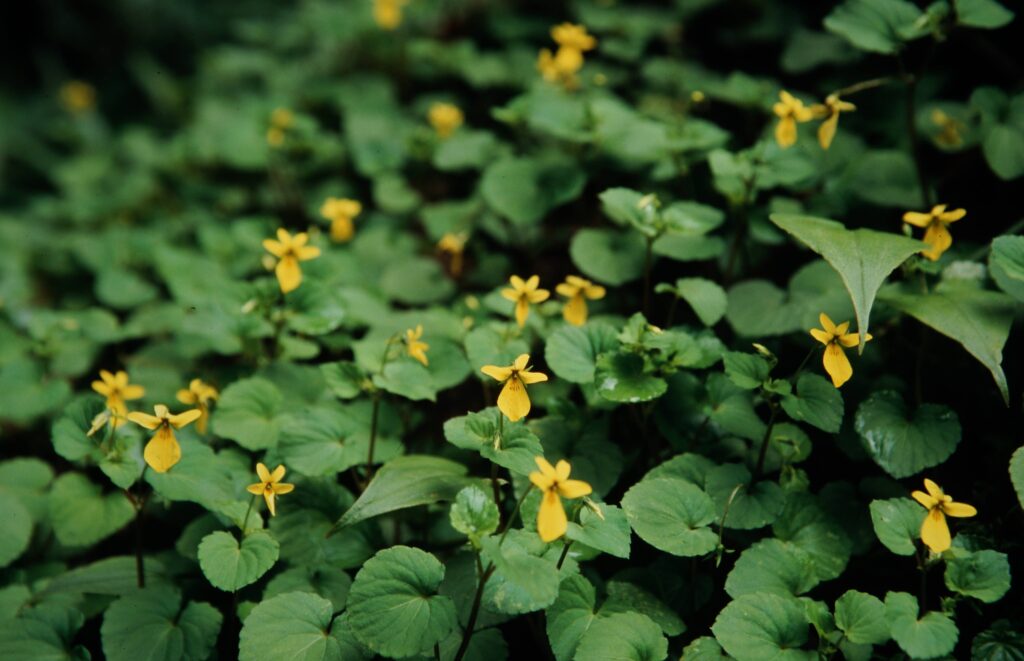
Viola bhutanica is a rare and range-restricted species endemic to Bhutan with marginal occurrence in adjacent parts of southern China. With only eight occurrences recorded in GBIF, it is among the least collected violets in the Himalayan region. The species inhabits moist, shaded forest floors in warm-temperate to subtropical broadleaved forests at elevations of 1,800–2,500 m, growing on humus-rich soils among mosses and leaf litter. The collection from Trashyangtse district in eastern Bhutan at 2,100 m typifies its preferred habitat in the moist valleys of the eastern Himalayan biodiversity hotspot.
Viola bhutanica is a perennial, acaulescent herb with a short, erect rhizome. Leaves are basal, long-petiolate, with ovate to broadly ovate blades 3–6 cm long, cordate at the base, crenate-serrate along the margins, and sparsely pubescent on both surfaces. Peduncles are slender, arising from the rootstock, exceeding the leaves, each bearing a single zygomorphic flower. Flowers are 1.5–2 cm across, with pale violet to lilac petals; the lateral petals are bearded, and the lowest petal bears a short, obtuse spur 3–5 mm long with darker violet veining that serves as a nectar guide. The fruit is an ellipsoid capsule dehiscing explosively by three valves, projecting seeds several centimetres from the parent plant.
Described by H. Hara in 1971, Viola bhutanica remains one of the most poorly known Himalayan violets. Its extreme rarity in herbarium collections and the very low number of GBIF records suggest either genuine scarcity or significant under-collection in its remote eastern Bhutanese habitats. The species belongs to the section Nomimium and is morphologically allied to V. pilosa, differing in its leaf indumentum and spur morphology. Given its highly restricted known range and the increasing pressures of land-use change in subtropical eastern Bhutan, V. bhutanica merits conservation assessment and targeted field surveys to clarify its population status.

Author: Hara · Sources: POWO (Kew), GBIF, Flora of Bhutan Vol. 1, Hara: Flora of Eastern Himalaya (1971), Noltie: Flora of Bhutan Vol. 3 (2000)
D. Don

Bh2008 157 P257
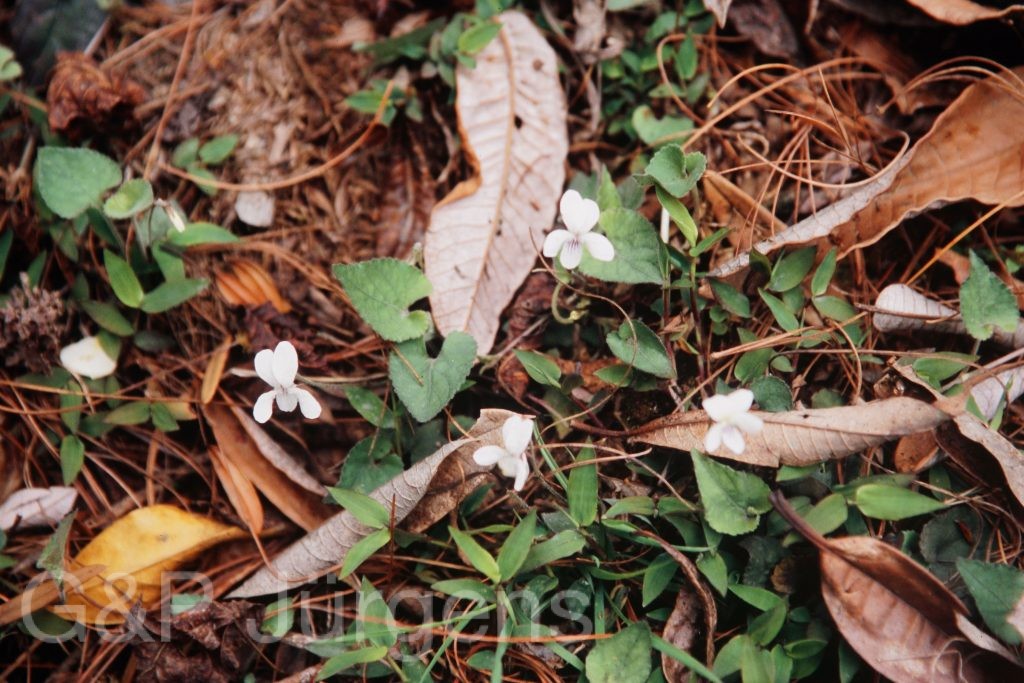
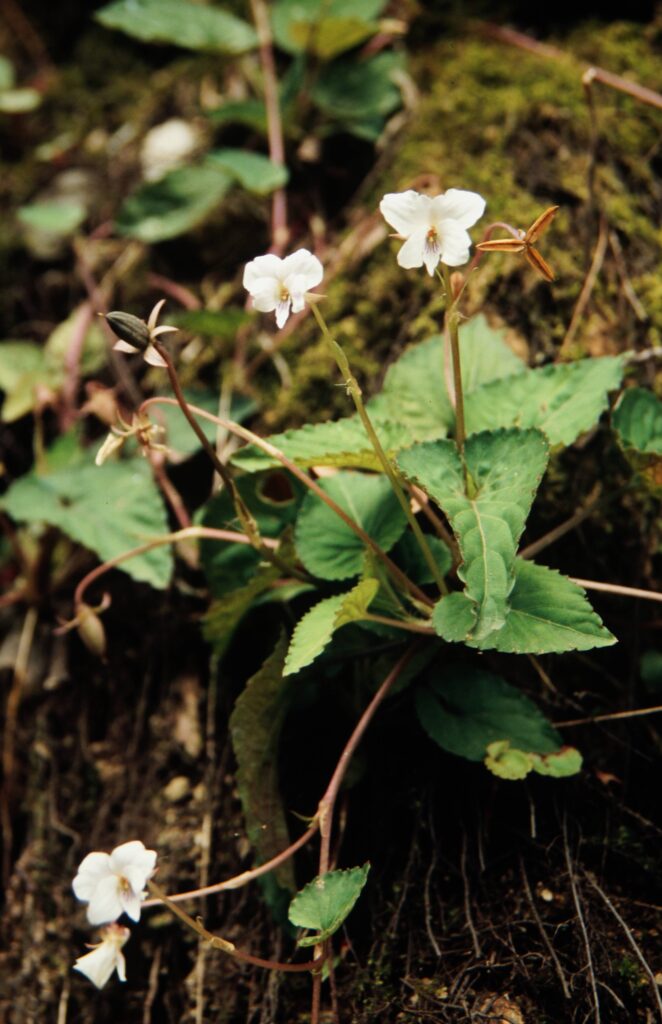
Bhutan Chendebji, 2500m April
Sikkim 2006 288 ergebnis
India West-Bengal, Chaana 1700m, May

Description

Viola hamiltoniana D.Don is a small perennial violet of the temperate Himalaya and East Asia. GBIF documents a broad distribution including Nepal, NE India, Bhutan, Bangladesh, Sri Lanka, China, Taiwan, Japan, Korea, the Russian Far East and Southeast Asia, with over 10,000 records, reflecting its place within a widespread and taxonomically intricate East Asian complex. In the Himalaya it grows in moist temperate forest, on grassy banks and shaded slopes; the illustrated plants are from Bhutan at Chendebji, 2,500 m, in April, and from West Bengal at Chaana, 1,700 m, in May, the flowering season of early spring.

The plant is a low, acaulescent or shortly stemmed herb arising from a slender rhizome, sometimes producing stolons. The leaves are basal in a loose rosette, the blades ovate to oblong-lanceolate or cordate with a crenate to serrate margin and a long, slender petiole, the stipules narrow and entire to fimbriate. Flowers are solitary on long axillary peduncles, zygomorphic and spurred in typical violet fashion, white to pale lilac or bluish with darker veining on the lower petal and a short blunt spur; cleistogamous flowers are commonly produced later in the season. The fruit is a three-valved loculicidal capsule that dehisces explosively to disperse the smooth seeds.

Viola section taxa of the Himalaya are notoriously variable, and V. hamiltoniana has been variously circumscribed and synonymised within the East Asian violet complex. The frequent cleistogamy ensures reliable seed set, contributing to its wide range and abundance. The species is common and of no conservation concern.

Author: D. Don · Sources: POWO (Kew), GBIF, Flora of China Vol. 13, Flora of Bhutan Vol. 1, Flora of Nepal, W. Becker: Violae Asiaticae

Ging.

Sikkim2011 165
Sikkim Vista-valley 2500m, June
Sikkim2011 167
Sikkim Vista-valley 2500m, June
Sikkim 2006 460 ergebnis
India West-Bengal, Ruigi-Chu 2100m, May

Description

Viola wallichiana is a small perennial herb of the Himalaya, distributed through Nepal, northern India, Sikkim, Bhutan and southwestern China, with peripheral or introduced records noted from Australia; GBIF holds about 79 collections, reflecting a relatively localised eastern Himalayan range. It grows in shaded, moist temperate forest, on mossy banks, humus-covered slopes and shaded rock ledges, typically between about 2000 and 3000 m. The photographed plants were found in Sikkim's Vista valley at around 2500 m in June and in the West Bengal hills at Ruigi-Chu near 2100 m in May, on the cool, sheltered, leaf-littered forest floor it inhabits through late spring and the early monsoon.

The plant is a low, stemless to short-stemmed perennial arising from a slender rhizome, sometimes spreading by short stolons. The leaves are basal or nearly so, long-petiolate, the blade ovate to cordate or reniform with a crenate margin and conspicuous fringed stipules. The flowers are solitary on slender axillary peduncles, zygomorphic and spurred in typical violet fashion, pale violet to bluish or whitish with darker veining on the lower petal, the spur short. Cleistogamous flowers may also be produced. The fruit is a small loculicidal capsule that splits into three valves, ejecting the seeds elastically.

Viola (Violaceae) is a large, cosmopolitan genus, and V. wallichiana belongs to the temperate Himalayan group of rosulate, spurred-flowered violets, commemorating Nathaniel Wallich. Its cordate basal leaves, fringed stipules and pale veined flowers distinguish it from congeners. It is a typical understorey forb of mid-elevation forest, locally common but not assessed as threatened.

Author: Ging. · Sources: POWO (Kew), GBIF, Flora of China Vol. 13, Flora of Bhutan Vol. 2, Flora of Nepal, Flora of Pakistan, Becker conspectus of Himalayan Viola

Meisn.

Nepal 99 57 ergebnis
West-Nepal Nyor Gaad 2700m, June
Nepal 99 935 ergebnis 1
West-Nepal Suli-Khola 2700m, July
Nepal 99 933 ergebnis
West-Nepal Ski-Khola 2700m, July
Garw 2005 236 ergebnis ergebnis
India Garhwal Guni 2350m, September

Description

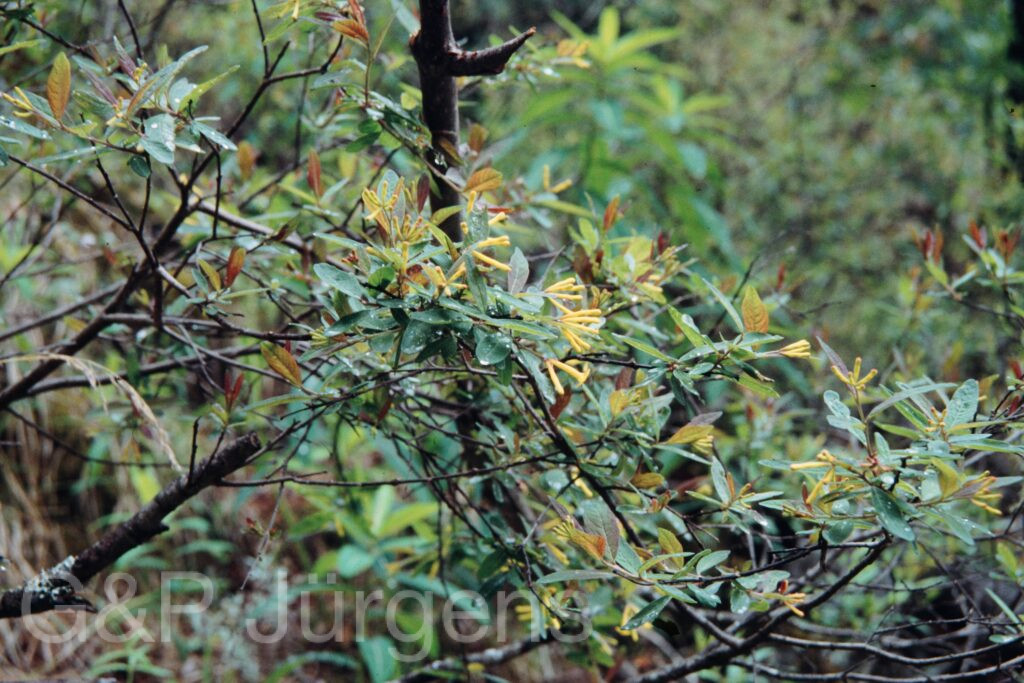
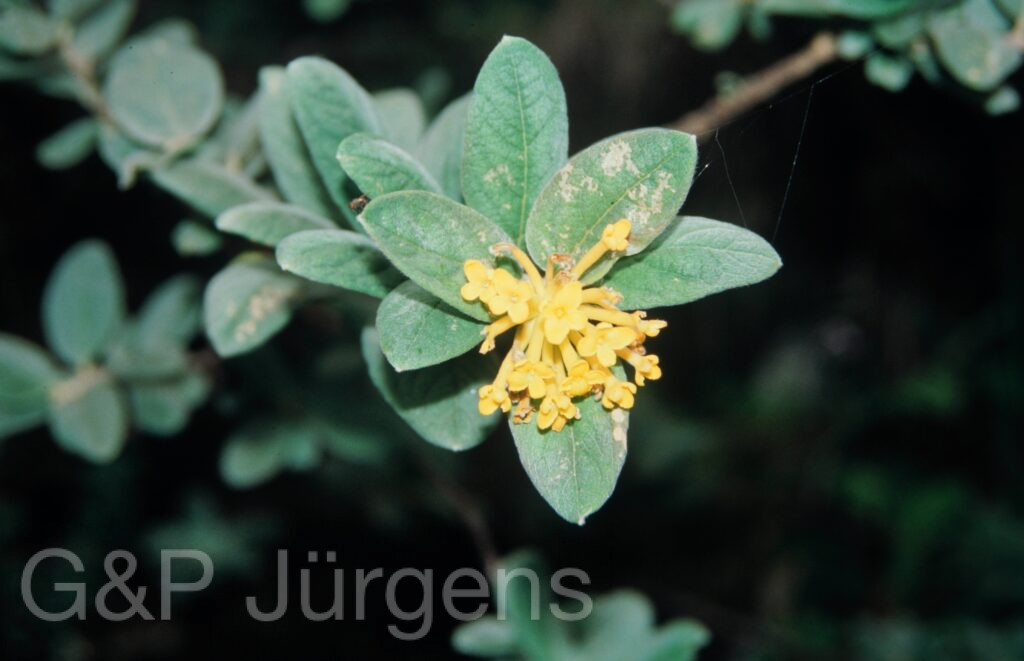
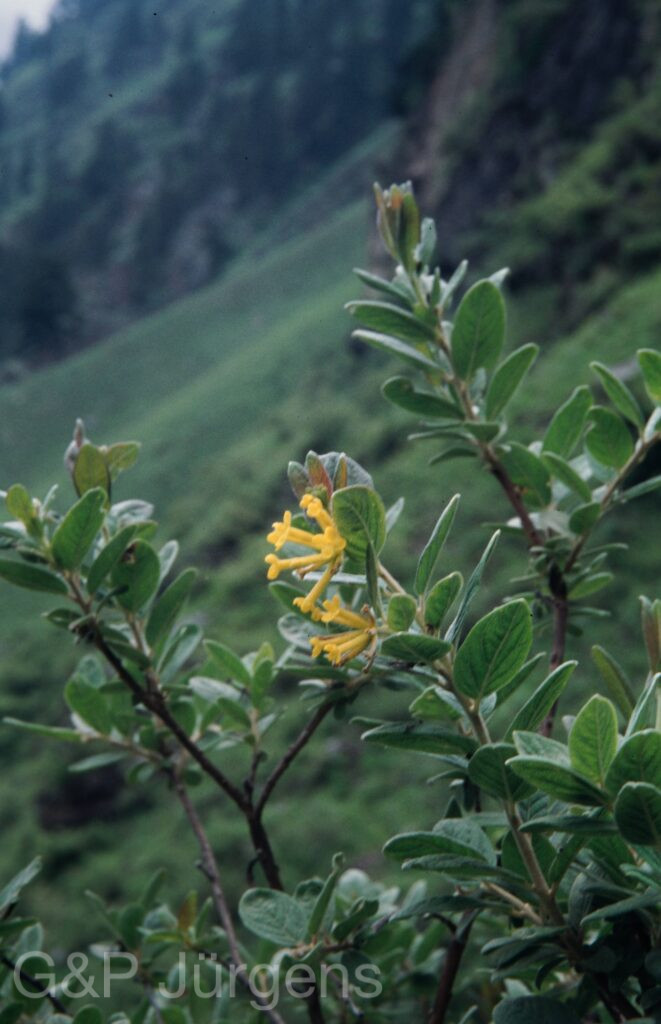
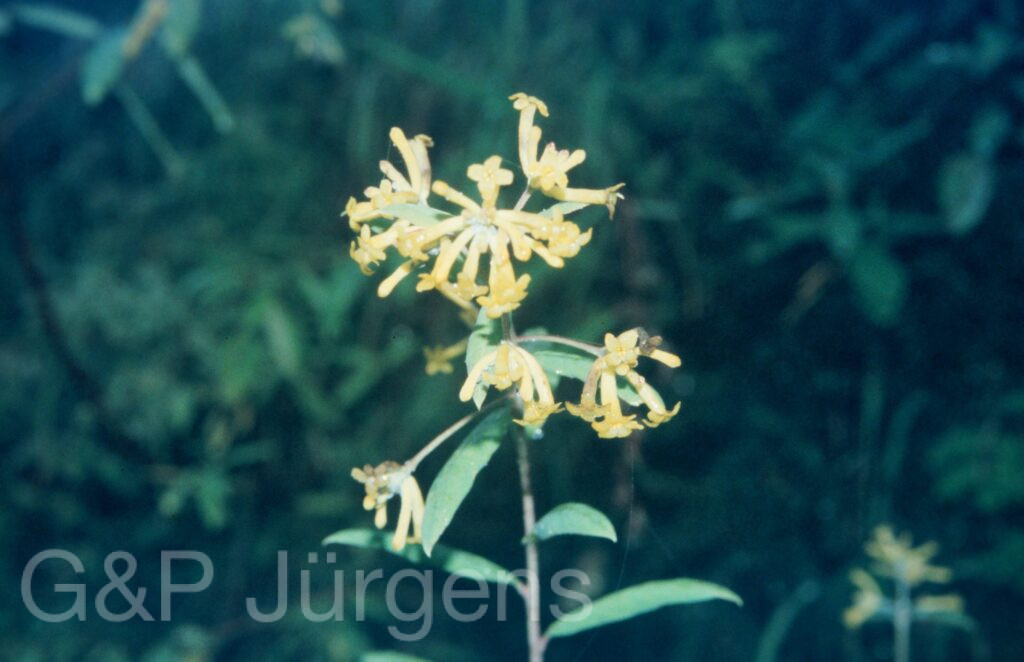
Wikstroemia canescens (Meisn.) is a Himalayan to East Asian shrub of the family Thymelaeaceae, distributed from Pakistan and the northwest Himalaya through India, Nepal and Myanmar to China, Sri Lanka and Japan. The fewer than 600 GBIF records indicate a scattered but characteristically montane occurrence. It inhabits open slopes, forest margins, scrubland and rocky banks in the temperate zone, generally between 1,500 and 3,000 m. The several West Nepal localities at around 2,700 m, recorded from June through July, together with the Garhwal collection from Guni at 2,350 m in September, span its full flowering and fruiting season across the central and western Himalaya.

The plant is an erect, branching shrub up to about 2 m tall, with tough, fibrous bark and young branchlets covered in a fine greyish pubescence, hence the epithet canescens. The leaves are subopposite to alternate, shortly petiolate, elliptic to oblong-lanceolate, entire-margined and somewhat silky beneath. The small, tubular flowers lack petals and consist of a yellow to greenish-yellow, four-lobed calyx tube; they are clustered in short, terminal, head-like or umbellate inflorescences. The fruit is a small, dry to fleshy drupe.

Like many Thymelaeaceae, Wikstroemia canescens possesses an exceptionally strong inner bark rich in long fibres, and in the Himalaya it is used locally for cordage and in the traditional manufacture of hand-made paper, a use shared with the related Daphne species. The genus is closely allied to Daphne, the two differing chiefly in floral merosity and indumentum, and generic boundaries within the group remain debated. The species is widespread and not currently considered threatened.

Author: Meisn. · Sources: POWO (Kew), Flora of Nepal, GBIF, Flora of China Vol. 13, Halda: The Genus Daphne and allied Thymelaeaceae (2001)

Kurz

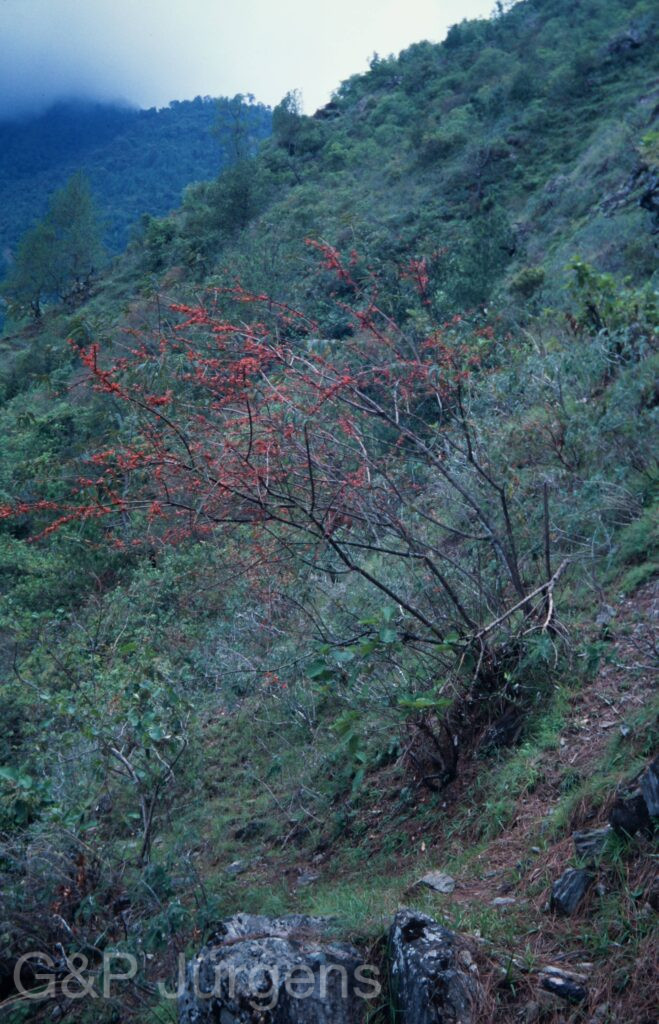
Bhutan2014 147
Bhutan Trashigang 1470m, May
Nepal 2001 461 ergebnis ergebnis
Nepal (Gorkha) Gunda 1700m, May

Description

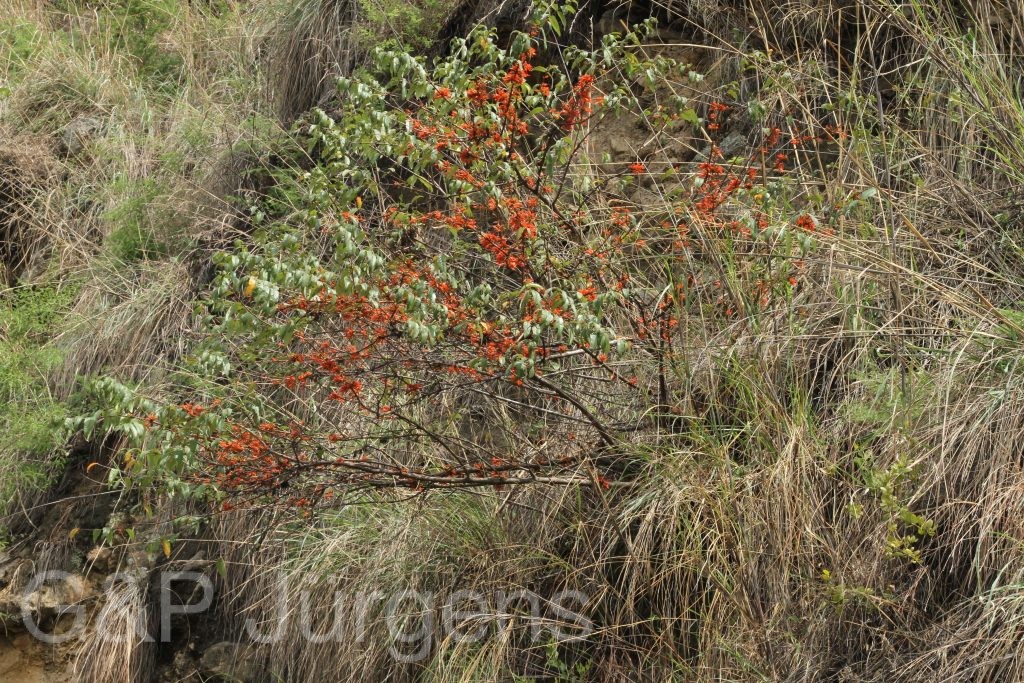
Woodfordia fruticosa is a widespread Old World shrub ranging from the Indian subcontinent through China and Southeast Asia to Madagascar and tropical Africa, with GBIF documenting around 1657 occurrences across India, China, Madagascar, Nepal, Indonesia, Sri Lanka, Myanmar, Pakistan, Bhutan, Bangladesh and Thailand. It is a plant of warm, seasonally dry habitats, characteristically colonising open hill slopes, rocky outcrops, scrub, forest margins and disturbed ground from the lowlands into the lower hills. The plants recorded at Trashigang in Bhutan at about 1470 m and at Gunda in Gorkha, Nepal at about 1700 m, both in May, illustrate its presence in the subtropical mid-hill zone, where it flushes with bright flowers at the onset of the warm season.

It is a much-branched deciduous shrub with long, often arching or pendulous branches and grey-brown bark. The leaves are opposite or subopposite, sessile to subsessile, lanceolate to oblong-lanceolate, entire-margined, dull green above and densely whitish- or rusty-tomentose and gland-dotted beneath. The flowers are clustered in short axillary cymes and are conspicuously bright red to orange-red; each has a tubular, slightly curved, ribbed calyx (hypanthium) with short triangular lobes, minute or vestigial petals, and numerous long-exserted stamens, giving the inflorescence a brush-like appearance. The fruit is a small ellipsoid capsule enclosed within the persistent calyx tube, releasing numerous tiny seeds.

The tubular red flowers and copious nectar of W. fruticosa make it strongly ornithophilous, attracting sunbirds and other nectar-feeding birds that act as pollinators, while it is also valued by beekeepers. Dried flowers (known as dhataki) are widely used in traditional medicine and notably as a natural fermentation agent in Ayurvedic preparations, owing to abundant tannins and polyphenols. The sole or near-sole member of its genus, the species is robust, fast-colonising and locally abundant, and is not of conservation concern.

Author: Kurz · Sources: POWO (Kew), GBIF, Flora of China Vol. 13, Flora of Bhutan Vol. 2, Flora of Nepal, Graham Revision of the Lythraceae of the Indian Subcontinent

Herb.

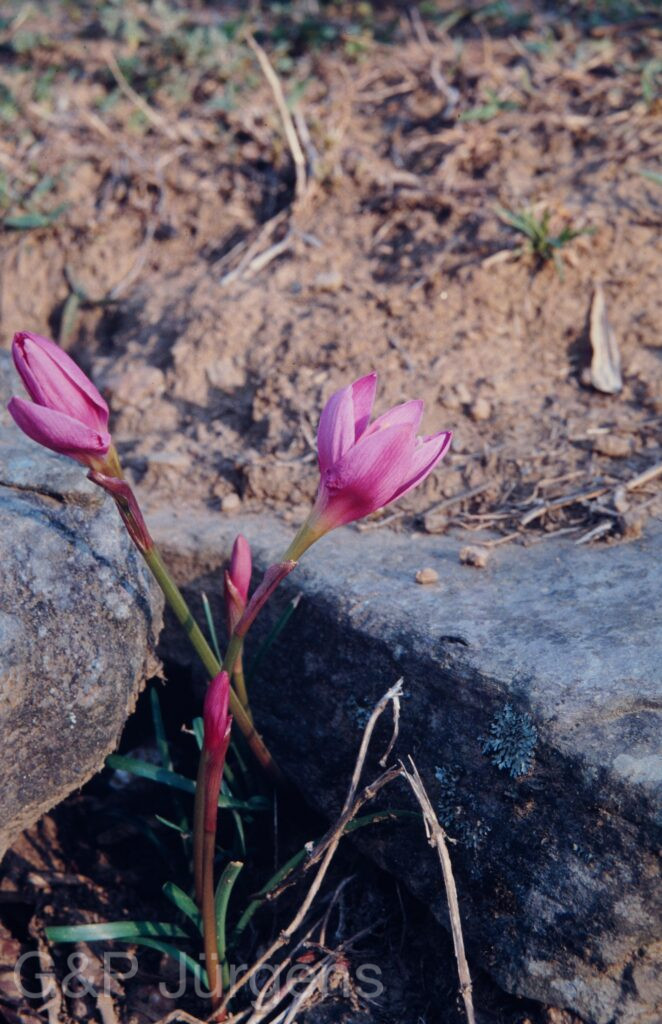
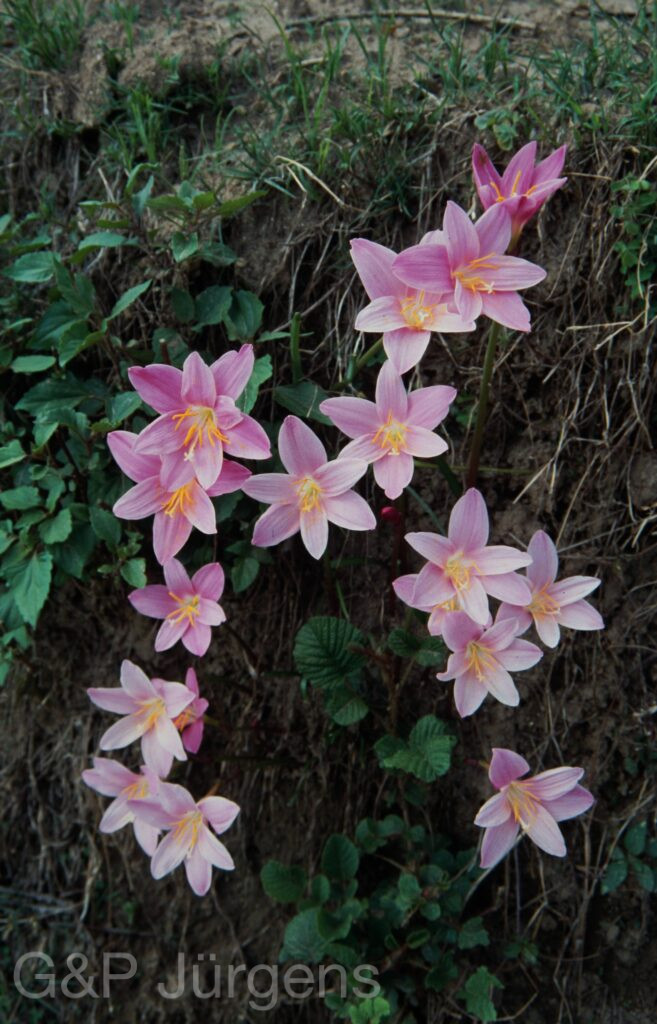
Nepal 1994 323 ergebnis
Ost-Nepal Chainpur 1300m May 
Nepal 2001 60 ergebnis ergebnis
East-Nepal Mulkharka 1920m, April

Description

Zephyranthes carinata, the rosepink rain lily, is native to Mexico and Central America but is now pantropically naturalised, GBIF recording some 1370 occurrences across the Americas, southern Africa, South and East Asia and Australasia. In the Himalaya it is a widespread garden escape, recorded across Nepal and northern India where it colonises grassy banks, roadsides, lawns and disturbed moist ground at low to middle elevations. The eastern Nepalese populations at Chainpur (1300 m, May) and Mulkharka (1920 m, April) show its spread into hill cultivation, where it flowers gregariously after the first rains.

It is a small bulbous geophyte with a tunicated, ovoid bulb bearing a few narrowly linear, somewhat keeled basal leaves (the epithet carinata referring to the carinate blade). The solitary flowers are borne on a hollow scape, each subtended by a tubular spathaceous bract. The perianth is funnel-shaped and erect, rose-pink to rose-purple fading paler, of six subequal tepals fused below into a short tube; within are six stamens in two series and an inferior trilocular ovary with a slender, shortly trifid style. The fruit is a depressed-globose loculicidal capsule with numerous flattened black seeds, though much spread is clonal through bulb offsets.

Zephyranthes belongs to tribe Hippeastreae of Amaryllidaceae, characterised by solitary, scapose, rain-triggered flowers. Z. carinata has long been confused with Z. grandiflora, the names variously applied in horticulture; current treatments accept Z. carinata as correct for the common pink rain lily. A hardy, free-flowering ornamental of no conservation concern, its readiness to naturalise makes it a minor weed of lawns and grasslands across its adopted Asian range.

Author: Herb. · Sources: POWO (Kew), GBIF, Flora of China Vol. 24, Flora of Pakistan, Annotated Checklist of the Flowering Plants of Nepal, Meerow and Snijman revision of Amaryllidaceae genera

King & Pantl.

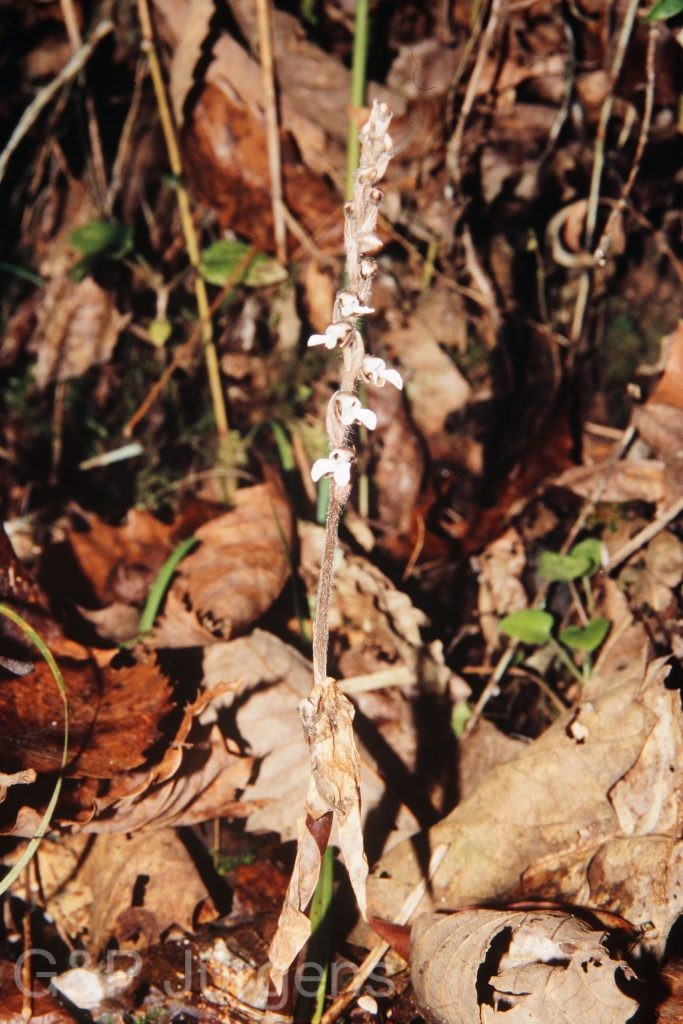
Bh2008 542 G820
Bhutan Punaka 1500m April

Description

Zeuxine reflexa is a small terrestrial orchid of the eastern Himalaya and adjacent regions, recorded from northern India, Nepal, Bhutan and Taiwan, the modest tally of 22 GBIF occurrences reflecting both its inconspicuous habit and its localised distribution. It grows in shaded, humus-rich situations on the floor of broad-leaved and subtropical forest, on mossy banks and in leaf litter, principally at lower to middle elevations around 1000-2000 m. The photographed plant was found near Punakha in Bhutan at 1500 m in April, the spring flowering period for this warm-temperate to subtropical forest-floor species.

It is a small herb with a fleshy, creeping, ascending rhizome rooting at the lower nodes and a short erect leafy stem. The few leaves are clustered toward the stem base, ovate to lanceolate, somewhat asymmetric and shortly petiolate with sheathing bases. The inflorescence is a slender, pubescent, few- to several-flowered terminal raceme of small flowers. The flowers are dull greenish to brownish with a contrasting white or pale lip; the dorsal sepal and petals are connivent into a hood, the lateral sepals often spreading or reflexed, and the saccate lip bears a pair of basal calli and a bilobed, frequently transversely broadened apical limb diagnostic of the genus.

Zeuxine is a genus of inconspicuous jewel-orchid relatives within subtribe Goodyerinae, distinguished from Goodyera and Anoectochilus chiefly by lip structure. Its dull, partly closed flowers suggest pollination by small insects or a degree of self-pollination, an effective strategy in the dim forest understorey. Owing to its small size and scattered records its true status is poorly documented, but it is not currently regarded as threatened; like all orchids it falls under CITES Appendix II, and its dependence on intact forest litter makes it sensitive to habitat clearance.

Author: King & Pantl. · Sources: POWO (Kew), GBIF, Flora of Bhutan, Pearce & Cribb: The Orchids of Bhutan, Pridgeon et al.: Genera Orchidacearum