Tag:

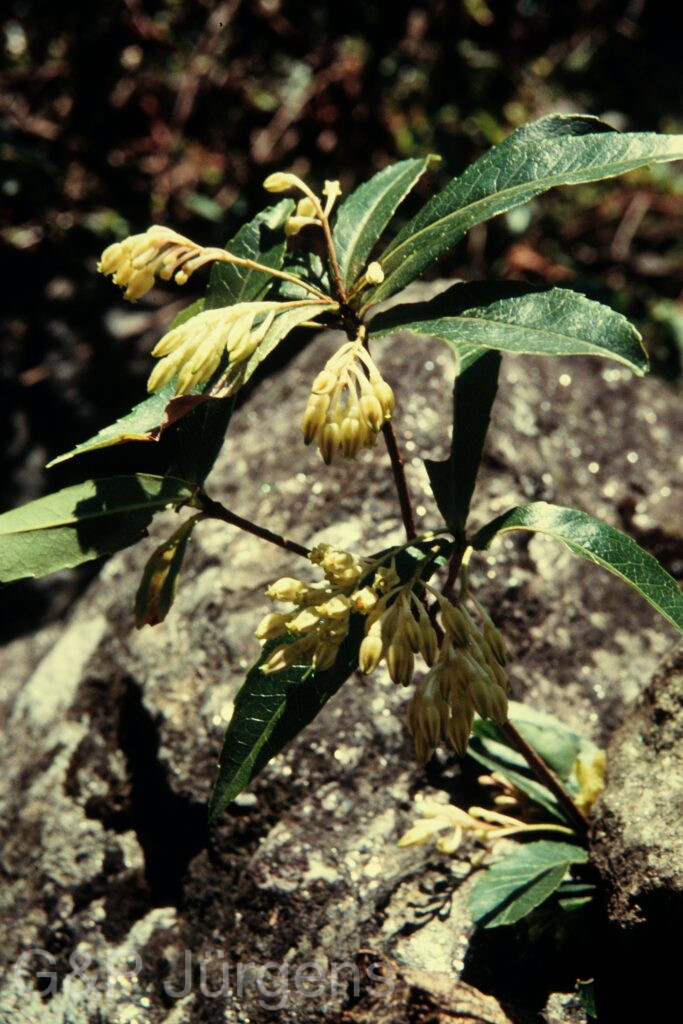
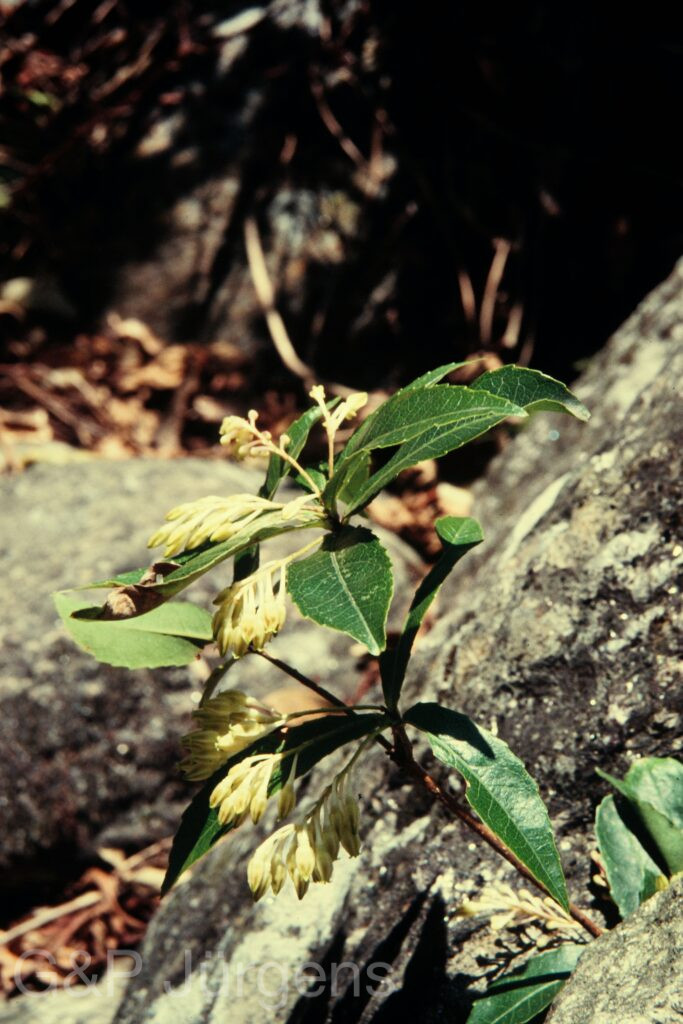
Montane (1500-2500 m)

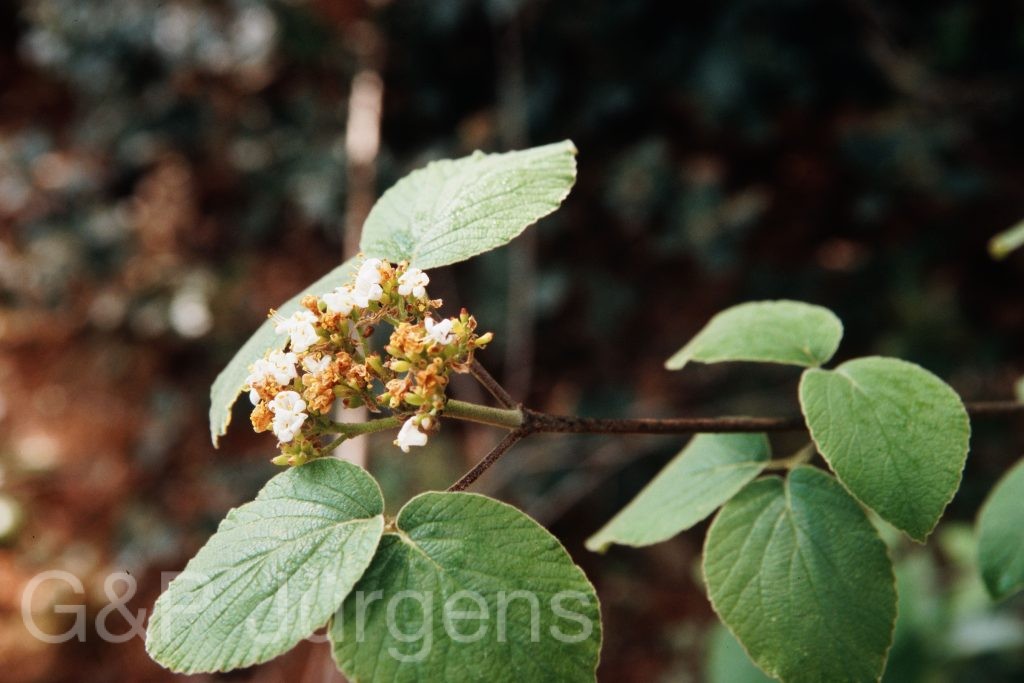
(Roxb.) Sleumer

Nepal 97 77 P127
Nepal above Meta-Khola 1850m April
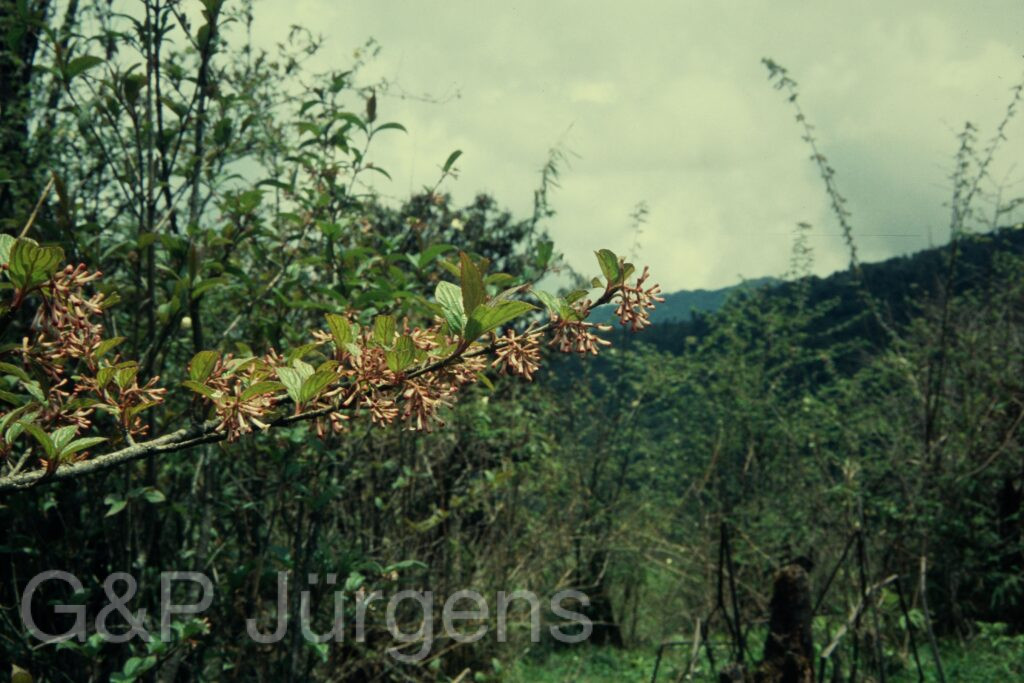
Nepal 97 90 P151
Nepal above Meta-Khola 1850m April

Description

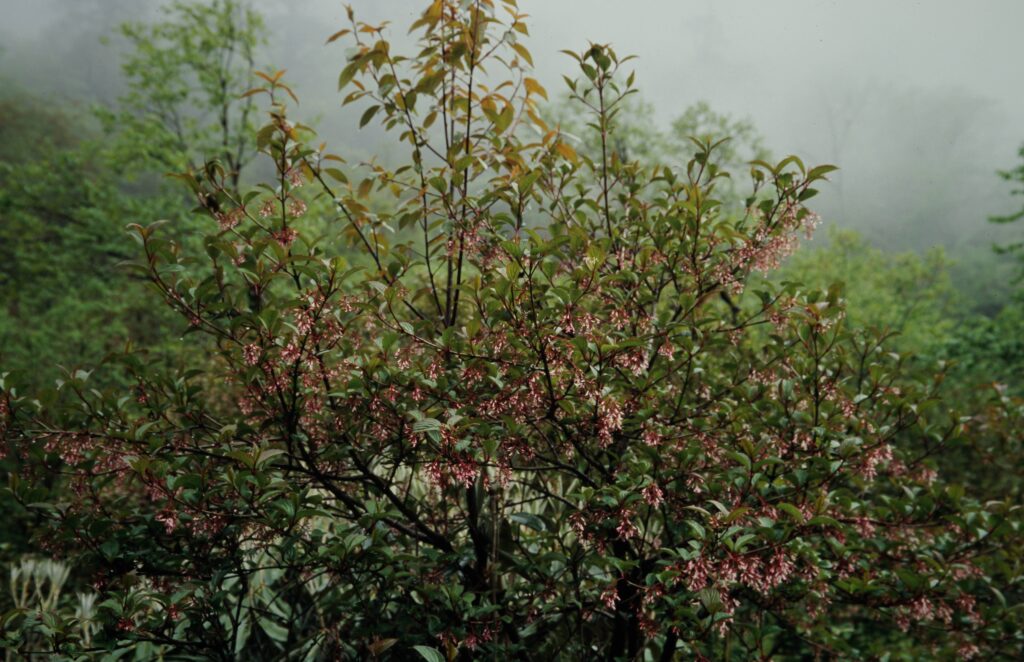
Vaccinium vacciniaceum is a shrub of the eastern Himalaya and adjoining ranges, recorded by GBIF from India, Nepal, Bhutan, China, Myanmar and Bangladesh across about 187 occurrences. It is characteristically epiphytic or lithophytic, growing on the trunks and branches of forest trees and on mossy rocks in humid temperate and subtropical broad-leaved and evergreen forest, typically between roughly 1500 and 2700 m. The plant photographed above the Meta-Khola in Nepal at about 1850 m, in April, reflects this moist mid-montane forest habitat where high humidity and abundant epiphytic moss support its growth.

The plant is a small, much-branched evergreen shrub, often pendent or scrambling when epiphytic, with a somewhat woody, swollen base. The leaves are alternate, leathery, elliptic to ovate-lanceolate, with an acuminate apex, an entire or finely serrulate margin, and prominent venation. The flowers are borne in short axillary racemes and are urceolate (urn-shaped), the corolla white to pale pink with five short recurved lobes, subtended by small bracts; the stamens have awned anthers opening by terminal pores, as is typical of the genus. The fruit is a small globose berry, ripening dark and fleshy, attractive to birds that disperse the numerous tiny seeds.

The species, transferred to Vaccinium by Sleumer in his comprehensive treatment of Asian Ericaceae, belongs to the largely epiphytic Sino-Himalayan element of the genus. Its epiphytic habit and dependence on humid, moss-rich forest tie it closely to intact, well-shaded montane woodland, and the fleshy berries indicate ornithochorous dispersal. Although not formally assessed as threatened, epiphytic Vaccinium are sensitive to forest clearance and to declines in the canopy humidity on which their establishment depends.

Author: (Roxb.) Sleumer · Sources: POWO (Kew), GBIF, Flora of China, Flora of Bhutan, Sleumer revision of Asian Vaccinium (Ericaceae), Annotated Checklist of the Flowering Plants of Nepal
(Roth) Kuntze

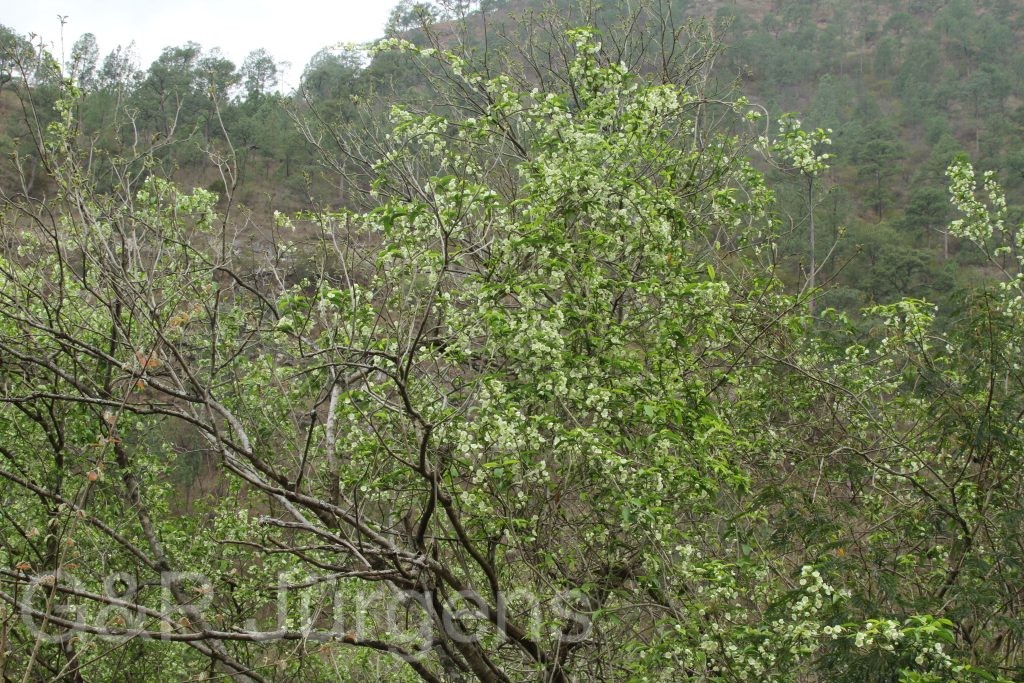
Bhutan2014 231 1
Bhutan Karu-Chu 1800m, May
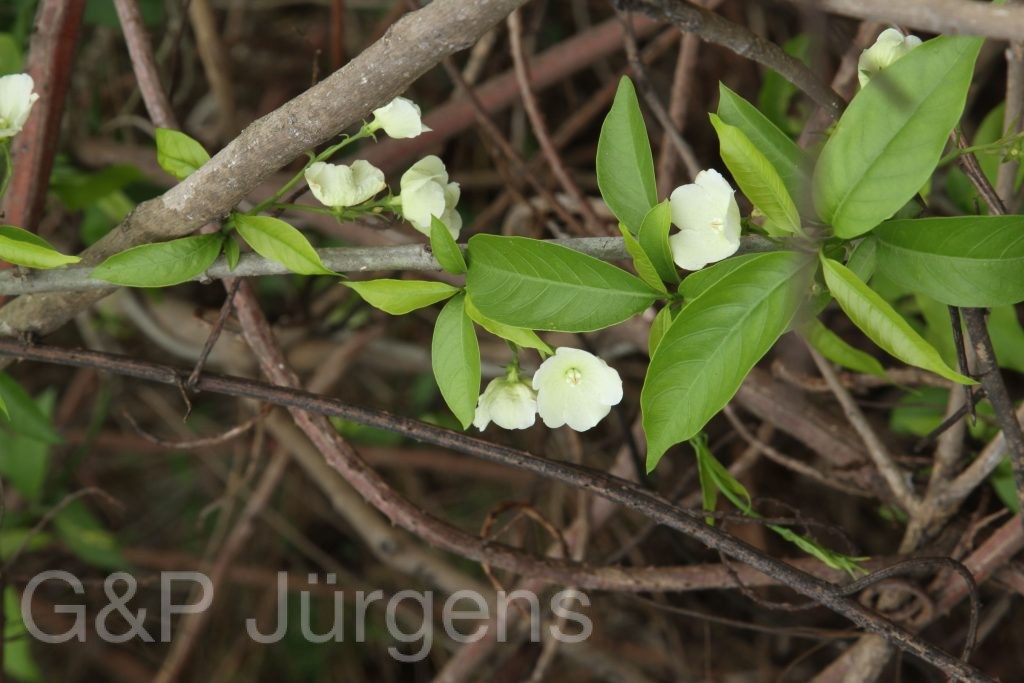
Bhutan2014 234
Bhutan Karu-Chu 1800m, May
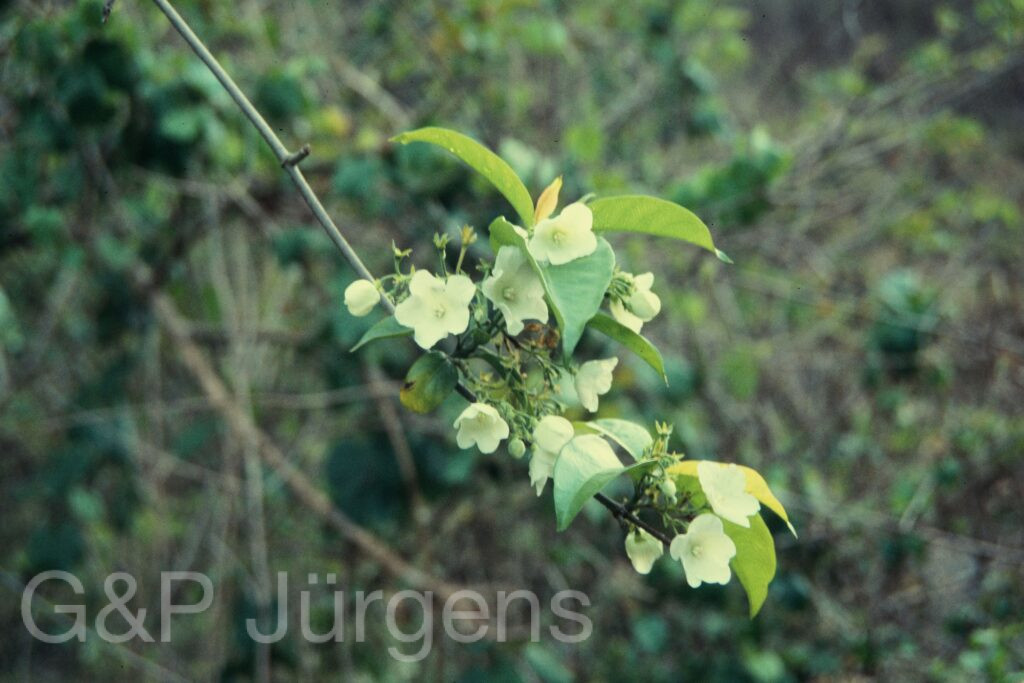
Nepal 97 28 P45
Nepal Dhoban 735m April

Description

Vallaris solanacea is a woody climber of tropical and subtropical Asia, broadly distributed from the Indian subcontinent and the Himalayan foothills through Indochina, southern China and the Malesian region (gbif_countries: IN, TH, CN, NP, MM, US, ZZ, LK, MY, GP, KH, LA, BD, BT, VN, ID, PK, SC), with GBIF documenting some 536 occurrences. It grows in lowland and submontane forests, thickets, riverine scrub and forest margins, often scrambling over shrubs and small trees. The illustrated gatherings range from Dhoban in Nepal at about 735 m, flowering in April, up to Karu-Chu in Bhutan near 1800 m in May, reflecting its preference for warm, humid lower hill country.

The plant is a glabrous to finely pubescent liana with milky latex and opposite, elliptic to ovate leaves that are entire, pinnately veined and shortly petiolate. The flowers are borne in axillary or terminal cymes and are fragrant, with a white, rotate to broadly campanulate corolla bearing five spreading lobes, the throat marked with hairy appendages; the floral form recalls a Solanum, the resemblance enshrined in the epithet. The androecium consists of five stamens with connivent anthers adhering to the stigmatic head, and the fruit is a pair of slender, spreading follicles releasing comose seeds adapted to wind dispersal.

A member of subfamily Apocynoideae, Vallaris is a small Indomalayan genus of latex-bearing twiners. V. solanacea is locally valued as an ornamental for its sweetly scented blossoms and is used in traditional medicine, while its latex and tissues, like those of many Apocynaceae, contain bioactive compounds. Widespread and adaptable, it is of no conservation concern across its extensive range.

Author: (Roth) Kuntze · Sources: POWO (Kew), GBIF, Flora of Nepal, Flora of China, Flora of British India, Flora Malesiana account of Apocynaceae

Griff.

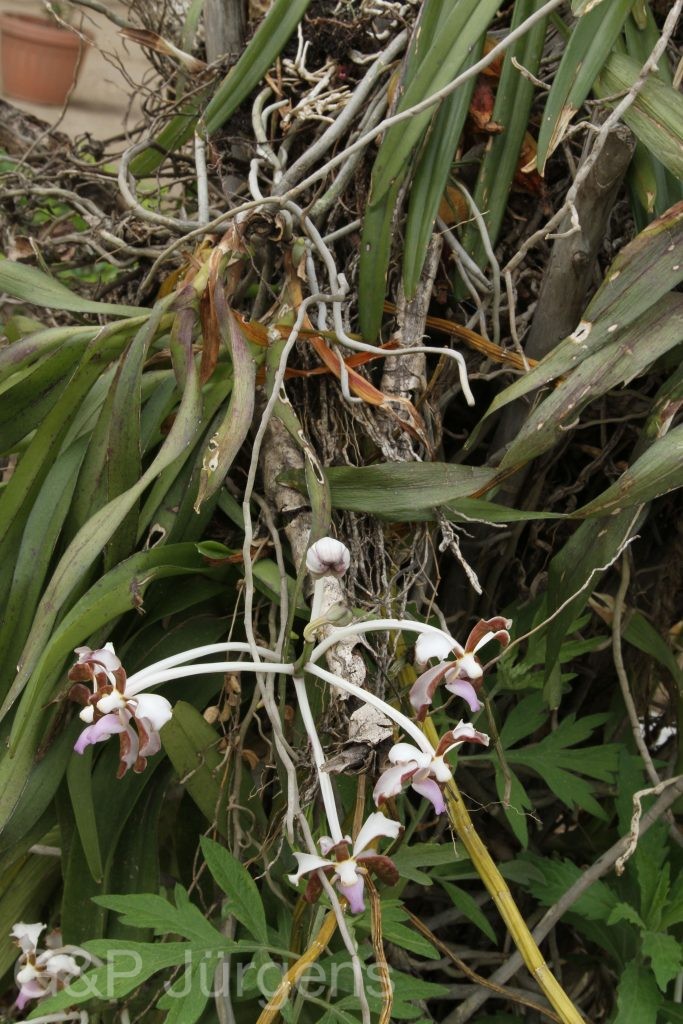
Bhutan2014 121
Bhutan Trashigang 1550m, May
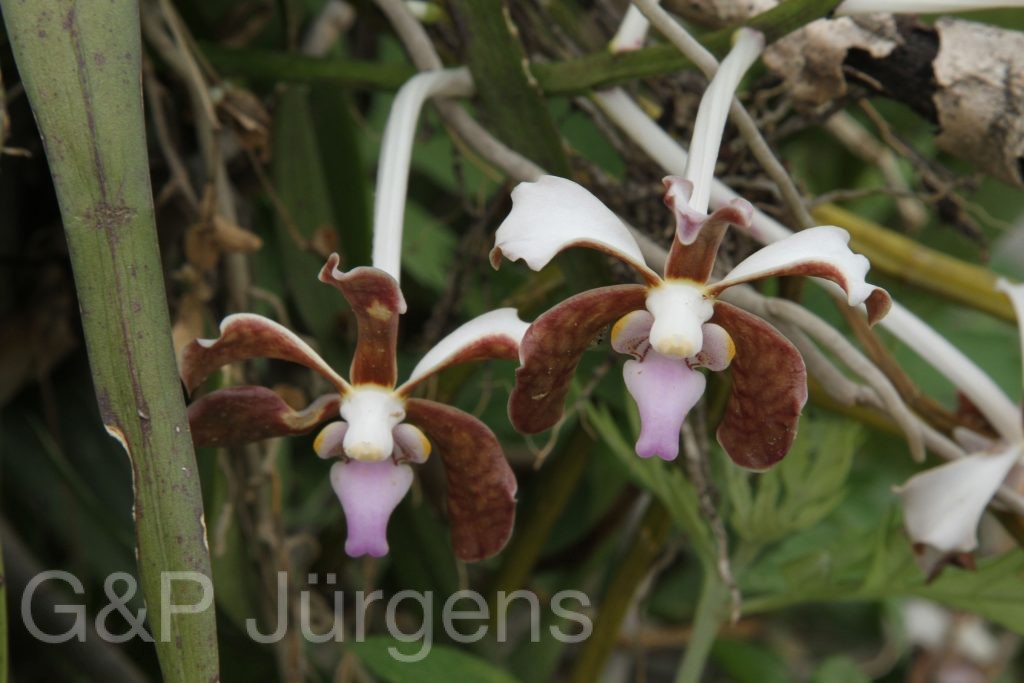
Bhutan2014 122
Bhutan Trashigang 1550m, May

Description

Vanda bicolor is a comparatively rare epiphytic orchid of the eastern Himalaya, known from Bhutan, north-east India, Nepal and adjacent southern China, with GBIF recording only about 35 occurrences that underline its localised distribution. It grows on the trunks and larger limbs of trees in warm-temperate to subtropical broad-leaved forest, generally at lower-montane elevations between roughly 1000 and 1800 m, in humid, partially shaded conditions. The illustrated plant from Trashigang in eastern Bhutan at 1550 m, flowering in May, is typical of the foothill forests where the species reaches its centre of abundance.

A monopodial epiphyte, it forms a stout, erect to ascending stem clothed in two ranks of strap-shaped (ligulate), leathery, channelled leaves with unequally bilobed, praemorse tips, and produces thick aerial roots. The inflorescence is a short, few- to several-flowered axillary raceme of large, fleshy, fragrant flowers. As the epithet indicates, the flowers are bicoloured: sepals and petals are broad, somewhat clawed and tessellated or flushed brownish over a paler ground, contrasting with the small, trilobed, spurred labellum. The fruit is an elongate, ribbed dehiscent capsule containing copious minute seeds.

Vanda comprises strap-leaved monopodial orchids of tropical Asia, within which V. bicolor is set apart by its flower colouration and labellum structure. Like all Vanda it is listed on CITES Appendix II, and its naturally restricted range, low population density and desirability to collectors make it vulnerable to habitat loss and illegal trade, warranting careful local protection.

Author: Griff. · Sources: POWO (Kew), GBIF, Flora of Bhutan, Orchids of Bhutan, Genera Orchidacearum (Pridgeon et al.)

Vanda cristata

by GP Jürgens

Wall. ex Lindl.

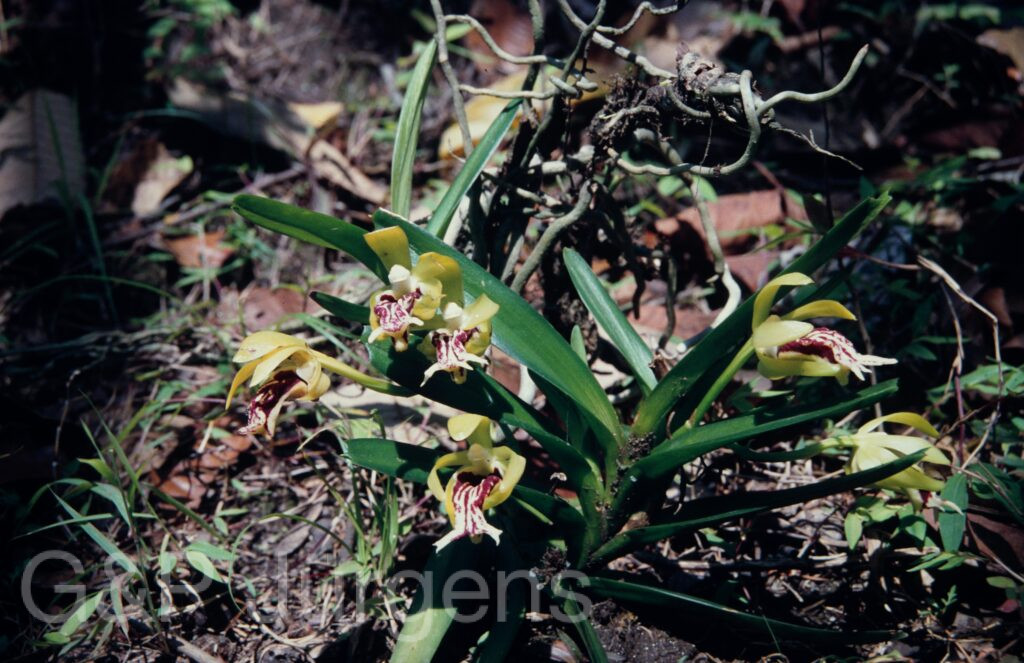
Nepal 1994 224 ergebnis
Ost-Nepal Mewa-Khola 1900m April 

Description

Vanda cristata is an epiphytic orchid distributed along the Himalaya from northern India through Nepal and Bhutan into southwestern China, with cultivated and naturalised records reflected in the GBIF dataset (136 occurrences across NP, IN, BT, CN and horticultural reports from CR, DE, TH and US). It inhabits humid, broad-leaved and mixed evergreen forest belts, growing as a twig and trunk epiphyte in dappled light, typically at montane elevations between roughly 1200 and 2200 m. The plant photographed in eastern Nepal in the Mewa Khola valley at about 1900 m in April illustrates its characteristic flowering during the pre-monsoon dry season, when cooler nights and high atmospheric humidity prevail.

The species is a compact, monopodial epiphyte with a short, erect stem clothed in the persistent imbricate bases of distichous leaves. The leaves are linear-ligulate, coriaceous, channelled above and unequally bilobed at the apex. Few-flowered racemes arise laterally from the leaf axils, bearing one to several long-lasting, waxy, fragrant flowers. The sepals and petals are yellowish-green, oblong and somewhat reflexed, while the three-lobed labellum is the diagnostic feature: the small lateral lobes flank a prominent fleshy mid-lobe marked with crimson to maroon longitudinal striations, narrowing to a sharply forked or bristled apex. The short column bears a terminal anther with waxy pollinia.

Within Vanda, V. cristata belongs to a group of small-statured, cool-growing Himalayan species and is sometimes placed in the segregate genus Trudelia, a treatment not adopted by POWO. Pollination is by bees attracted to the patterned labellum, and the long flowering period favours outcrossing. As with most showy Vanda species it is subject to horticultural collection pressure, and although not formally assessed as threatened it is protected under CITES Appendix II governing international trade in wild-collected orchids.

Author: Wall. ex Lindl. · Sources: POWO (Kew), GBIF, Flora of Nepal, Flora of Bhutan, Flora of China, The Genus Vanda (Motes)

L.

Bh09 357 P574
Bhutan Wangdi, 2400m June

Description

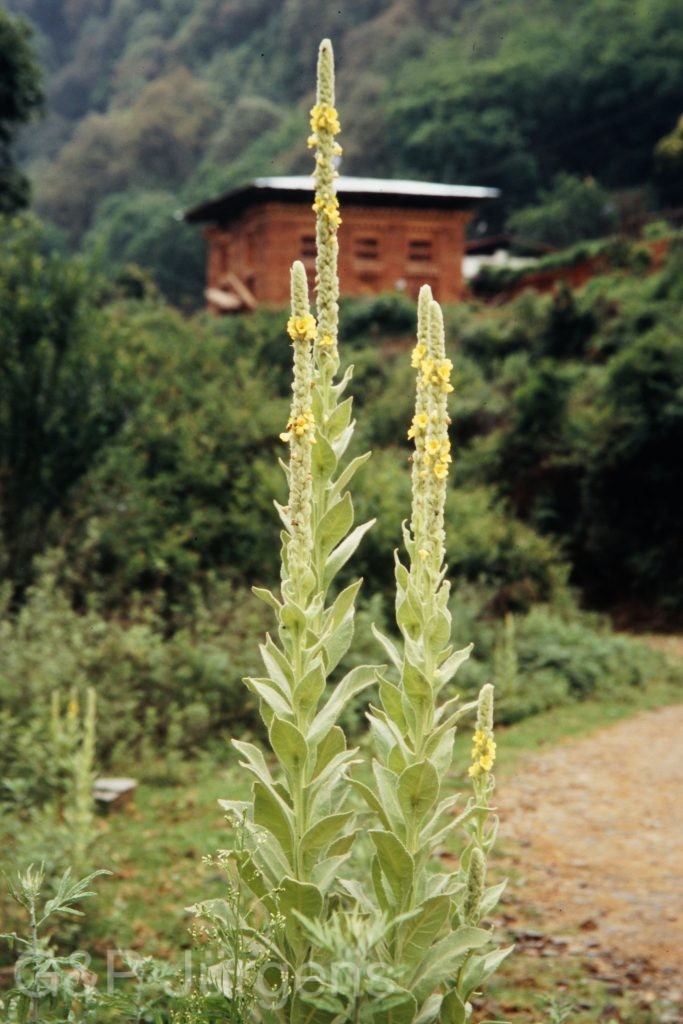
Verbascum thapsus L., common or great mullein, is a robust biennial herb native to Europe and western Asia and now one of the most widely naturalised plants on Earth. The enormous GBIF dataset (over 340,000 occurrences) reflects its near-cosmopolitan spread across North America, Europe, Australia, New Zealand and temperate Asia, including the Himalaya. It is a pioneer of open, disturbed, well-drained sites: roadsides, pastures, river gravels, fallow ground and waste places. The plant photographed at Wangdi in Bhutan at 2,400 m in June illustrates its successful establishment in the warm-temperate Himalayan valleys, where it behaves as a ruderal colonist of disturbed terrain.

In its first year the plant forms a dense basal rosette of large, oblong to obovate leaves; in the second it produces a stout, usually unbranched flowering stem up to 2 m tall. The whole plant is densely covered with soft, branched, stellate-woolly hairs giving a greyish, felted appearance and reducing water loss and herbivory. Leaves are decurrent along the stem. The inflorescence is a long, dense, spike-like raceme of yellow flowers; each flower has a five-lobed, slightly irregular rotate corolla and five stamens, the upper three with woolly white or yellowish filament hairs. The fruit is an ovoid septicidal capsule packed with very numerous minute seeds.

A single plant can produce hundreds of thousands of long-lived seeds, underpinning its weediness and its classification as an invasive species in parts of North America and Australasia. The placement of Verbascum has shifted between Scrophulariaceae and a narrowly circumscribed family in modern phylogenetic systems, but it is most often retained in Scrophulariaceae sensu APG. Long used in traditional medicine for respiratory complaints, it remains of pharmacological and ecological interest as a model colonising ruderal.

Author: L. · Sources: POWO (Kew), Flora of Pakistan, Flora of China Vol. 18, GBIF, Murbeck: Monographie der Gattung Verbascum (1933)

Wall. ex Benth.

Sikkim 2006 333 ergebnis
India West-Bengal, Tolung 2450m, May

Description

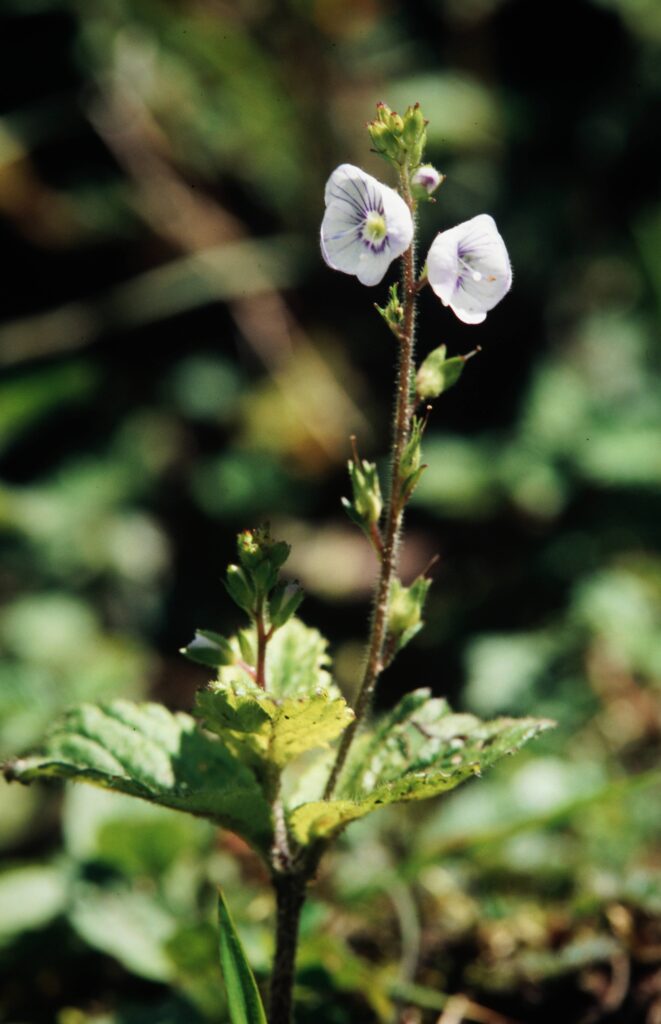
Veronica cana is a Himalayan speedwell distributed from Pakistan and northern India (Kashmir to Arunachal Pradesh) through Nepal, Bhutan, and Myanmar to southwestern China (Xizang, Yunnan) and Japan. It occurs in open forest clearings, grassy slopes, rocky banks, and montane scrub at elevations of 1,500–3,500 m. The species has been recorded from the Tolung area in West Bengal at 2,450 m, where it flowers in May during the pre-monsoon season. It favours well-drained, often stony soils in areas receiving moderate to high rainfall.
Veronica cana is an erect to ascending perennial herb, 15–40 cm tall, arising from a slender, creeping rhizome. The stems are simple or sparingly branched, densely covered with short, grey-white, appressed hairs that give the plant a characteristically canescent appearance — hence the epithet "cana" (grey-haired). Leaves are opposite, sessile or subsessile, ovate to lanceolate, 2–5 cm long and 1–2 cm wide, with a crenate to serrate margin and dense, soft pubescence on both surfaces. The inflorescence is a terminal raceme, 5–15 cm long, bearing numerous flowers on short, erect pedicels. The corolla is rotate, four-lobed, 5–8 mm in diameter, pale blue to lilac with darker veins. Stamens are two, exserted. The fruit is an obcordate, compressed capsule 3–5 mm wide, emarginate at the apex, containing numerous minute seeds.
Veronica cana belongs to a complex of pubescent, racemose-flowered Himalayan speedwells that have been variously treated taxonomically. Molecular phylogenetic studies have confirmed that Veronica in the broad sense (including former Pseudolysimachion and Veronicastrum segregates) is monophyletic within Plantaginaceae. V. cana is distinguished from the related V. laxa by its denser canescent indumentum and more compact racemes. Ecologically, the species is a characteristic element of Himalayan montane grasslands and forest-edge communities, contributing to ground-layer diversity in habitats increasingly threatened by overgrazing and land-use intensification.

Author: Wall. ex Benth. · Sources: POWO (Kew), GBIF, Flora of China Vol. 18, Flora of Bhutan Vol. 2, Albach et al.: Phylogeny of Veronica (2004)

D. Don

Bhutan2014 863
Bhutan Chele-La 3100m, May
Bhutan2014 965
Bhutan Chele-La 3400m, May
Bh2008 554 P838
Bhutan Paro 1950m April

Description

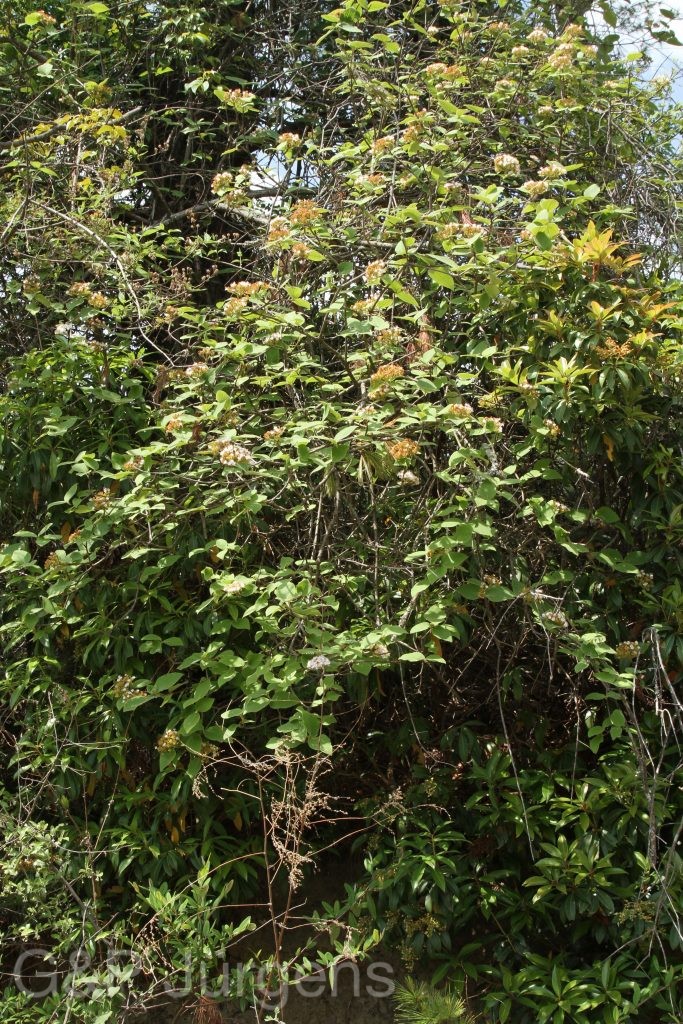
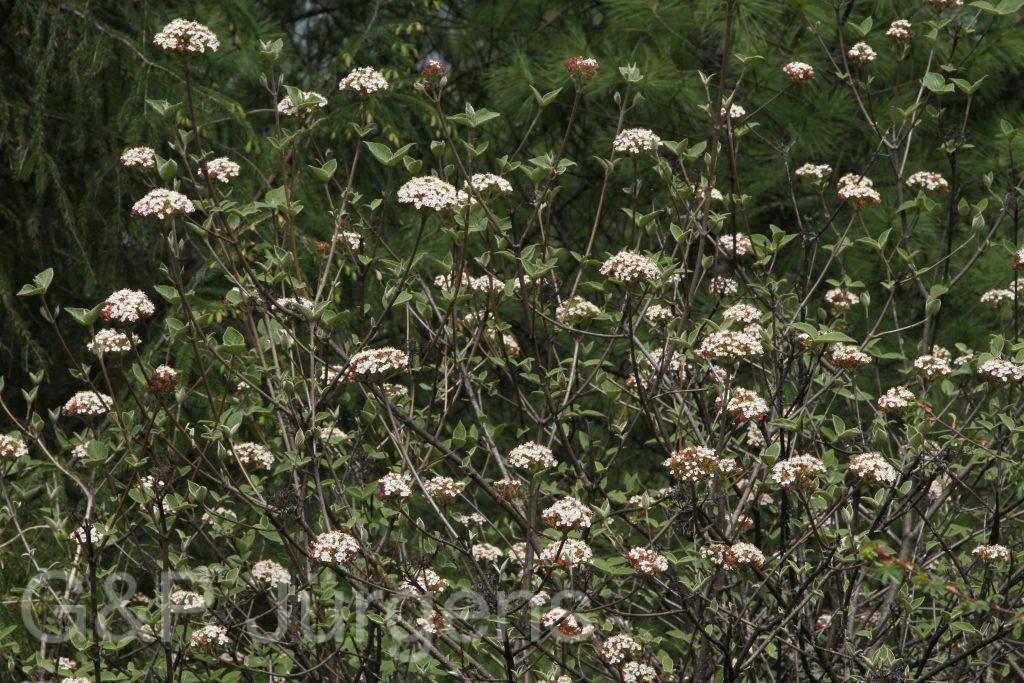
Viburnum cotinifolium is a Himalayan and Central Asian shrub distributed from Afghanistan and Pakistan eastward through Kashmir and the Indian Himalaya, Nepal and Bhutan to western and southwestern China; GBIF records 714 occurrences, principally from Pakistan, Nepal, India, China and Bhutan. It inhabits open temperate forest, scrub, forest margins, ravines and dry rocky slopes, mostly between about 1500 and 3500 m. The cited records from Chele-La in Bhutan at 3100 and 3400 m in May and from Paro at 1950 m in April illustrate its broad elevational range and its spring flowering, when the white-pink corymbs open as the new foliage flushes in the western Bhutanese borderlands.

It is a deciduous shrub with stellate-tomentose young branchlets and opposite, broadly ovate to orbicular leaves that recall those of Cotinus (whence the epithet), the blades entire to obscurely toothed, three- to five-veined at the base and densely grey stellate-pubescent beneath. The flowers are small, white tinged pink, all fertile and aggregated into dense, rounded, peduncled corymbose cymes; each has a short campanulate corolla with five spreading lobes. The fruit is an ovoid, somewhat compressed drupe ripening from red to glossy black, containing a single flattened, grooved stone, and is edible.

The species belongs to Viburnum, transferred with the genus from the traditional Caprifoliaceae to the Adoxaceae on molecular evidence. Its showy fertile corymbs attract diverse insect pollinators, while the colourful drupes are dispersed by birds; the fruits are also gathered locally for food. Widespread, hardy and ornamental, it is cultivated in temperate gardens and is of least conservation concern throughout its extensive range.

Author: D. Don · Sources: POWO (Kew), GBIF, Flora of China Vol. 19, Flora of Bhutan Vol. 2, Flora of Pakistan, A Monograph of the Genus Viburnum (Kern / Hara studies)

Buch.-Ham. ex D. Don

Bhutan2012 525
Bhutan Wangdi 2400m, September

Description

Viburnum cylindricum is a widespread evergreen or semi-evergreen shrub to small tree of the Sino-Himalayan and Indochinese region, exceptionally well documented with over 5700 GBIF occurrences spanning China, Nepal, India, Thailand, Myanmar, Bhutan, Vietnam, Laos and beyond, together with numerous cultivated and introduced records in Europe, North America and elsewhere reflecting its horticultural use. It grows in open forests, thickets, forest margins and scrub on hill slopes, typically between 1000 and 3000 m. The plant photographed near Wangdi in Bhutan at about 2400 m in September occupies this mid-montane belt, flowering and fruiting in the post-monsoon period within the warm-temperate broad-leaved forest zone of the eastern Himalaya.

It is an erect, glabrous-twigged shrub or small tree reaching several metres, immediately recognisable by its leathery, glaucous leaves whose surface bears a waxy bloom that can be marked or written upon. The leaves are opposite, simple, elliptic to oblong, entire or obscurely toothed towards the apex, and often somewhat blue-grey beneath. The inflorescence is a large, flat-topped to slightly domed terminal compound cyme of small white to pinkish-white flowers, each with a five-lobed campanulate to tubular corolla and long-exserted stamens that give the open umbel a delicate, brush-like appearance. The fruit is a small ovoid to ellipsoid drupe ripening from red to blue-black, containing a single compressed stone and dispersed by birds.

Viburnum is now placed in Adoxaceae following molecular phylogenetic revision of the old Caprifoliaceae, and V. cylindricum belongs to section Megalotinus, a predominantly tropical to subtropical Asian assemblage. The waxy, exserted-stamened flowers and bird-dispersed drupes are typical of the section. The species is locally used in traditional medicine, and the leaf wax has been put to minor practical uses. Owing to its very broad geographic and altitudinal range and tolerance of disturbed habitat it is of no conservation concern, ranking among the most frequently encountered viburnums of the eastern Himalaya and southwestern China.

Author: Buch.-Ham. ex D. Don · Sources: POWO (Kew), GBIF, Flora of China Vol. 19, Flora of Bhutan Vol. 2, Flora of Nepal, Kern Revision of Viburnum sect. Megalotinus

Wall. ex. DC.

Sikkim2004 111 G188
India West-Bengal, Utaray 2000m April
Sikkim 2006 353 ergebnis
India West-Bengal, Tamrong 2700m, May

Description

Viburnum erubescens Wall. ex DC. is a deciduous to semi-evergreen shrub of the Adoxaceae, widespread across the Himalaya and into East and Southeast Asia. GBIF data (over 2,800 occurrences) record it from China, Nepal, India, Bhutan, Myanmar, Taiwan, and beyond, indicating a broad Sino-Himalayan range. It was photographed in West Bengal at Utaray (2,000 m, April) and Tamrong (2,700 m, May), typical of its occurrence in temperate broad-leaved and mixed forests, forest margins, and shrubberies between roughly 1,500 and 3,000 m, where it flowers in spring as the new foliage expands.

The plant forms a shrub to small tree with opposite, elliptic to ovate-lanceolate leaves that are finely serrate, acuminate, and sparsely hairy on the veins beneath. The flowers are borne in pendulous, paniculate cymes; the corolla is tubular with five spreading lobes, white flushed with pink (the epithet "erubescens" meaning blushing), and sweetly fragrant. The fruit is a small ovoid drupe that ripens from red to glossy black, containing a single compressed stone, and is readily taken by birds.

Viburnum, long placed in Caprifoliaceae, is now referred to Adoxaceae on molecular grounds. Viburnum erubescens is a variable species comprising several recognised varieties across its range, and its pendulous, tubular-flowered inflorescences distinguish it from most co-occurring Himalayan congeners. Widespread, adaptable, and locally common, it is of no conservation concern and is valued horticulturally as an ornamental flowering shrub.

Author: Wall. ex. DC. · Sources: POWO (Kew), Flora of China Vol. 19, Flora of Bhutan Vol. 2, GBIF, Kern: Revision of Asian Viburnum

Sm.

Bhutan2014 109
Bhutan Trashigang 1550m, May

Description

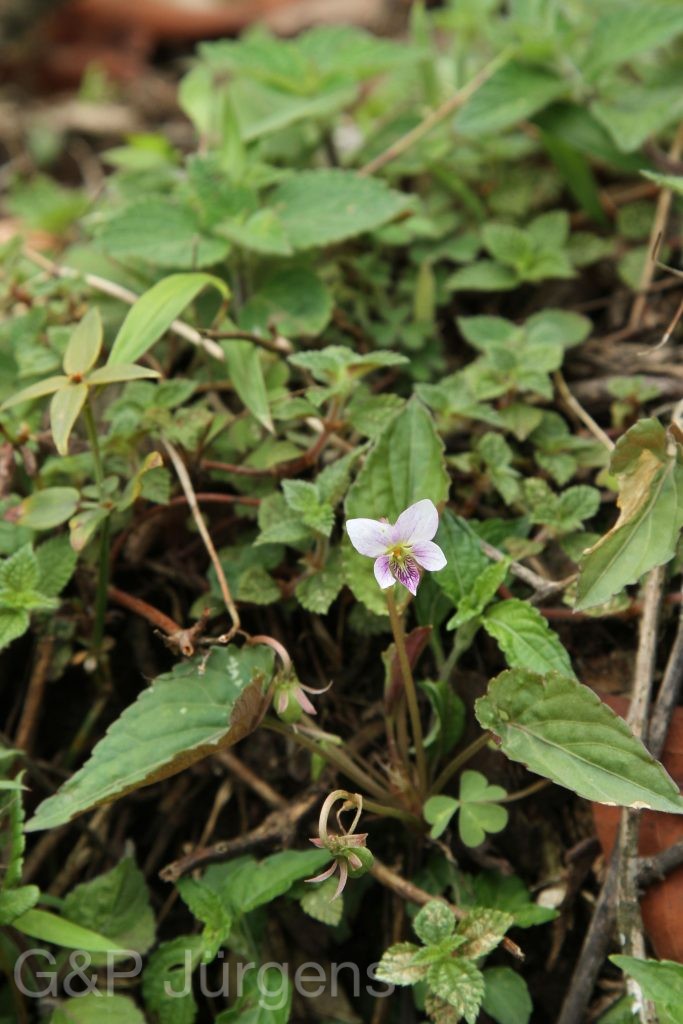
Viola betonicifolia is a widespread, polymorphic violet ranging across South, East and Southeast Asia to Australasia, documented by GBIF in over 16,600 occurrences spanning Australia, New Zealand, Japan, China, Taiwan, Korea, the Philippines, India, Nepal, Pakistan, Sri Lanka, Myanmar, Thailand, Vietnam, Indonesia and beyond. It grows in open grassland, meadows, grassy slopes, forest margins, roadsides and disturbed ground from low elevations to over 3000 m, tolerating a broad range of subtropical to temperate conditions. The illustrated plant from Trashigang in eastern Bhutan at about 1550 m, flowering in May, represents a low-montane subtropical population at the warm end of this exceptionally wide ecological amplitude.

It is an acaulescent perennial herb forming a basal rosette from a short, stout rhizome. The leaves are erect and long-petioled, the blade narrowly triangular-lanceolate to hastate or oblong with a truncate to subcordate base and a crenate to entire margin, recalling those of Betonica (whence the epithet 'betony-leaved'); the stipules are adnate to the petiole and fimbriate. Solitary flowers are borne on slender bracteolate peduncles; the zygomorphic corolla of five unequal petals is violet to purple (rarely white), the lowest spurred and the laterals usually bearded. Summer cleistogamous flowers supplement the spring chasmogamous ones, and the fruit is an elastically dehiscent three-valved capsule.

A member of Viola section Viola (the stemless, spring-flowering rosette violets), V. betonicifolia is a notoriously variable species treated by some authors as a complex of regional forms. Its tolerance of disturbance, dual chasmogamous-cleistogamous breeding system and effective seed dispersal underpin its broad distribution, and it is of no conservation concern.

Author: Sm. · Sources: POWO (Kew), GBIF, Flora of China, Flora of Bhutan, Flora of British India, W. Becker Violae Asiaticae