
D. Don
Description
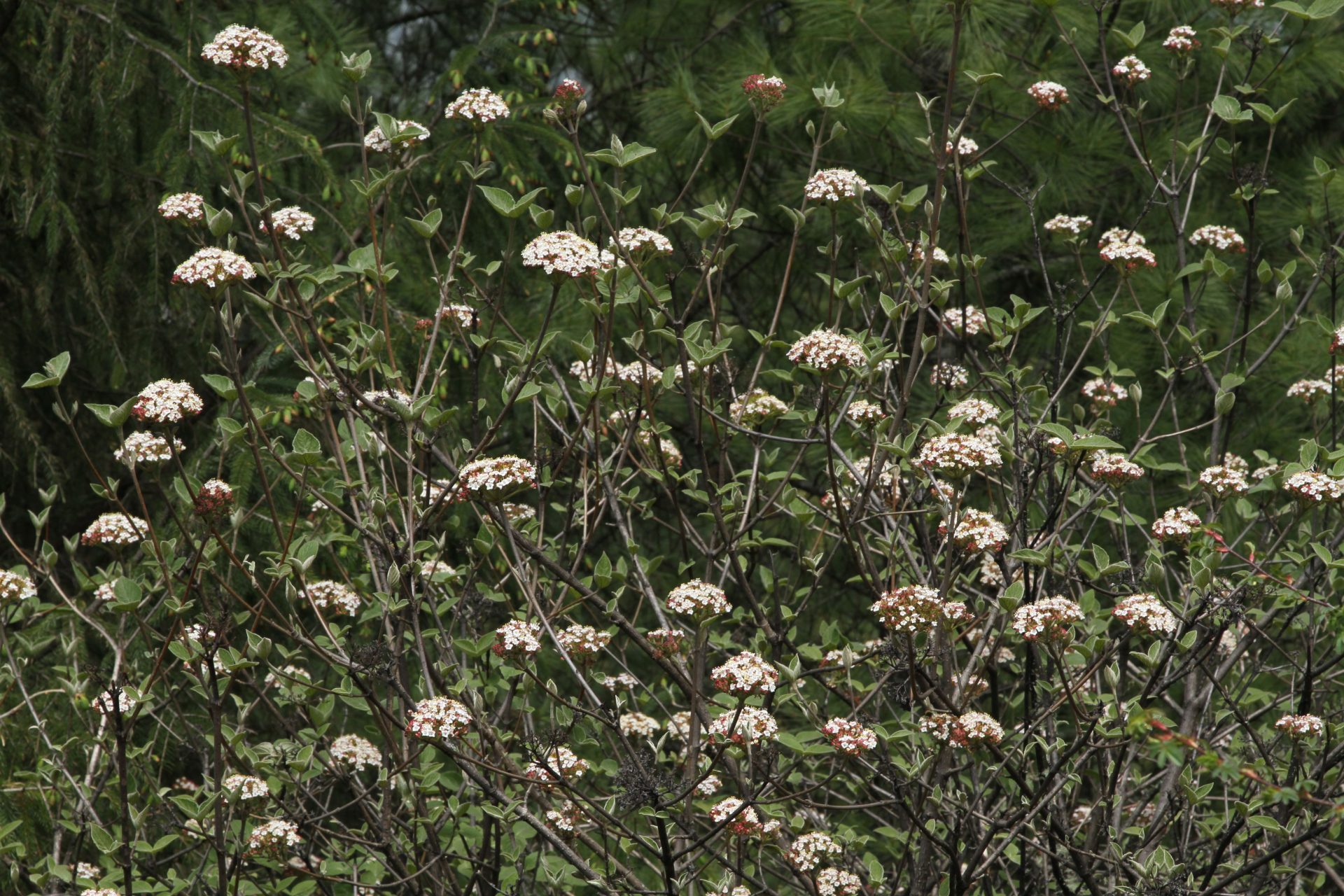
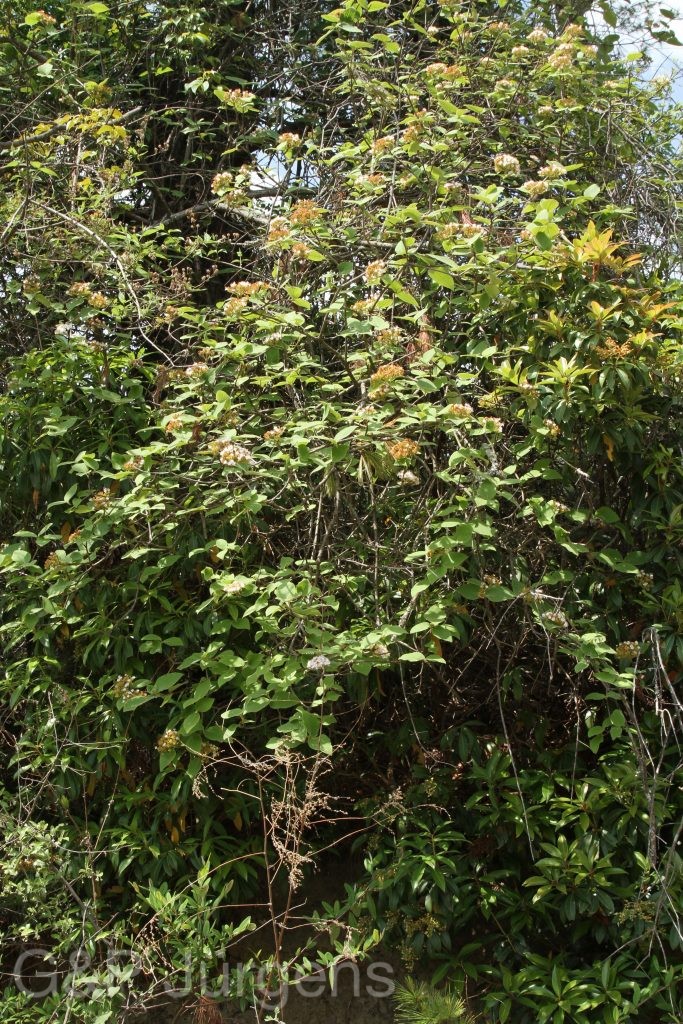
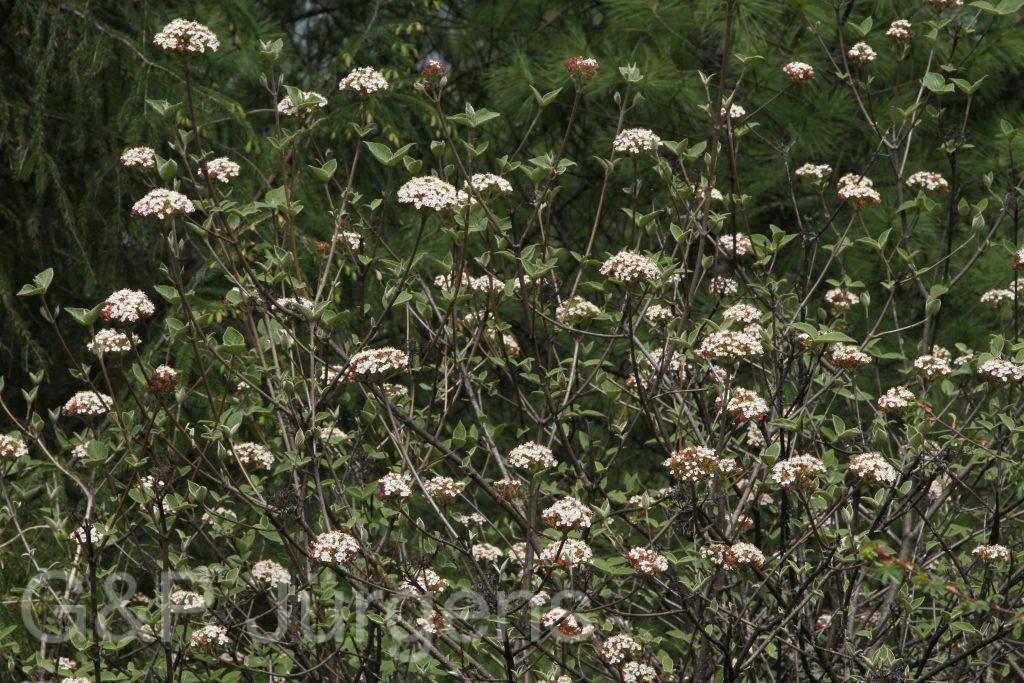
Viburnum cotinifolium is a Himalayan and Central Asian shrub distributed from Afghanistan and Pakistan eastward through Kashmir and the Indian Himalaya, Nepal and Bhutan to western and southwestern China; GBIF records 714 occurrences, principally from Pakistan, Nepal, India, China and Bhutan. It inhabits open temperate forest, scrub, forest margins, ravines and dry rocky slopes, mostly between about 1500 and 3500 m. The cited records from Chele-La in Bhutan at 3100 and 3400 m in May and from Paro at 1950 m in April illustrate its broad elevational range and its spring flowering, when the white-pink corymbs open as the new foliage flushes in the western Bhutanese borderlands.
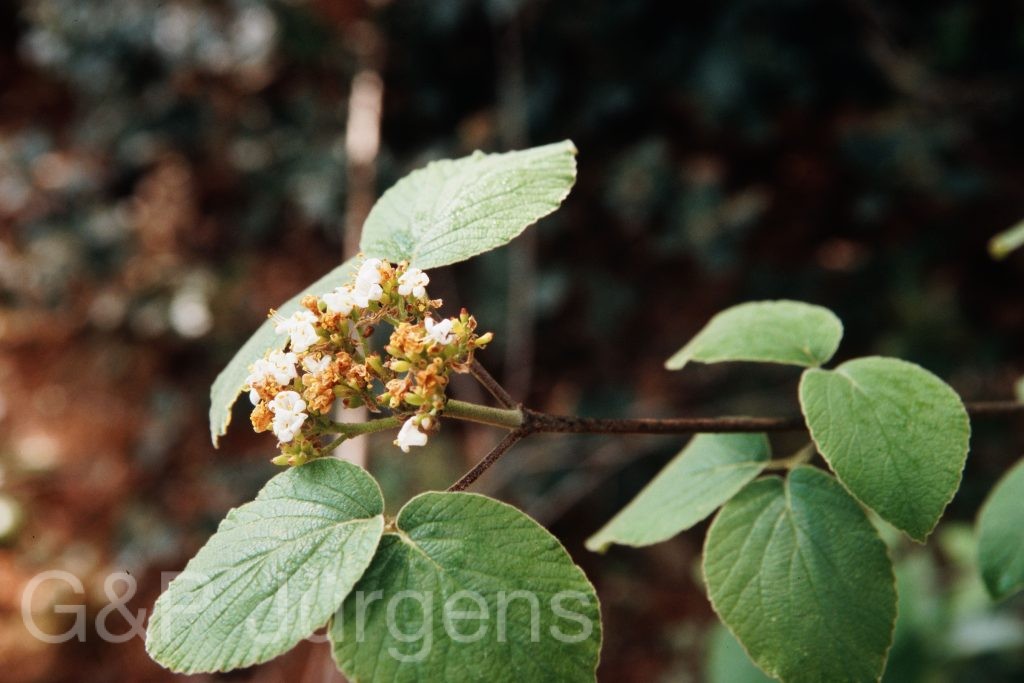
It is a deciduous shrub with stellate-tomentose young branchlets and opposite, broadly ovate to orbicular leaves that recall those of Cotinus (whence the epithet), the blades entire to obscurely toothed, three- to five-veined at the base and densely grey stellate-pubescent beneath. The flowers are small, white tinged pink, all fertile and aggregated into dense, rounded, peduncled corymbose cymes; each has a short campanulate corolla with five spreading lobes. The fruit is an ovoid, somewhat compressed drupe ripening from red to glossy black, containing a single flattened, grooved stone, and is edible.
The species belongs to Viburnum, transferred with the genus from the traditional Caprifoliaceae to the Adoxaceae on molecular evidence. Its showy fertile corymbs attract diverse insect pollinators, while the colourful drupes are dispersed by birds; the fruits are also gathered locally for food. Widespread, hardy and ornamental, it is cultivated in temperate gardens and is of least conservation concern throughout its extensive range.
Author: D. Don · Sources: POWO (Kew), GBIF, Flora of China Vol. 19, Flora of Bhutan Vol. 2, Flora of Pakistan, A Monograph of the Genus Viburnum (Kern / Hara studies)