
Wall. ex. DC.
Description
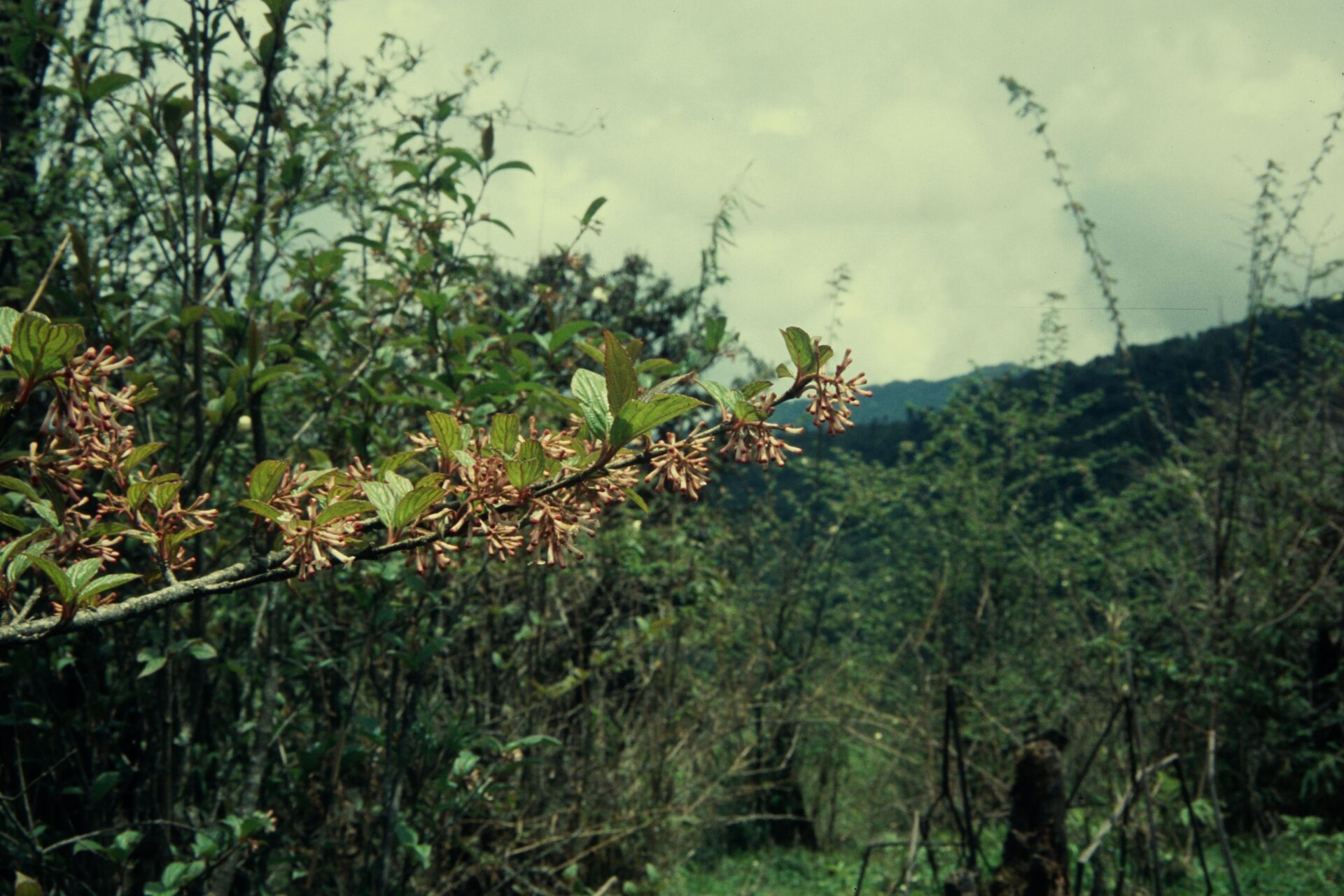
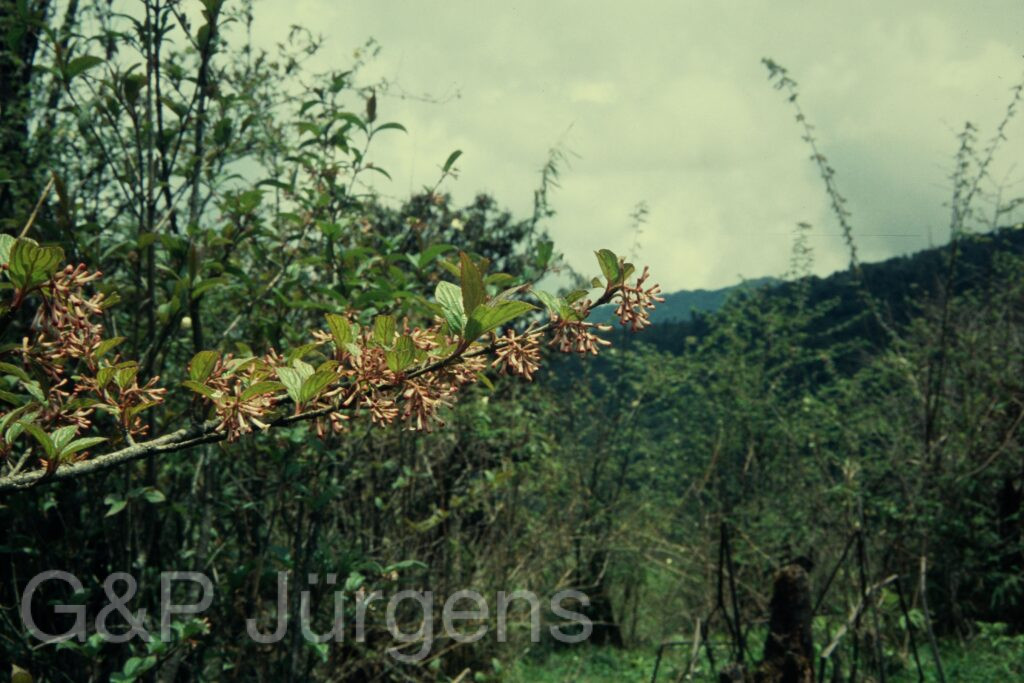
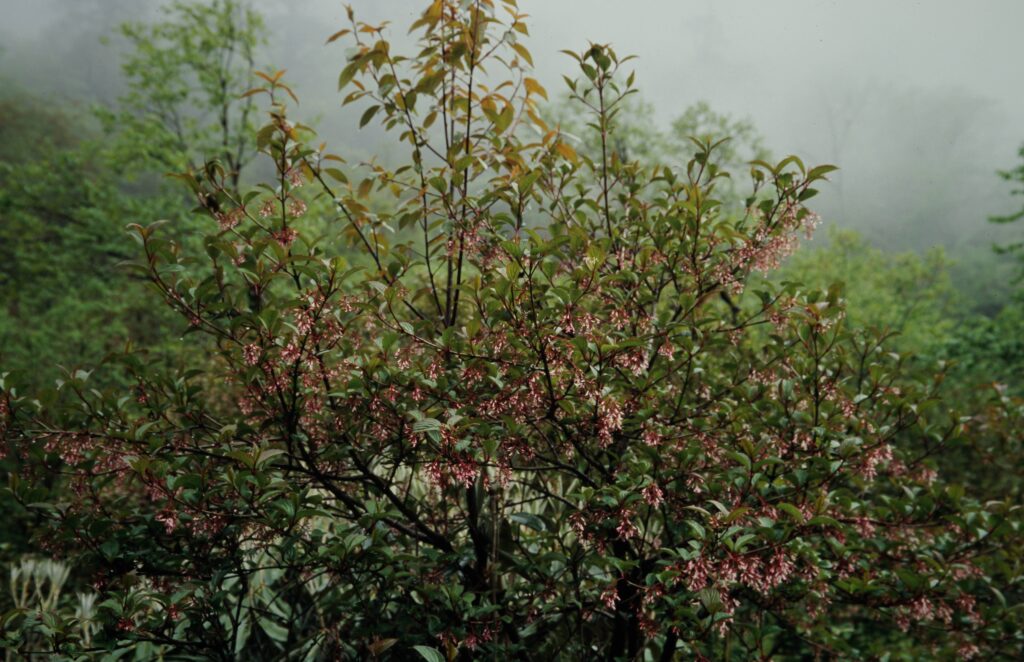
Viburnum erubescens Wall. ex DC. is a deciduous to semi-evergreen shrub of the Adoxaceae, widespread across the Himalaya and into East and Southeast Asia. GBIF data (over 2,800 occurrences) record it from China, Nepal, India, Bhutan, Myanmar, Taiwan, and beyond, indicating a broad Sino-Himalayan range. It was photographed in West Bengal at Utaray (2,000 m, April) and Tamrong (2,700 m, May), typical of its occurrence in temperate broad-leaved and mixed forests, forest margins, and shrubberies between roughly 1,500 and 3,000 m, where it flowers in spring as the new foliage expands.
The plant forms a shrub to small tree with opposite, elliptic to ovate-lanceolate leaves that are finely serrate, acuminate, and sparsely hairy on the veins beneath. The flowers are borne in pendulous, paniculate cymes; the corolla is tubular with five spreading lobes, white flushed with pink (the epithet "erubescens" meaning blushing), and sweetly fragrant. The fruit is a small ovoid drupe that ripens from red to glossy black, containing a single compressed stone, and is readily taken by birds.
Viburnum, long placed in Caprifoliaceae, is now referred to Adoxaceae on molecular grounds. Viburnum erubescens is a variable species comprising several recognised varieties across its range, and its pendulous, tubular-flowered inflorescences distinguish it from most co-occurring Himalayan congeners. Widespread, adaptable, and locally common, it is of no conservation concern and is valued horticulturally as an ornamental flowering shrub.
Author: Wall. ex. DC. · Sources: POWO (Kew), Flora of China Vol. 19, Flora of Bhutan Vol. 2, GBIF, Kern: Revision of Asian Viburnum