
Wall. ex DC.
Description
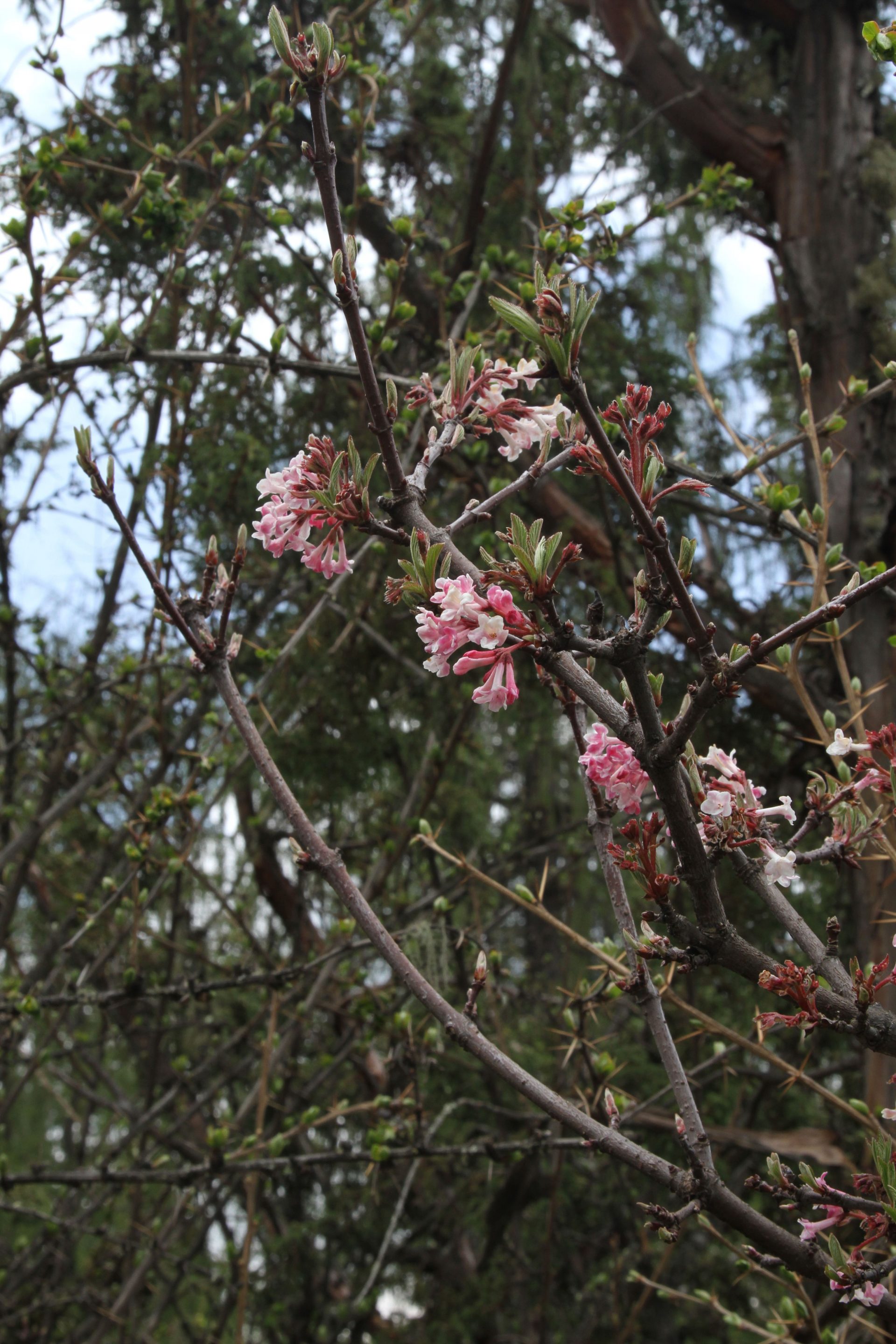
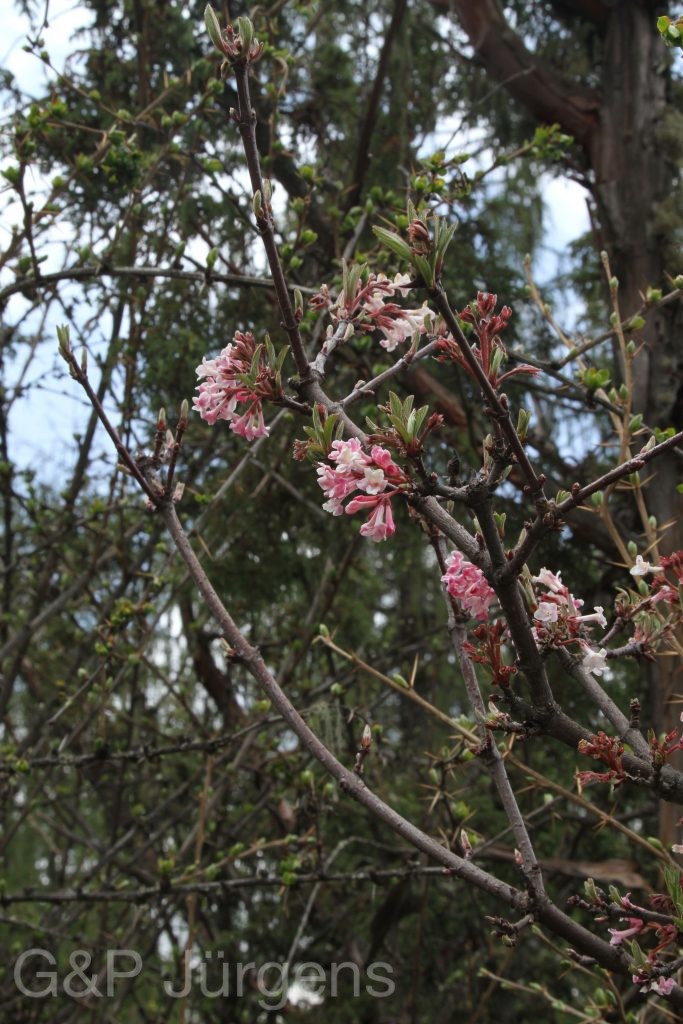
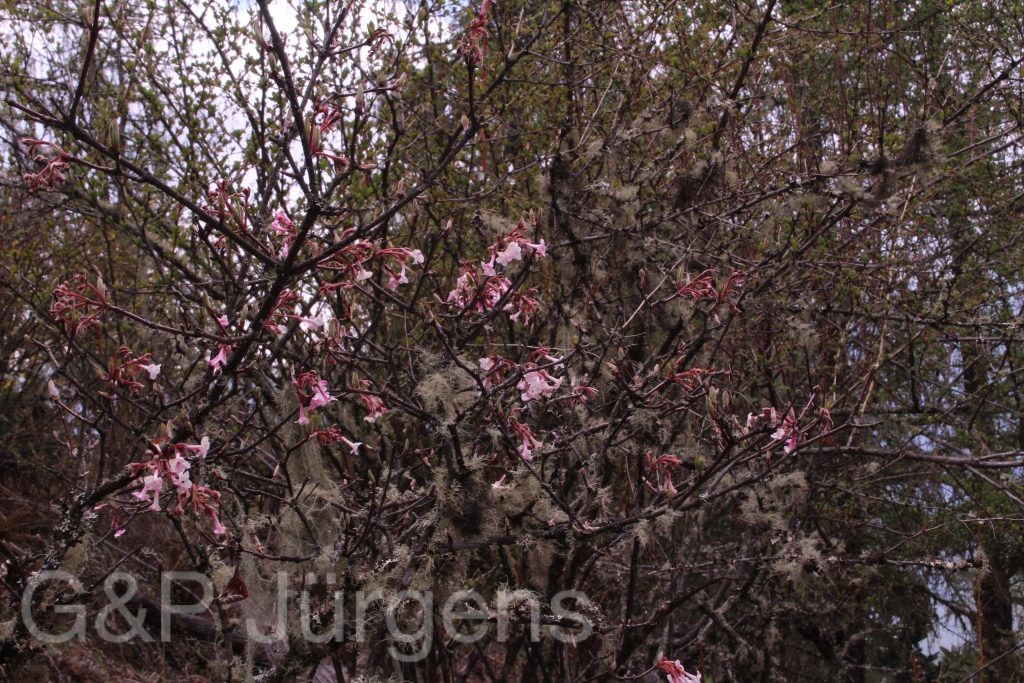
Viburnum grandiflorum is a Himalayan shrub distributed from Pakistan and north-west India through Nepal, Bhutan and adjacent south-western China; records from Britain, Ireland, Belgium, Canada and Korea reflect its cultivation as an ornamental rather than a natural range. It occurs in the upper temperate to subalpine zone, in forest margins, open scrub, Rhododendron thickets and rocky slopes, generally between about 2,400 and 3,900 m. The shrub photographed at the Chele La in western Bhutan at 3,500 m in May illustrates its spring flowering high in the inner ranges, the inflorescences often expanding before the leaves are fully out.
It is a deciduous shrub of moderate stature with stiff, spreading branches. The leaves are opposite, elliptic to oblong-ovate, with a serrate to crenate-serrate margin, acuminate apex, prominent impressed venation above and pubescence along the veins beneath, often colouring richly in autumn. The flowers are borne in dense, rounded, terminal corymbose cymes; the corolla is tubular-funnelform with five spreading lobes, comparatively large for the genus (whence "grandiflorum"), pink to rose in bud and opening paler, fragrant. The fruit is an ovoid drupe ripening from red to blue-black, containing a single compressed stone.
Viburnum, long placed in Caprifoliaceae, is now referred to Adoxaceae on molecular grounds, allied to Sambucus and Adoxa. The species is closely related to V. nervosum and other Himalayan members of section Pseudotinus, with which it can be confused. Hardy and ornamental, it is established in temperate horticulture and has contributed to garden hybrids; in the wild it remains widespread and is not considered threatened.
Author: Wall. ex DC. · Sources: POWO (Kew), Flora of China Vol. 19, Flora of Bhutan Vol. 2, GBIF, Kern: Revision of Viburnum (Asia)