Tag:

Alpine (>3500 m)

Abies densa

by GP Jürgens

Griff.

Bhutan2015 402
Bhutan Tumching-La 4000m, October
Bhutan2014 420 ergebnis
Bhutan Jakar 2400m, May
Sikkim 2006 82 ergebnis
Sikkim, West-Bengal Kalipokhri 3100m, May

Description

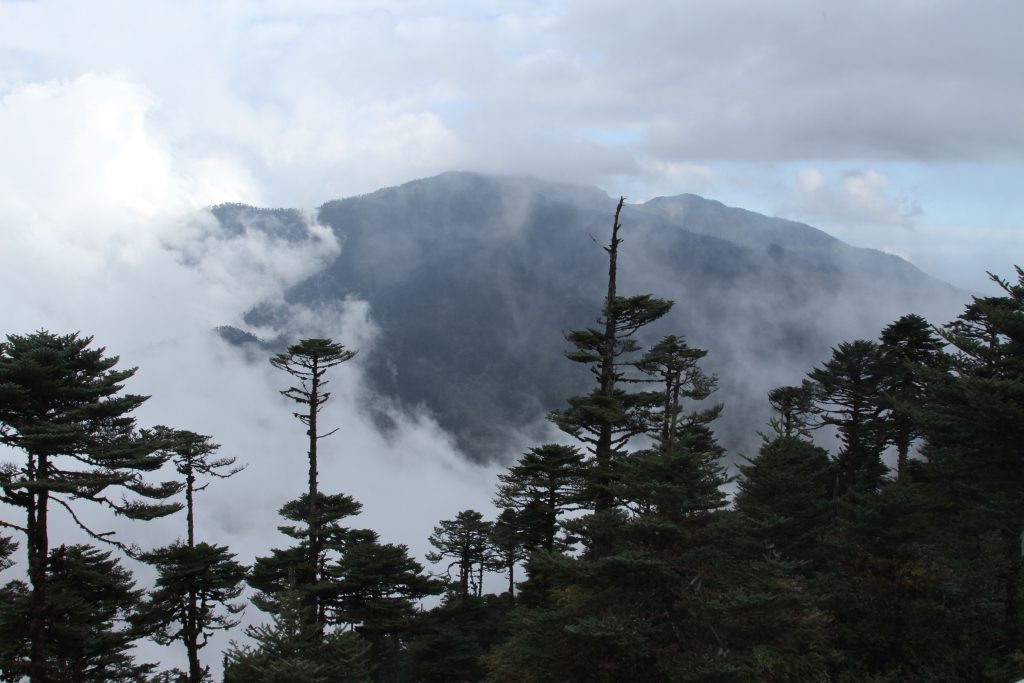
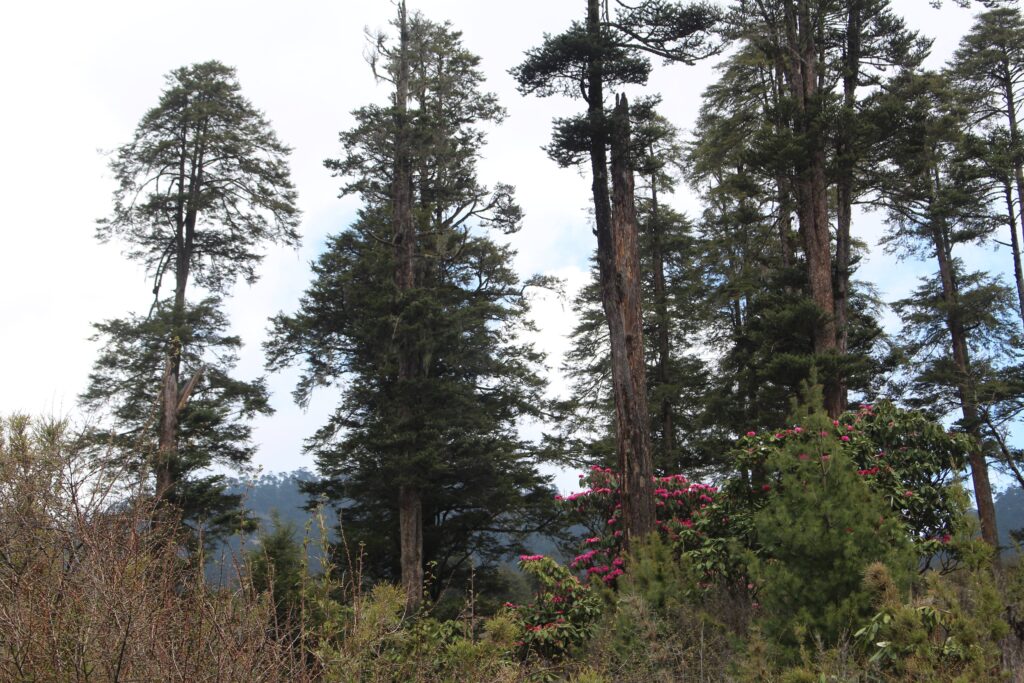
Abies densa, the Bhutan or eastern Himalayan fir, is a large evergreen conifer of the eastern Himalaya, ranging through Bhutan, Sikkim and adjacent India, eastern Nepal, southern China and northern Myanmar (gbif_countries: BT, IN, CN, NP, MM, CA, ZZ, BE), with about 192 GBIF occurrences. It is the dominant tree of the upper subalpine forest belt, forming dense stands often mixed with Rhododendron, birch and juniper and grading into the treeline krummholz. The illustrated records span Jakar in Bhutan at about 2400 m up to Tumching-La near 4000 m and Kalipokhri in the Sikkim–West Bengal borderland at about 3100 m, documenting its occupation of the cool, humid, high-montane to subalpine zone.

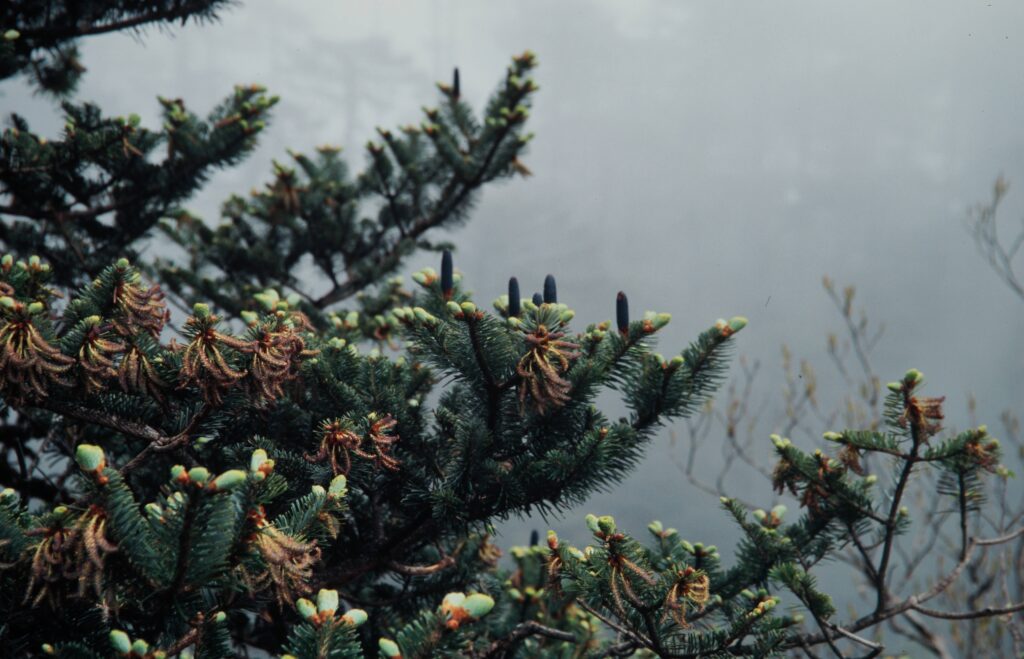
The tree reaches considerable height with a straight bole and conical crown, bearing horizontally spreading branches. The needle-like leaves are arranged spirally but pectinately spread, linear and flattened, dark green and glossy above with two whitish stomatal bands beneath, and notched or rounded at the apex. The pollen cones are small and lateral; the seed cones are erect, cylindrical, dark violet to blue-black when young, and, as in all firs, disintegrate on the tree at maturity to release winged seeds, leaving the persistent central axis standing.

Closely allied to Abies spectabilis of the western Himalaya, A. densa is sometimes treated as its eastern vicariant, the two replacing one another along the range. It is an ecologically important timber and watershed species and a keystone of subalpine forest. Though still locally abundant, its treeline populations are sensitive to climate shifts and grazing, and it is assessed as of Least Concern overall while warranting monitoring at range margins.

Author: Griff. · Sources: POWO (Kew), GBIF, Flora of Bhutan, Flora of China, Farjon's A Handbook of the World's Conifers, IUCN Red List conifer assessments
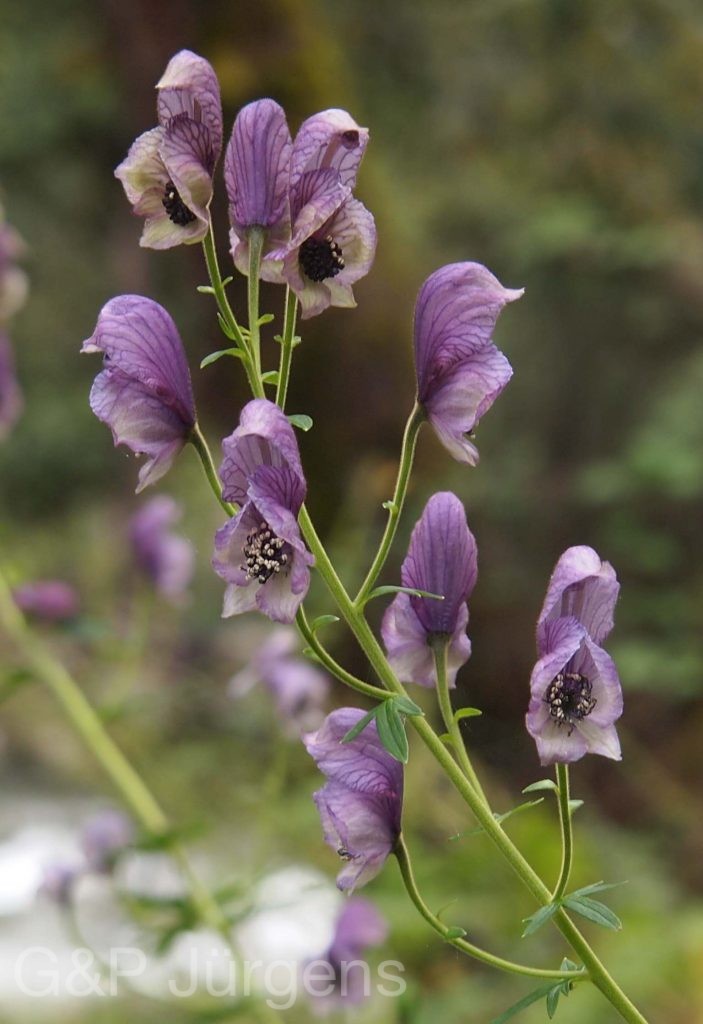
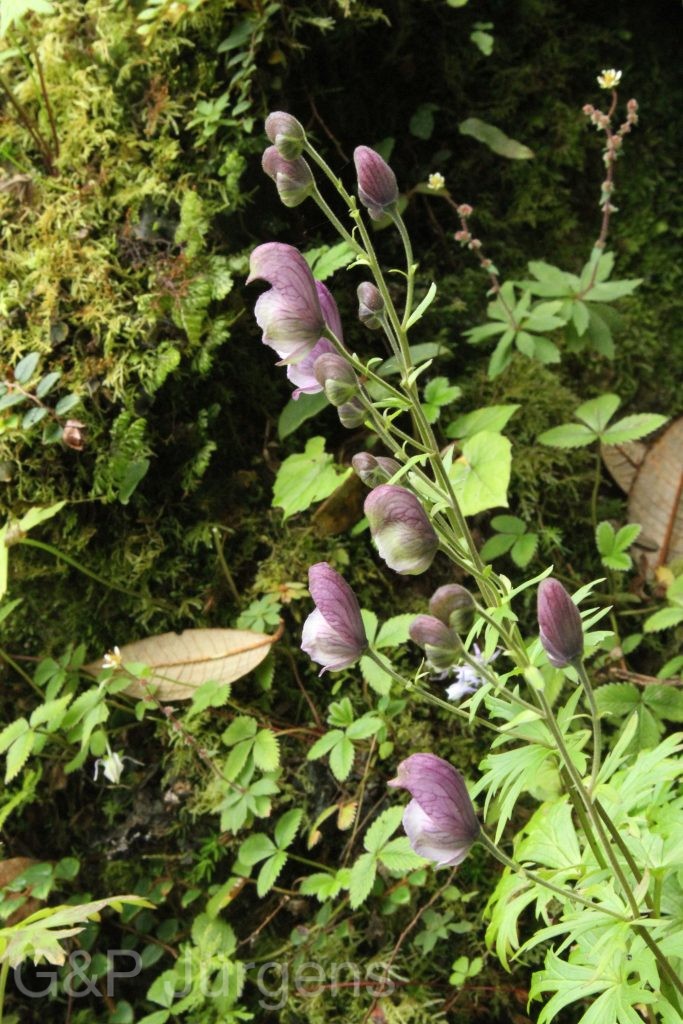
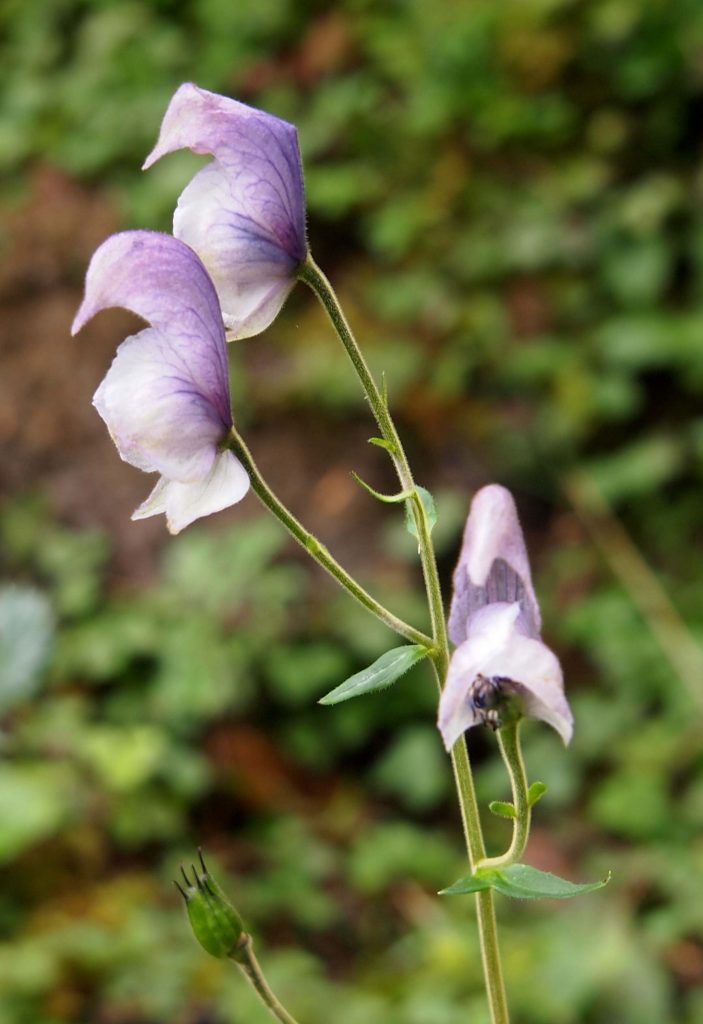
Stapf

Bhutan2012 177
Bhutan Haar-Valley, 3500m September
Bhutan2012 327
Bhutan Dochu-La, 3200m September

Description

Aconitum heterophylloides is an eastern Himalayan monkshood distributed across Nepal, India, Bhutan and adjacent China, a comparatively narrowly known species with around 68 GBIF occurrences. It grows in subalpine and alpine habitats, on open grassy slopes, scrub margins, forest clearings and damp meadows in the upper temperate to subalpine zone, flowering late in the season. The images document it in Bhutan in the Haar Valley at about 3500 m and at Dochu-La near 3200 m, both in September, when its blue-purple hoods appear among the autumn meadow vegetation.

It is an erect perennial herb arising from paired tuberous roots, with a slender, often somewhat flexuous stem. The leaves are alternate, palmately divided into several lobes, the lower long-petiolate and the upper sessile, with the segments toothed. The inflorescence is a lax terminal raceme of zygomorphic flowers; the conspicuous perianth consists of petaloid sepals, the uppermost forming a tall, helmet- or hood-shaped galea that arches over the two concealed nectariferous petals. The flowers are violet-blue, and the fruit is a cluster of several many-seeded follicles.

Aconitum heterophylloides belongs to the large Sino-Himalayan radiation of the genus, which is taxonomically complex and includes many intergrading montane species; it is allied to the A. heterophyllum group. Like other monkshoods the plant contains diterpenoid alkaloids and is highly toxic, while the hooded flowers are adapted for buzz- and tongue-pollination by bumblebees foraging late in the alpine season. Several Himalayan Aconitum are heavily harvested for medicinal use, making range-restricted species potentially vulnerable to overcollection.

Author: Stapf · Sources: POWO (Kew), GBIF, Flora of China, Flora of Bhutan, Flora of Nepal, Tamura's treatment of Ranunculaceae

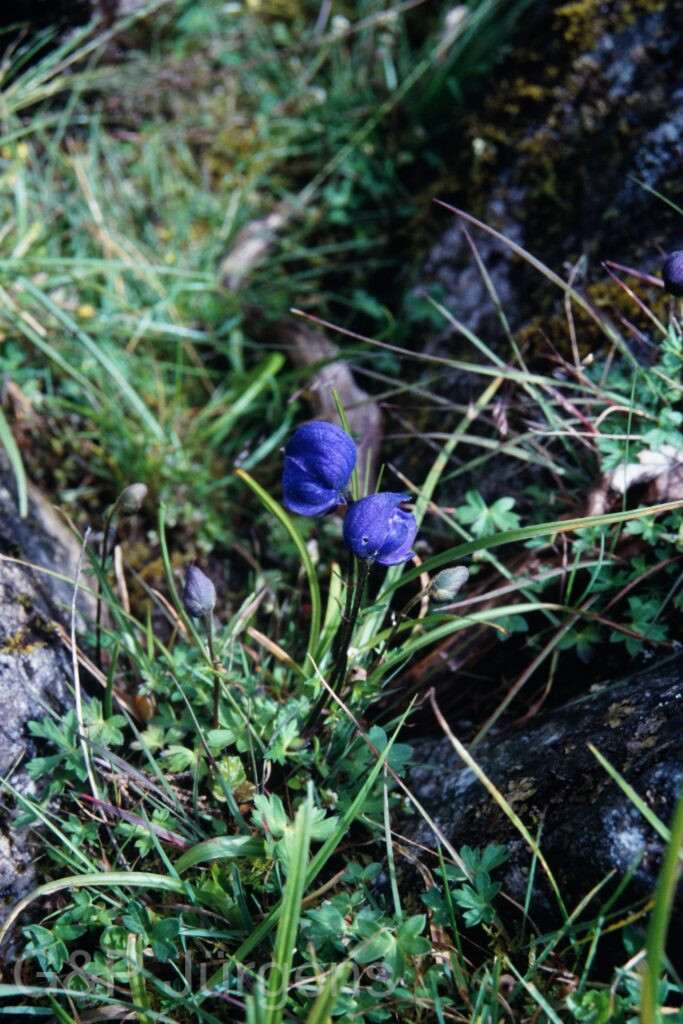
Stapf

Sikkim2003 249 P343
Sikkim Dzongri 4300m, August
Sikkim2003 251 G345
Sikkim Dzongri 4300m 08.2003
Sikkim2003 250 G344
Sikkim Dzongri 4200m, August

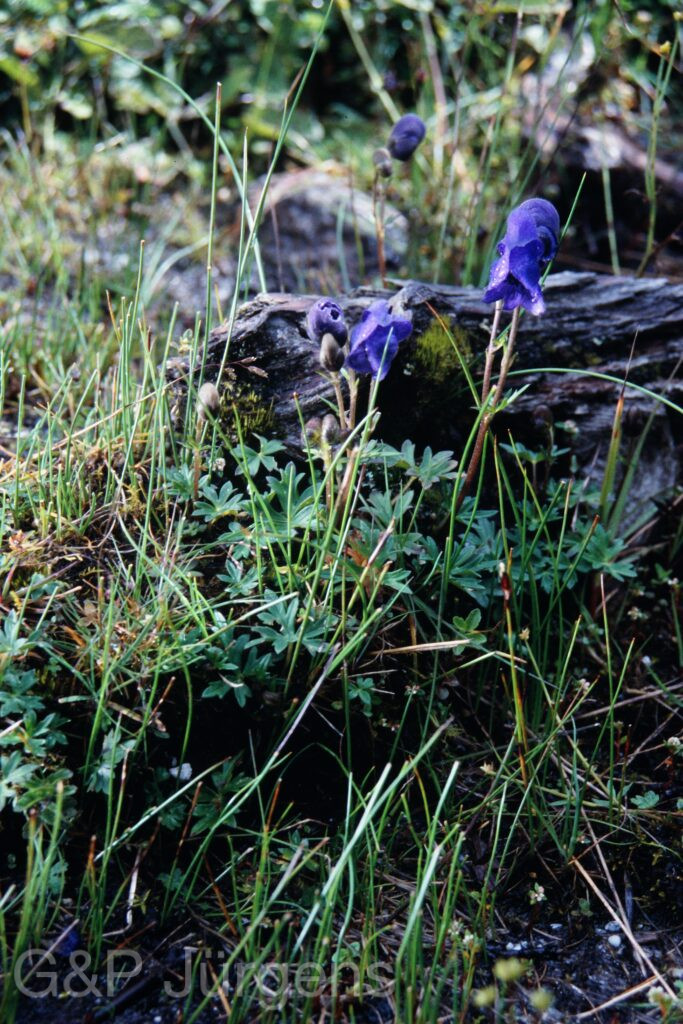
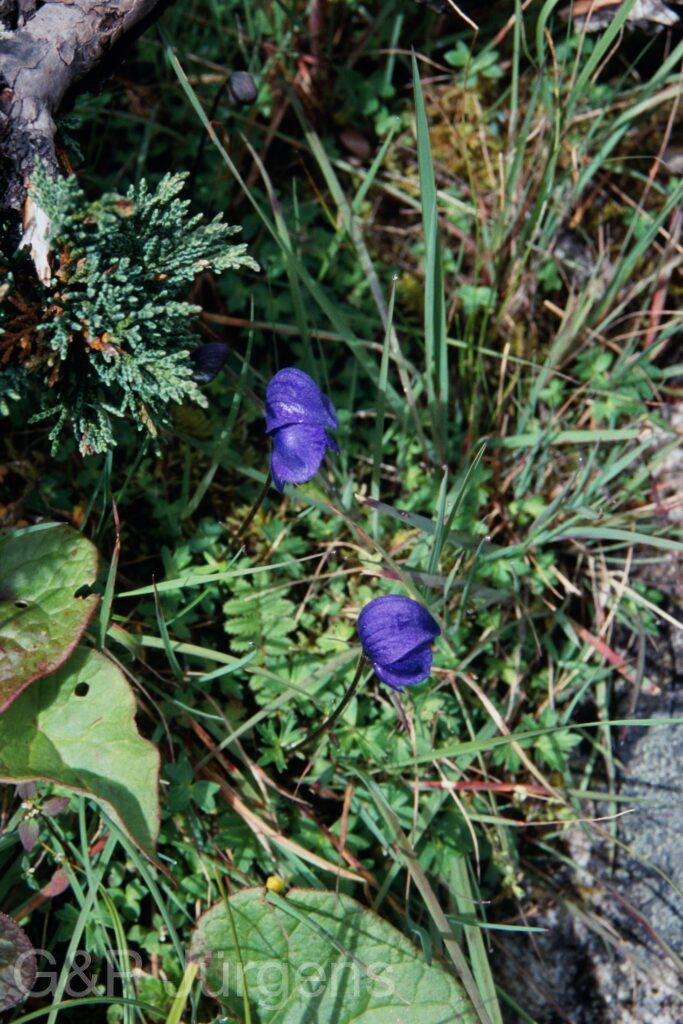
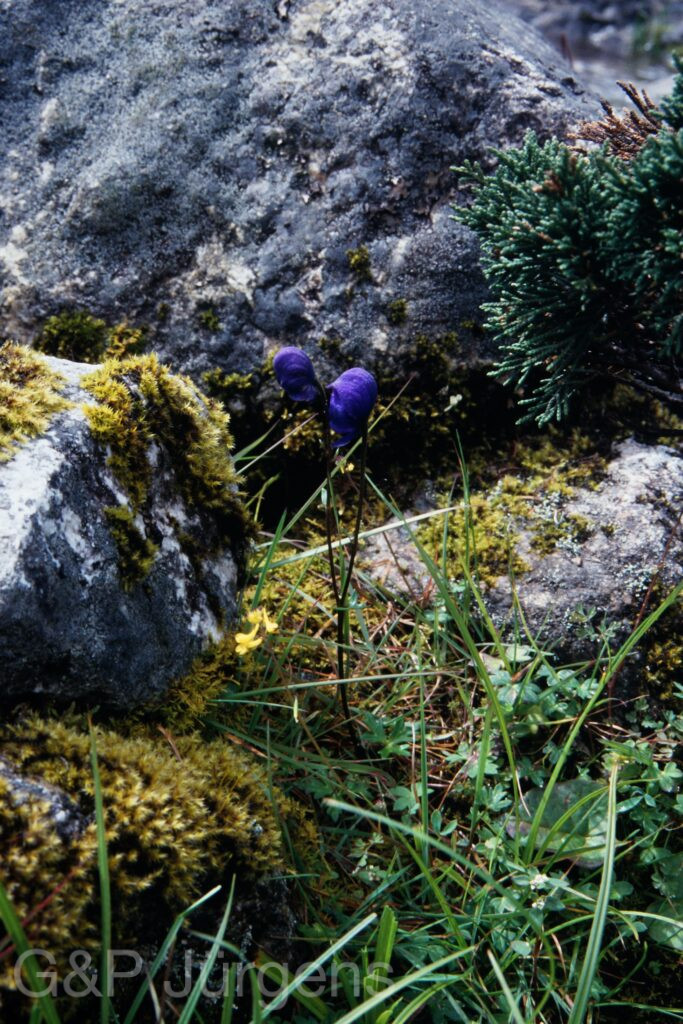
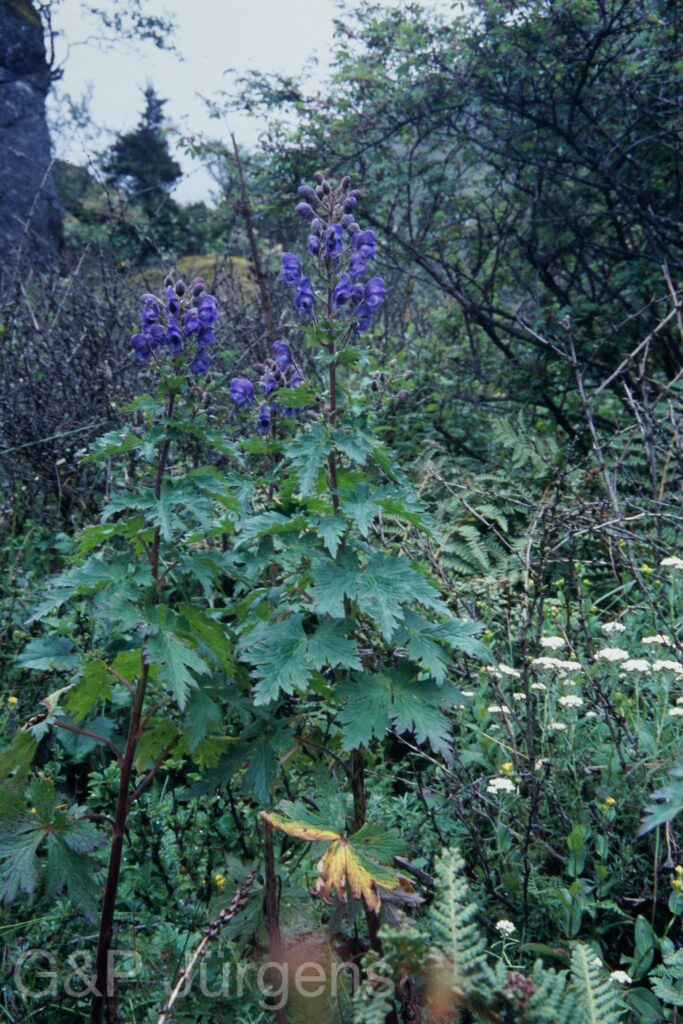
Description

Aconitum hookeri is an alpine perennial of the eastern Himalaya, recorded from Nepal, China and India (NP, CN, IN, with further records), with around 96 documented occurrences. It inhabits open alpine meadows, grassy slopes, stony pastures and the margins of dwarf scrub in the high alpine zone, generally between about 4000 and 4800 m. The collections cited were all made at Dzongri in Sikkim, at 4200 to 4300 m in August, an elevation and late-summer flowering season fully characteristic of the species, where it grows in herb-rich turf above the treeline among the rolling alpine pastures of the upper Rathong valley.

The plant is a low, erect to ascending perennial herb arising from a tuberous, paired rootstock. The leaves are deeply palmately divided into narrow, again-lobed segments, dark green and mostly basal or on the lower stem. The inflorescence is a few-flowered terminal raceme of large, showy, deep blue to violet flowers. As in all Aconitum the flowers are strongly zygomorphic: the uppermost of the five petaloid sepals is enlarged into a tall, helmet-shaped hood (the galea) arching over two long-clawed nectariferous petals concealed within, the remaining sepals spreading. The numerous stamens surround several free carpels that mature into a cluster of follicles releasing winged or angled seeds.

Aconitum (monkshood; subfamily Ranunculoideae of the Ranunculaceae) is a large genus of the northern temperate and alpine zones, richly represented in the Sino-Himalaya. The hooded flowers are specialised for pollination by long-tongued bumblebees, which alone can reach the nectaries within the galea. Like its congeners A. hookeri contains highly toxic diterpenoid alkaloids of the aconitine type, rendering the whole plant dangerously poisonous yet of interest in traditional medicine. Restricted to high alpine grassland, it is locally frequent and not presently of conservation concern.

Author: Stapf · Sources: POWO (Kew), GBIF, Flora of Bhutan, Flora of China, Aconitum monograph (Tamura/Rapaics, Ranunculaceae)

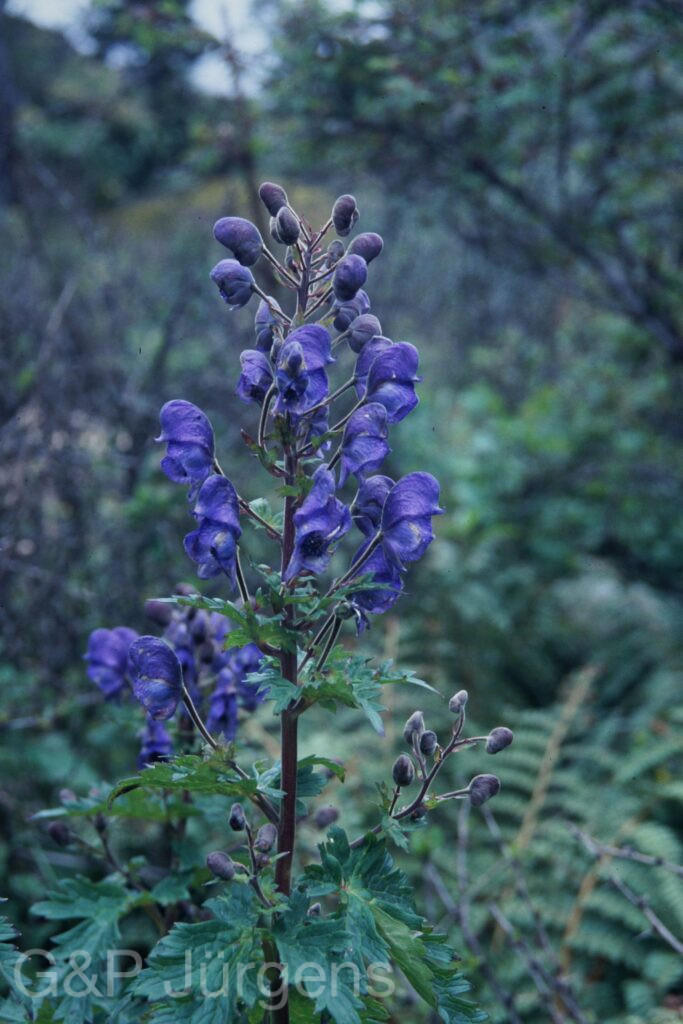
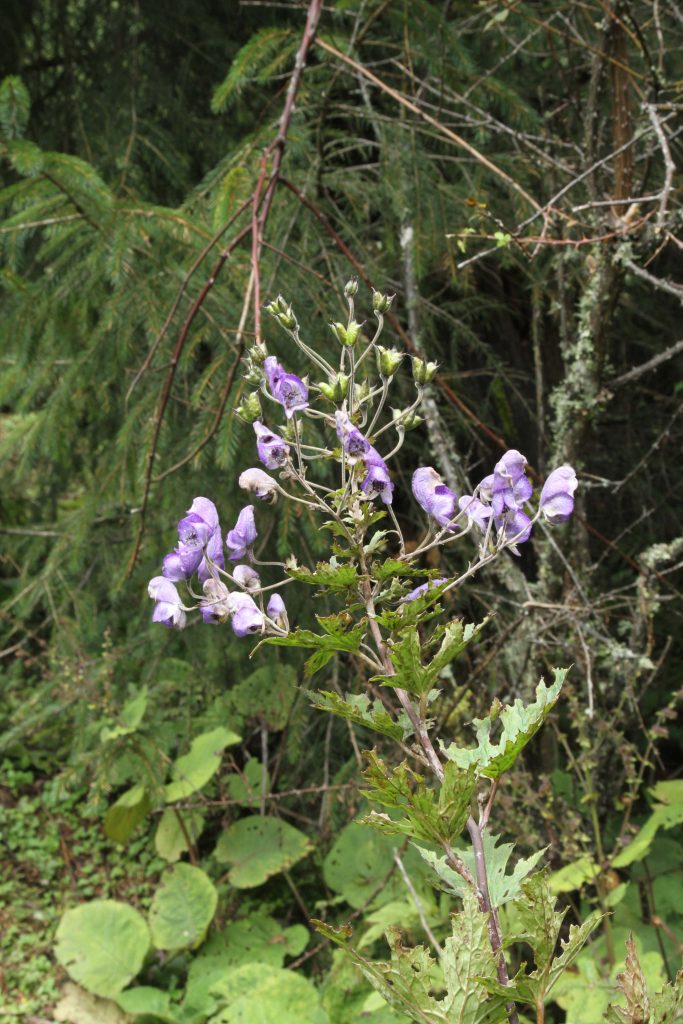
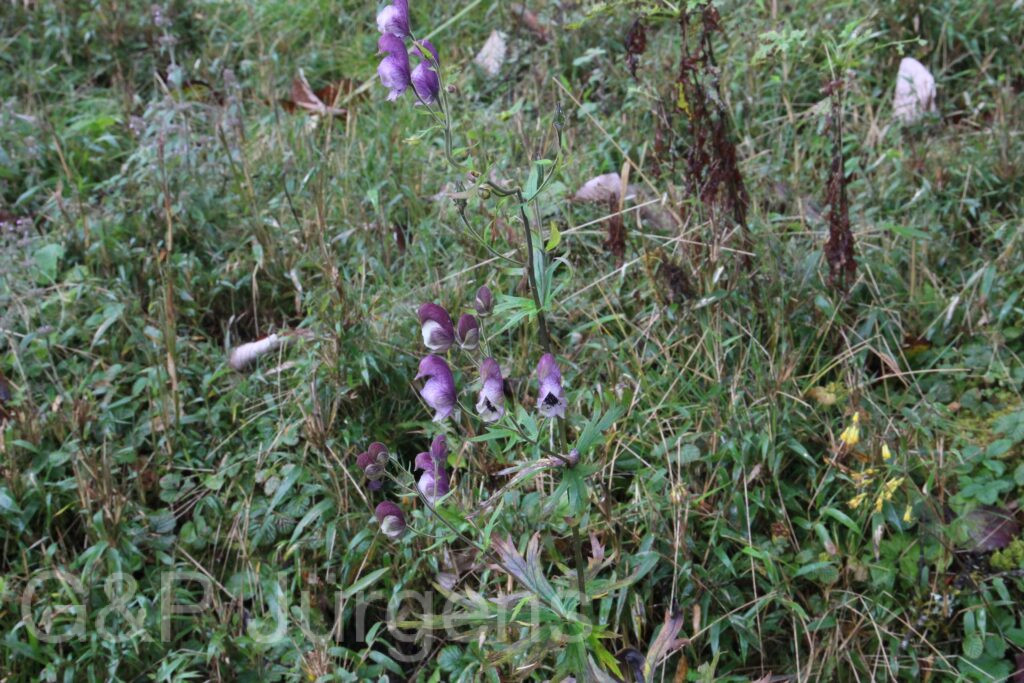
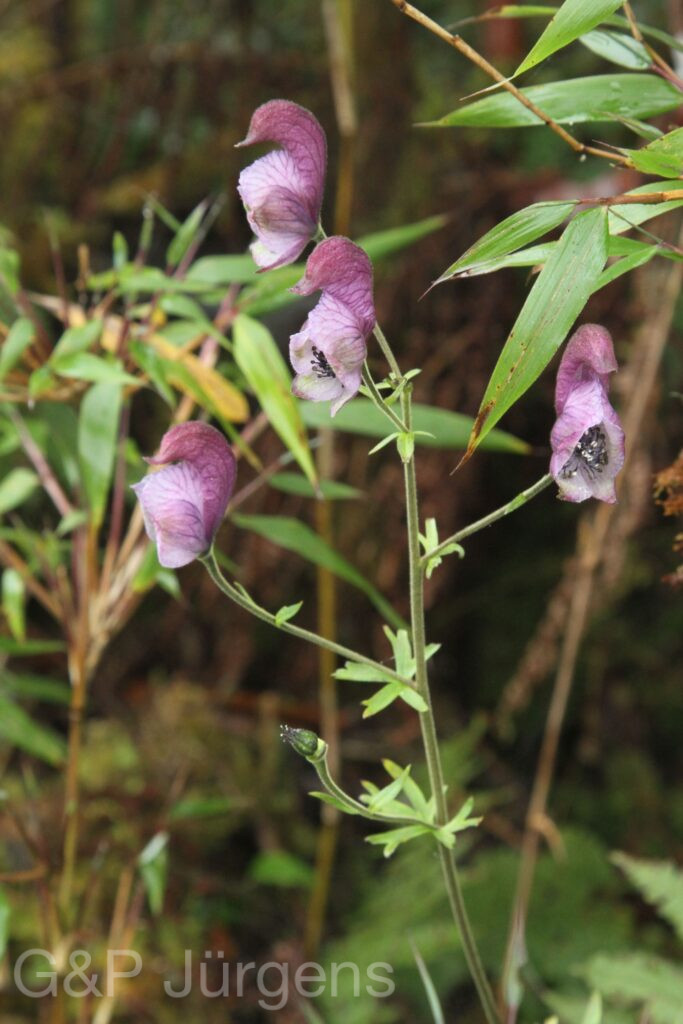
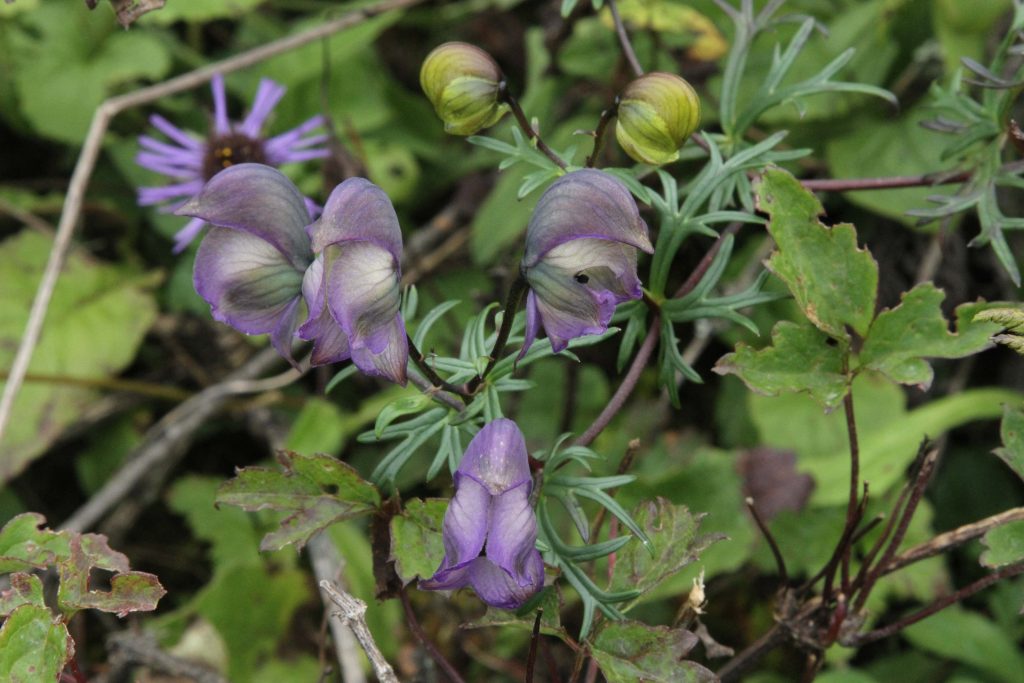
Griff.

Sikkim2003 440 P612
Sikkim Chopta Valley 3900m August
Sikkim2003 441 P613
Sikkim Chopta Valley 3900m August
Bhutan2012 39
Bhutan Shele-La, 3600m September
Bhutan2012 176
Bhutan Haar-Valley 3500m, September

Description

Aconitum lethale is an eastern Himalayan monkshood restricted to Nepal, India and Bhutan, with about 176 GBIF records concentrated in Sikkim and Bhutan. It is a plant of the upper subalpine and alpine zone, growing among tall-herb meadows, rhododendron and juniper scrub, and along moist, open slopes. The cited collections trace its habitat closely: the Chopta Valley in Sikkim at around 3900 m in August, and several Bhutanese sites including Shele-La at about 3600 m, the Haar Valley at 3500 m and Dochu-La near 3000 m, flowering from late summer into October. It favours cool, humid, well-drained mountain soils where the monsoon sustains lush herbaceous growth.

The plant is an erect perennial herb arising from tuberous roots, with a leafy stem bearing palmately divided, deeply lobed leaves whose segments are further incised. The inflorescence is a terminal raceme or panicle of the characteristic zygomorphic flowers, in which the upper sepal is enlarged into a tall, helmet-shaped or hooded galea concealing two long-clawed nectaries; the flowers are typically deep blue to violet. Numerous stamens surround several free carpels, which ripen into a cluster of dehiscent follicles releasing winged or angular seeds.

Described by Griffith, A. lethale is, as both its epithet and generic affinity warn, intensely poisonous, containing diterpenoid alkaloids of the aconitine type throughout the plant and especially in its tubers. Such alkaloids underlie the cautious medicinal use of Himalayan aconites in traditional pharmacopoeias. As a narrow-range endemic of the eastern Himalaya, it warrants attention to grazing pressure and habitat change, though it remains locally frequent within its restricted distribution.

Author: Griff. · Sources: POWO (Kew), GBIF, Flora of Bhutan, Annotated Checklist of the Flowering Plants of Nepal, Tamura's treatment of Aconitum

Tamura

Bhutan2012 288
Bhutan Shele-La, 4100m September

Description

Aconitum nakaoi is a high-alpine monkshood distributed across the eastern Himalaya and the south-eastern Tibetan plateau margin, recorded from Bhutan, China (Xizang and adjacent Yunnan), Nepal and northern India. Its modest documentary record of around 21 georeferenced occurrences reflects both its restricted range and the difficulty of botanizing the steep upper screes and meadows it favours. The species inhabits open alpine turf, the margins of dwarf-shrub thickets and damp stony slopes, typically between about 3,800 and 4,500 m. The photographed plant from Shele-La in Bhutan at 4,100 m, flowering in September, is characteristic of its late-season anthesis in the cool, monsoon-influenced uplands where snowmelt and persistent humidity sustain the short growing season.

The plant is a perennial herb arising from small paired tuberous roots, with slender, often decumbent to ascending stems. The leaves are palmately divided into narrow, deeply incised segments, glabrous to thinly pubescent, the basal leaves long-petiolate and the cauline ones progressively reduced. The inflorescence is a lax few-flowered raceme bearing the zygomorphic, helmet-shaped flowers typical of the genus; the upper sepal forms a high, narrowly conical to galeate hood enclosing two long-clawed nectariferous petals, the colour ranging from violet-blue to dull purplish. The fruit is a cluster of several erect follicles releasing winged seeds.

Like all Aconitum, the species contains diterpenoid alkaloids and is highly toxic. It belongs to the taxonomically intricate Himalayan radiation of section Aconitum, where narrow endemics and clinal variation complicate species delimitation. Though not formally assessed as threatened, its narrow altitudinal band makes it sensitive to upward shifts of the treeline and to grazing pressure on alpine pastures.

Author: Tamura · Sources: POWO (Kew), Flora of China Vol. 6, Flora of Bhutan Vol. 1, GBIF, Tamura: Ranunculaceae in Die natürlichen Pflanzenfamilien

Stapf

Sikkim2003 256 P351
Sikkim Dzongri 4200m August

Description

Aconitum naviculare is a high-alpine monkshood of the eastern and central Himalaya, ranging from Nepal through Sikkim and northern India into Bhutan, south-western China (Xizang) and northern Myanmar; its modest tally of around 110 georeferenced occurrences (CN, NP, BT, IN, MM) reflects its specialised montane niche. It occupies open alpine meadows, screes, moist turf and rocky slopes at high elevation, typically between about 3500 and 4800 m. The plant photographed at Dzongri in Sikkim at 4200 m in August, flowering at the height of the monsoon-influenced alpine summer, exemplifies its cold, exposed habitat near the upper limit of vascular plant growth.

It is a small perennial herb arising from a slender tuberous rootstock, with an erect or somewhat flexuous stem usually under 30 cm. The leaves are palmately divided into narrow, deeply cut segments. The flowers are few and borne in a lax terminal raceme; as in all Aconitum the five petaloid sepals are zygomorphic, the uppermost forming the characteristic helmet or hood (galea), here narrowly boat-shaped (navicular, whence the epithet), bluish-purple and often paler within. Two long-clawed nectariferous petals are concealed beneath the hood, with numerous stamens and three to five free carpels ripening into a cluster of follicles containing winged seeds.

Aconitum naviculare belongs to subgenus Aconitum and is a noted constituent of Himalayan alpine flora, valued and harvested in Tibetan and folk medicine as "Bonga" for its diterpenoid alkaloids, which render the whole plant highly toxic. Such harvesting, combined with its restricted high-altitude range, raises local conservation concern, although it remains frequent within intact alpine grassland.

Author: Stapf · Sources: POWO (Kew), GBIF, Flora of China, Flora of Bhutan, Flora of Nepal, Stapf's monograph of the Asiatic species of Aconitum

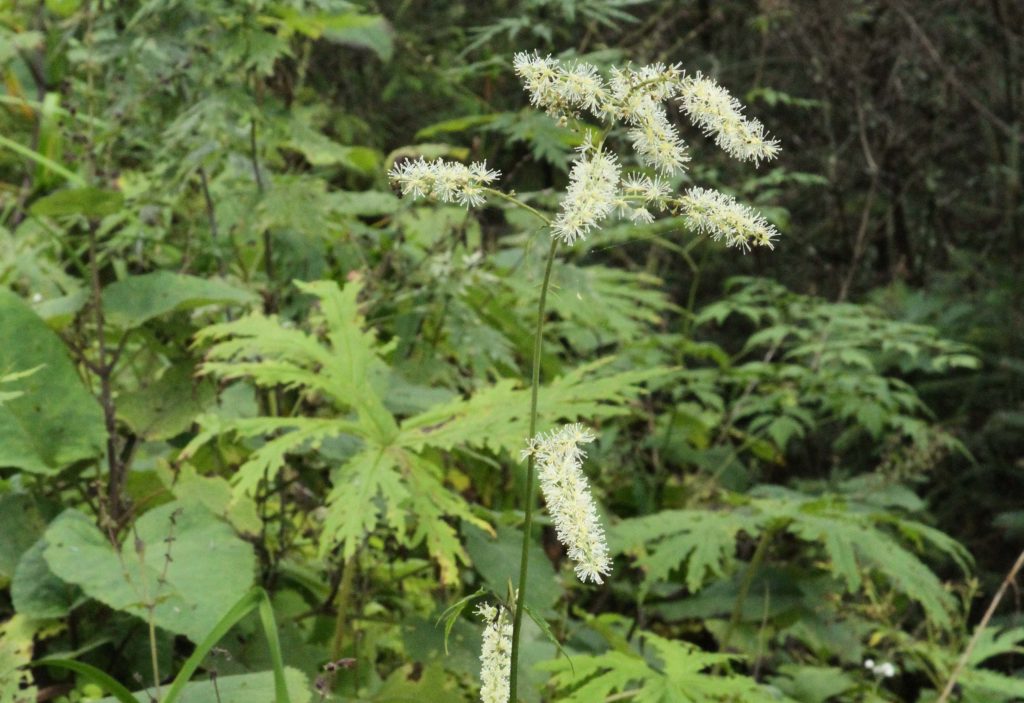
L.

Bhutan2012 41
Bhutan Shele-La, 3600m September
Bhutan2012 42
Bhutan Shele-La, 3600m September

Description

Actaea cimicifuga, the type of the long-segregated genus Cimicifuga and now treated within Actaea, is a temperate Eurasian herb with a vast range spanning Russia, China, Korea, Mongolia, Japan, Nepal, India, Bhutan and parts of central and eastern Europe, reflected in some 2565 georeferenced records. It grows in cool montane and subalpine woodland, forest margins, scrub and tall-herb meadows, in the Himalaya generally between about 2500 and 3800 m. The recorded plant from Shele-La in Bhutan at 3600 m, flowering in September, illustrates its preference for moist, shaded high-montane situations where it blooms late in the season.

It is a tall, erect perennial from a stout woody rhizome, reaching well over a metre. The leaves are large and ternately to bipinnately compound, with ovate, sharply toothed and lobed leaflets. The inflorescence is an elongate, branched panicle of slender racemes bearing many small, short-stalked flowers; the petaloid sepals fall early, the petals are reduced and staminode-like, and the numerous white stamens give the spikes a feathery aspect. The fruit is a cluster of dry, dehiscent, several-seeded follicles, distinguishing it from the berry-fruited typical species of Actaea.

The follicular fruit and tall paniculate habit underlie the historic recognition of Cimicifuga, now subsumed into Actaea on molecular grounds, making the species a focus of generic-circumscription debate. The plant has a strong, unpleasant odour repellent to insects, the source of the name "bugbane," and it has a long history of medicinal use. Widespread and locally common, it is of no conservation concern.

Author: L. · Sources: POWO (Kew), GBIF, Flora of China, Flora of Bhutan, Compton's revision of Cimicifuga and Actaea

Franch.

Bh2008 15 P25
Bhutan Thimphu-Chu, 2800m April
Bh2008 304 G469
Bhutan Thimphu-Chu, 2800m April
Bh2008 305 G471
Bhutan Ura 3400m, April

Description

Adonis davidii is a perennial herb of the eastern Himalaya and southwestern China, with GBIF records (462 occurrences) concentrated in China and Bhutan. It grows in cool, shaded habitats: coniferous and mixed forest understorey, forest margins, shrubberies and damp meadows, generally between 2500 and 4000 m. The Bhutanese gatherings figured here span this range, from Thimphu-Chu at 2800 m and Ura at 3400 m in April to Chele-La at 4000 m in May, illustrating its early-spring to early-summer flowering as snow retreats and its preference for moist, humus-rich montane soils in partial shade.

The plant arises from a short, thickened rhizome bearing fibrous roots, producing erect or ascending stems 15-50 cm tall that are usually simple or sparingly branched. The leaves are alternate, sessile or shortly petiolate, and several times ternately or pinnately dissected into narrow, linear-lanceolate ultimate segments, giving a finely divided, fern-like aspect. The solitary terminal flowers are white, often tinged blue, lilac or pink, with numerous spreading petaloid sepals (the true perianth) surrounding a central cluster of yellow stamens and free carpels. The fruit is an aggregate of numerous obovoid, wrinkled achenes, each tipped by a short persistent style.

Adonis (Ranunculaceae) is a chiefly Eurasian genus distinguished by its many free achenes and showy perianth; like many congeners A. davidii contains cardioactive compounds and should be regarded as toxic. Within the genus it belongs to the white-flowered perennial assemblage centred on China. It is not currently considered threatened, being locally frequent across an extensive forest range, though it depends on intact montane forest cover and is therefore sensitive to logging and habitat fragmentation.

Author: Franch. · Sources: POWO (Kew), GBIF, Flora of China, Flora of Bhutan, Monograph of the Genus Adonis (Ranunculaceae)

Simonov.

Sikkim2004 168 P284
Sikkim/India Singalila 4200m May

Description

Adonis nepalensis is an alpine perennial herb of the central and eastern Himalaya, recorded from Nepal, India and Bhutan (the additional scattered GBIF records from Hungary and Morocco almost certainly representing cultivated or misattributed material), with a small total of 28 occurrences in GBIF. It is a plant of high open habitats, growing in alpine meadows, grassy and rocky slopes and the margins of dwarf scrub near and above the treeline. The photographed plant was collected on the Singalila ridge on the Sikkim/India border at about 4200 m in May, a high-altitude spring-flowering station typical of the species, which blooms soon after snowmelt.

The plant grows from a short, stout rootstock and produces erect, leafy stems. The leaves are alternate and finely dissected, repeatedly divided into narrow, linear ultimate segments, giving them a feathery aspect characteristic of the genus. The flowers are solitary and terminal, fairly large and showy, with numerous spreading petals that are yellow (the usual colour in the Himalayan species), subtended by a green, dissected involucre of leaf-like bracts; the numerous stamens and free carpels are borne on a slightly elongate receptacle. The fruit is a head of small, dry, one-seeded achenes.

Adonis belongs to the Ranunculaceae and, like many genera of the family, contains cardiac glycosides and other toxic compounds. Adonis nepalensis is the principal Himalayan representative, distinguished by its alpine habit and yellow flowers, and is a relatively narrow-ranged montane species. Its high-elevation, snowmelt-dependent populations make it of biogeographic interest as part of the specialised Himalayan alpine flora and potentially sensitive to warming and to the disturbance of fragile alpine turf.

Author: Simonov. · Sources: POWO (Kew), GBIF, Flora of Bhutan, Annotated Checklist of the Flowering Plants of Nepal, Ranunculaceae of the Himalaya

Ajania myriantha

by GP Jürgens

(Franch.) Ling ex C.Shih

Bhutan2015 679
Bhutan Chele-La 4000m, October
Bhutan2012 100
Bhutan Shele-La, 3600m September

Description

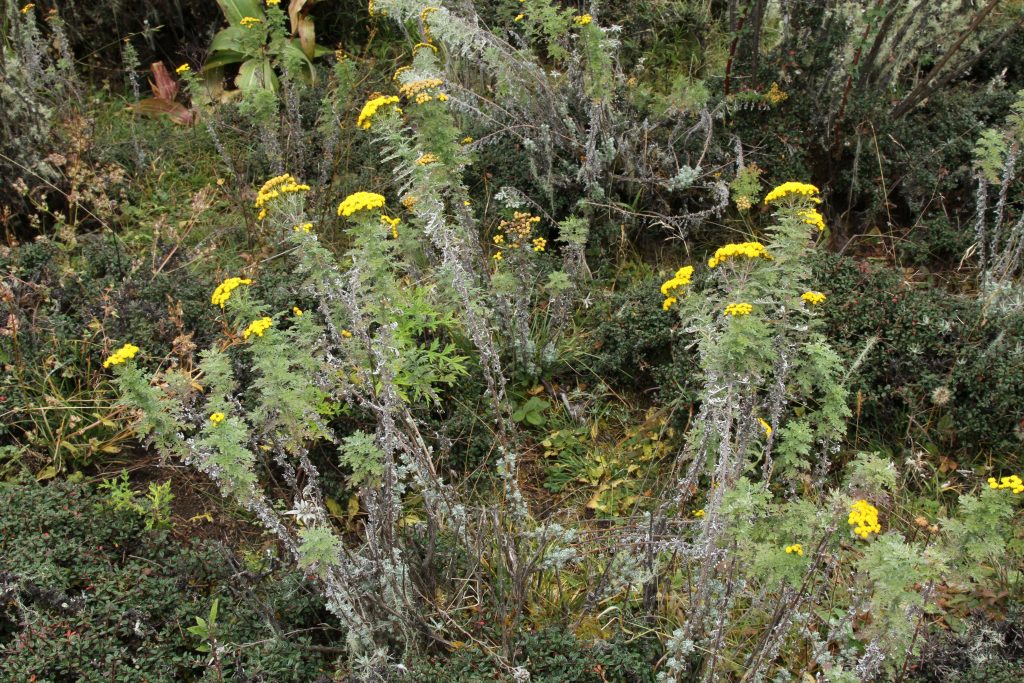
Ajania myriantha is a subshrubby composite of the Sino-Himalaya, native to China, Nepal, Bhutan and India and recorded by aggregated databases from a fair number of high-elevation localities. It is a plant of the upper subalpine and alpine zone, growing on dry, open stony slopes, rocky banks, cliff ledges and exposed pastures, generally between about 3000 and 4200 m. The individuals shown were photographed at Chele-La in Bhutan at 4000 m in October and at Shele-La at 3600 m in September, their autumn flowering being typical of this late-blooming high-mountain genus.

The plant forms a low, much-branched, somewhat woody-based perennial or dwarf subshrub, often grey-green with appressed silvery indumentum that reduces water loss in the exposed alpine environment. The leaves are alternate, ovate to obovate in outline and pinnately to bipinnately divided into small, narrow lobes, greyish-tomentose especially beneath. The capitula are small, numerous and discoid, lacking ray florets, and are aggregated into dense, flat-topped corymbose clusters, as the epithet myriantha (many-flowered) implies. Each head bears an involucre of imbricate, scarious-margined phyllaries enclosing yellow tubular florets; the achenes are small and ribbed and typically lack a conspicuous pappus.

Ajania is a Central and East Asian genus segregated from Chrysanthemum and its allies within the Chrysantheminae of tribe Anthemideae, distinguished by its discoid heads of tubular florets only. The generic limits of Ajania, Chrysanthemum and related taxa remain debated following molecular study, and some authors have proposed transfers. Locally common on dry alpine slopes, the species is not of conservation concern, though it is of interest as part of the aromatic Sino-Himalayan Anthemideae flora.

Author: (Franch.) Ling ex C.Shih · Sources: POWO (Kew), GBIF, Flora of China, Flora of Bhutan, Anthemideae systematic studies, Compositae of the Himalaya