
Stapf
Description
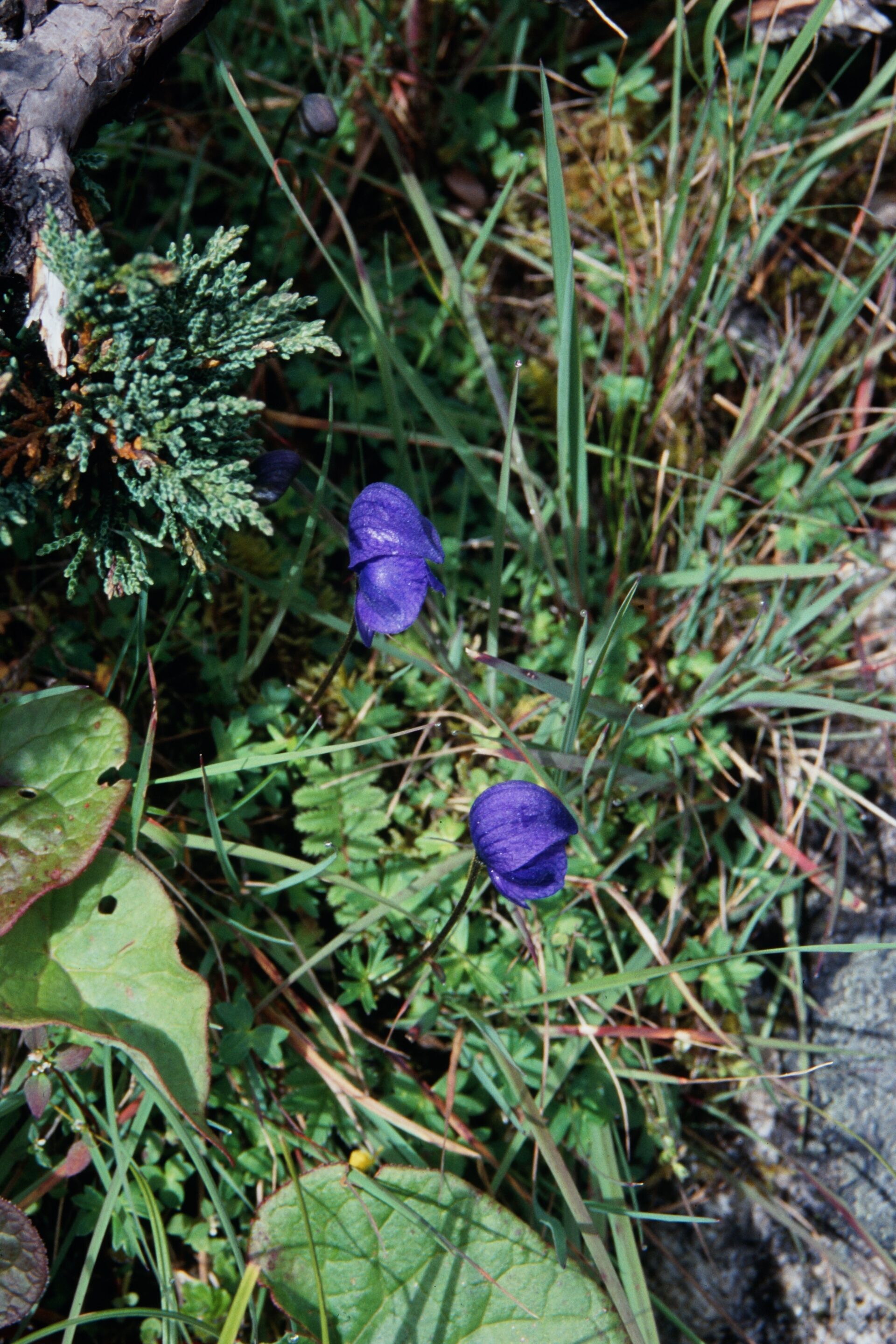
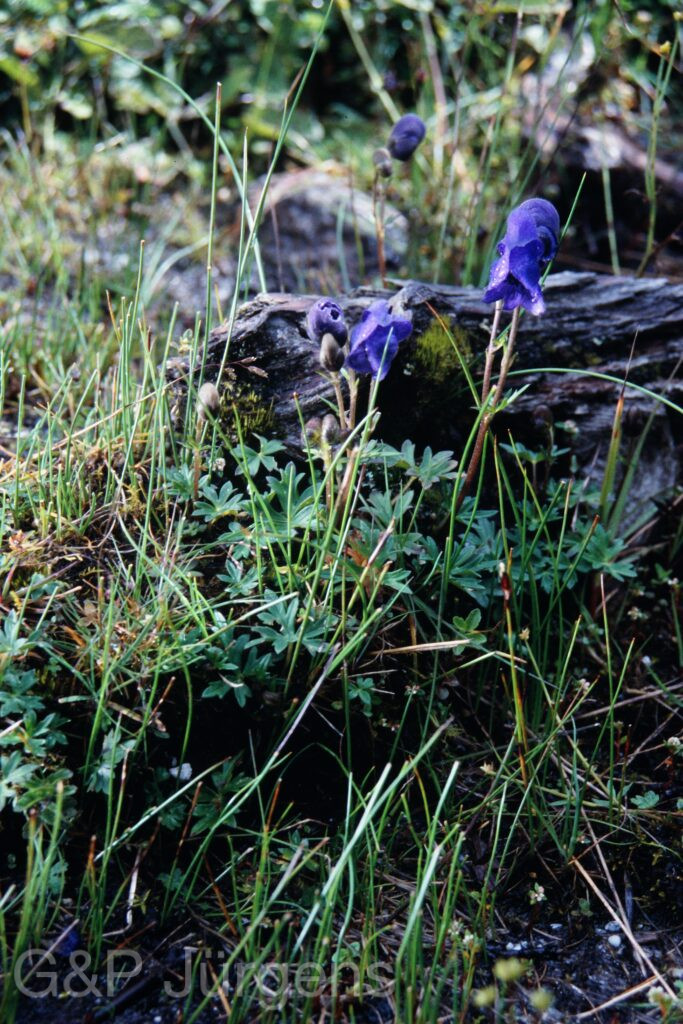
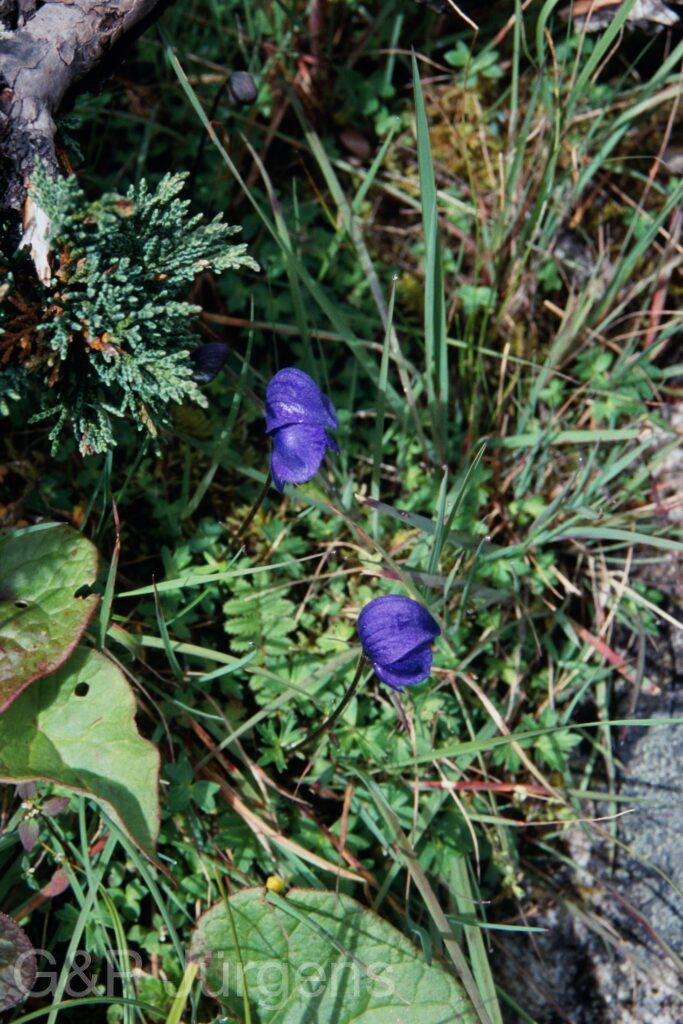
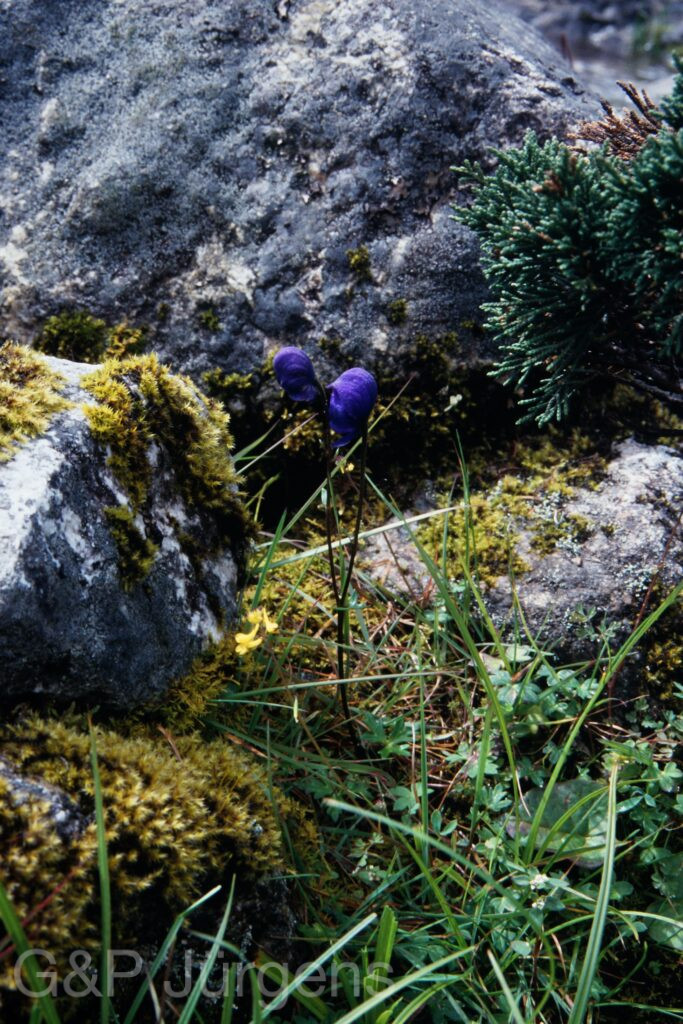
Aconitum hookeri is an alpine perennial of the eastern Himalaya, recorded from Nepal, China and India (NP, CN, IN, with further records), with around 96 documented occurrences. It inhabits open alpine meadows, grassy slopes, stony pastures and the margins of dwarf scrub in the high alpine zone, generally between about 4000 and 4800 m. The collections cited were all made at Dzongri in Sikkim, at 4200 to 4300 m in August, an elevation and late-summer flowering season fully characteristic of the species, where it grows in herb-rich turf above the treeline among the rolling alpine pastures of the upper Rathong valley.
The plant is a low, erect to ascending perennial herb arising from a tuberous, paired rootstock. The leaves are deeply palmately divided into narrow, again-lobed segments, dark green and mostly basal or on the lower stem. The inflorescence is a few-flowered terminal raceme of large, showy, deep blue to violet flowers. As in all Aconitum the flowers are strongly zygomorphic: the uppermost of the five petaloid sepals is enlarged into a tall, helmet-shaped hood (the galea) arching over two long-clawed nectariferous petals concealed within, the remaining sepals spreading. The numerous stamens surround several free carpels that mature into a cluster of follicles releasing winged or angled seeds.
Aconitum (monkshood; subfamily Ranunculoideae of the Ranunculaceae) is a large genus of the northern temperate and alpine zones, richly represented in the Sino-Himalaya. The hooded flowers are specialised for pollination by long-tongued bumblebees, which alone can reach the nectaries within the galea. Like its congeners A. hookeri contains highly toxic diterpenoid alkaloids of the aconitine type, rendering the whole plant dangerously poisonous yet of interest in traditional medicine. Restricted to high alpine grassland, it is locally frequent and not presently of conservation concern.
Author: Stapf · Sources: POWO (Kew), GBIF, Flora of Bhutan, Flora of China, Aconitum monograph (Tamura/Rapaics, Ranunculaceae)