
(Hook. & Thomson) Holub
Description
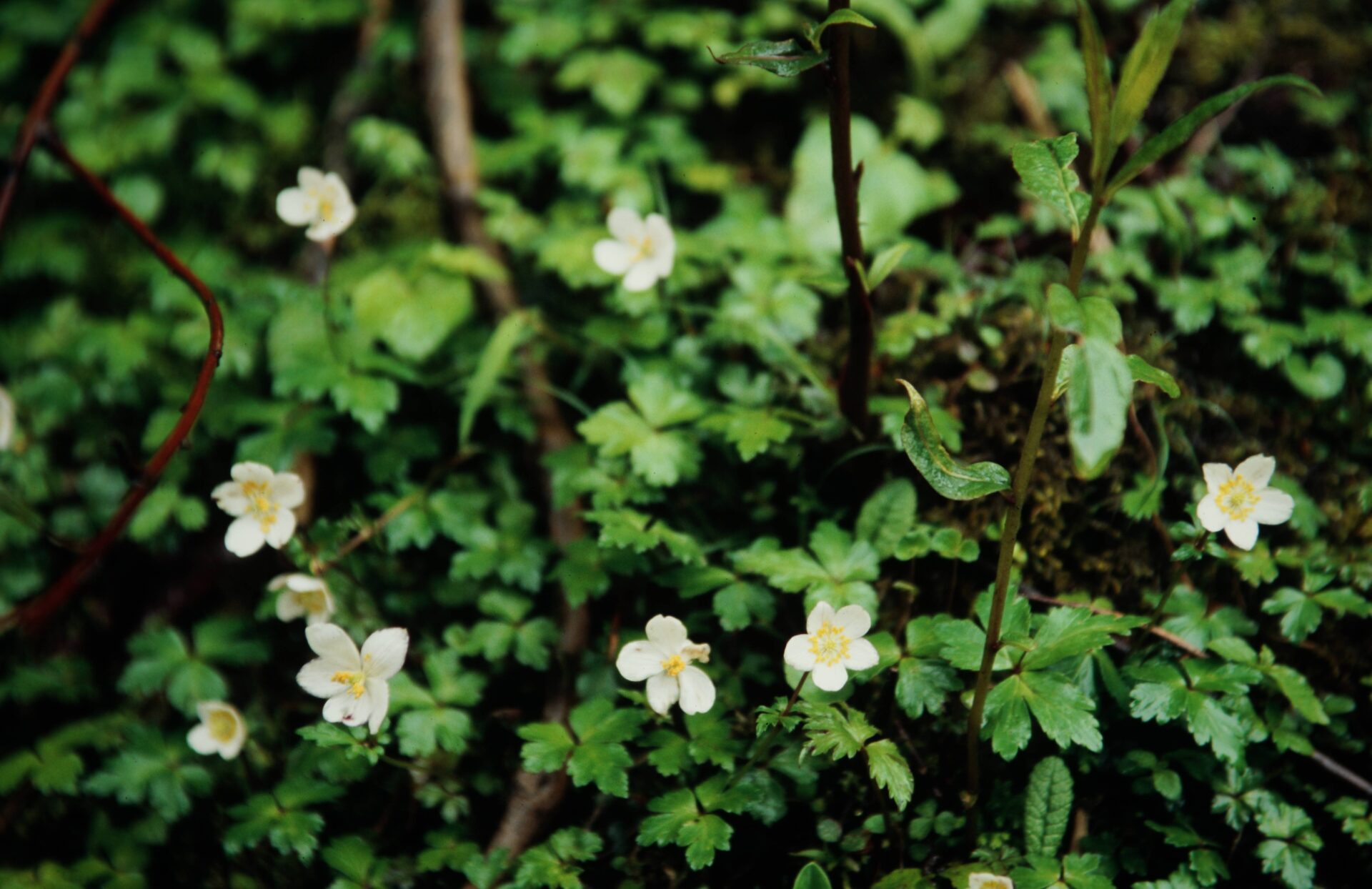
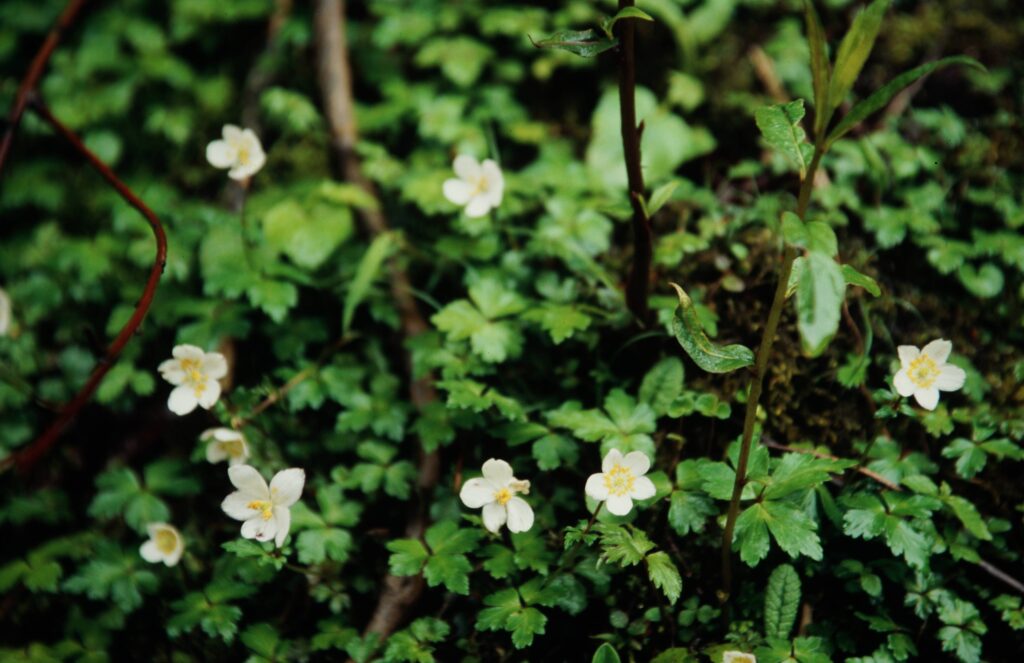
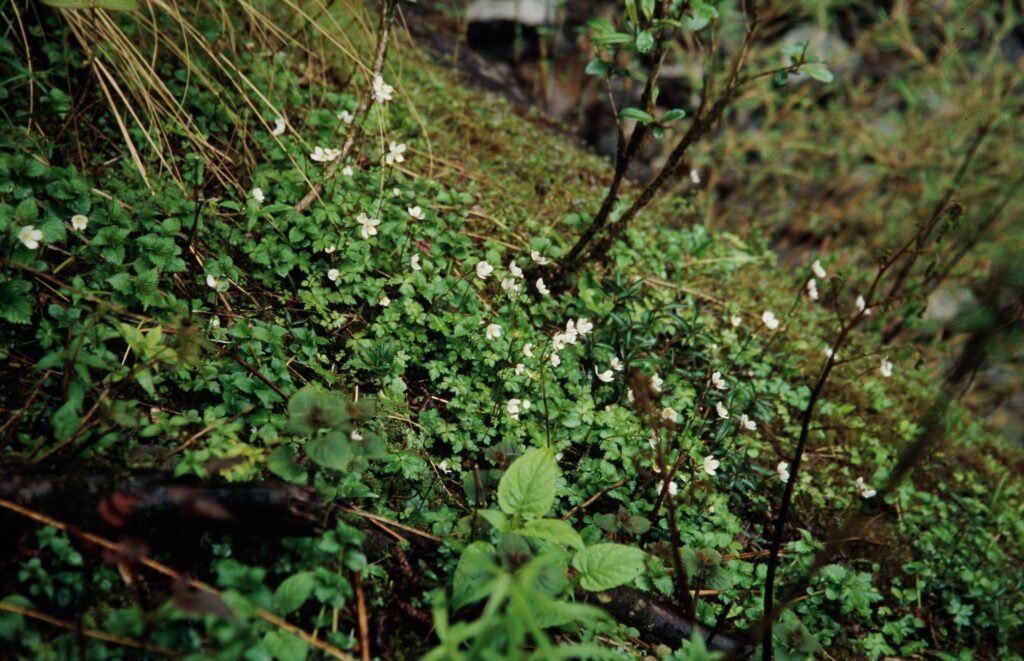
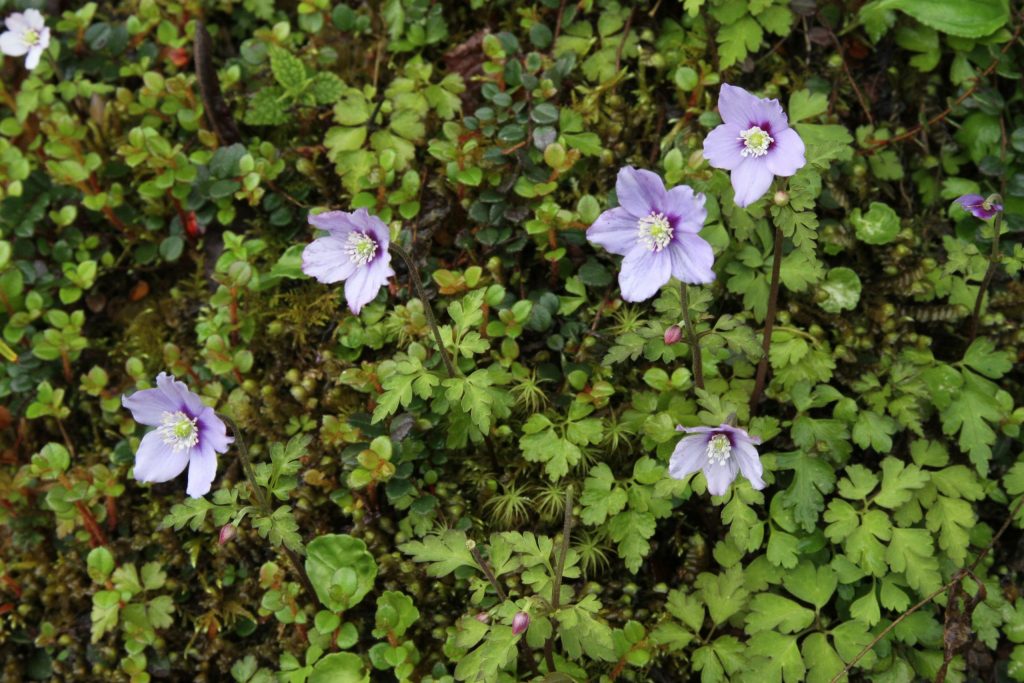
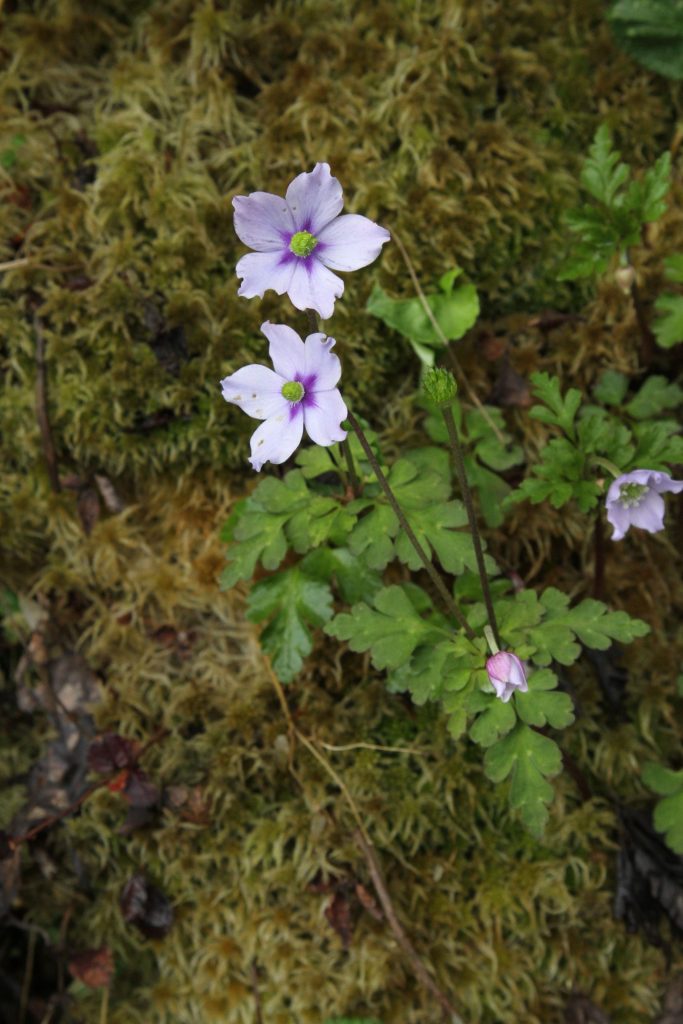
Anemonoides griffithii is a slender, woodland-floor perennial of the temperate eastern Himalaya, distributed through Sikkim, the Darjeeling district of West Bengal, Bhutan and adjacent southern Tibet (Xizang); GBIF, which records the species under the name Anemonoides griffithii, holds only a sparse occurrence dataset (a single georeferenced point from China), reflecting how thinly this shade-dwelling herb is documented despite a genuinely wider range. It favours the cool, humus-rich understorey of mixed conifer and broad-leaved forest and damp shrubberies, where it flowers in late spring as the canopy leafs out. The accompanying images, gathered at Tamrong (2650 m) in West Bengal and at the Tumching-La pass (2700 m) in Bhutan, both in May, place the plant squarely in its characteristic mid-montane band between roughly 2500 and 3500 m, in the moist, mossy conditions typical of the monsoon-fed Himalayan flank.
The plant arises from a short, creeping rhizome and is a delicate herb seldom exceeding 15-25 cm. The basal leaves are long-petiolate and ternately to palmately divided, with deeply incised, toothed segments and a thin, soft texture. The flowering stem bears a whorl of three stalked involucral leaves resembling reduced basal leaves, above which is borne a solitary terminal flower. There are no true petals; the showy perianth consists of five to several petaloid sepals, white often flushed pink or purple beneath, surrounding numerous stamens and a head of carpels. The fruit is an aggregate of small, ovoid, pubescent achenes tipped by a short style, dispersed as the involucre withers.
The species belongs to Anemonoides, a segregate genus split from the broadly circumscribed Anemone to accommodate the rhizomatous, woodland anemones of the A. nemorosa alliance, and many references still treat it under Anemone griffithii. Within the Himalaya it is one of several closely allied spring-flowering forest anemones, distinguished by leaf dissection and perianth colour. As a low-growing, monsoon-region understorey herb it has not been formally assessed for conservation status, but its dependence on intact temperate forest makes it locally sensitive to logging and grazing pressure across its restricted eastern-Himalayan range.
Author: (Hook. & Thomson) Holub · Sources: POWO (Kew), GBIF, Flora of Bhutan Vol. 1, Flora of China Vol. 6, Flora of Nepal, Tamura's Ranunculaceae treatment in The Families and Genera of Vascular Plants