
DC.
Description
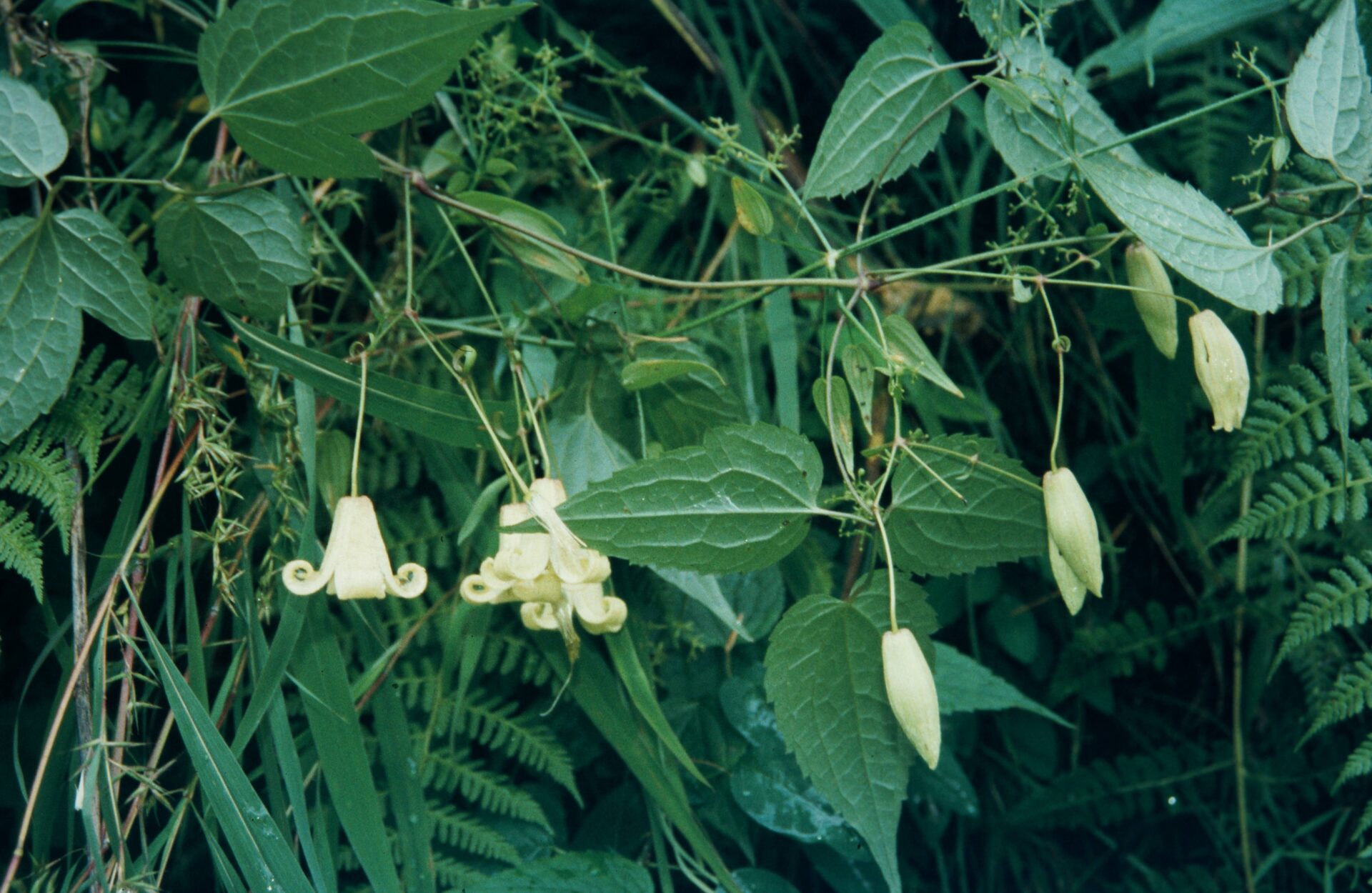
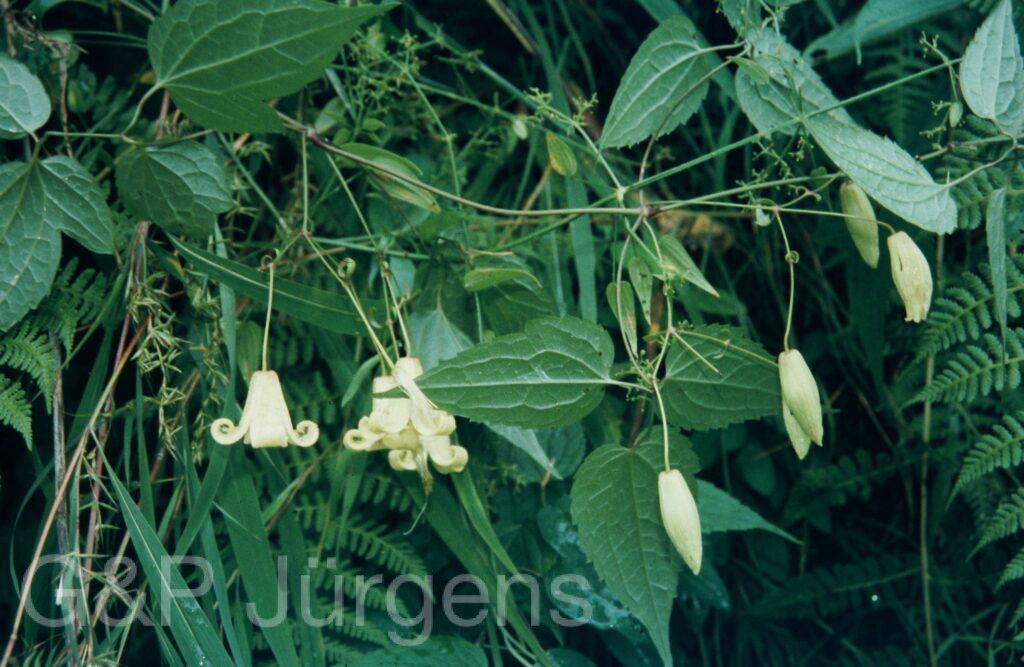
Clematis acuminata is a woody climber of the Himalaya and adjacent uplands, recorded by GBIF from China, India, Nepal, Myanmar, Thailand and Bhutan, with around 173 occurrences spread along the southern ranges. It grows in temperate and warm-temperate forest, scrambling through shrubbery, over forest margins and along open hillsides and ravines, typically on well-drained slopes. The photographed plant was found in the Indian Garhwal Himalaya at Sitel around 1850 m, flowering in September as the monsoon wanes; the species generally occupies the 1500-3000 m belt where it climbs vigorously into the canopy of small trees and thickets.
The plant is a perennial liana with slender, ribbed, climbing stems that ascend by means of clasping, twining petioles. The leaves are opposite and pinnately or ternately compound, the leaflets ovate to lanceolate and conspicuously long-acuminate, giving the epithet, with entire or sparingly toothed margins. The flowers are borne in axillary cymes and lack true petals, the showy parts being four spreading, often pale to creamy or pinkish sepals surrounding numerous stamens. The fruit is a head of achenes, each tipped with a long, persistent, plumose style that aids wind dispersal.
Clematis belongs to the Ranunculaceae and is unusual in the family for its lianescent habit and petaloid sepals. The feathery styled achenes are a hallmark of the genus, ensuring effective anemochory across mountainous terrain. Like many relatives, the herbage contains acrid protoanemonin and is locally used in folk medicine. Clematis acuminata is moderately widespread but nowhere abundant; it is not formally assessed, and its forest-margin populations persist where montane woodland and scrub remain intact.
Author: DC. · Sources: POWO (Kew), GBIF, Flora of China, Flora of Bhutan, Clematis monograph (Grey-Wilson)