Fabaceae

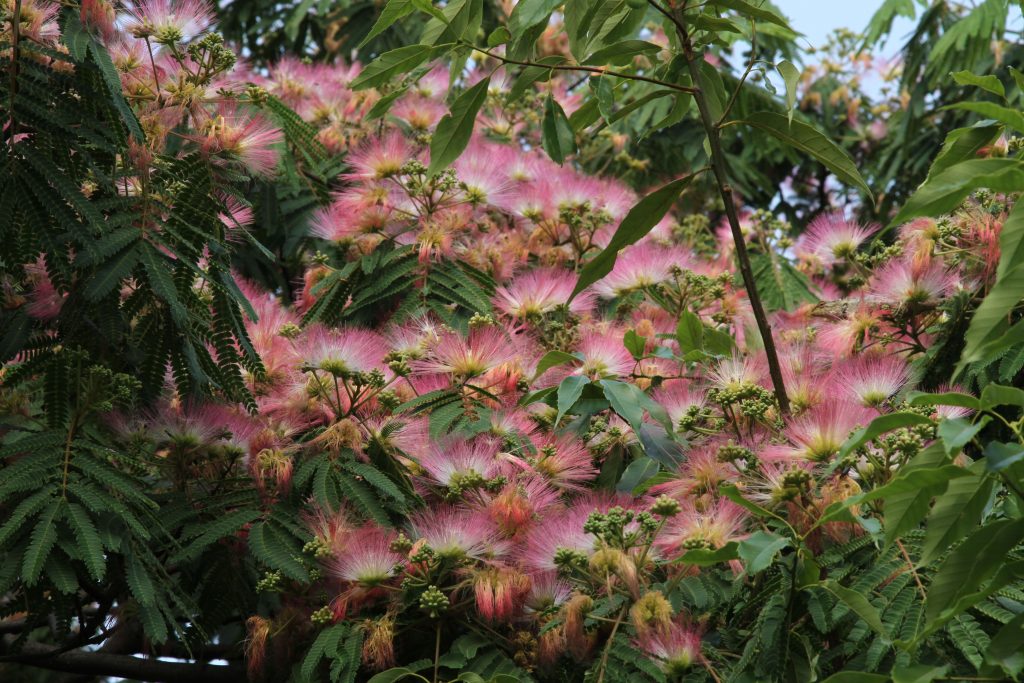
Durazz.

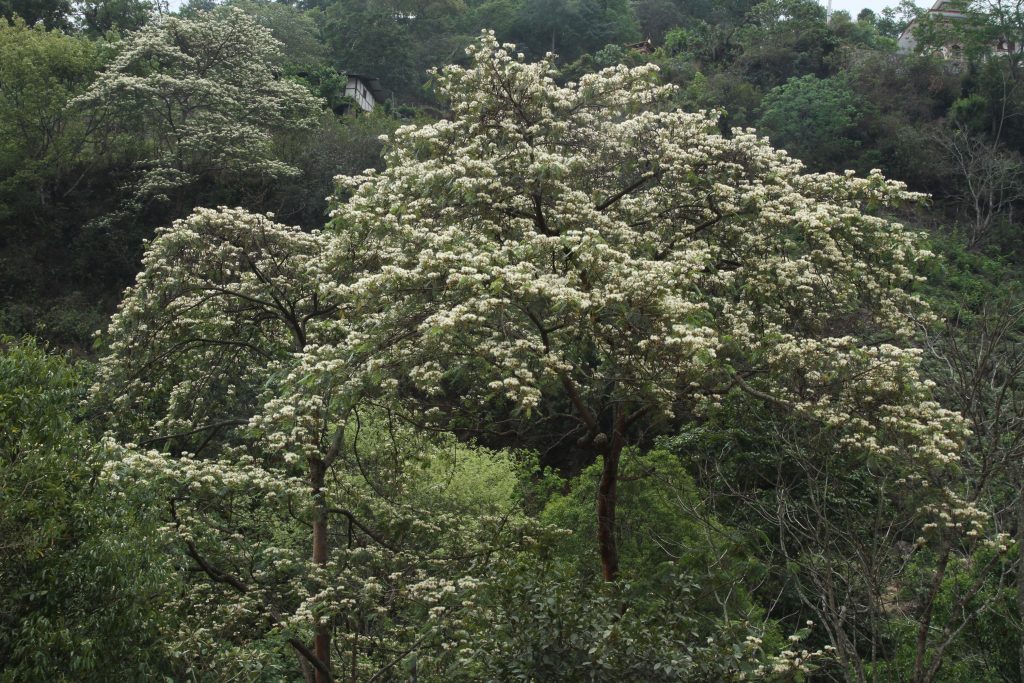
Bhutan2014 696
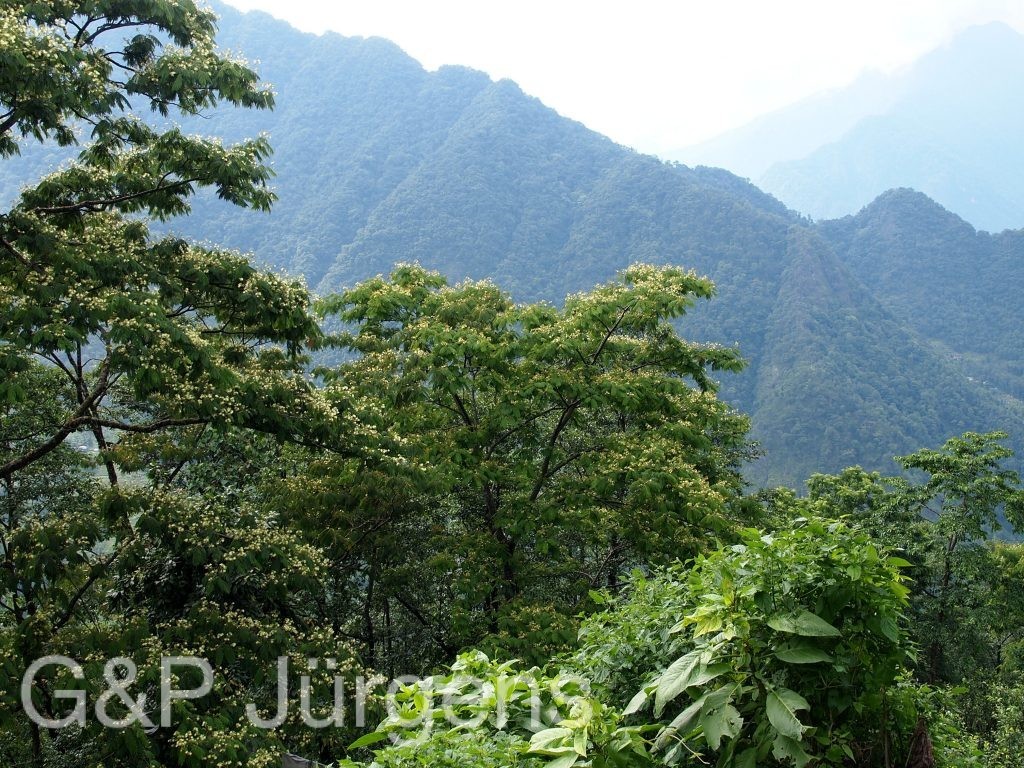
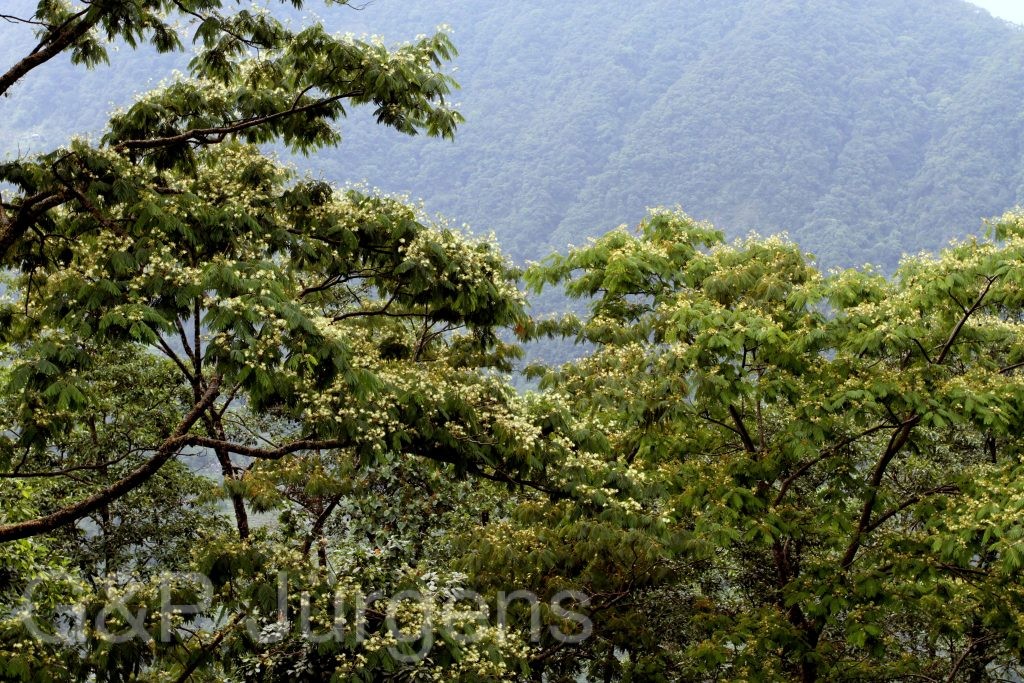
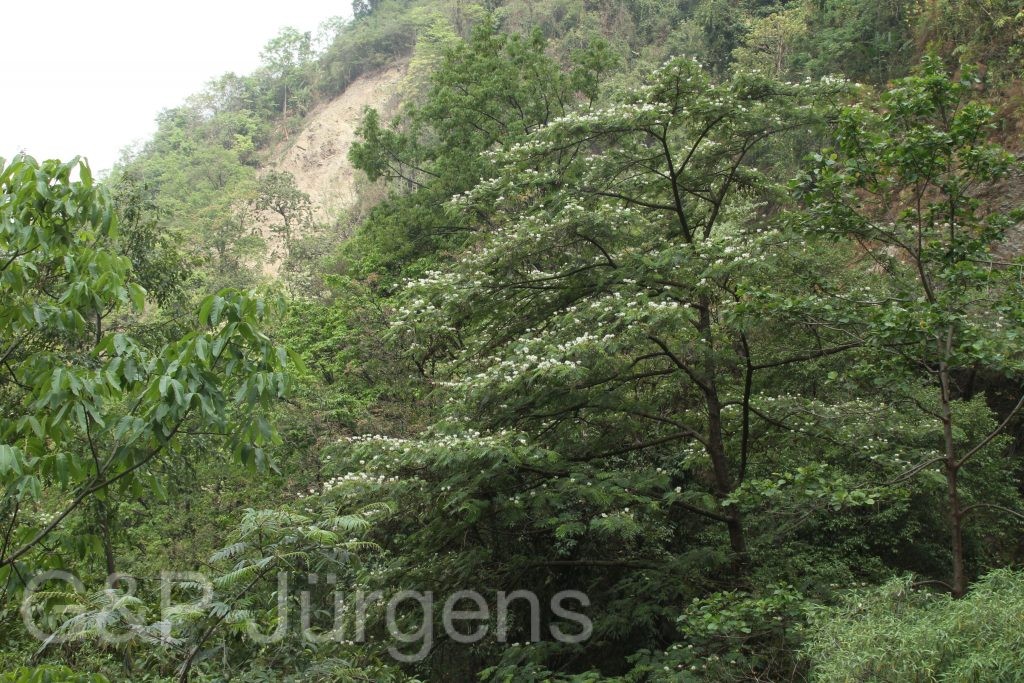
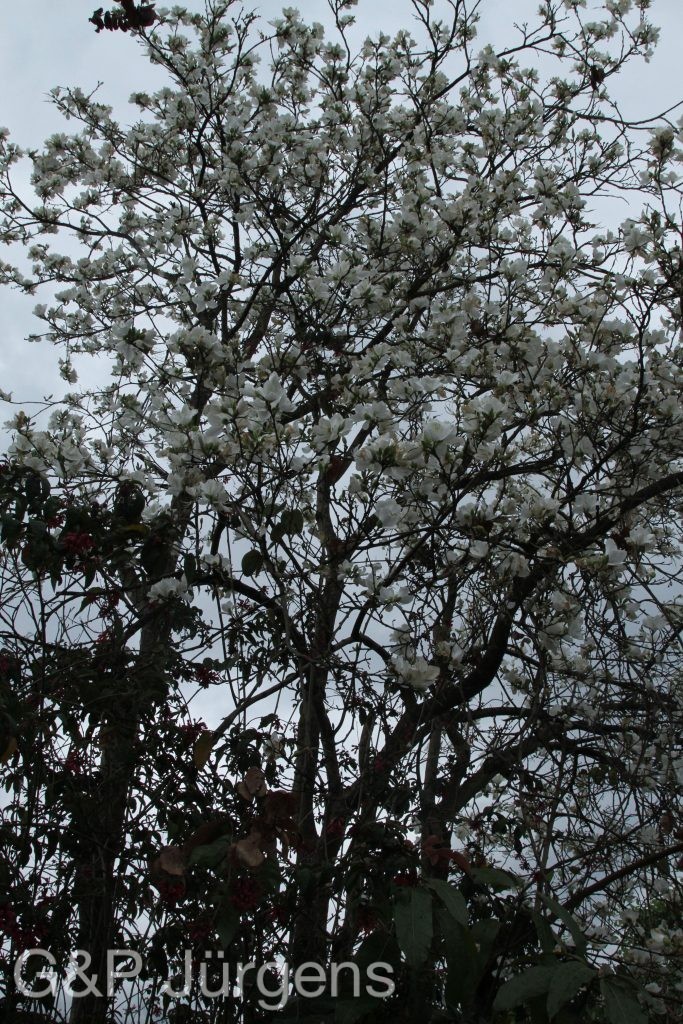
Bhutan Wangdi Phodrang 2000m, May
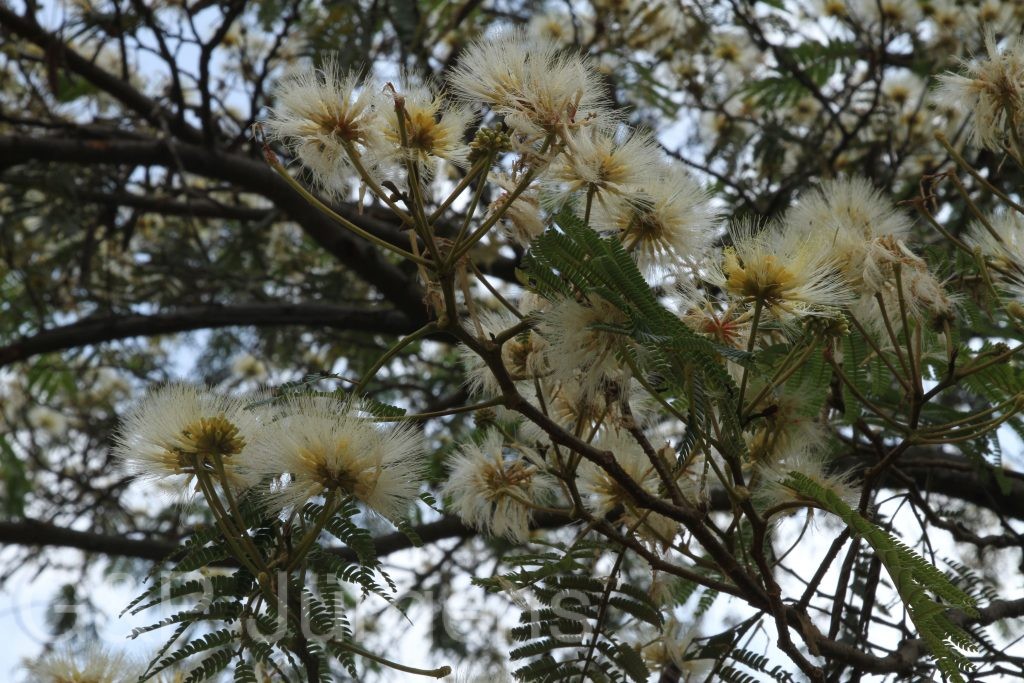
Bhutan2014 699
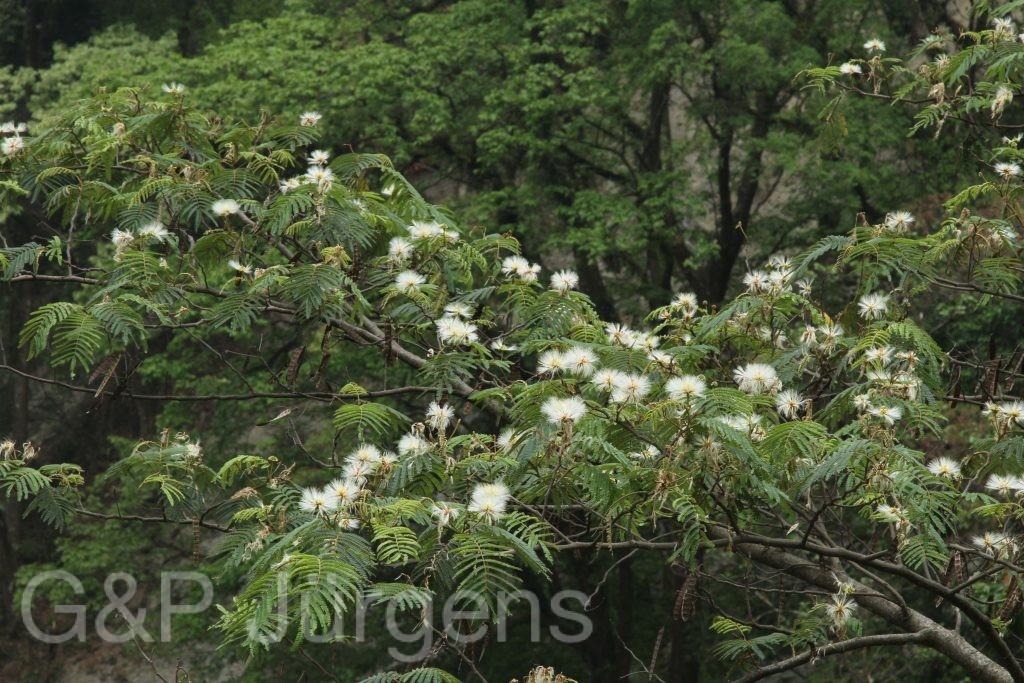
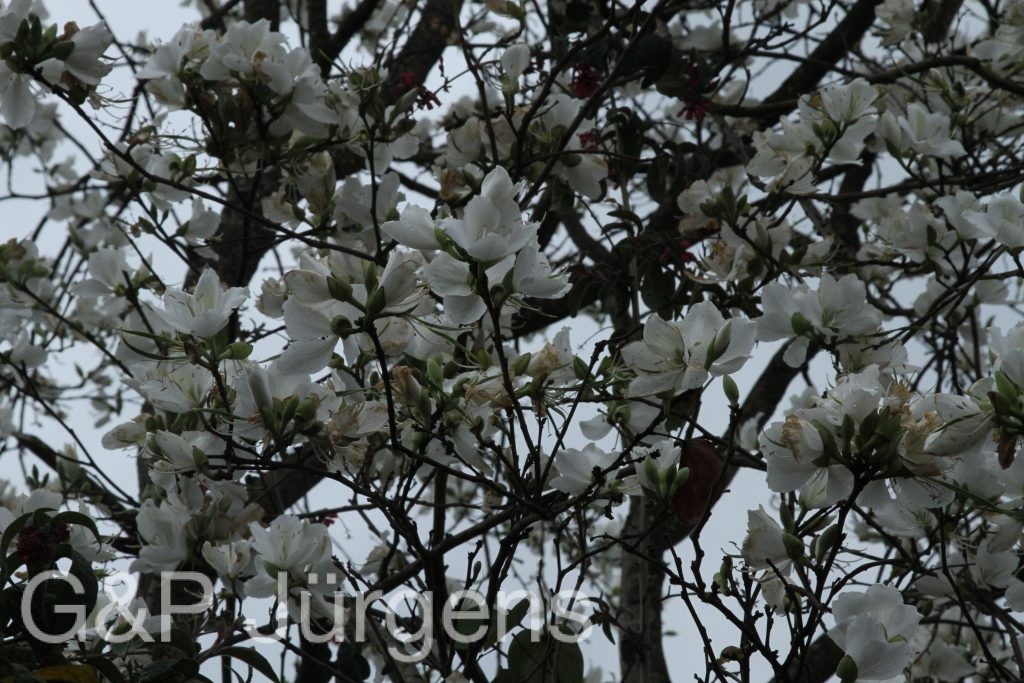
Bhutan Wangdi Phodrang 2000m, May

Description

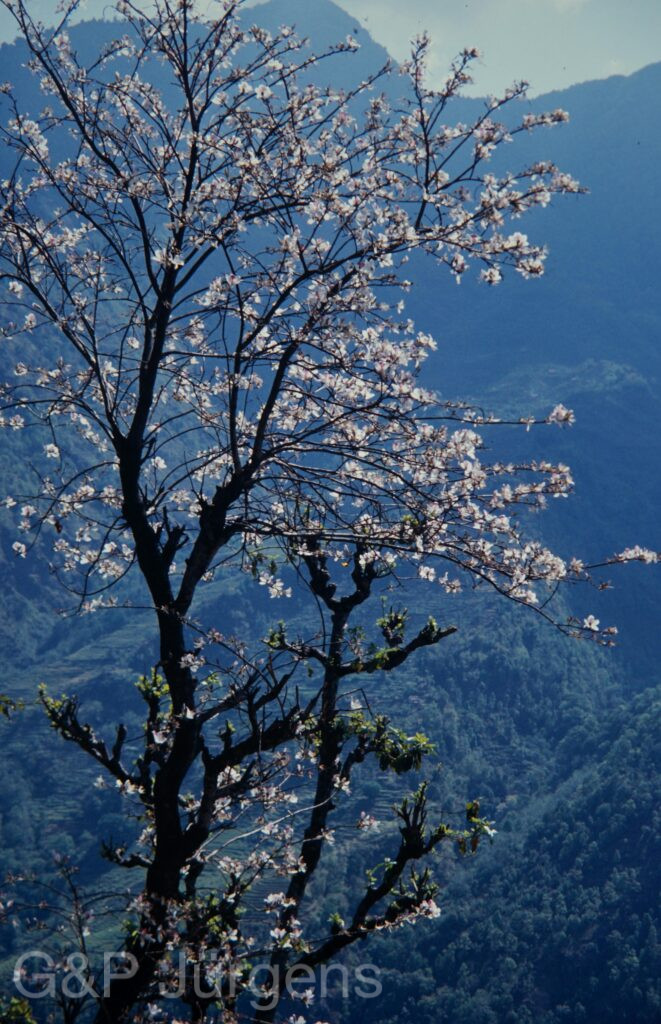
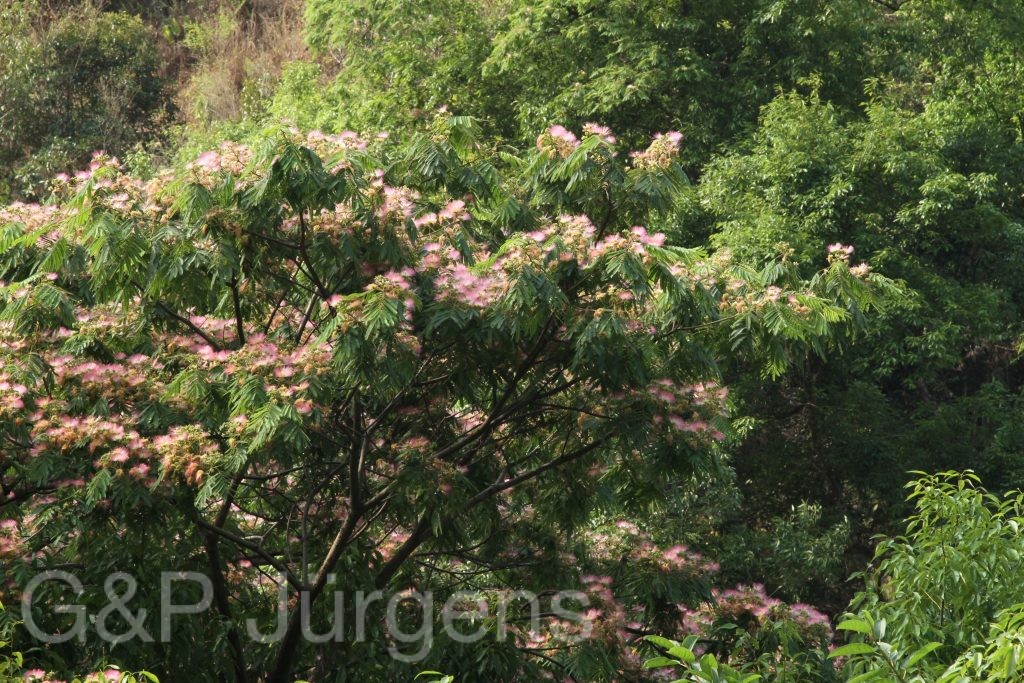
Albizia julibrissin, the silk tree or Persian silk tree, is a deciduous tree native from Iran and the Caucasus across to eastern Asia, now extensively planted and naturalised worldwide as shown by GBIF's more than 35000 occurrences spanning the United States, Korea, Japan, China, France, Turkey, Russia, Argentina, Italy and India among many others. In its Asian range it grows in warm-temperate broadleaf forest, open hillsides, valley margins and disturbed roadsides, from the lowlands to about 2500 m. The photographed tree from Wangdi Phodrang in Bhutan at 2000 m in May represents its occurrence in the warm inner Himalayan valleys, where it flowers in late spring and through the warm season.

It is a small, spreading tree with a broad, flat-topped, umbrella-like crown and smooth greenish-grey bark. The large, alternate leaves are bipinnate with numerous pinnae each bearing many small, oblong, asymmetric leaflets that fold together at night. The inflorescences are dense, hemispherical heads grouped in terminal panicles; the flowers are inconspicuous in their corollas but conspicuous through their numerous long, silky stamens, pink to deep rose distally and white below, giving a powder-puff effect. The fruit is a flat, papery, straw-coloured dehiscent legume containing several flattened seeds.

Albizia belongs to Fabaceae subfamily Caesalpinioideae (the mimosoid clade), characterised by actinomorphic flowers with showy stamens far exceeding the small petals. Nitrogen-fixing through root nodulation, fast-growing and widely cultivated as an ornamental, it has become invasive in parts of North America and elsewhere. Globally of Least Concern, it is valued horticulturally and ecologically as a pioneer of disturbed, well-drained, sunny sites.

Author: Durazz. · Sources: POWO (Kew), GBIF, Flora of China, Flora of Bhutan, Flora Iranica, Nielsen revision of Albizia and allied Mimosoideae
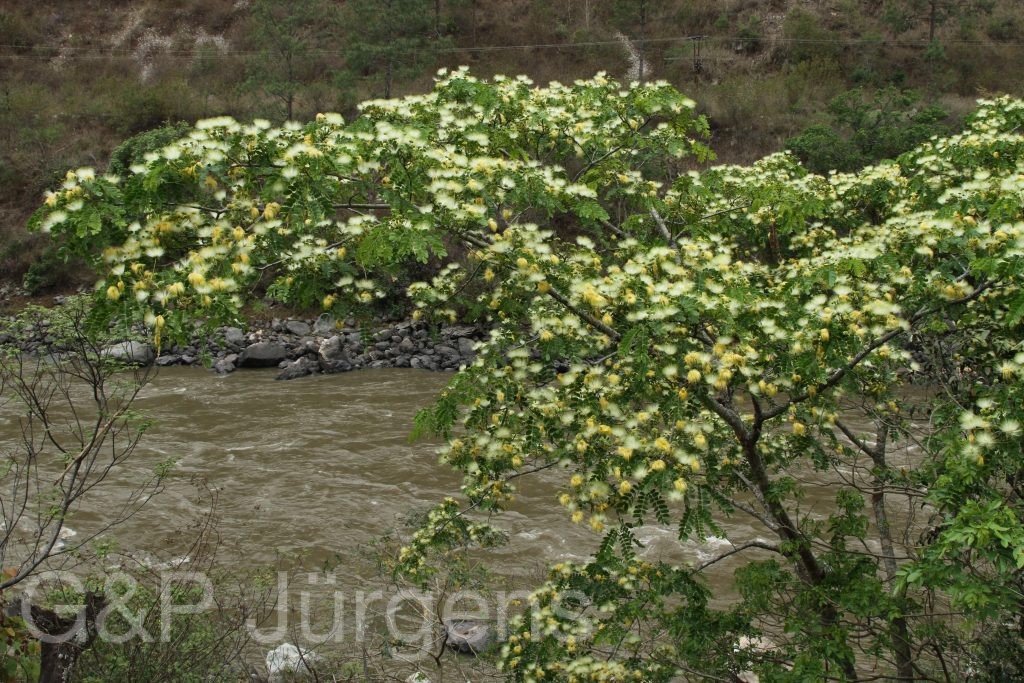
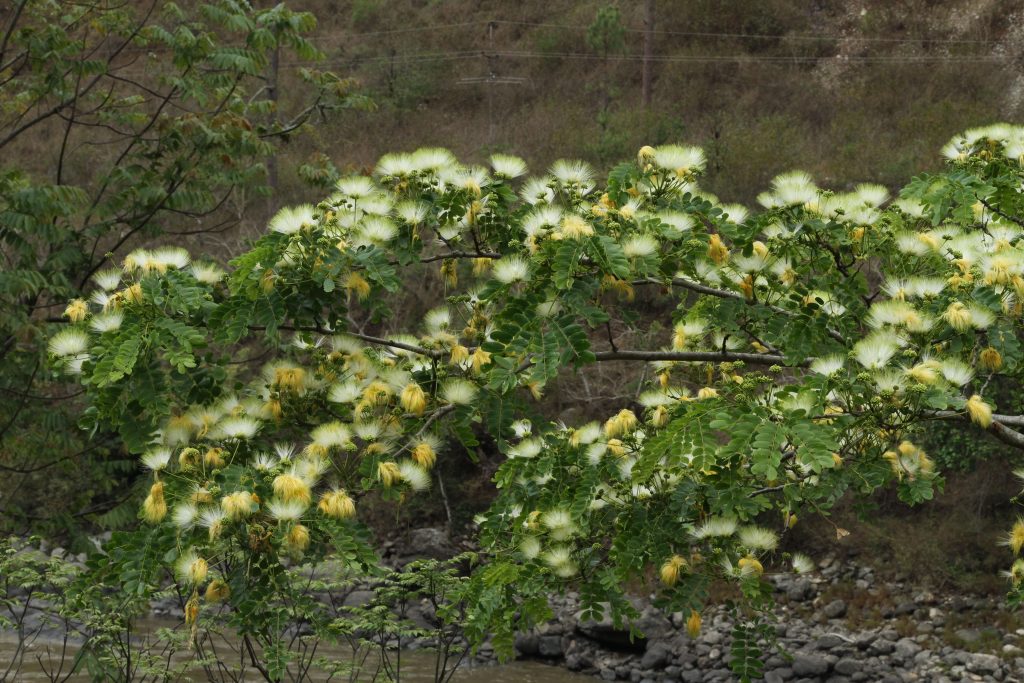
Albizia lebbeck

by GP Jürgens

(L.) Benth.

Bhutan2014 238
Bhutan Karu-Chu 1800m, May
Bhutan2014 240
Bhutan Karu-Chu 1800m, May

Description

Albizia lebbeck is a fast-growing tropical tree native to the Indian subcontinent and tropical Asia but now pantropically naturalised, as its 13,114 GBIF occurrences from India, Australia, Brazil, Mexico, the United States, Madagascar, Nigeria and many other countries attest. It occupies open woodland, savanna, riverbanks, roadsides and disturbed ground from the lowlands to about 1800 m, and is widely planted for shade, timber and fodder. The photographed tree was recorded in Bhutan along the Karu-Chu at about 1800 m in May, near the upper limit of its altitudinal range in the warm Himalayan foothills.

It is a deciduous tree to 15-25 m with a spreading, flat-topped crown and grey, fissured bark. The leaves are bipinnate with 2-4 pairs of pinnae, each bearing 4-9 pairs of oblong, asymmetric leaflets, and a conspicuous gland on the petiole. The flowers are massed in showy, hemispherical axillary heads, each flower with a small calyx and corolla but numerous long, greenish-white to cream stamens fused below into a tube, giving a powder-puff appearance and a sweet fragrance. The fruit is a flat, straw-coloured, papery legume 15-30 cm long, persisting on the tree and rattling in the wind, containing several flattened seeds.

A member of the Fabaceae (subfamily Caesalpinioideae, mimosoid clade), Albizia lebbeck fixes nitrogen through root nodules and is valued in agroforestry, though it behaves as an invasive weed in parts of the Neotropics, Australia and Pacific islands. Pollination is by insects and birds attracted to the nectar-rich stamen brushes, and the buoyant pods aid wind and water dispersal. It is of least concern and globally abundant.

Author: (L.) Benth. · Sources: POWO (Kew), GBIF, Flora of British India, Flora of Bhutan, Nielsen Monograph of Asian Albizia

(L.f.) Benth.

Sikkim2011 12
India Sikkim Tista valley 1800m, June
Sikkim2011 13
India Sikkim Tista valley 1800m, June

Description

Albizia odoratissima is a deciduous tree of broadly tropical and subtropical distribution, ranging across the Indian subcontinent and continental Southeast Asia into southern China, with records from Nepal, Bangladesh, Myanmar, Thailand, Laos, Vietnam, Sri Lanka, Malaysia and Indonesia; it has been widely introduced elsewhere, including East Africa, Nigeria, Mozambique and the Americas, and is documented from over a thousand georeferenced collections. In the eastern Himalaya it ascends warm submontane forest, as in the Tista valley of Sikkim around 1800 m photographed in June, favouring moist deciduous and semi-evergreen forest, riverine slopes and forest margins.

The tree reaches 15-25 m, with a spreading crown, grey-brown bark and finely pubescent branchlets. The leaves are bipinnate, with 3-6 pairs of pinnae, each pinna bearing numerous small oblong-falcate leaflets oblique at the base; a gland sits on the petiole. The fragrant flowers are arranged in pedunculate globose heads grouped into terminal panicles, each with a small campanulate calyx, funnel-shaped corolla and numerous long, white to greenish-cream exserted stamens united below into a tube. The fruit is a flat, thin, oblong dehiscent legume, glabrous and reddish-brown.

A member of the mimosoid clade of Fabaceae, A. odoratissima was described as Mimosa odoratissima by the younger Linnaeus and transferred to Albizia by Bentham. It is valued as a nitrogen-fixing timber and fodder species and is widely planted for shade, agroforestry and reforestation, which accounts for its naturalised occurrences far beyond its native Asian range. Locally esteemed for its hard, durable wood, it remains common and is not regarded as threatened, though native populations are affected by selective logging and forest conversion.

Author: (L.f.) Benth. · Sources: POWO (Kew), GBIF, Flora of China, Flora of Bhutan, Flora of British India, Nielsen monograph of Asian Albizia (Mimosoideae)

Albizia sherriffii

by GP Jürgens

Baker f.

Bhutan2014 3
Bhutan Sandrup 750m, May
Bhutan2014 5
Bhutan Sandrup 750m, May
Bhutan2014 224
Bhutan Karu-Chu 1800m, May
Bhutan2014 229
Bhutan Karu-Chu 1800m, May

Description

Albizia sherriffii is a tree of the eastern Himalayan foothills and adjoining ranges, recorded from Bhutan, north-east India, Myanmar and southern China, with GBIF holding about 65 occurrences that indicate a fairly restricted distribution. It occurs in warm subtropical to lower-temperate broad-leaved forest and along forest margins and river valleys, broadly between 700 and 1800 m, where the monsoon climate is warm and humid. The two illustrated Bhutanese gatherings, from Sandrup at 750 m and Karu-Chu at 1800 m, both in May, bracket its elevational range and show its flowering at the onset of the rains.

It is a medium-sized to large deciduous tree with spreading branches and bipinnate leaves bearing several pairs of pinnae, each with numerous small, oblong leaflets, the foliage often subtended by a gland on the petiole as is characteristic of the genus. The flowers are grouped in capitate or umbellate heads and, as in Albizia generally, owe their showy appearance to the long, numerous, exserted stamens united below into a tube, the small corolla being inconspicuous. The fruit is a flat, oblong, dehiscent legume (pod) containing several compressed seeds.

Named for the plant collector George Sherriff, A. sherriffii belongs to the mimosoid legumes (Fabaceae subfamily Caesalpinioideae, mimosoid clade), within which Albizia is distinguished from Acacia and allied genera by its stamen and pod characters. As a relatively narrowly distributed Himalayan tree, it is potentially sensitive to lowland forest clearance, though it has not been formally assessed in detail.

Author: Baker f. · Sources: POWO (Kew), GBIF, Flora of Bhutan, Legumes of the World (Lewis et al.), Flora of China

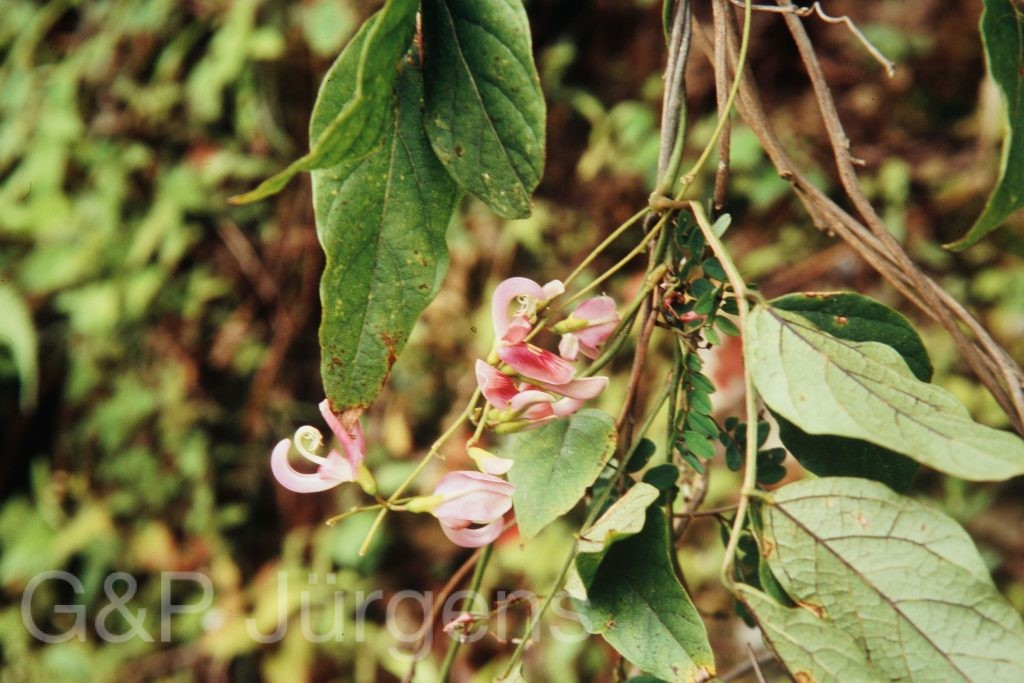
Apios carnea

by GP Jürgens

(Wall.) Benth.

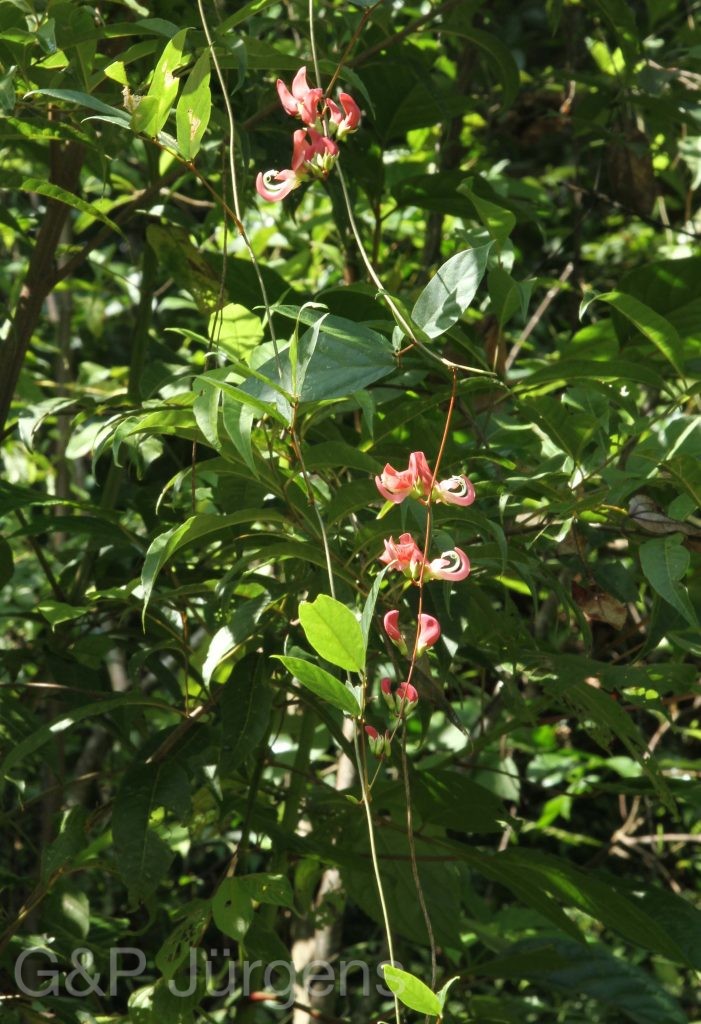
Bhutan2012 990
Bhutan Trithangebe, 1100m October
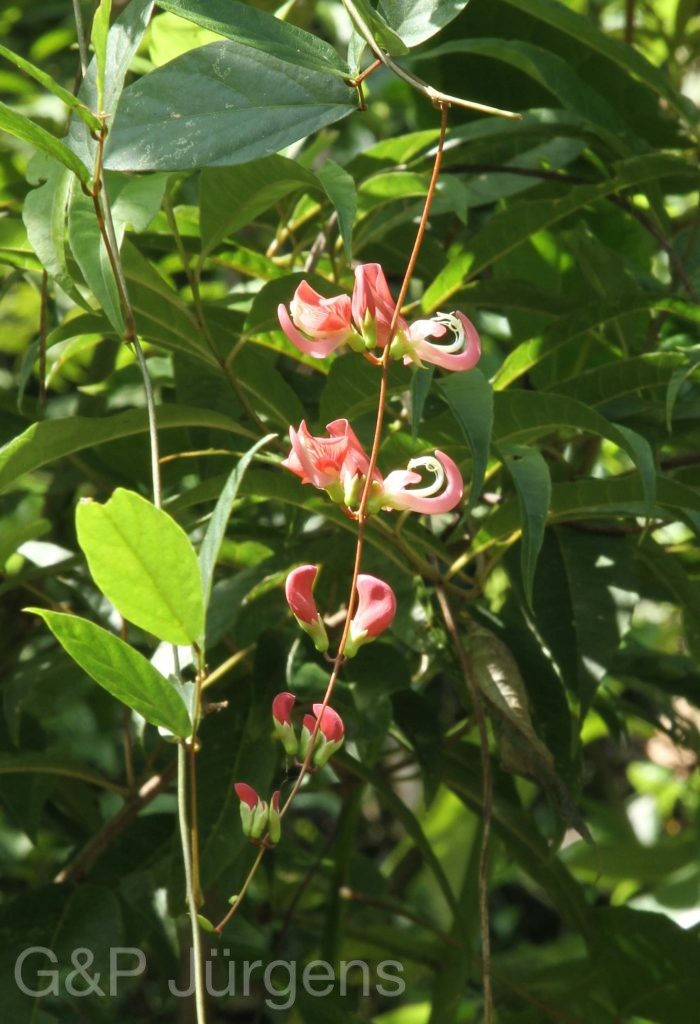
Bhutan2012 991
Bhutan Trithangebe, 1100m October
Bh09 242 P405
Bhutan Wangdi, 2000m June

Description

Apios carnea is widely distributed through the Himalaya and into south-east and east Asia, recorded from Nepal, north-east India, Bhutan, Myanmar, China, Thailand, Laos, Vietnam, Malaysia, Korea and Japan among its 887 georeferenced occurrences. It is a climbing herb of forest margins, thickets, streamsides and clearings in warm-temperate to subtropical settings, scrambling over shrubs and into the lower canopy. The Bhutan records at Trithangebe (1100 m, October) and Wangdi (2000 m, June) illustrate a broad altitudinal tolerance from about 1000 to 2400 m, flowering through the warm wet season.

It is a perennial twining vine arising from a tuberous, fleshy rootstock, with slender, herbaceous, somewhat woody-based stems. The leaves are pinnately compound (imparipinnate) with usually five to seven ovate-lanceolate, acuminate leaflets. The flowers are borne in dense axillary racemes and are typical papilionate legumes, flesh-pink to dull reddish or salmon, with a broad standard, incurved keel and the characteristic coiled keel-and-style of the genus. The fruit is a slender, elongate, dehiscent legume containing several seeds.

The genus Apios belongs to tribe Phaseoleae of subfamily Faboideae, allied to climbing beans, and the twisted keel enclosing the spirally coiled style and stamens is a notable floral specialisation promoting cross-pollination by bees. As a nitrogen-fixing legume it contributes to soil enrichment, and its tubers have been used locally as food. Common and widespread across its range, it is of no conservation concern, though it is regionally valued both as an ornamental climber and a wild food plant.

Author: (Wall.) Benth. · Sources: POWO (Kew), GBIF, Flora of Bhutan, Flora of China, Flora of Nepal, Lackey Phaseoleae revision (Advances in Legume Systematics)

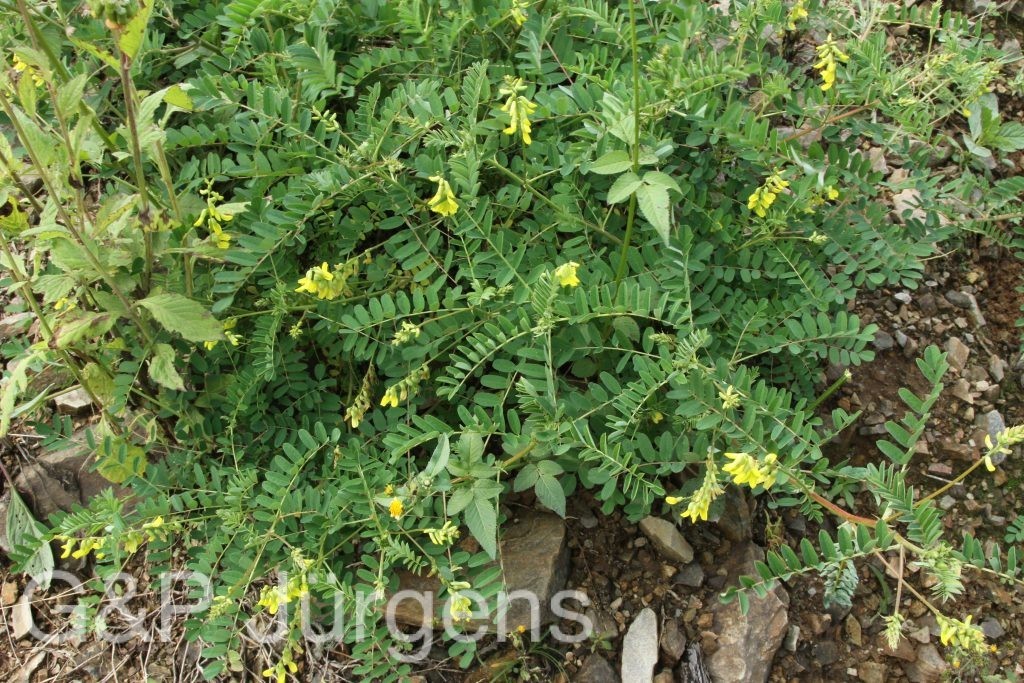
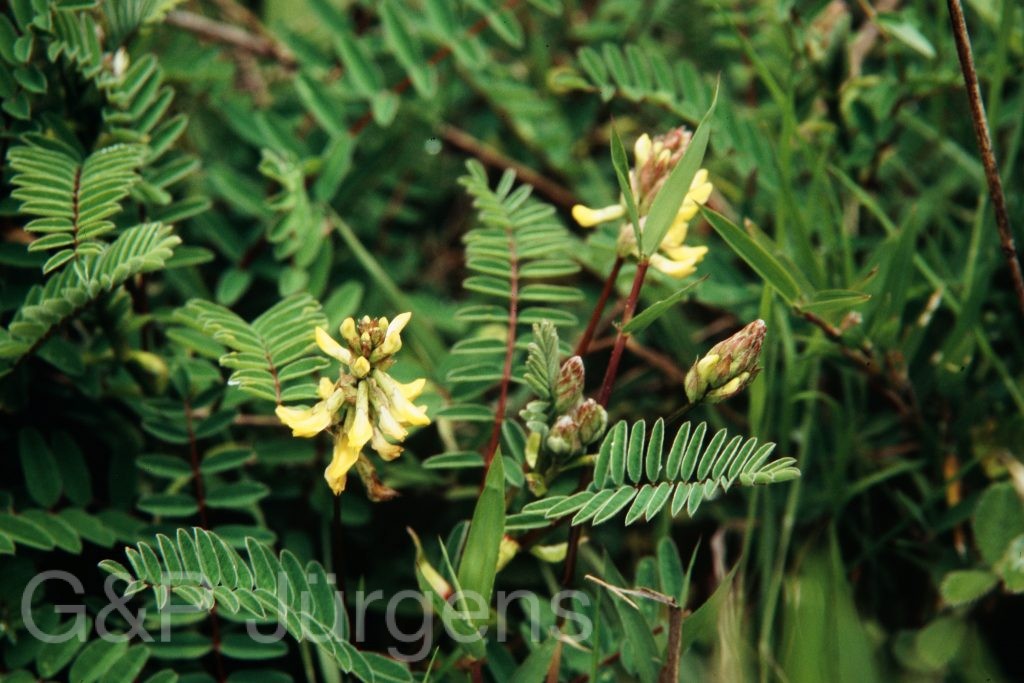
Lindl.

Bhutan2015 515
Bhutan Phobjika 2600m, October
Bh09 300 G494
Bhutan Kiki-La, 2100m June

Description

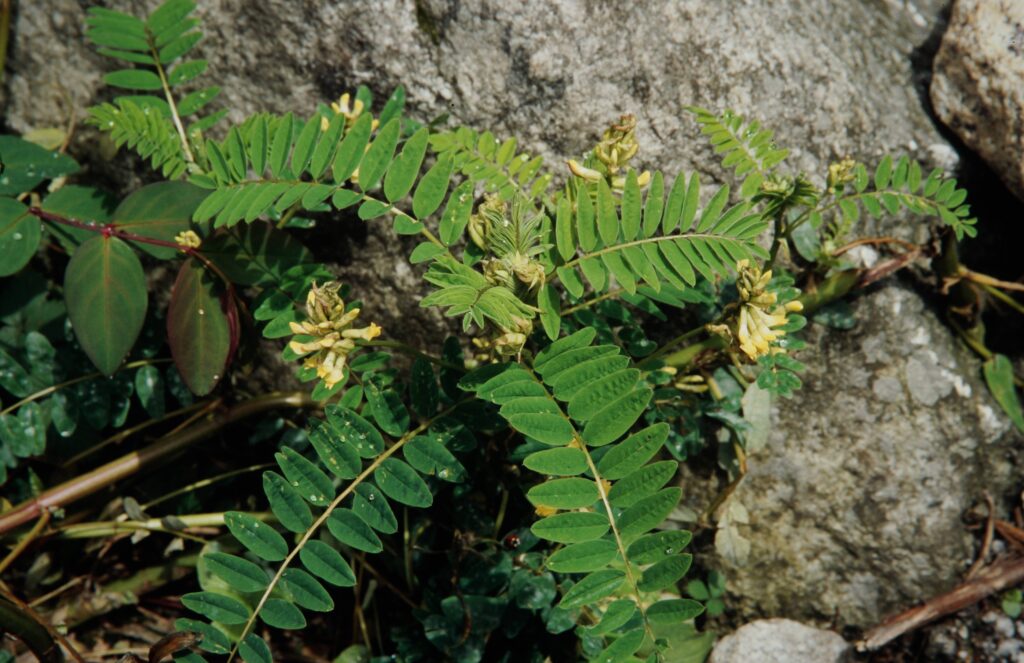
Astragalus chlorostachys is a perennial legume of the inner valleys and dry montane slopes of the Himalaya and Central Asia, ranging through India, Pakistan, Nepal, Bhutan, Afghanistan and China, with around 270 documented occurrences (records from Belgium and Switzerland representing herbarium and cultivated material). It favours open grassy slopes, forest margins, scrub and disturbed ground in the warm- to cool-temperate belt, broadly between about 2000 and 3000 m. The photographed plants were recorded in Bhutan at Phobjika at 2600 m in October and at the Kiki-La at 2100 m in June, indicating a long flowering and fruiting season through the growing months.

The species is an erect to ascending herb with several stems arising from a woody rootstock, the herbage finely appressed-pubescent. The leaves are imparipinnate with numerous opposite, oblong to elliptic leaflets. The flowers are crowded into dense, elongate, spike-like axillary racemes (the green-tinged inflorescence reflected in the epithet chlorostachys); the calyx is tubular and pubescent, and the papilionaceous corolla is small, yellowish to greenish-white or pale lilac. The fruit is a small, sessile or shortly stipitate pod, more or less inflated and pubescent, dehiscent at maturity.

Astragalus is among the largest genera of flowering plants, and its Himalayan members are taxonomically intricate; A. chlorostachys is placed among the densely spicate-flowered milkvetches of the region. Like many of its congeners it is a nitrogen-fixing pioneer of disturbed and grazed terrain, providing fodder and contributing to soil enrichment. It is common across a wide range and is not considered to be of conservation concern.

Author: Lindl. · Sources: POWO (Kew), GBIF, Flora of Bhutan, Flora of Pakistan, Astragalus monograph (Podlech & Zarre)

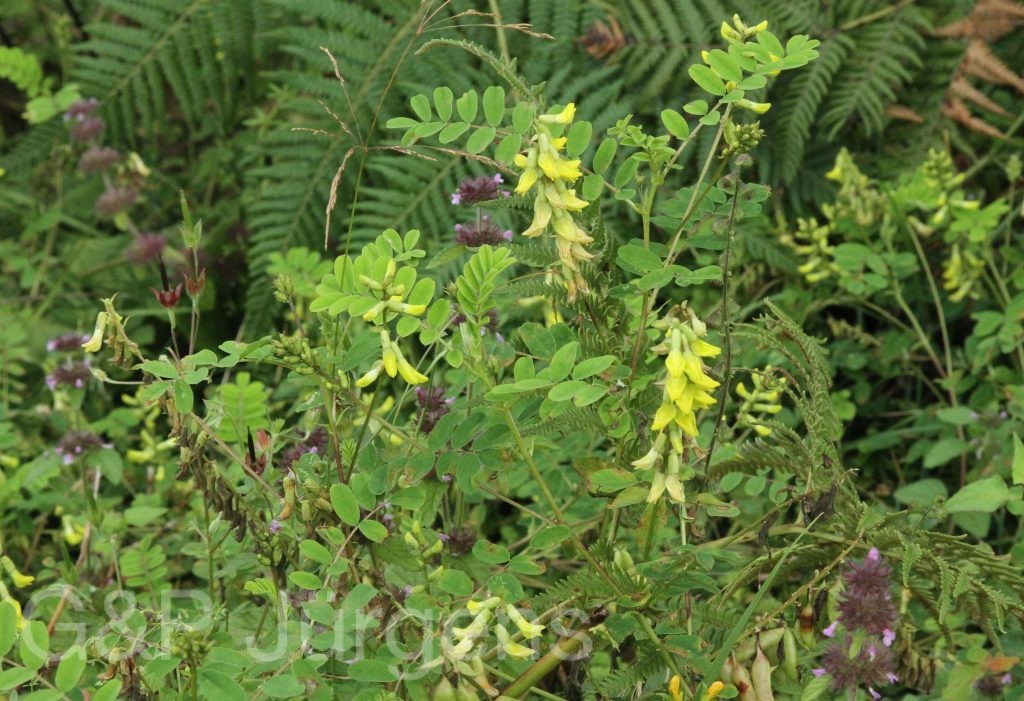
Benth.

Bhutan2012 349
Bhutan Wangdi 2000m, September
Sikkim 2006 466 ergebnis
India West-Bengal, Ruhig-Chu 2100m, May

Description

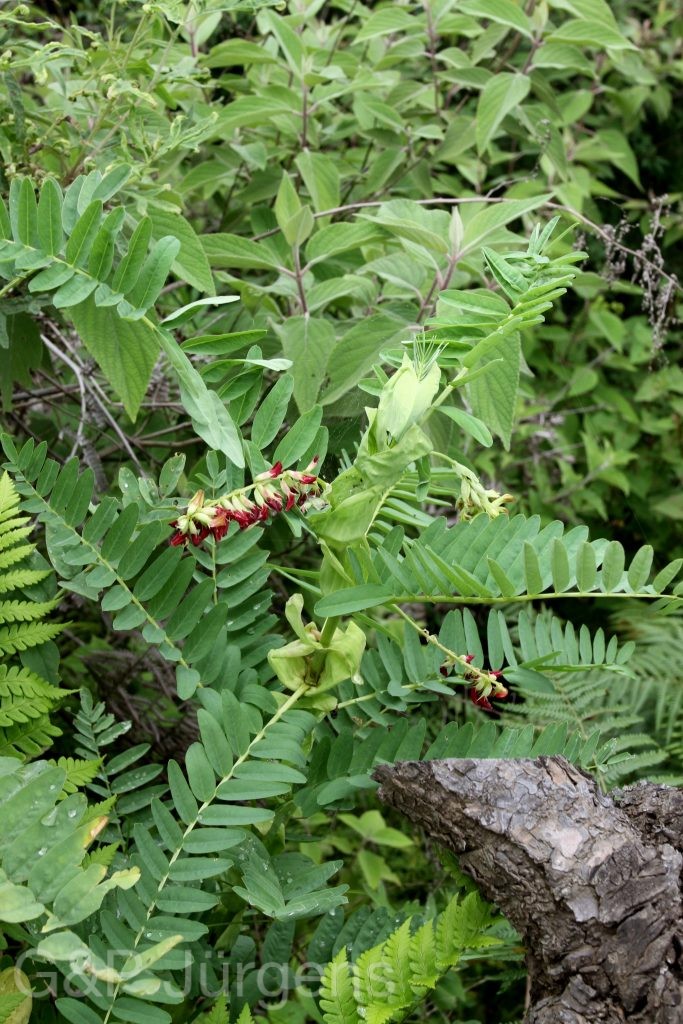
Astragalus concretus is a Himalayan milkvetch recorded from Nepal, India, China, Pakistan and Bhutan, with about 147 georeferenced occurrences concentrated along the central and eastern ranges; scattered records from the United States, Russia and Belgium derive from herbarium and database holdings rather than wild populations. It favours open, sunny banks, dry slopes, scrub margins and disturbed ground in the subtropical to lower temperate zone, broadly between 1500 and 2500 m. The cited gatherings from Wangdue in Bhutan at 2000 m in September and from the Rishi Chu valley in West Bengal at 2100 m in May indicate a tolerance of warm mid-elevation habitats.

It is a perennial or robust herb with ascending to spreading stems. The leaves are imparipinnate with several pairs of oblong to elliptic leaflets, the foliage typically appressed-pubescent. The flowers are borne in axillary racemes; the papilionaceous corolla, of purplish to pale colouring, shows the standard, wing and keel petals characteristic of the genus, subtended by a campanulate, toothed calyx. The fruit is a legume pod, in this species somewhat inflated and incompletely two-celled by intrusion of the ventral suture, the feature reflected in the epithet.

Astragalus is among the largest of all plant genera, and its Himalayan members are taxonomically intricate, separated largely on pod and indumentum characters. As a nitrogen-fixing legume, A. concretus contributes to soil enrichment on poor, eroding slopes. It is not regarded as threatened, occurring widely across disturbed and natural openings throughout its range.

Author: Benth. · Sources: POWO (Kew), GBIF, Flora of China, Flora of Bhutan, Astragalus and Oxytropis monographs of Podlech and Maassoumi

D.Don ex. Sims

BhutanPG2011 849
Bhutan Paro-Chu, 2400m July

Description

Astragalus stipulatus is a Himalayan milk-vetch distributed across Nepal, India, China and Bhutan, with around 83 GBIF occurrences. It is a plant of open, sunny situations in the temperate to lower subalpine zone, occupying dry grassy slopes, rocky banks, riverside terraces and disturbed ground, generally between about 2000 and 3500 m. The plant illustrated from the Paro Chu valley in Bhutan at 2400 m, flowering in July, is typical of its occurrence along well-drained, gravelly valley sides during the monsoon season.

It is a perennial or sometimes biennial herb with ascending to spreading, often somewhat straggling stems arising from a branched rootstock. The leaves are imparipinnate with several pairs of small elliptic to oblong leaflets and conspicuous, often connate stipules that give the species its epithet. The pea-like flowers are borne in axillary racemes; the papilionaceous corolla is purplish to pale violet or whitish, with the standard exceeding the wings and keel, and the calyx is tubular-campanulate with subequal teeth. The fruit is an oblong, often somewhat curved and inflated legume that may be bilocular through intrusion of the lower suture.

Astragalus, the largest genus of flowering plants, is richly represented in the Himalaya and Central Asia. A. stipulatus (D. Don ex Sims) belongs to the diverse Himalayan assemblage of the genus; it is widespread and of no conservation concern, contributing to early-successional and grazing-disturbed communities and, as a legume, to soil nitrogen enrichment through root nodulation.

Author: D.Don ex. Sims · Sources: POWO (Kew), GBIF, Flora of Bhutan, Flora of China, Podlech & Zarre monograph of Old World Astragalus

Bauhinia purpurea

by GP Jürgens

L.

Bhutan2015 551
Bhutan Punaka 1400m, October
Nepal 95 20 P29 ergebnis
Nepal Gorkha 1200m, Octobre

Description

Bauhinia purpurea is a tropical and subtropical tree native to South and Southeast Asia, with a centre of diversity across India, Nepal, Bhutan, southern China, Thailand, Malaysia and the Philippines. Through widespread cultivation as an ornamental and street tree it has become naturalised across the tropics, and the more than 11,500 GBIF records include numerous occurrences in the Americas (Brazil, Colombia, Mexico, Costa Rica, the Caribbean) and elsewhere. In its native Himalayan foothill range it occupies warm broad-leaved forest, scrub and cultivated margins at low to mid elevations; the Bhutanese tree at Punakha (1400 m) and the Nepalese population near Gorkha (1200 m), both flowering in October, mark its autumn blooming in the eastern Himalaya.

It is a small to medium-sized deciduous tree with a spreading crown. The leaves are distinctive and diagnostic of the genus: broadly ovate to orbicular, cleft at the apex into two rounded lobes for up to one-third to one-half their length, giving the characteristic bilobed "camel-foot" outline, with several palmate veins. The fragrant flowers are borne in short racemes and have five free, narrow, clawed petals coloured rose-purple to magenta, with usually three fertile stamens. The fruit is a flattened, linear-oblong, woody legume that dehisces elastically to scatter several seeds.

Bauhinia purpurea is often confused with the closely allied B. variegata, from which it differs in its narrower petals, reduced number of fertile stamens and later flowering season. The species is economically and culturally significant, valued for shade, ornament, edible flower buds, fibre and traditional medicine. It is common and widely planted, of no conservation concern, but its readiness to naturalise has led to its being treated as locally invasive in some introduced tropical regions.

Author: L. · Sources: POWO (Kew), GBIF, Flora of China, Flora of Bhutan, Annotated Checklist of the Flowering Plants of Nepal, Larsen & Larsen revision of Asian Bauhinia (monograph)

Bauhinia variegata

by GP Jürgens

L.

Bhutan2014 45
Bhutan Trashigang 1200m, May
Bhutan2014 46
Bhutan Trashigang 1200m, May
Nepal 1994 170 ergebnis
Ost-Nepal Mewa-Khola
1850m April

Description

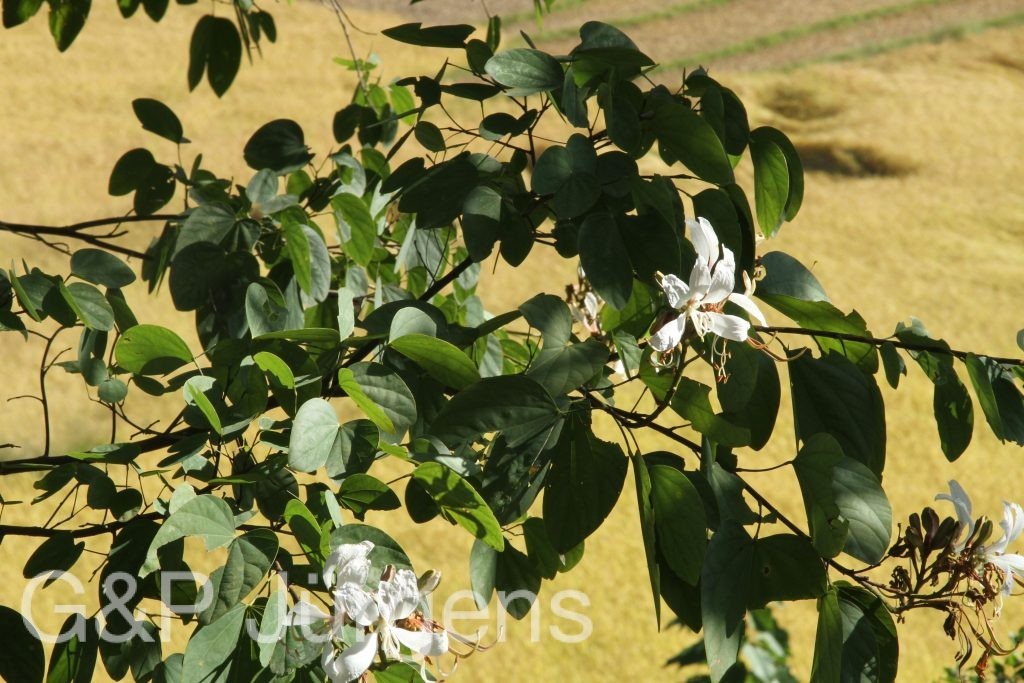
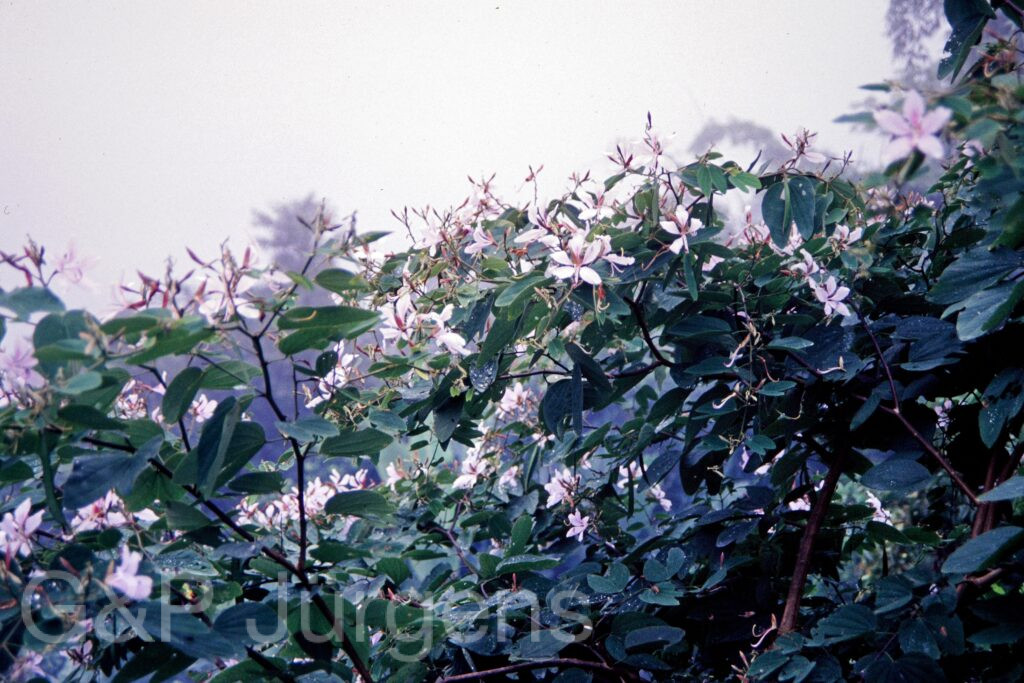
Bauhinia variegata, the orchid tree or kachnar, is a deciduous tree native to tropical and subtropical Asia and now pantropically naturalised, reflected in GBIF's nearly 5000 occurrences spanning India, Nepal, China, Myanmar, Thailand and Pakistan as well as introduced ranges in Brazil, the United States, Mexico, South Africa, Australia and Spain. In the Himalayan foothills it occupies warm, seasonally dry broadleaf forest, riverine slopes and disturbed ground from the plains to about 1900 m. The photographed trees from Trashigang in eastern Bhutan at 1200 m in May and from the Mewa-Khola in eastern Nepal at 1850 m in April illustrate its lower-montane habitat, where it flushes conspicuous blossoms in the dry pre-monsoon months on largely leafless branches.

It is a small to medium tree with grey-brown bark and a spreading crown. The alternate leaves are broadly ovate-cordate, bilobed for up to one-third their length into two rounded lobes giving the characteristic camel-footprint outline, with palmate venation. The showy, fragrant flowers are borne in short axillary or terminal racemes; each has five obovate, clawed petals ranging from white through pink to mauve-purple, the uppermost broader and streaked with deeper veining, and typically three to five fertile stamens. The fruit is a flat, dehiscent, woody legume up to 30 cm long containing several compressed seeds.

A member of Fabaceae (Caesalpinioideae), Bauhinia is the type genus of the diagnostically bilobed-leaved tribe Cercideae. The species is extensively cultivated as an ornamental and avenue tree, while its flower buds, bark and young pods are used as vegetables and in traditional medicine. Widespread, weedy and able to fix little nitrogen yet tolerant of poor soils, it is of Least Concern and locally invasive beyond its native range.

Author: L. · Sources: POWO (Kew), GBIF, Flora of Bhutan, Flora of China, Annotated Checklist of the Flowering Plants of Nepal, Larsen & Larsen revision of Bauhinia