
Baker f.
Description
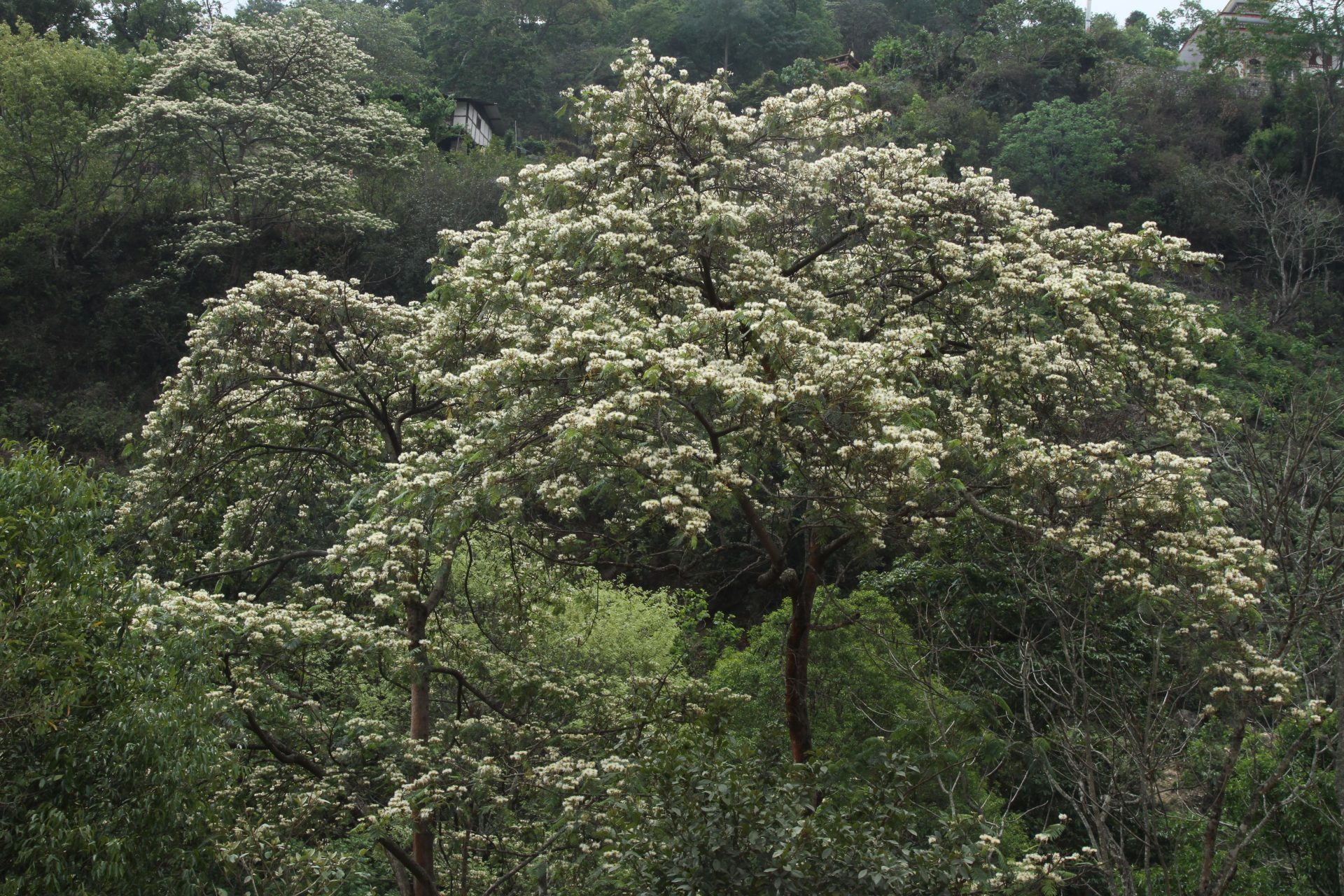
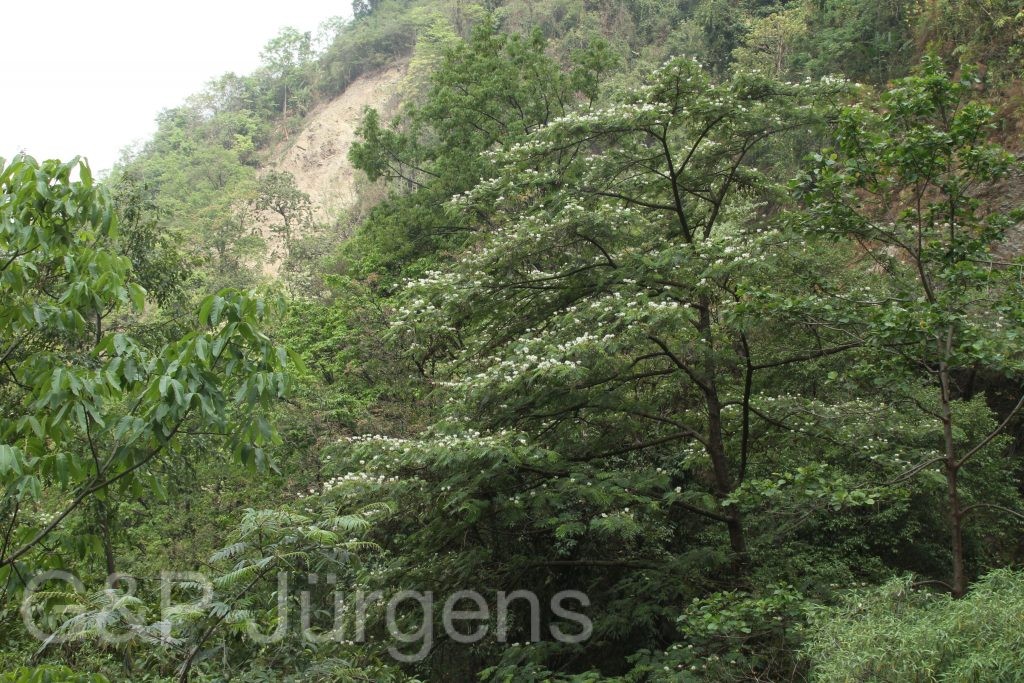
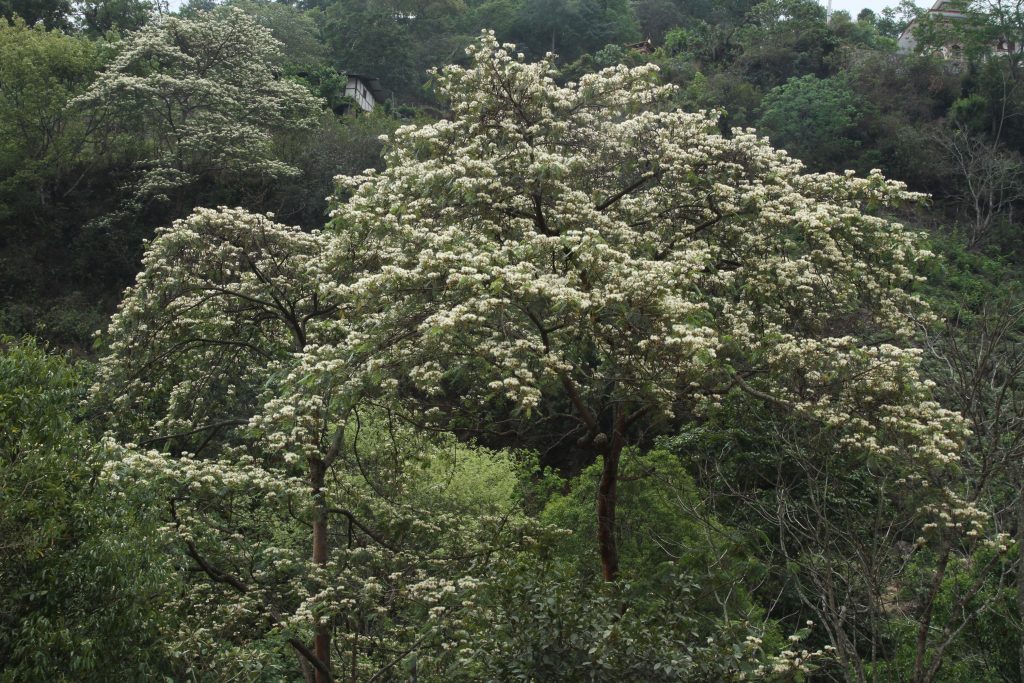
Albizia sherriffii is a tree of the eastern Himalayan foothills and adjoining ranges, recorded from Bhutan, north-east India, Myanmar and southern China, with GBIF holding about 65 occurrences that indicate a fairly restricted distribution. It occurs in warm subtropical to lower-temperate broad-leaved forest and along forest margins and river valleys, broadly between 700 and 1800 m, where the monsoon climate is warm and humid. The two illustrated Bhutanese gatherings, from Sandrup at 750 m and Karu-Chu at 1800 m, both in May, bracket its elevational range and show its flowering at the onset of the rains.
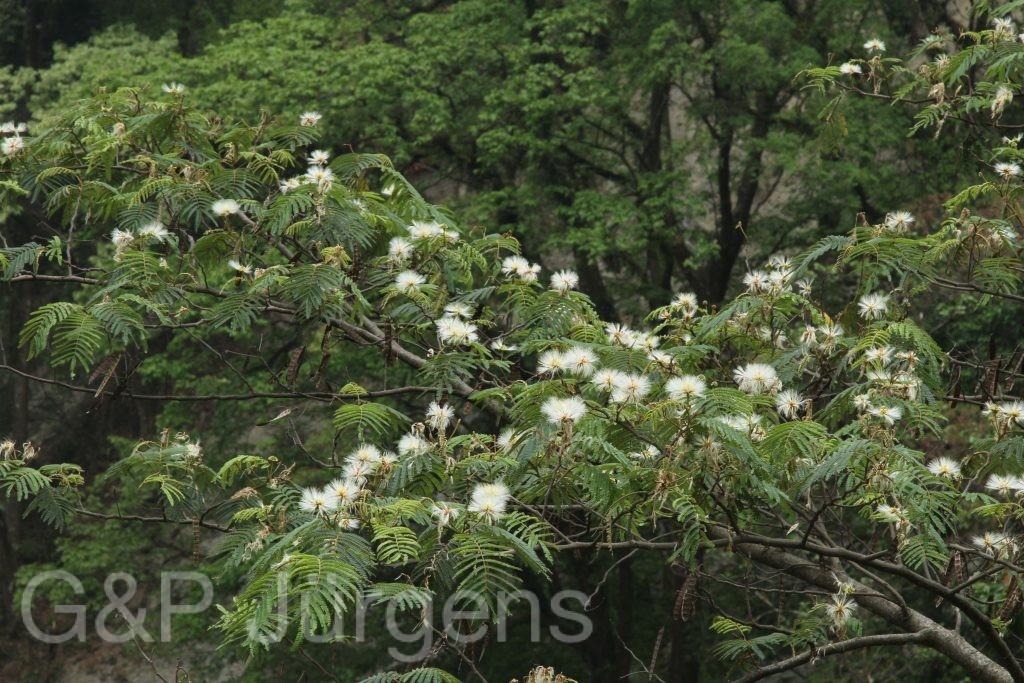
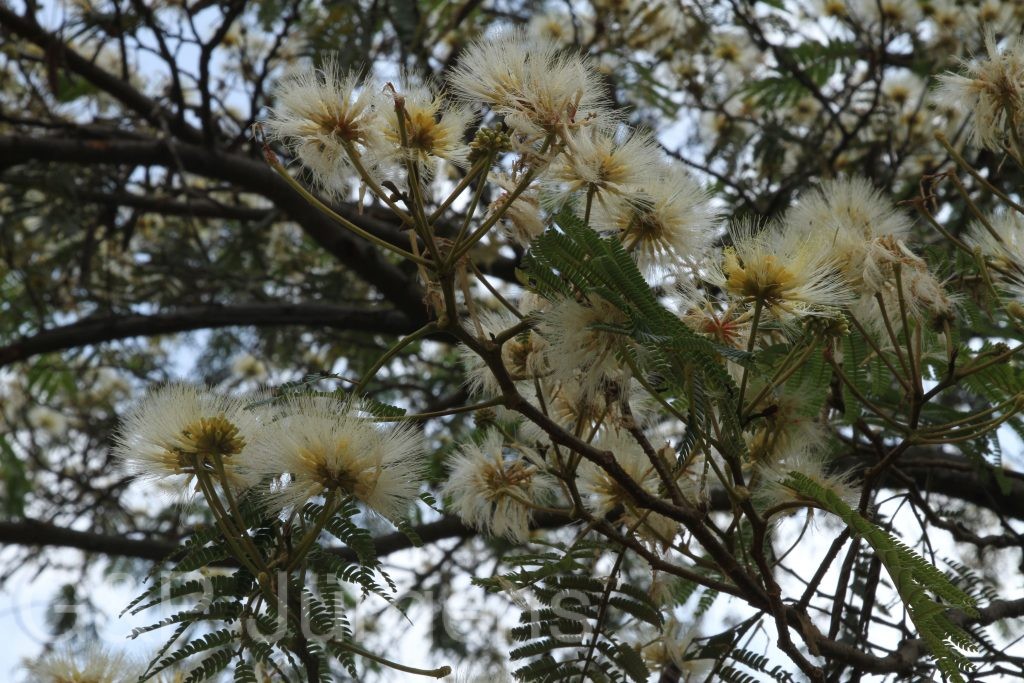
It is a medium-sized to large deciduous tree with spreading branches and bipinnate leaves bearing several pairs of pinnae, each with numerous small, oblong leaflets, the foliage often subtended by a gland on the petiole as is characteristic of the genus. The flowers are grouped in capitate or umbellate heads and, as in Albizia generally, owe their showy appearance to the long, numerous, exserted stamens united below into a tube, the small corolla being inconspicuous. The fruit is a flat, oblong, dehiscent legume (pod) containing several compressed seeds.
Named for the plant collector George Sherriff, A. sherriffii belongs to the mimosoid legumes (Fabaceae subfamily Caesalpinioideae, mimosoid clade), within which Albizia is distinguished from Acacia and allied genera by its stamen and pod characters. As a relatively narrowly distributed Himalayan tree, it is potentially sensitive to lowland forest clearance, though it has not been formally assessed in detail.
Author: Baker f. · Sources: POWO (Kew), GBIF, Flora of Bhutan, Legumes of the World (Lewis et al.), Flora of China