
H.Ohashi
Description
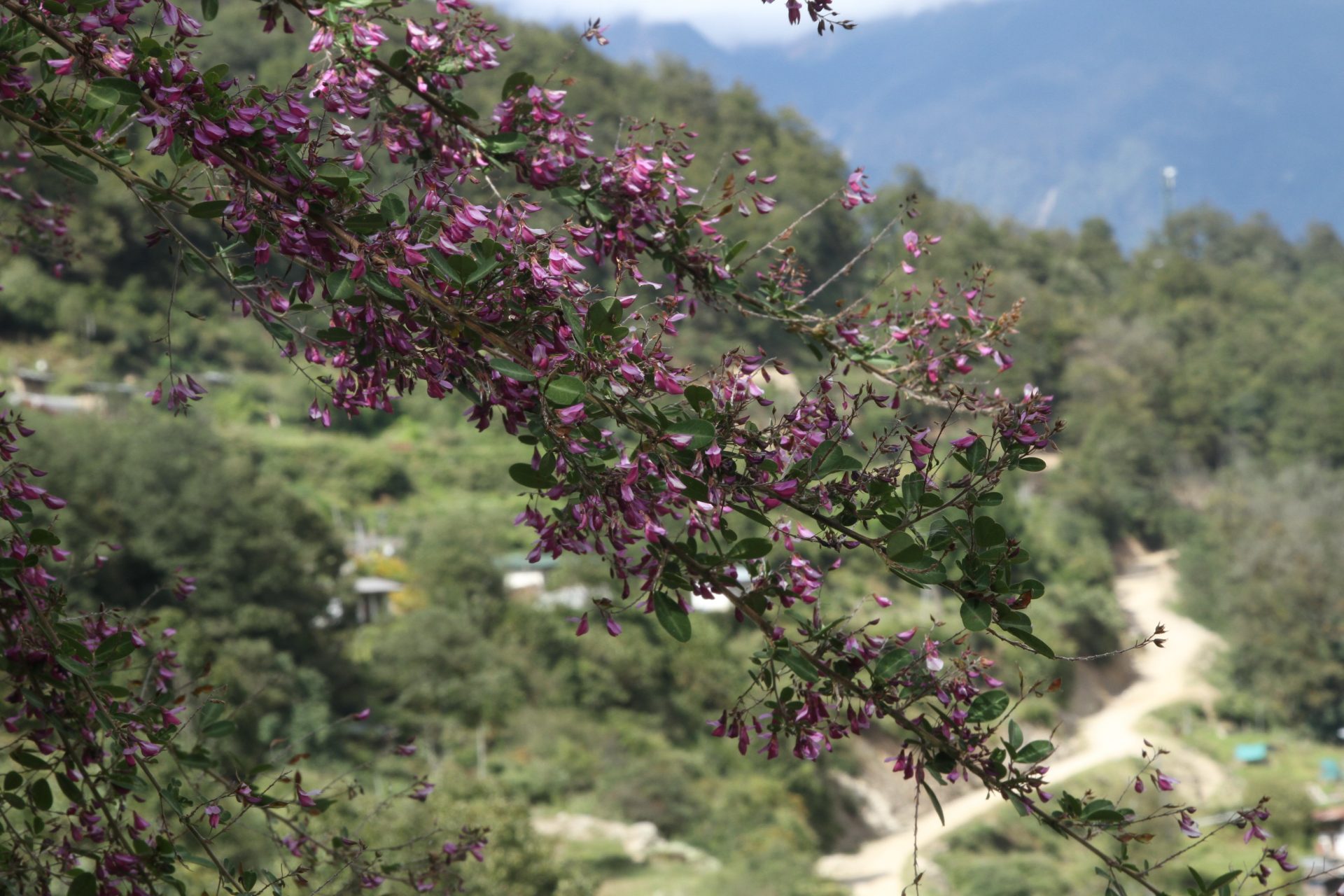
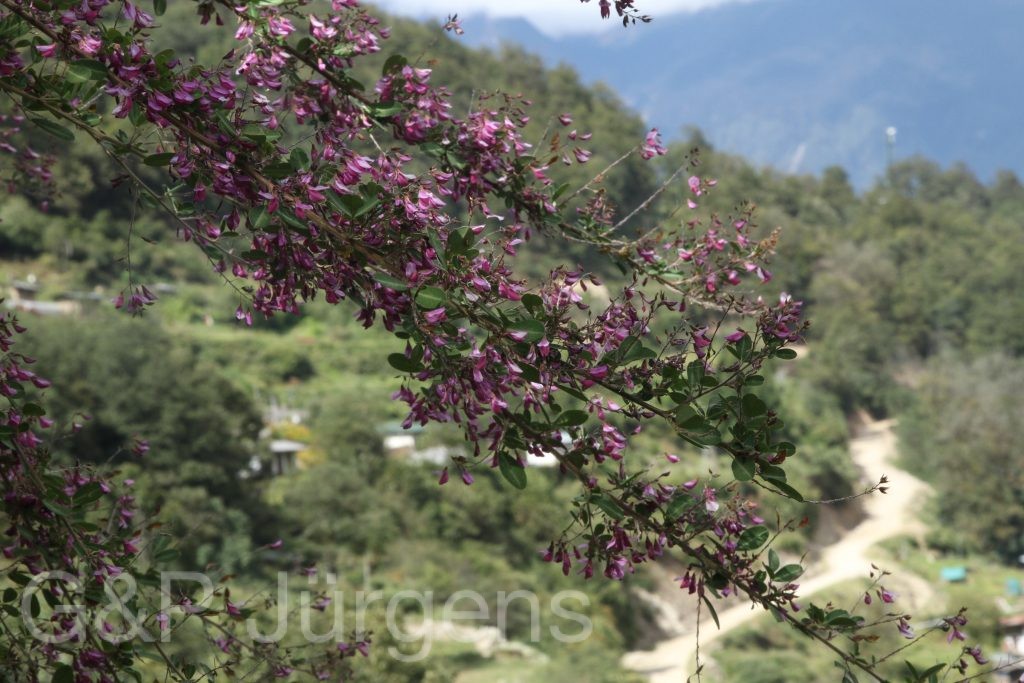
Codariocalyx motorius is a subshrub of the subtropical and tropical understorey, widely distributed across South and Southeast Asia and reaching the southern Himalayan foothills. GBIF records (some 1,418 occurrences) document it from China, India, Nepal, Bhutan, Myanmar, Thailand, Laos, Cambodia, Vietnam, Sri Lanka, Taiwan, the Philippines, Indonesia and Pakistan, with naturalised or cultivated material in Japan, the United States and elsewhere. It favours open scrub, forest margins, grassy slopes and disturbed ground. The photographed plant grows at Punakha in western Bhutan at about 1,240 m, flowering in October, typical of the warm broadleaved zone below 1,500 m it occupies in the eastern Himalaya.
It is an erect perennial subshrub 0.6–1.5 m tall with woody-based, finely pubescent stems. The leaves are pinnately trifoliolate; the terminal leaflet is large, oblong-lanceolate and up to 8 cm long, flanked by two minute lateral leaflets that perform spontaneous rotatory movements in response to light and warmth. The inflorescence is a terminal or axillary raceme of small papilionaceous flowers, violet to purplish, with a striate standard. The fruit is a curved, several-jointed lomentum that breaks into one-seeded articles at maturity.
Long known as Desmodium gyrans, the species is famous as the "telegraph" or "dancing" plant, its motile lateral leaflets having attracted study from Darwin onwards. It is locally used in traditional medicine and is of no conservation concern given its wide range and tolerance of disturbance, though it is a characteristic indicator of seasonally dry monsoon forest in the Himalayan tracts.
Author: H.Ohashi · Sources: POWO (Kew), Flora of China Vol. 10, Flora of Bhutan Vol. 1, GBIF, Ohashi: Taxonomic Studies in Desmodium (Leguminosae)