
(L.) Graham ex Wall.
Description
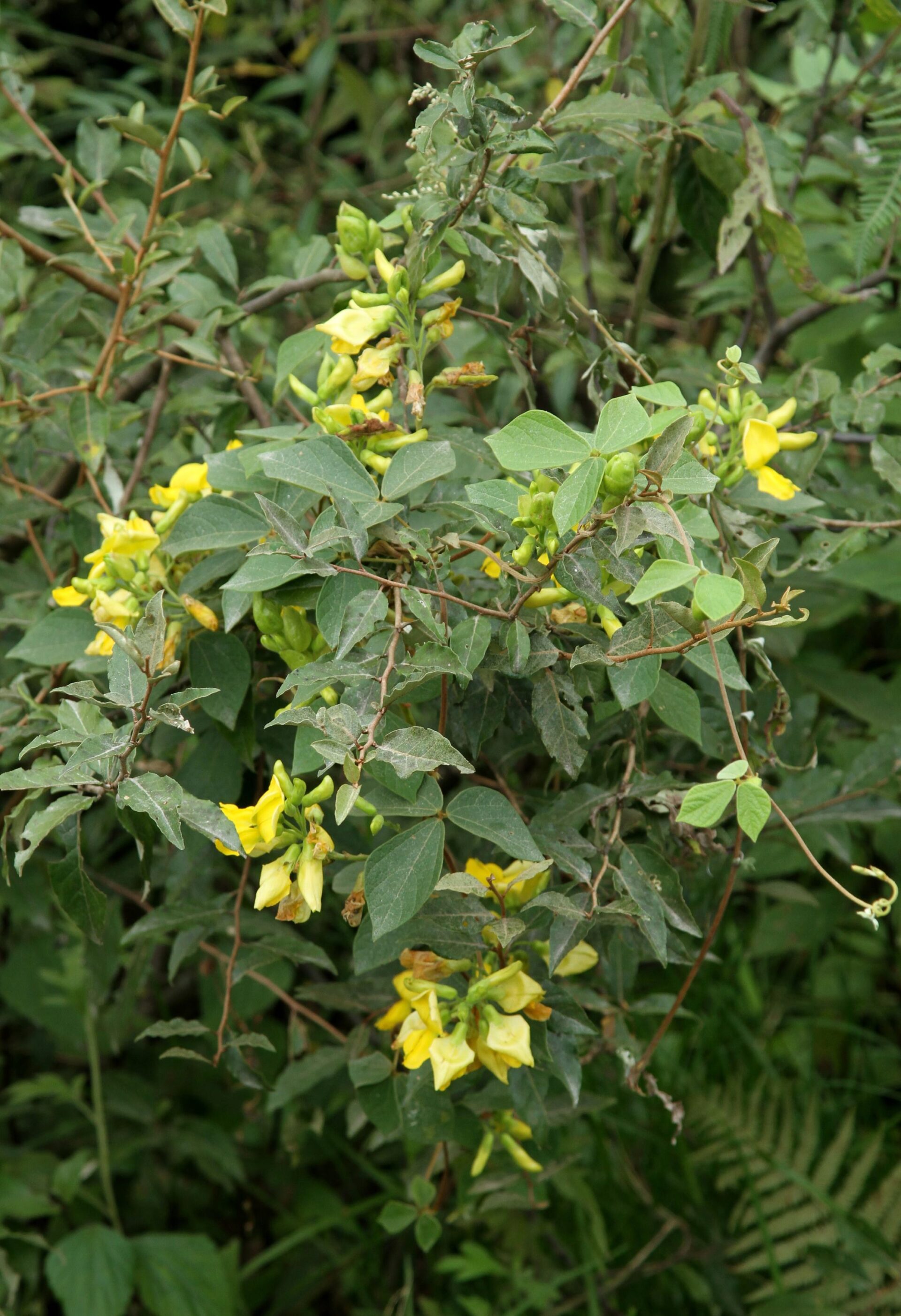
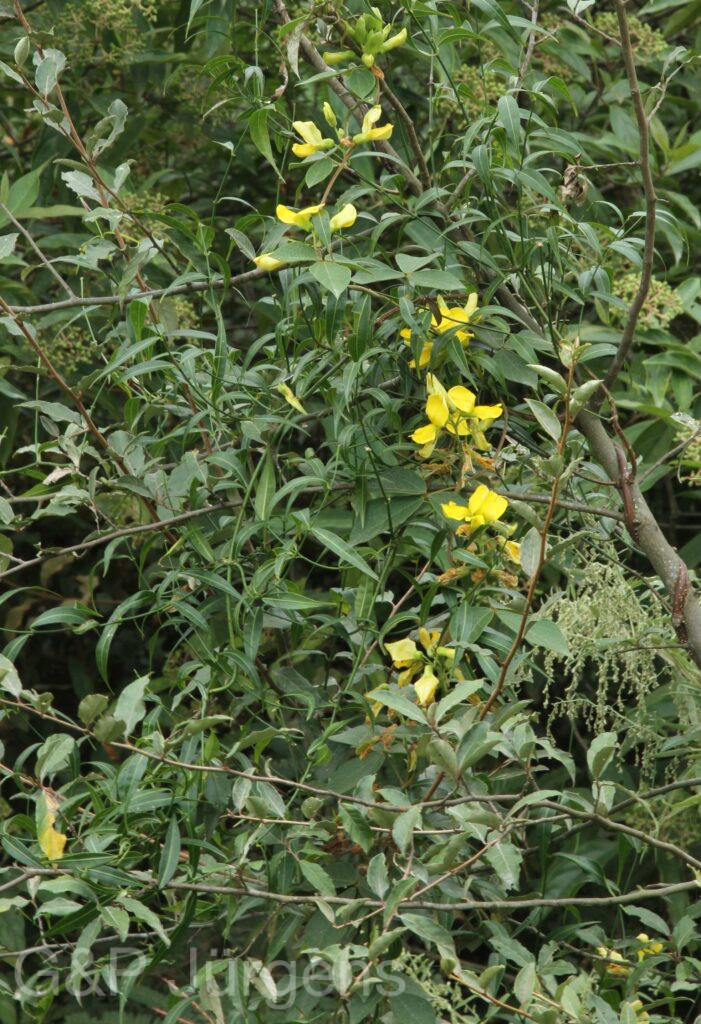
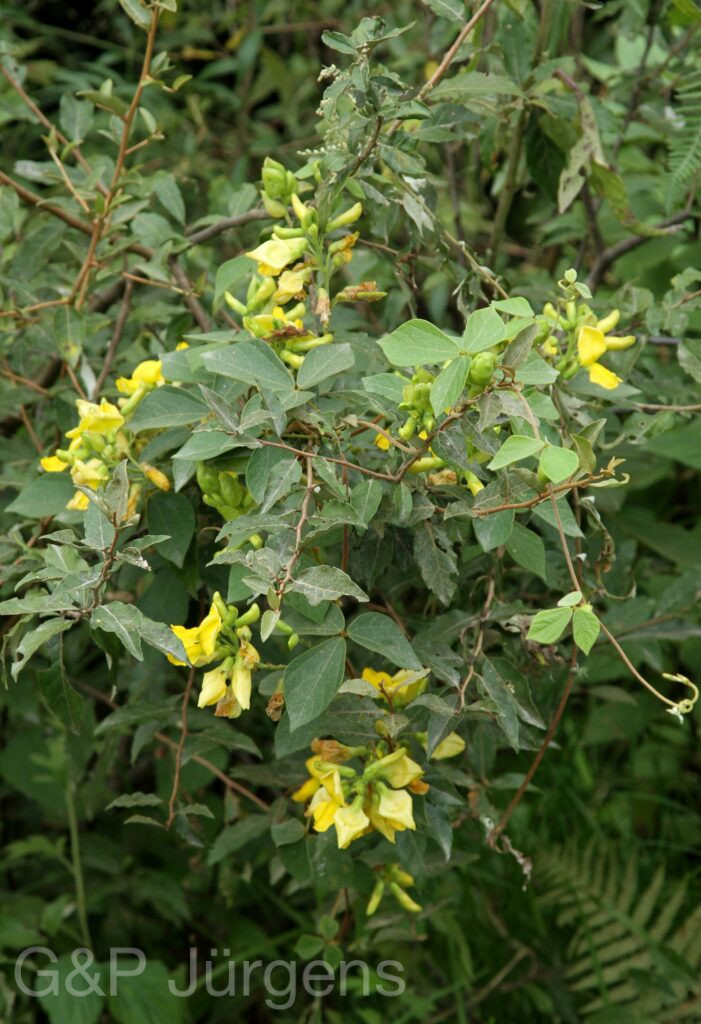
Cajanus scarabaeoides is a widely distributed twining legume of the Old World tropics and subtropics, recorded by GBIF from more than two dozen territories spanning the Indian subcontinent, China, Taiwan, mainland and insular Southeast Asia (Thailand, Vietnam, the Philippines, Indonesia, Papua New Guinea), Japan, Australia, the western Indian Ocean islands (Madagascar, Réunion, Mayotte) and parts of West Africa, with over 4,200 georeferenced occurrences attesting to its commonness as a weedy scrambler. In the Himalayan portion of its range it ascends well into the hills, as the photographed plant from Trongsa in central Bhutan at about 2,050 m elevation in October illustrates. It typically grows in open grasslands, scrub, forest margins, fallow fields, roadsides and other disturbed sunny situations, flowering and fruiting through the post-monsoon dry season; as a nitrogen-fixing pioneer it colonises poor soils readily and is often a component of degraded secondary vegetation.
The species is a slender, trailing or twining perennial herb to subshrub with prostrate to climbing stems clothed in spreading silky or brownish hairs. The leaves are pinnately trifoliolate, the leaflets oblong-elliptic to obovate, the terminal one largest, gland-dotted beneath and silky-pubescent on both surfaces, with small stipels and persistent stipules. The flowers are borne in short axillary racemes; the corolla is papilionaceous and yellow, the standard frequently marked with reddish or purplish veining on the back, and the calyx is campanulate with narrow lobes. The fruit is a flattened, oblong, brownish-pubescent pod constricted between the seeds and conspicuously transversely depressed, dehiscing to release several small dark seeds.
Cajanus scarabaeoides belongs to the tribe Phaseoleae (subtribe Cajaninae) and is taxonomically significant as one of the closest wild relatives of the cultivated pigeon pea, Cajanus cajan, sharing the characteristic resinous glandular dots that distinguish the genus. As a hardy, drought-tolerant wild crop relative it is valued in plant breeding as a source of genes for pest resistance and stress tolerance, and it serves locally as fodder and a green-manure cover crop. Its enormous natural range, ecological adaptability and frequency leave it of least conservation concern, though wild germplasm is increasingly recognised for its importance to food-security research.
Author: (L.) Graham ex Wall. · Sources: POWO (Kew), GBIF, Flora of China Vol. 10, Flora of Bhutan Vol. 1, Flora of Nepal, Flora of Pakistan, van der Maesen monograph on Cajanus and Atylosia (Wageningen Agricultural University Papers)