
Wall. ex Brandis
Description
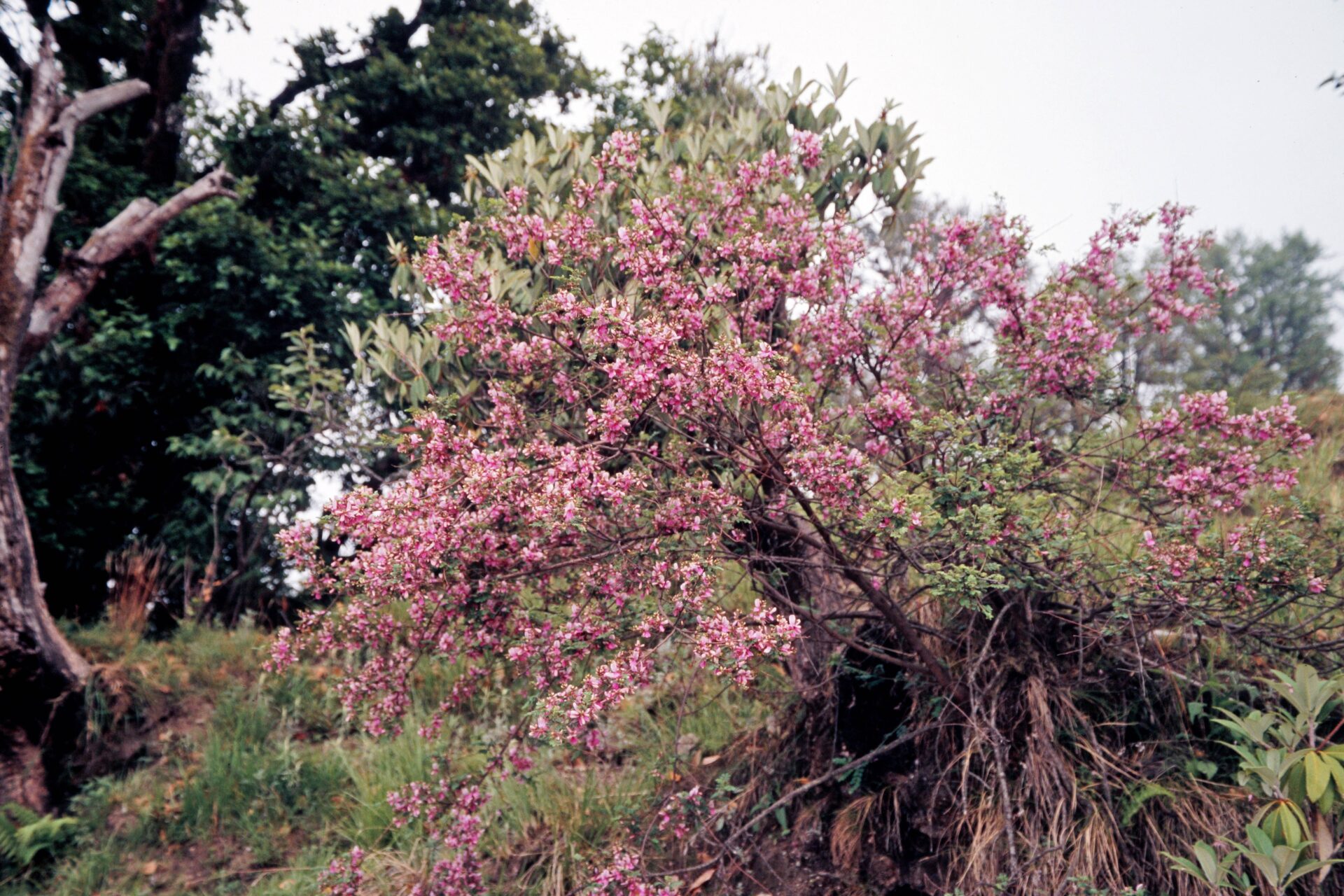
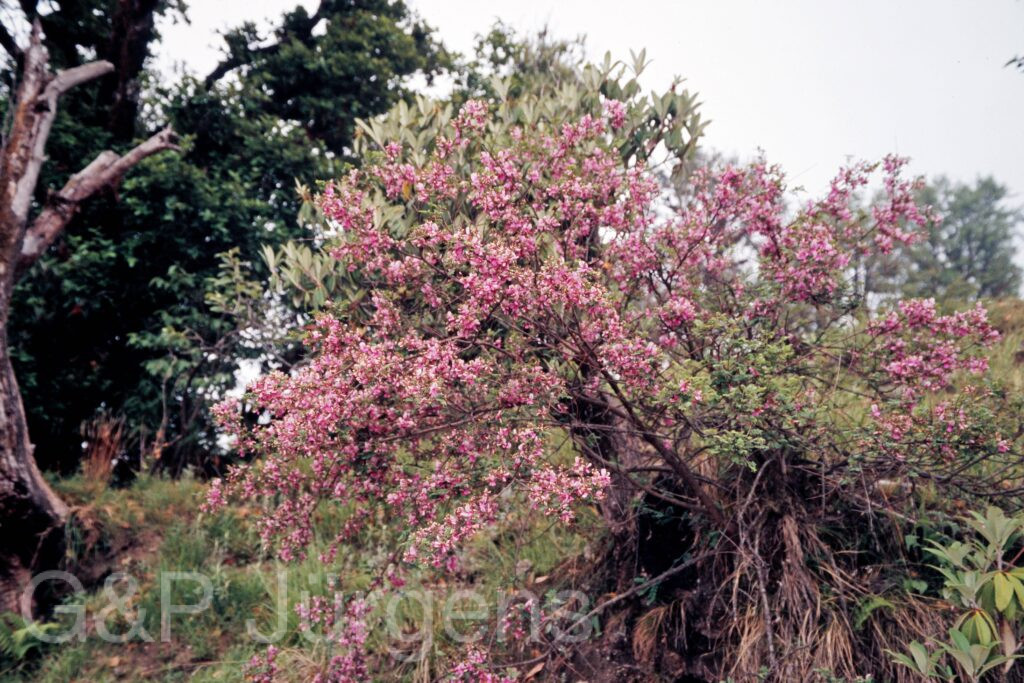
Indigofera heterantha (Wall. ex Brandis), a deciduous shrub of the subfamily Faboideae, is widely distributed across the western and central Himalaya, ranging from Afghanistan and Pakistan eastward through northern India, Nepal and Bhutan into southwest China. With over 1,100 georeferenced occurrences recorded in GBIF, it is a common and conspicuous element of the temperate zone, and has additionally become naturalised in cultivation across Europe, North America, Japan and the Southern Hemisphere. The species favours open hillsides, forest margins, dry stony slopes and degraded scrub, typically between 1,500 and 3,000 m, as reflected in the collection from Garhwal at Kawara, India, at 2,000 m in June, where it forms part of the sun-loving sub-alpine shrubbery.
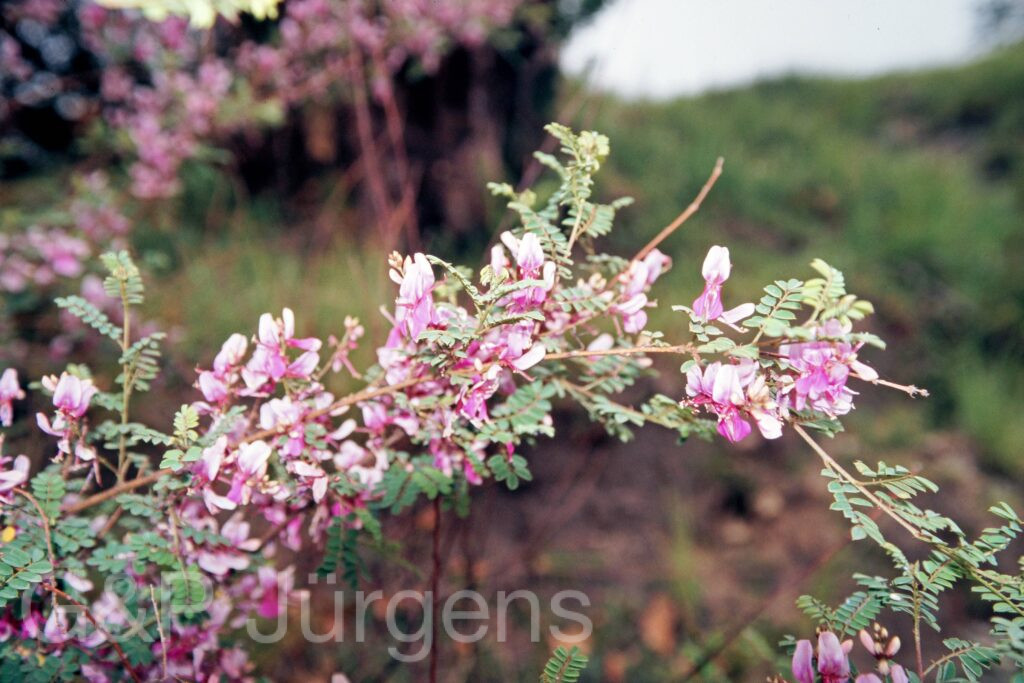
The plant is an erect, much-branched shrub reaching 1–2 m in height, with slender, angular, greyish branchlets bearing appressed, biramous (medifixed) hairs that lend a canescent aspect to young growth. The leaves are imparipinnate with 11–21 small, obovate to elliptic leaflets, each mucronate at the apex and silky-pubescent beneath. Numerous purplish-red to bright pink-crimson papilionaceous flowers are borne in dense, erect axillary racemes that often exceed the subtending leaf; the calyx is shortly toothed and the standard petal silky on its outer face. The fruit is a slender, terete, glabrescent legume containing several cuboid seeds.
Formerly treated under the name Indigofera gerardiana, the species is taxonomically allied to the I. hebepetala group of Himalayan legumes. It is an important soil-binding pioneer on eroding slopes, contributing nitrogen through rhizobial symbiosis, and the tough stems are traditionally harvested for basketry and fuel. Its hardiness and floriferous habit have made it a popular ornamental in temperate gardens. The species is not considered threatened, being abundant throughout its broad montane range.
Author: Wall. ex Brandis · Sources: POWO (Kew), Flora of Pakistan, GBIF, Flora of China Vol. 10, Sanjappa: Legumes of India (1992)