
(Royle ex Schindl.) Schindl.
Description
Campylotropis speciosa is a Sino-Himalayan shrub distributed across the warm-temperate and subtropical belts of the southern Himalaya and adjacent China, with verified records from India, Nepal, Pakistan, Bhutan, Bangladesh, Myanmar and China. The roughly 294 occurrences trace a continuous arc along the outer ranges. In the Garhwal Himalaya it occupies open hill slopes, forest margins and scrub at around 1900-2500 m, as documented by collections from Kunol (2500 m) and Sitel (1900 m) flowering in September. It favours sunny, well-drained rocky ground and is typically a component of secondary scrub and degraded oak forest.
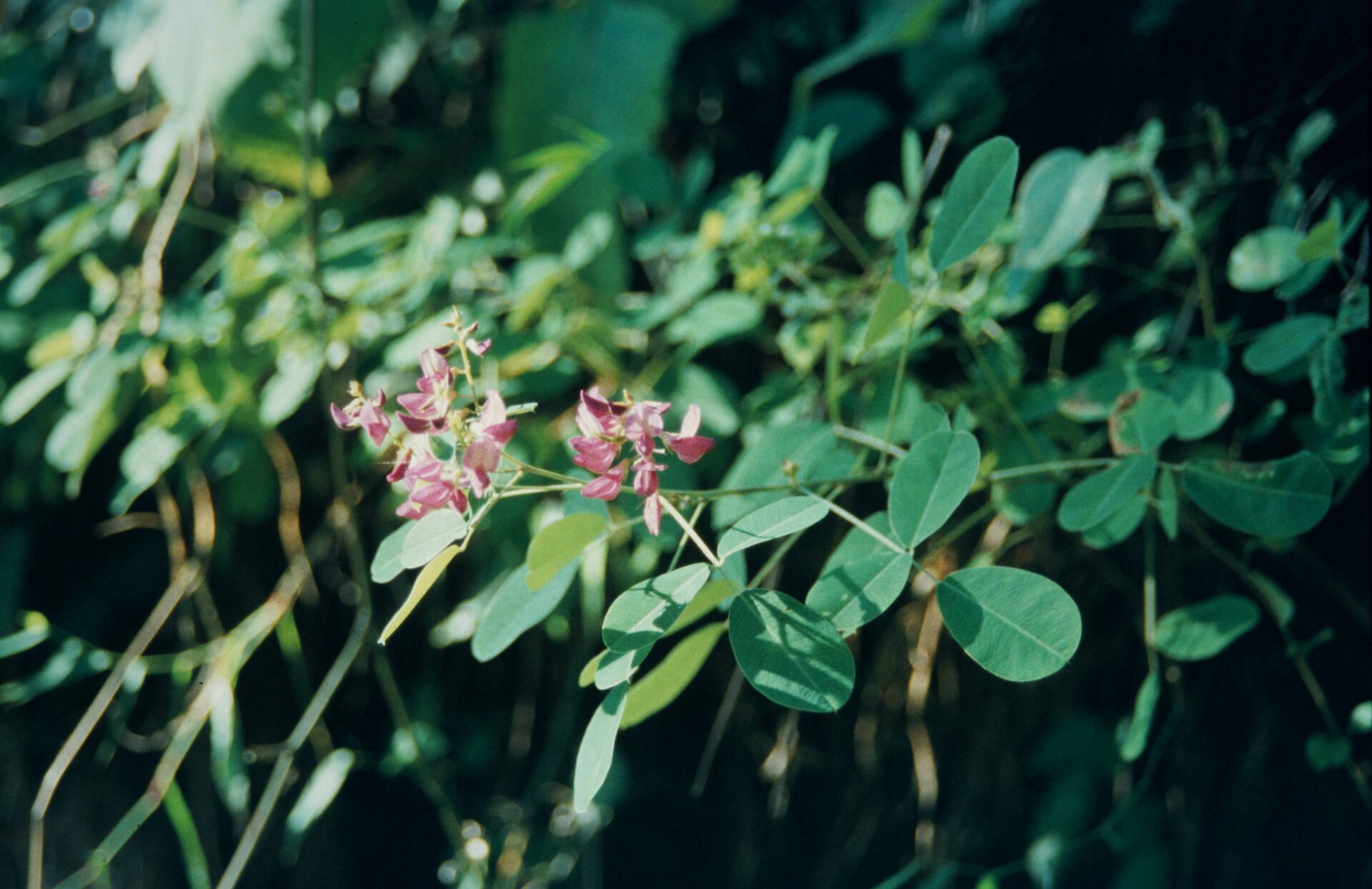
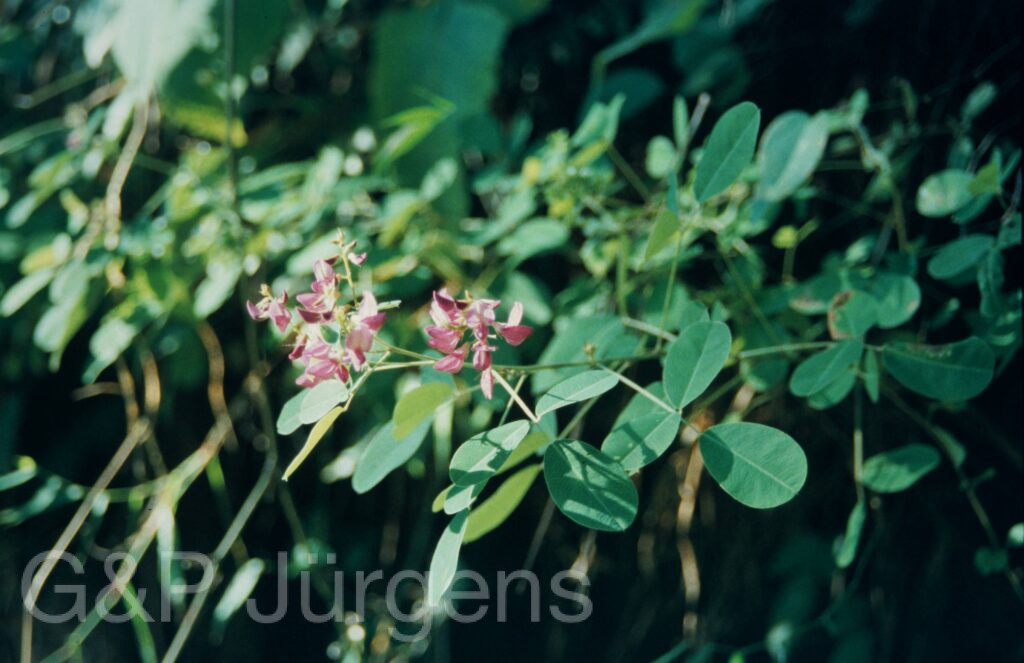
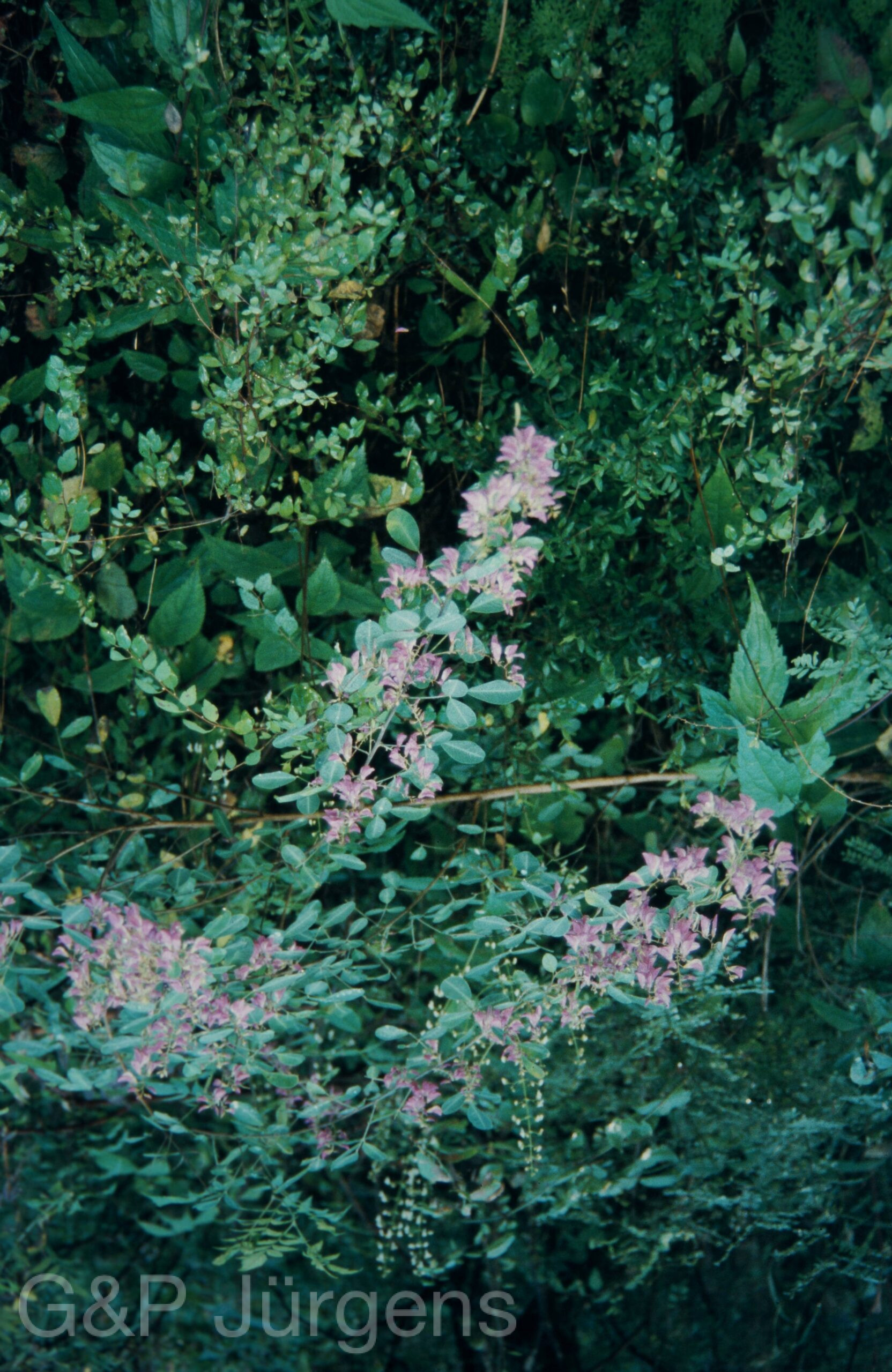
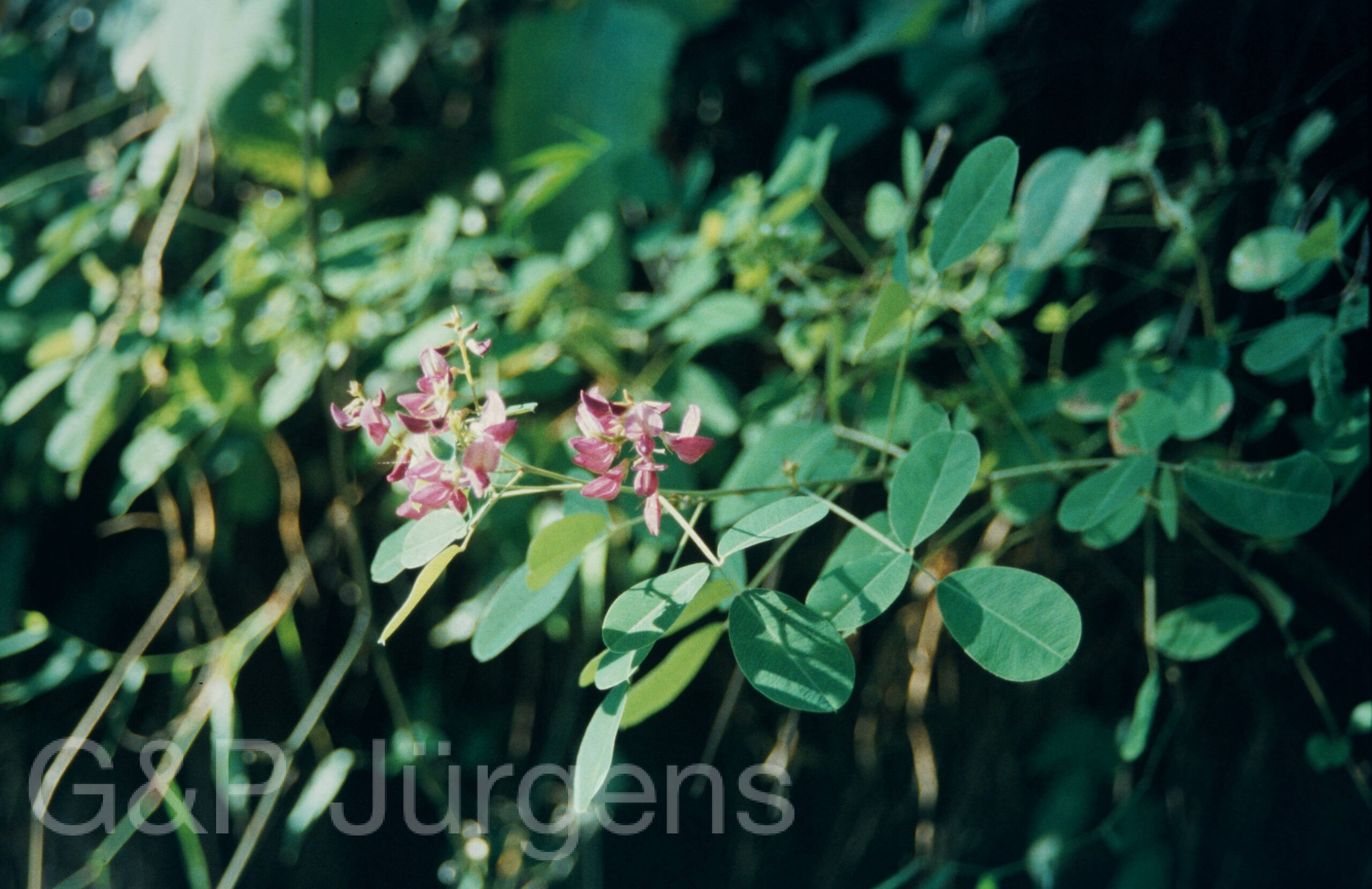
It forms an erect, much-branched shrub to about 2 m, with ridged, finely pubescent young branchlets. The leaves are pinnately trifoliolate; leaflets are elliptic to obovate, the terminal one largest, rounded or emarginate at the apex and mucronate, glabrescent above and appressed-pubescent beneath, the stipules subulate and persistent. The showy flowers are borne in elongate, lax terminal and axillary racemes, each pedicel articulate and bearing a single papilionaceous corolla; the standard is broad and reddish-purple to violet, the keel incurved. The fruit is a small, flattened, indehiscent, one-seeded legume with a reticulate-veined surface.
The genus Campylotropis, allied to Lespedeza within tribe Desmodieae, is distinguished by its articulate pedicels and one-seeded pods. C. speciosa is among the more ornamental Himalayan species, valued for its long racemes. As a leguminous pioneer it aids nitrogen enrichment and slope stabilisation on disturbed ground; though not assessed as threatened, its dependence on open habitats makes it sensitive to forest succession and grazing.
Author: (Royle ex Schindl.) Schindl. · Sources: POWO (Kew), GBIF, Flora of China, Flora of Bhutan, Flora of Pakistan, Iokawa & Ohashi revision of Campylotropis