J.Wen, Lowry & Esser
Description
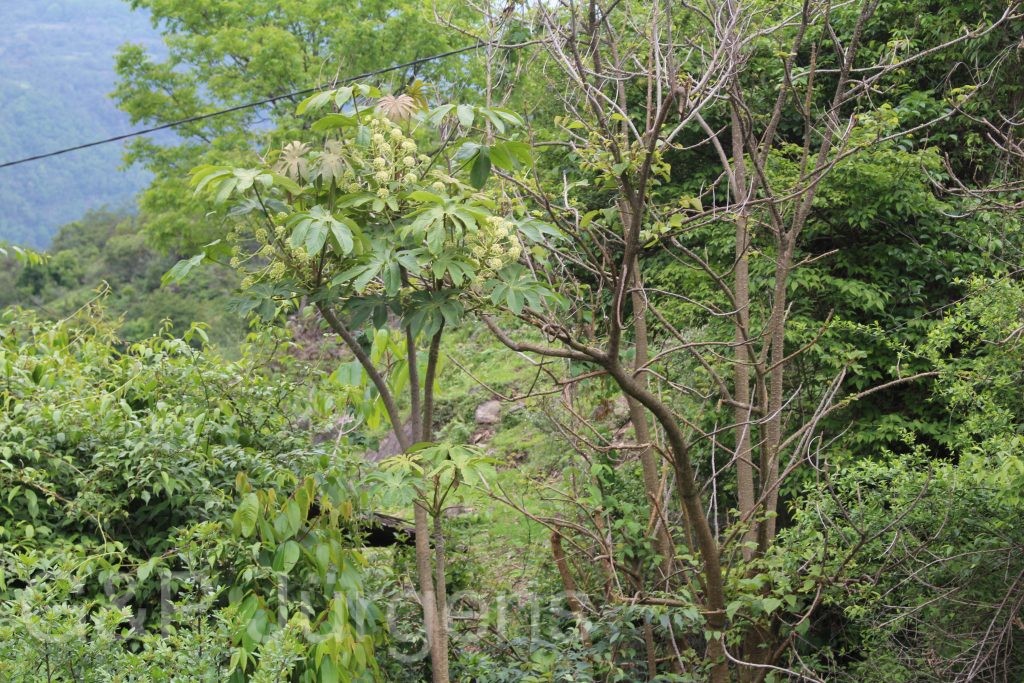
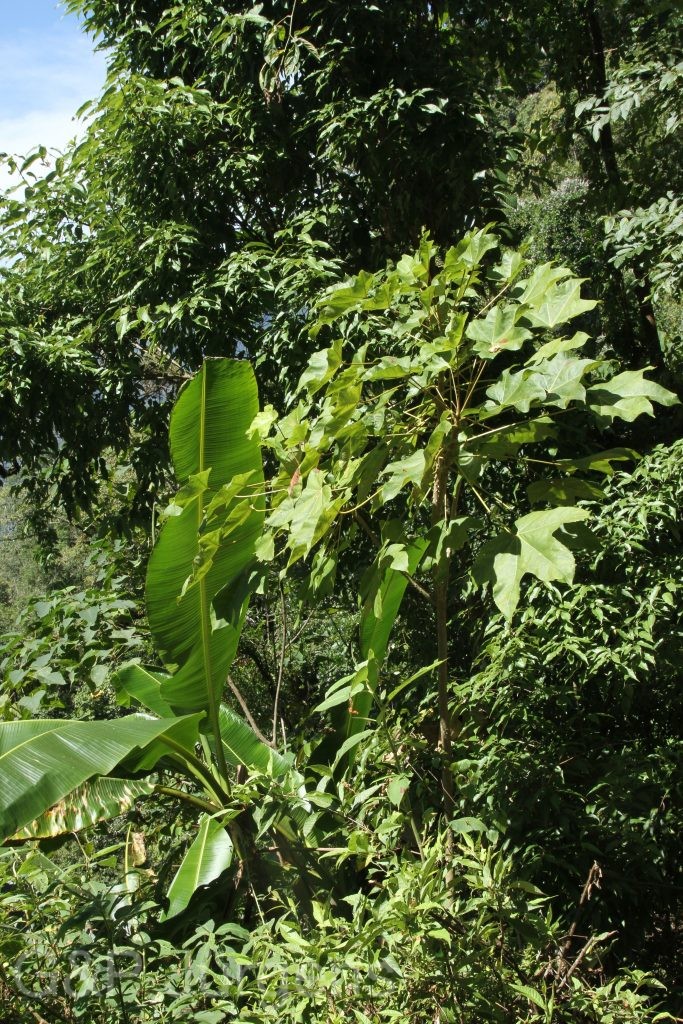
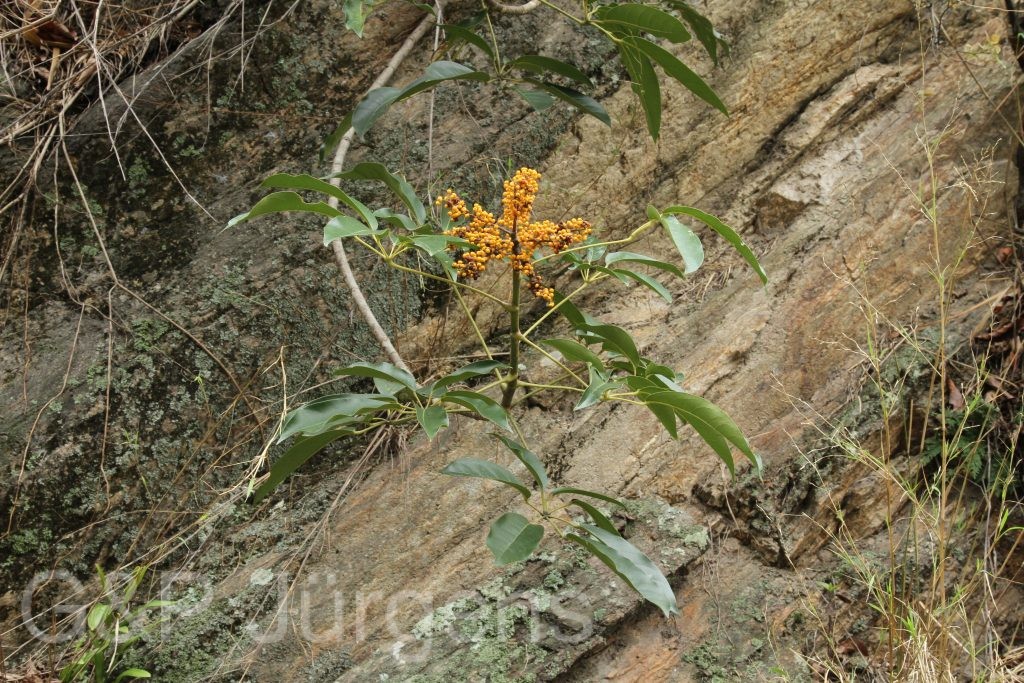
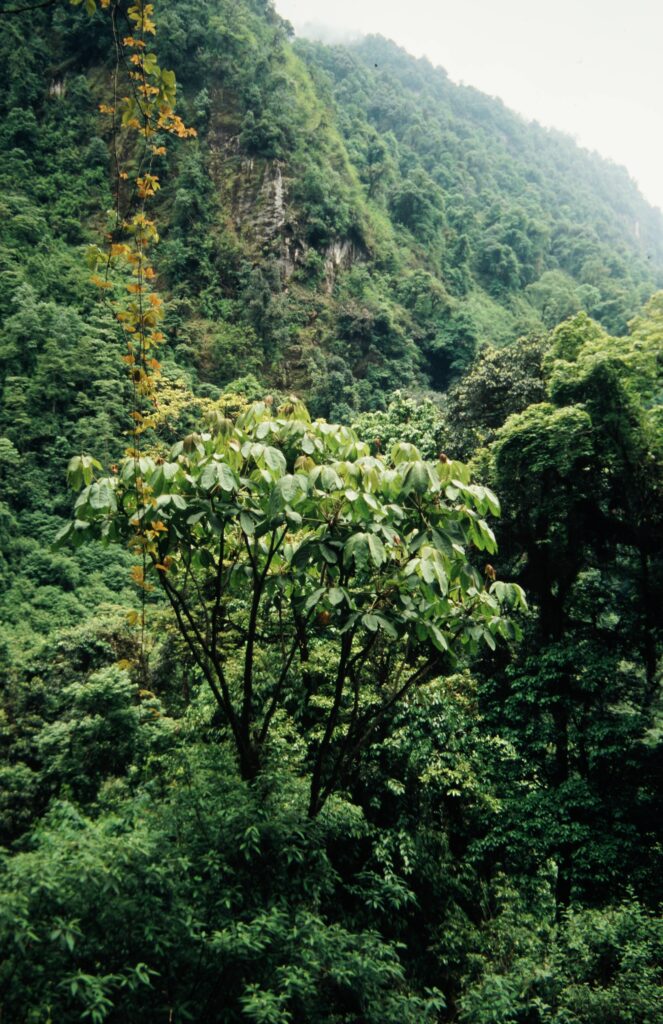
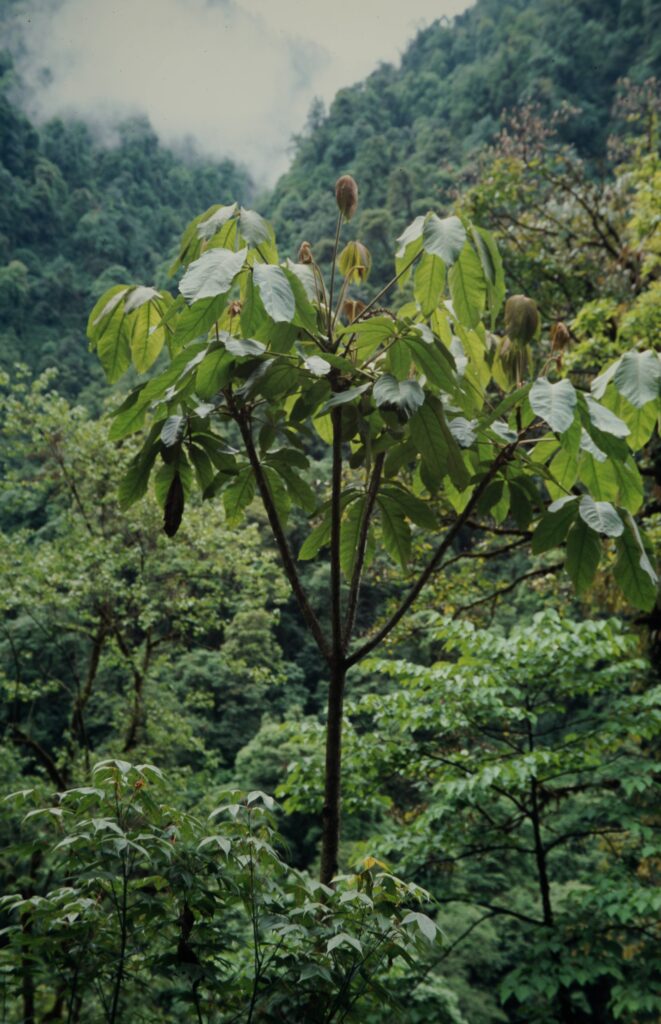
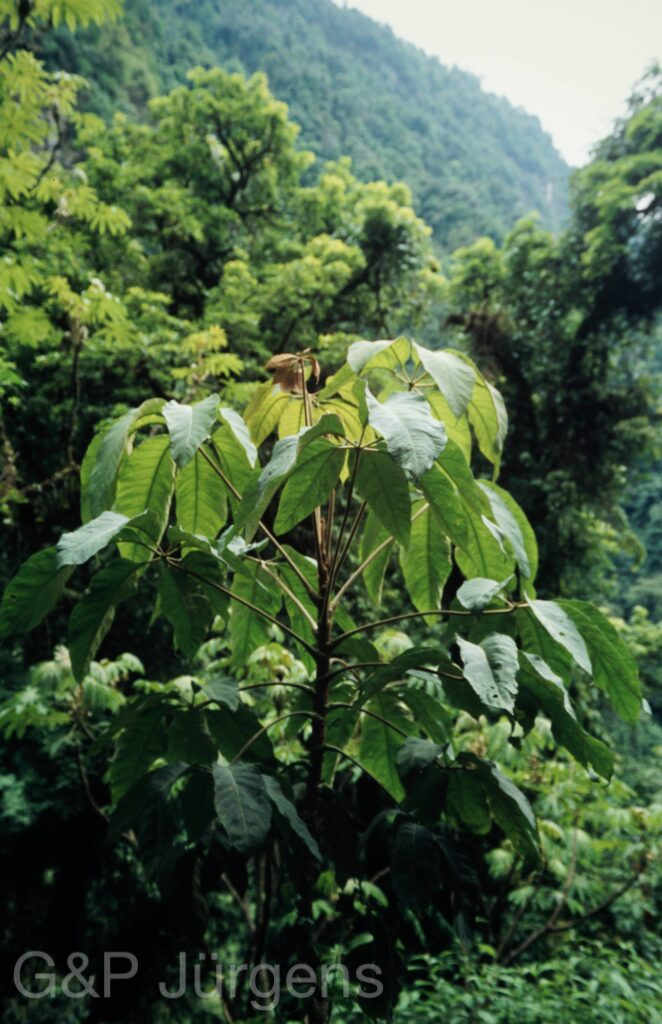
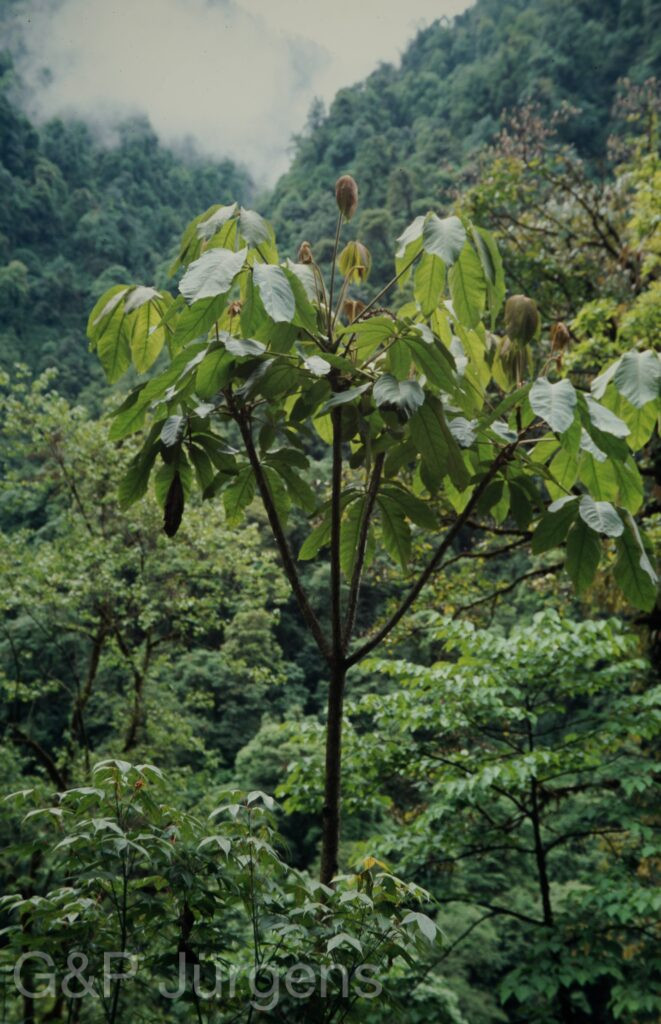
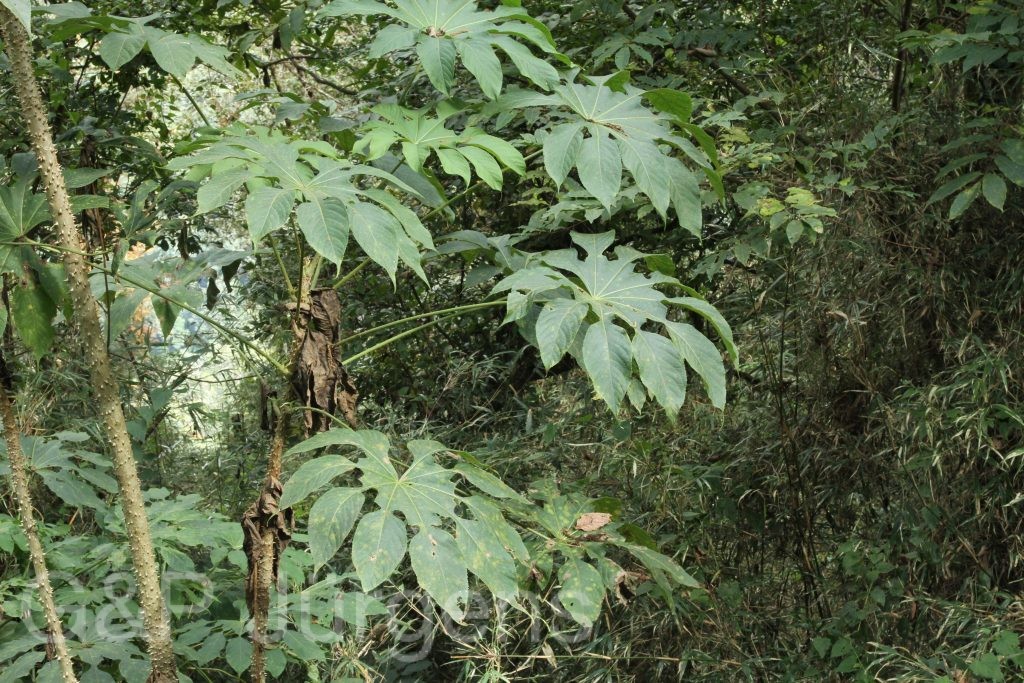
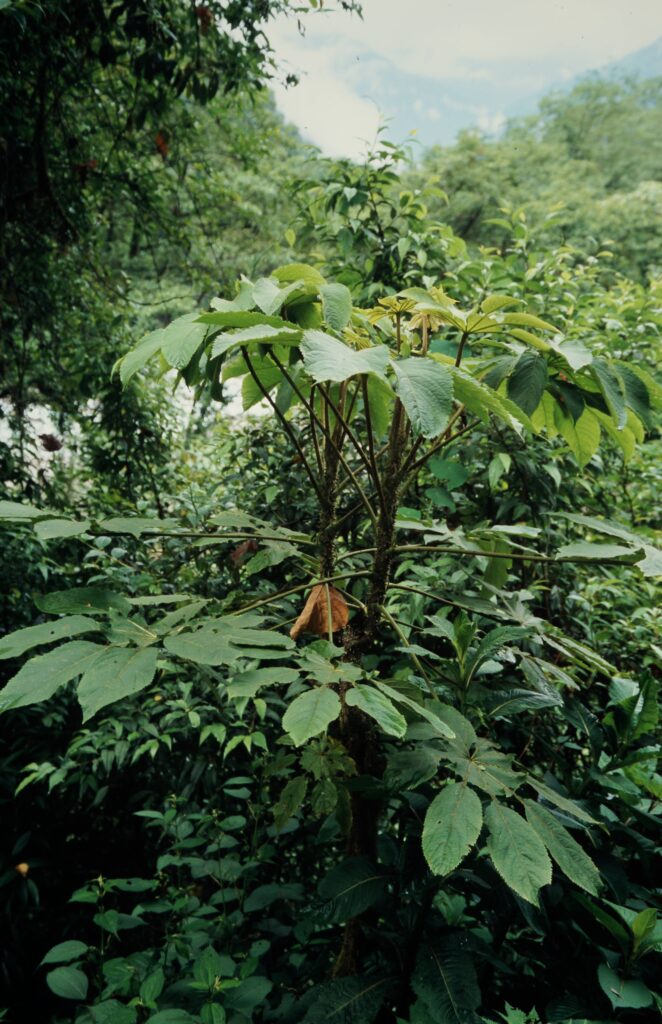
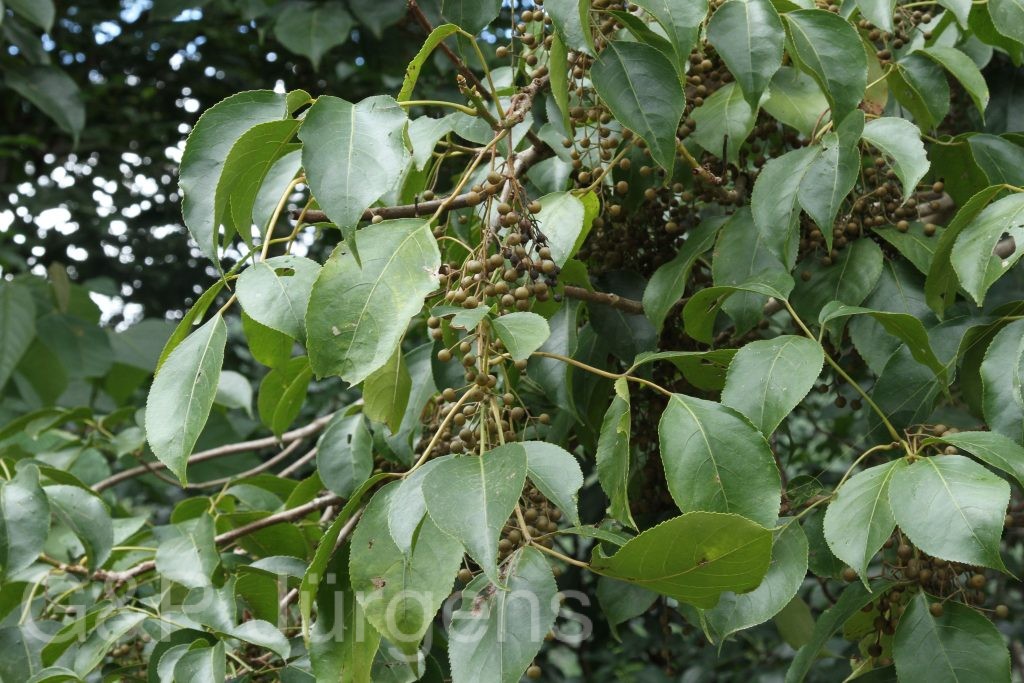
Aralia kingdon-wardii is a narrowly distributed eastern Himalayan and southwest Chinese species known from China, Myanmar, Bhutan and northeastern India, with GBIF recording only about 45 occurrences, reflecting its rarity and restricted range. It is a plant of warm-temperate to subtropical broadleaf forest, the photographed material coming from the Mo-Chu valley in western Bhutan at 1600 m in October. It occupies humid forest interiors, ravine slopes, clearings and stream banks on rich, moist soils in the lower montane belt, where it grows as a tall coarse herb or soft-wooded shrub in shaded to semi-open situations.
The species is a robust, often prickly perennial with stout stems and very large, two- to three-pinnately compound leaves, the numerous ovate to ovate-lanceolate leaflets serrate along the margins and acuminate at the apex. The small, five-merous, greenish-white flowers have an inferior ovary and are borne in numerous umbellules aggregated into a very large, much-branched terminal panicle, the typical inflorescence architecture of Aralia. The fruit is a small, dark, more or less globose, ribbed drupe containing several flattened pyrenes, ripening to purple-black and dispersed by birds.
Named for the plant collector Frank Kingdon-Ward, the species was described by J. Wen, Lowry and Esser as part of modern revisionary work clarifying Asian Aralia and the segregation of related Araliaceae genera. Given its limited known range and low number of records, A. kingdon-wardii is of potential conservation interest, dependent on the persistence of intact eastern Himalayan montane forest; its panicles of nectar-rich flowers and bird-dispersed drupes integrate it into forest pollinator and frugivore networks.
Author: J.Wen, Lowry & Esser · Sources: POWO (Kew), GBIF, Flora of China, Flora of Bhutan, Wen, Lowry & Esser studies in Asian Aralia (Araliaceae), Frodin & Govaerts World Checklist of Araliaceae