
Thunb.
Description
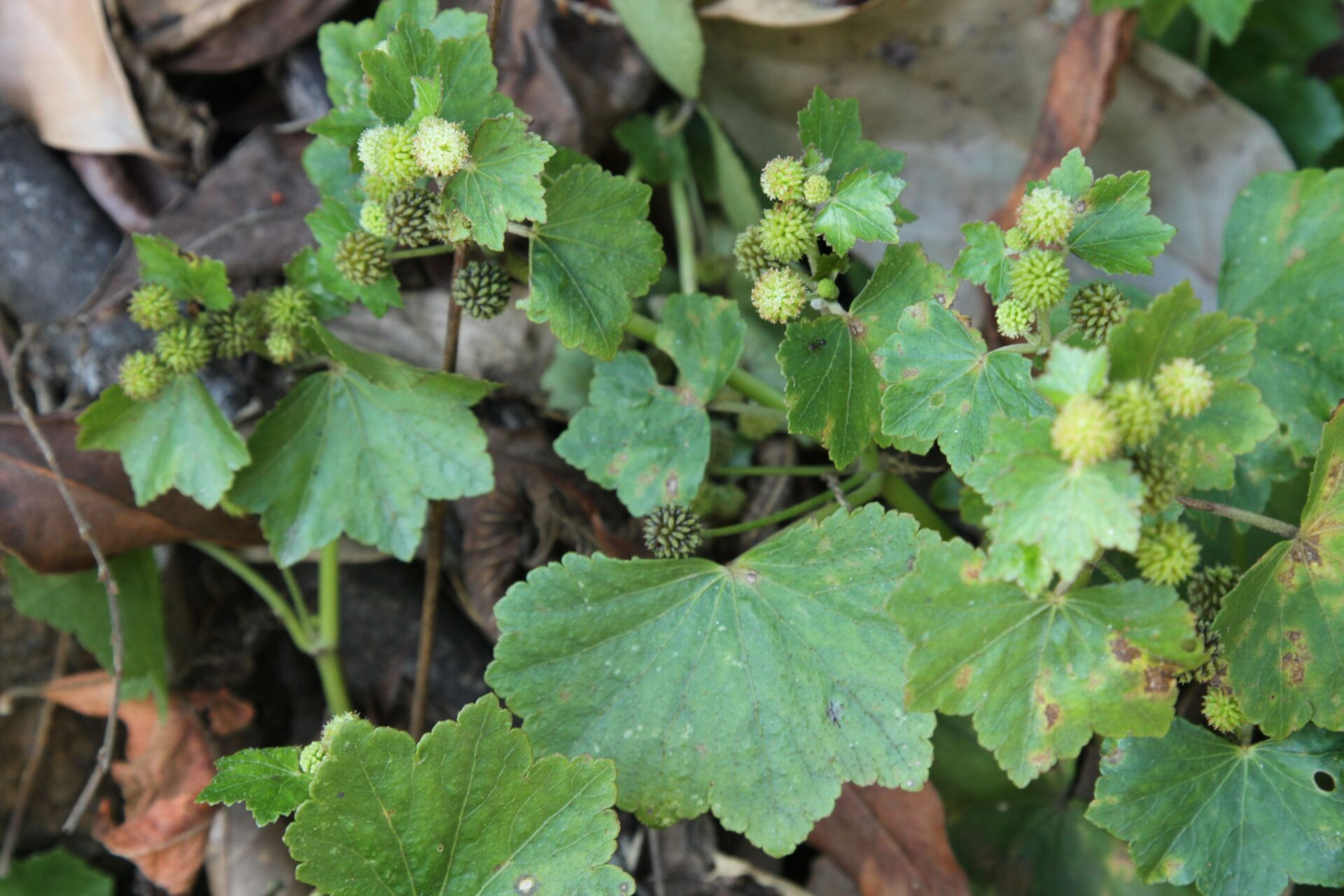
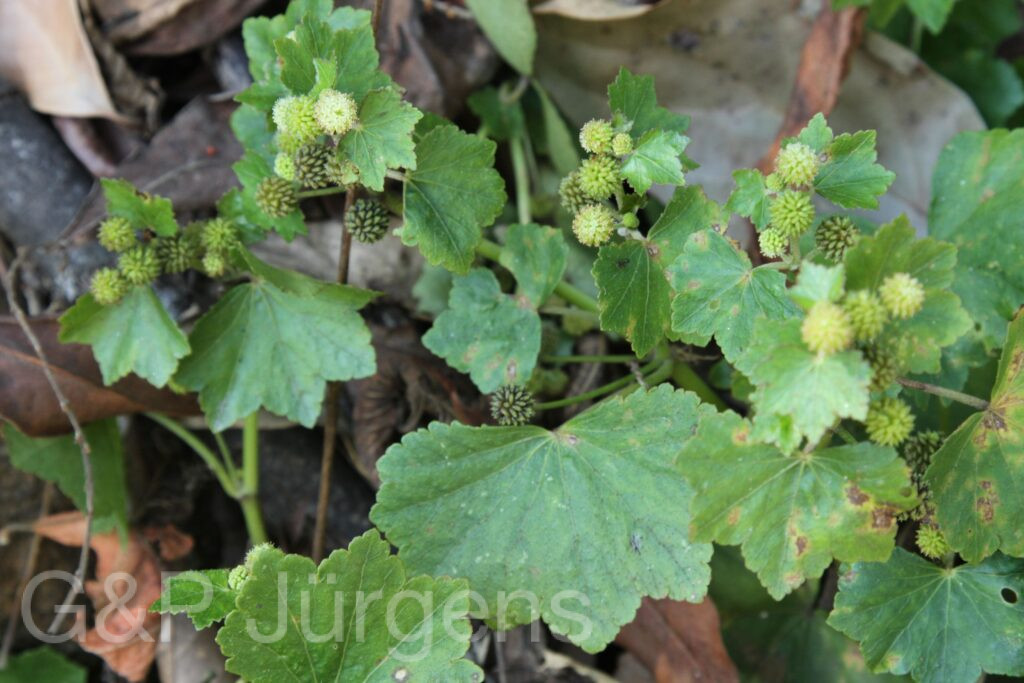
Hydrocotyle javanica is a widespread perennial herb of tropical and subtropical Asia and the western Pacific, recorded from the Himalaya (Nepal, NE India, Bhutan) through southern China, Taiwan, Japan and Korea to Sri Lanka, Myanmar, Indochina, Malesia, the Philippines, New Guinea, Australia and Fiji; with 2,061 GBIF occurrences it is among the better-documented members of its genus. It favours moist, shaded ground along streams, forest floors, seepage banks and damp roadside verges. The Bhutan record from Zhemgang at about 900 m in October places it in warm, humid subtropical forest, where it grows as a creeping ground cover.
It is a creeping to ascending herb rooting at the nodes, with slender, often pilose stems. The leaves are alternate, long-petioled, orbicular to reniform in outline, 2–7 cm wide, palmately 5–7-lobed with the lobes again toothed, cordate at the base, and frequently bearing scattered hairs. The inflorescences are condensed simple umbels, sometimes verticillate along the stem, on peduncles shorter than the petioles; the minute flowers are whitish to greenish, with five petals and an inferior bicarpellate ovary. The fruit is a small, laterally compressed schizocarp, broader than long, the mericarps with conspicuous lateral ribs.
Long placed in Apiaceae, Hydrocotyle is now segregated into Araliaceae (Hydrocotyloideae) on molecular grounds, so the input family is botanically defensible. GBIF lists the name as accepted. The species is highly variable across its enormous range, and several infraspecific taxa have been described; it is common, weedy and of no conservation concern.
Author: Thunb. · Sources: POWO (Kew), Flora of China Vol. 14, Flora of Bhutan Vol. 2, GBIF, Pimenov & Leonov: The Genera of the Umbelliferae (1993)