
J.Wen
Description
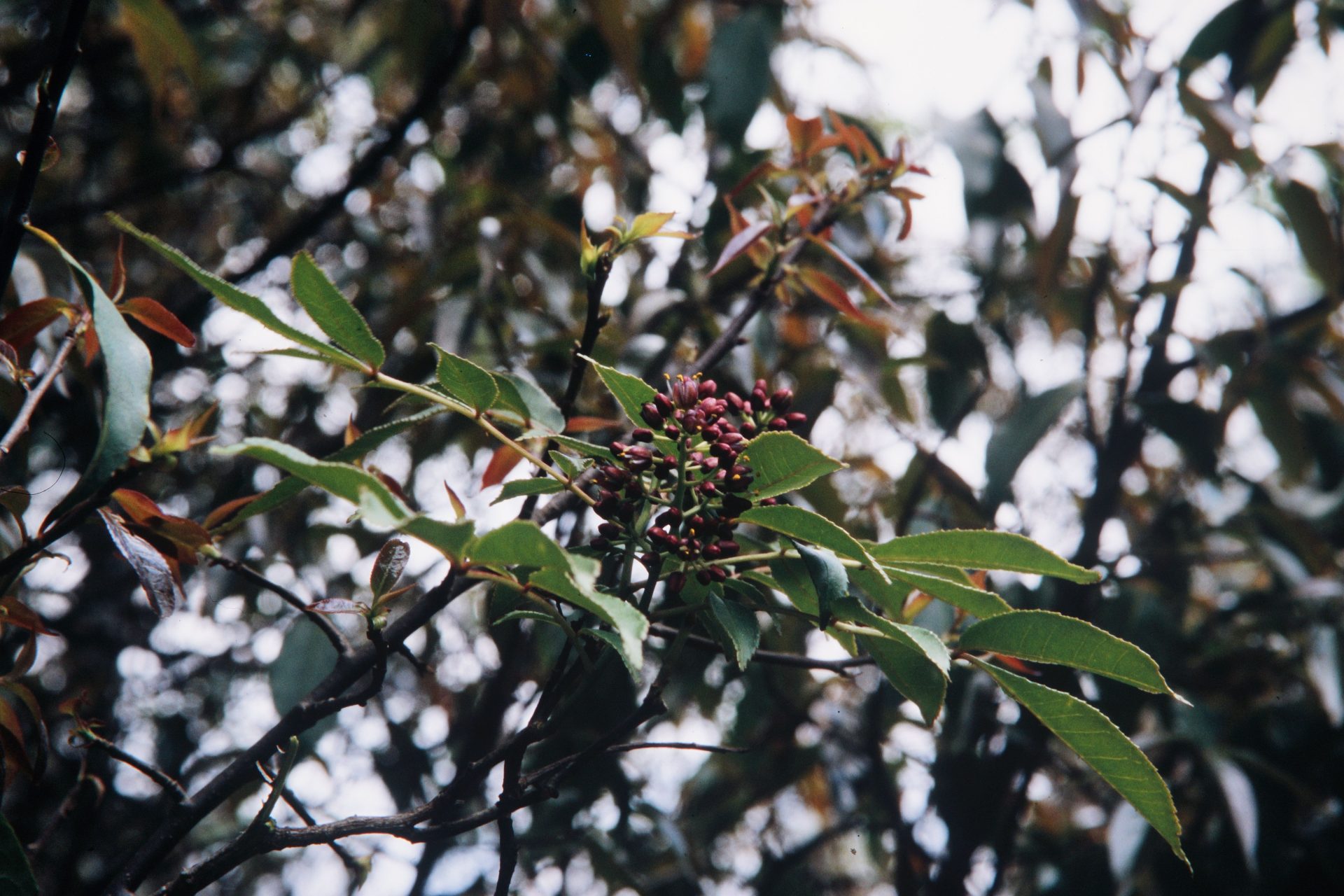
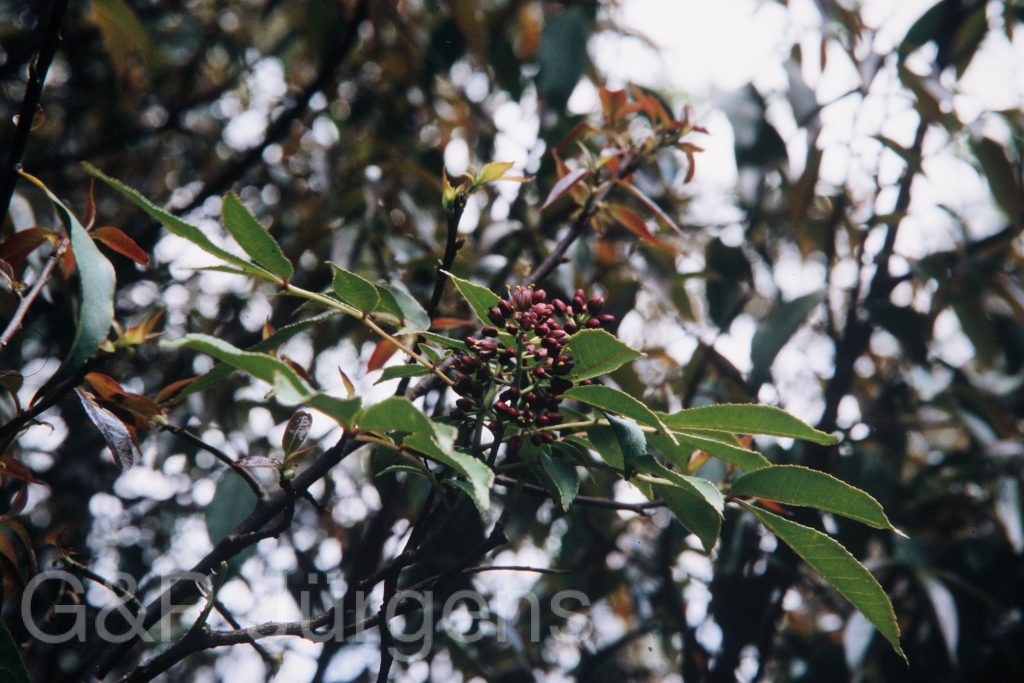
Aralia gigantea is a large herbaceous to subwoody member of the ginseng family ranging across the eastern Himalaya and adjacent uplands, with GBIF logging 145 occurrences in China, Nepal, India, Myanmar and Bhutan. It grows in moist temperate broad-leaved and mixed forest, along ravines, forest clearings and damp shaded slopes, generally between roughly 2000 and 3000 m. The illustrated plant was recorded in Bhutan near Tongsa (Trongsa) at about 2400 m in April, a representative mid-montane forest station for the species, where it springs up among tall-herb communities as the growing season begins.
The plant is a robust, sparsely prickly herb with stout, somewhat pithy stems arising from a thickened rootstock. Leaves are very large, alternate and two- to three-pinnately compound, the numerous ovate leaflets serrate and acuminate, borne on prickly rachides. The inflorescence is a massive terminal panicle of many small umbels, the individual flowers small, greenish-white and five-merous, with a reduced calyx, five petals, five stamens and an inferior ovary crowned by free or basally united styles. The fruit is a small subglobose drupe, ribbed and dark when ripe, containing several flattened pyrenes and attractive to birds.
The species belongs to a group of giant herbaceous Aralia centred on East and Southeast Asia, distinguished from woody congeners by its large compound foliage and herb-like habit. POWO and GBIF accept the name as currently circumscribed. Its size and rapid seasonal growth make it a conspicuous component of Himalayan tall-herb forest understorey, and like related Aralia it has minor ethnobotanical use.
Author: J.Wen · Sources: POWO (Kew), GBIF, Flora of China, Flora of Bhutan, Annotated Checklist of the Flowering Plants of Nepal, Systematics of Aralia (Araliaceae monograph)