
Seem.
Description
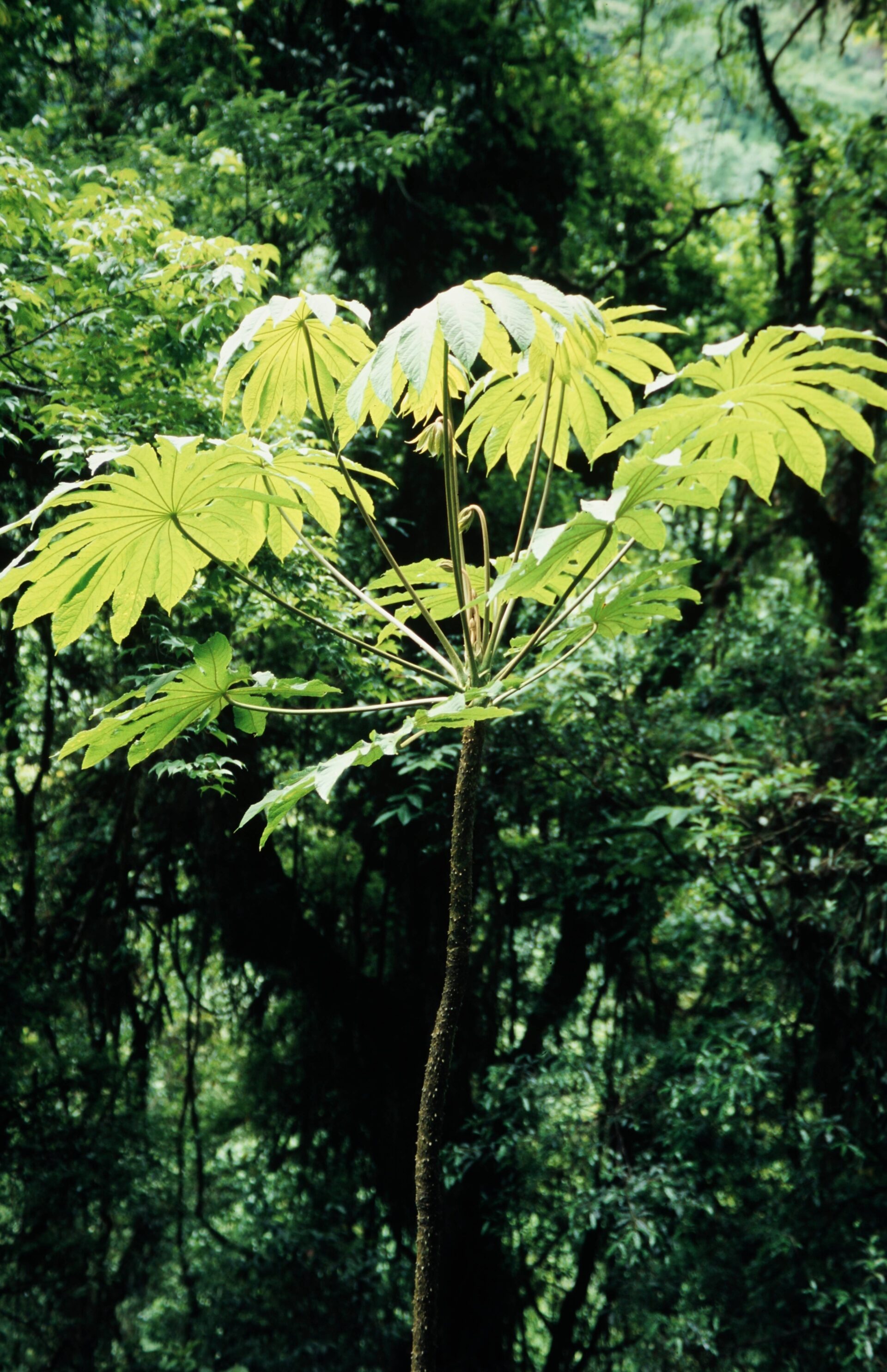
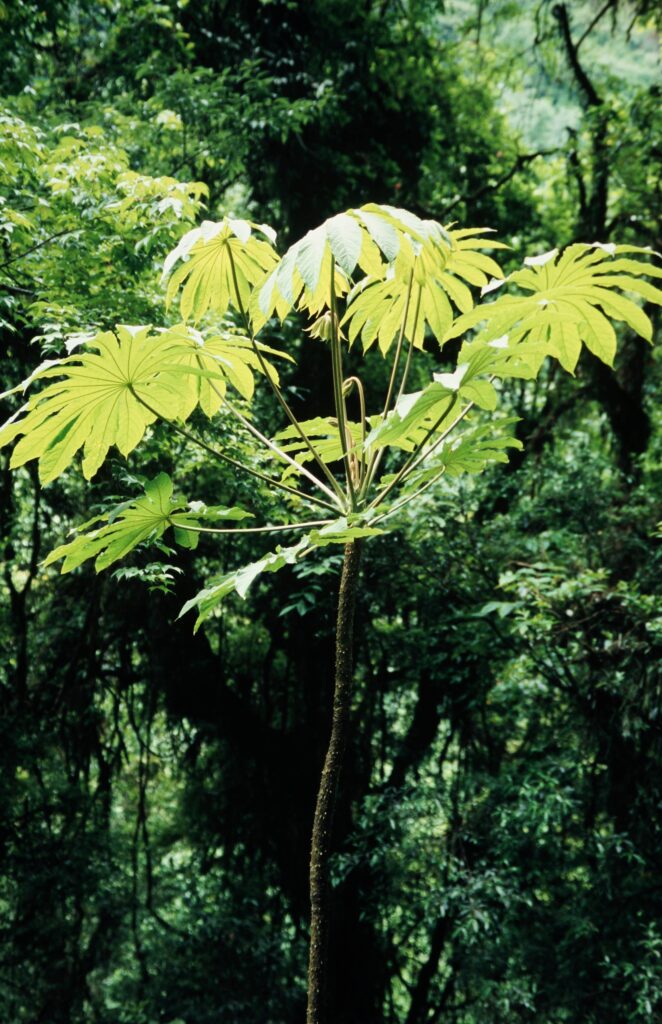
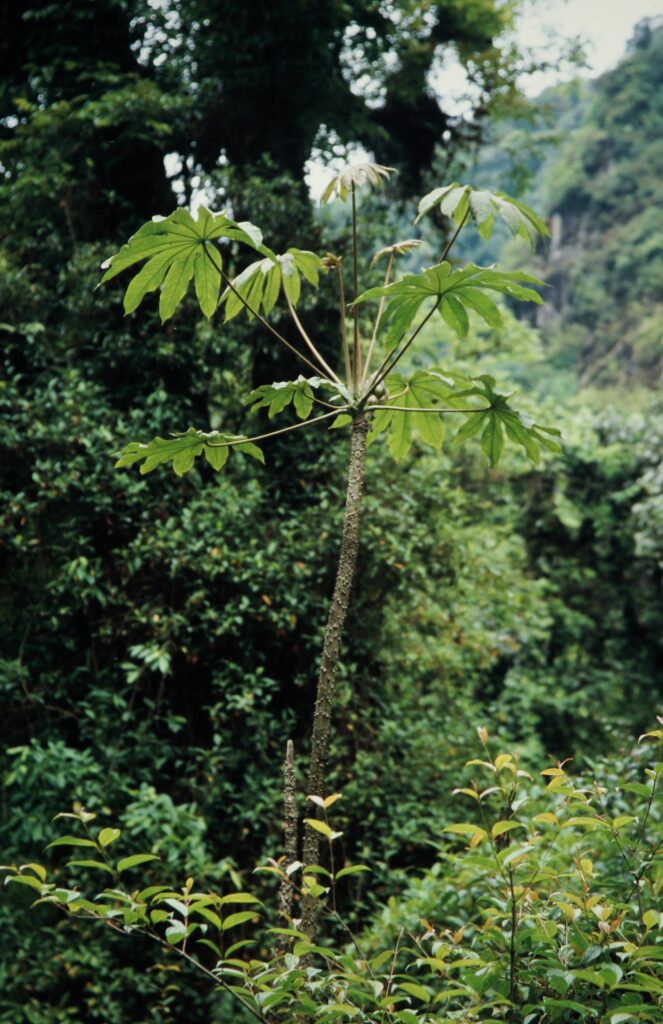
Brassaiopsis hispida Seem. is a prickly shrub or small tree of the ginseng family ranging through the eastern Himalaya and the Sino-Himalayan region. GBIF records document it in India, Nepal, Bhutan, China and Myanmar, reflecting a distribution centred on the moist eastern Himalayan foothills and adjacent uplands. It occupies humid broad-leaved evergreen and semi-evergreen forest, forest margins and ravines, typically between roughly 1,200 and 2,500 m. The collections illustrated from Chaana in West Bengal at 1,750 m and from the Ringi-Chu in Sikkim at 2,300 m, both flowering in May, are representative of its damp montane forest habitat.
The plant is an armed shrub to small tree, the stems and petioles bearing scattered prickles and a hispid indumentum. The large, long-petiolate leaves are palmately lobed or compound, with the lobes or leaflets coarsely serrate and abruptly acuminate, the surfaces rough-hairy. The inflorescence is a terminal panicle of umbels bearing small, greenish to yellowish, functionally polygamous flowers with five petals and a five-merous ovary. The fruit is a small subglobose drupe with the persistent styles at the apex.
Brassaiopsis is a Palaeotropical Asian genus closely allied to Trevesia and Aralia, distinguished by its prickly habit and lobed leaves. B. hispida is one of several morphologically variable Himalayan species, and the genus has attracted phytochemical interest for its triterpenoid saponins. Though locally common in suitable forest, it is sensitive to habitat clearance in the lower hills.
Author: Seem. · Sources: POWO (Kew), GBIF, Flora of China Vol. 13, Flora of Bhutan Vol. 2, Lowry & Frodin: Studies in Asian Araliaceae