(Roth) O.Deg.
Description
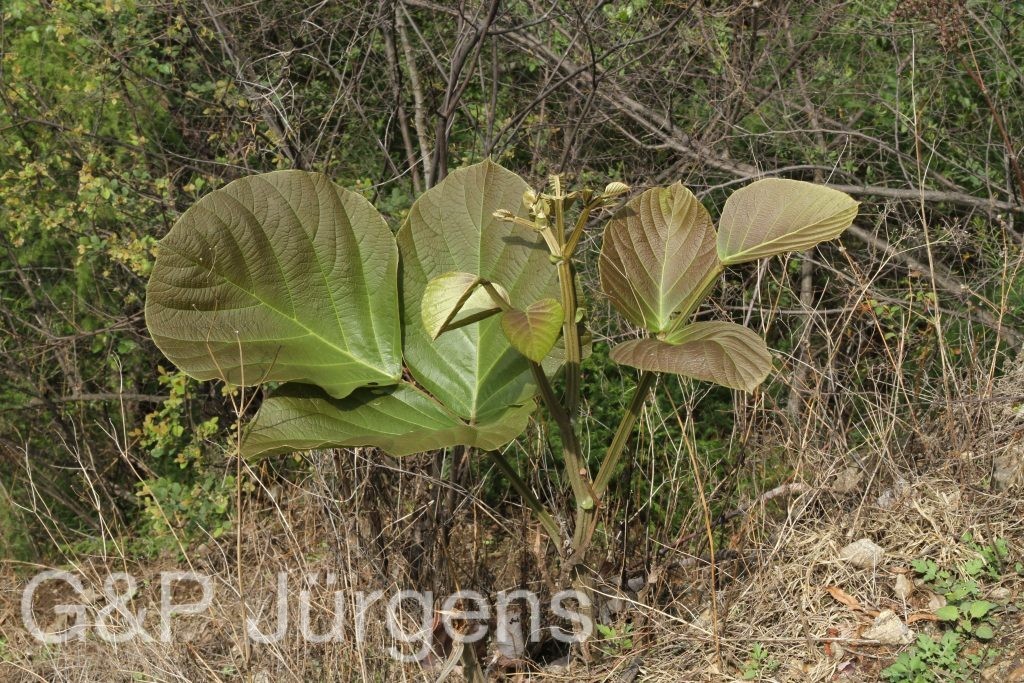
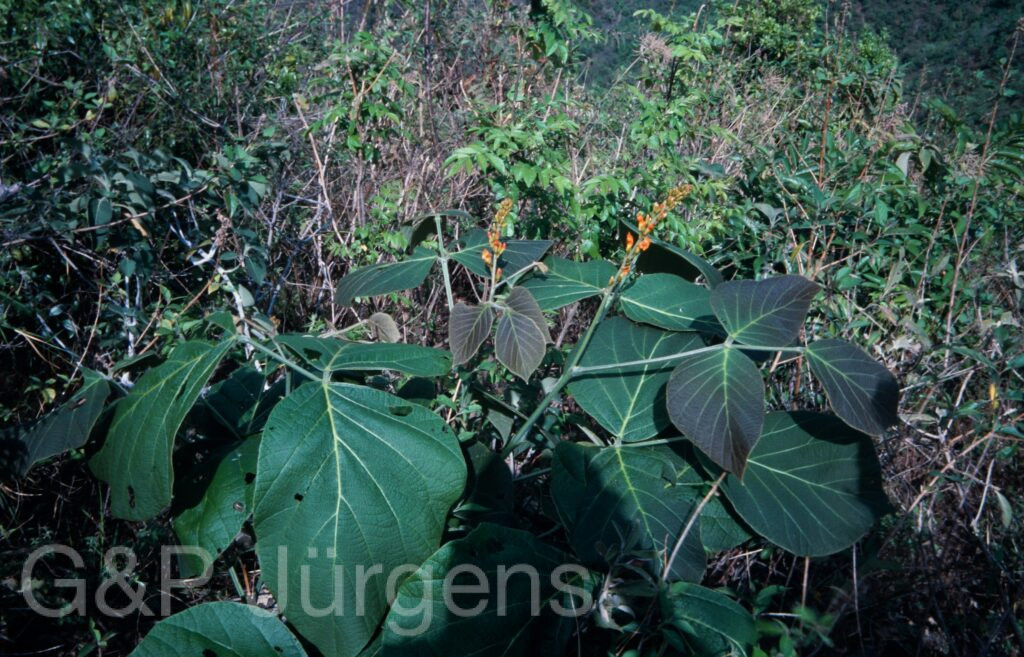
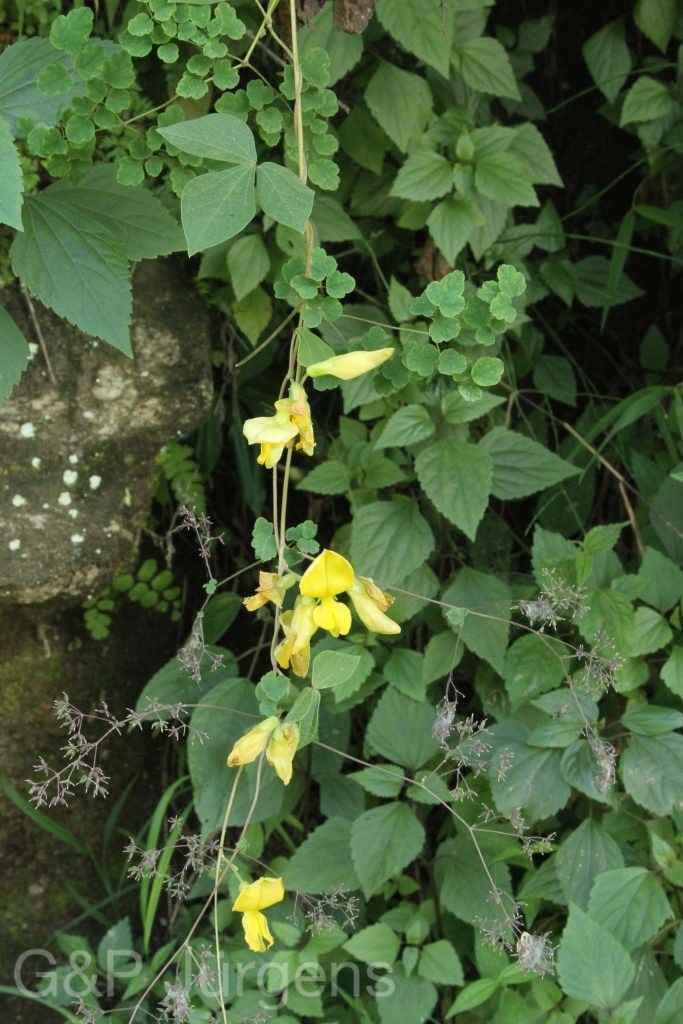
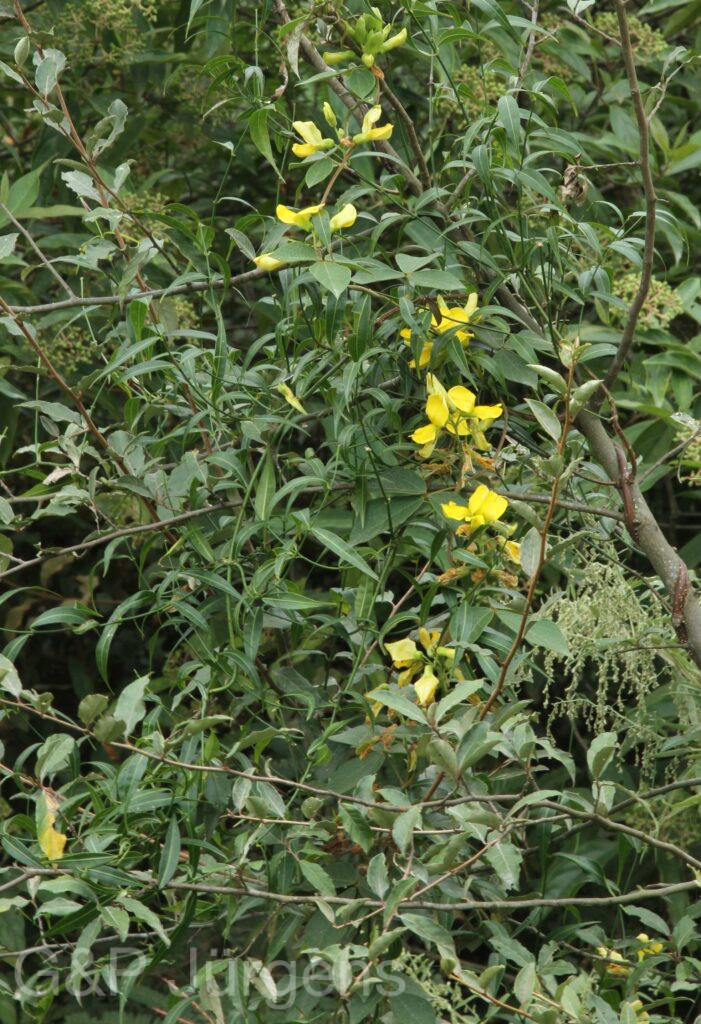
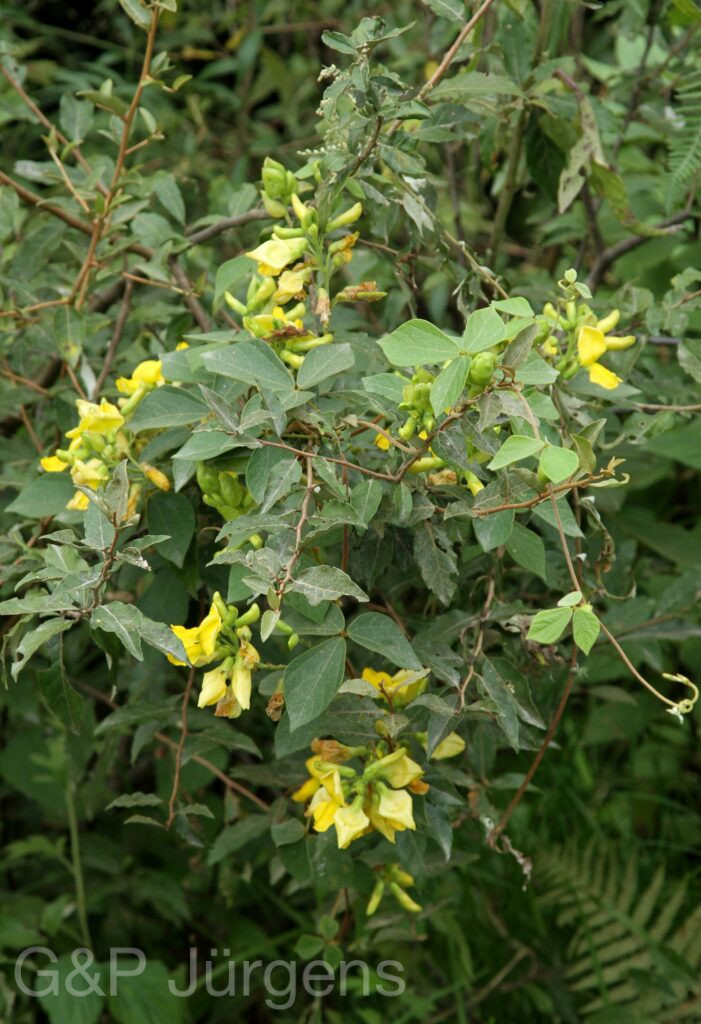
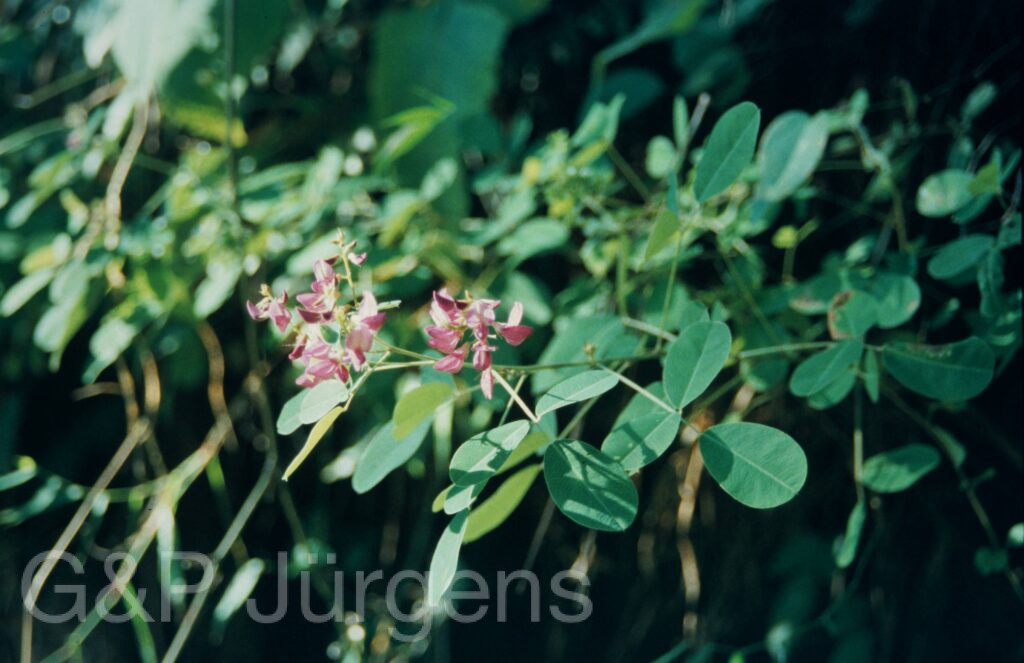
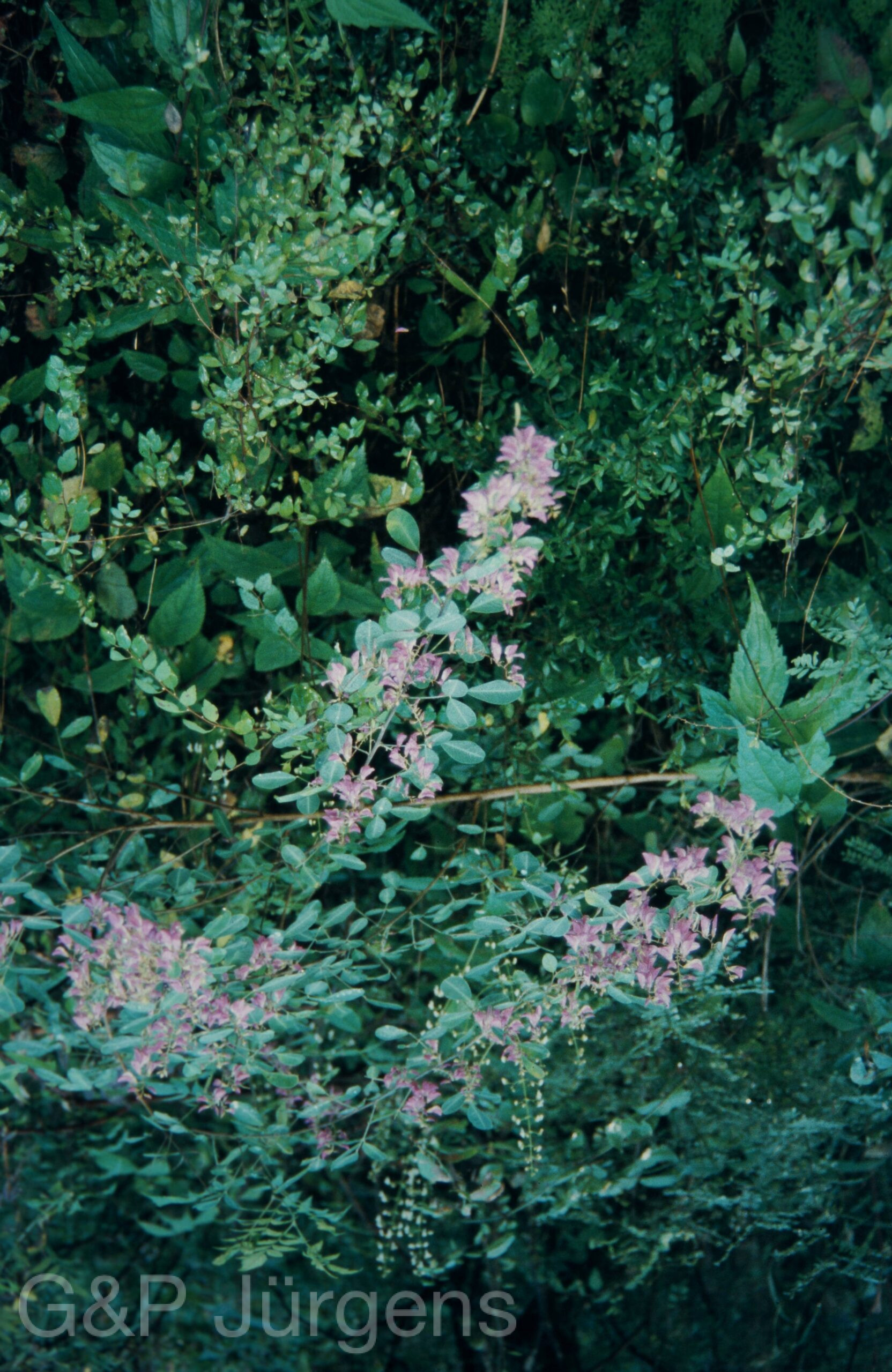
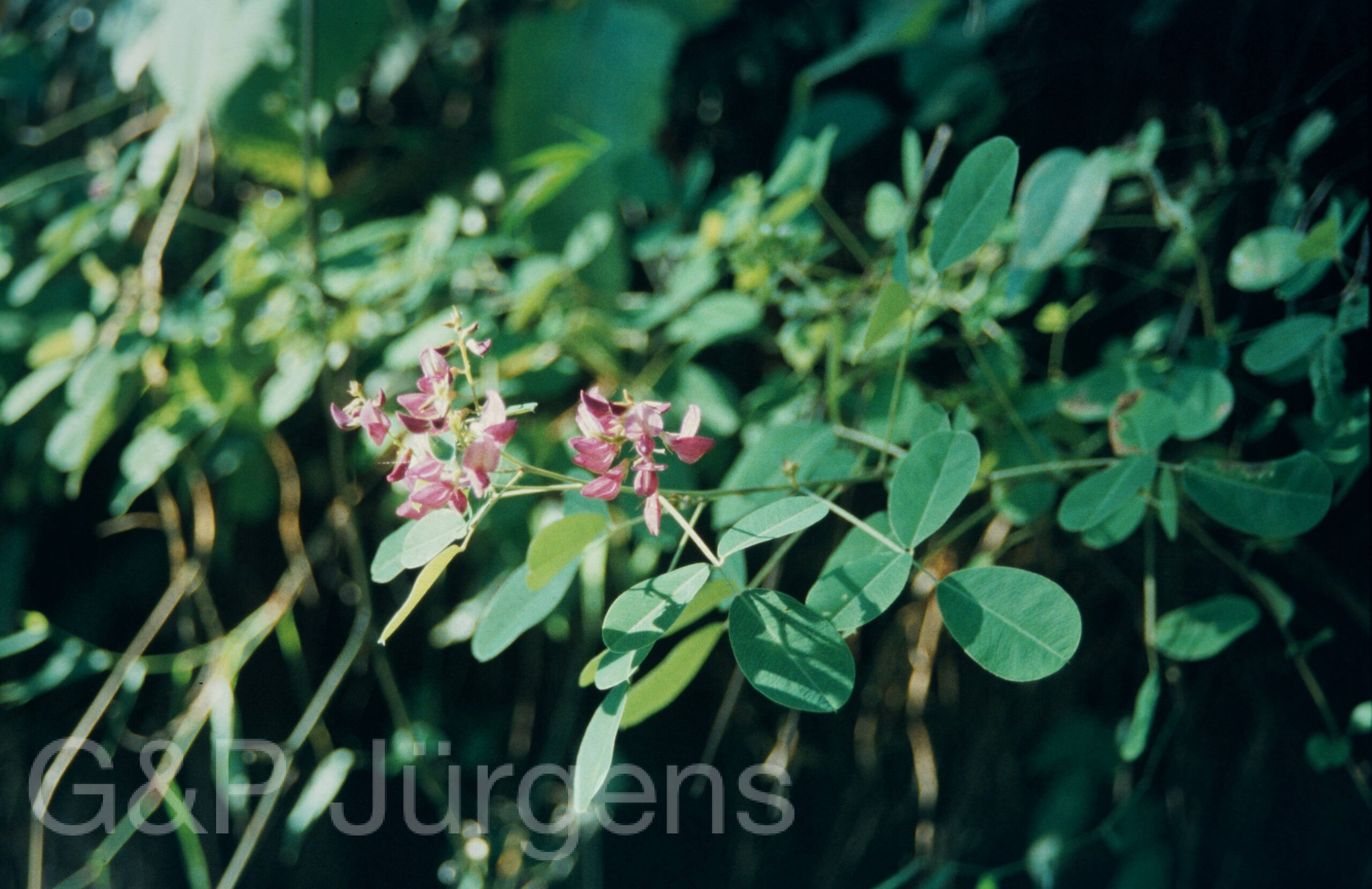
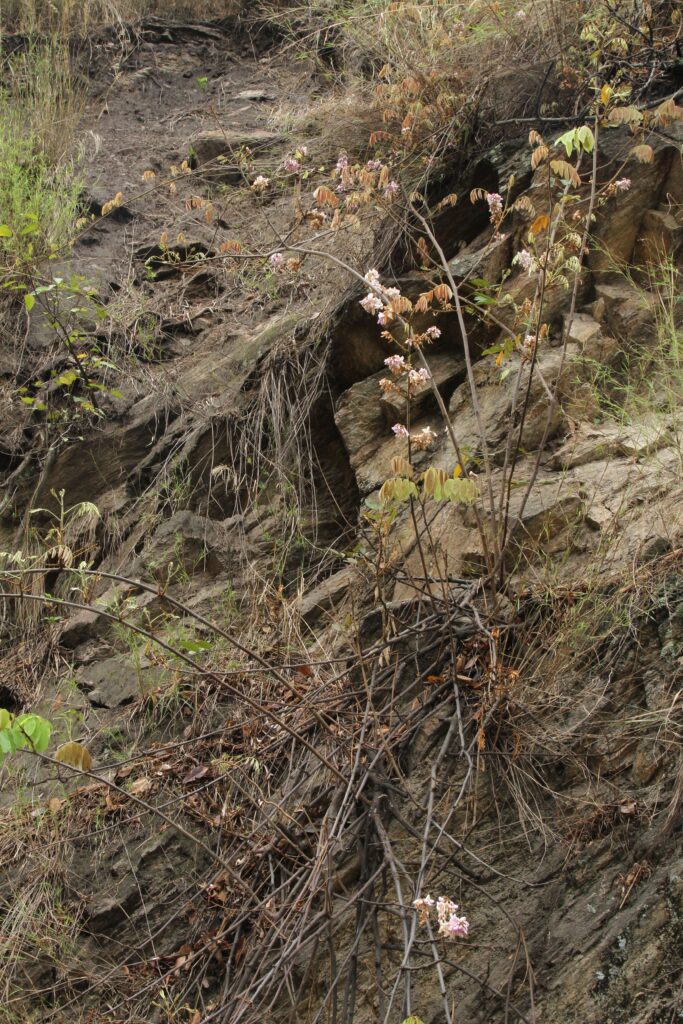
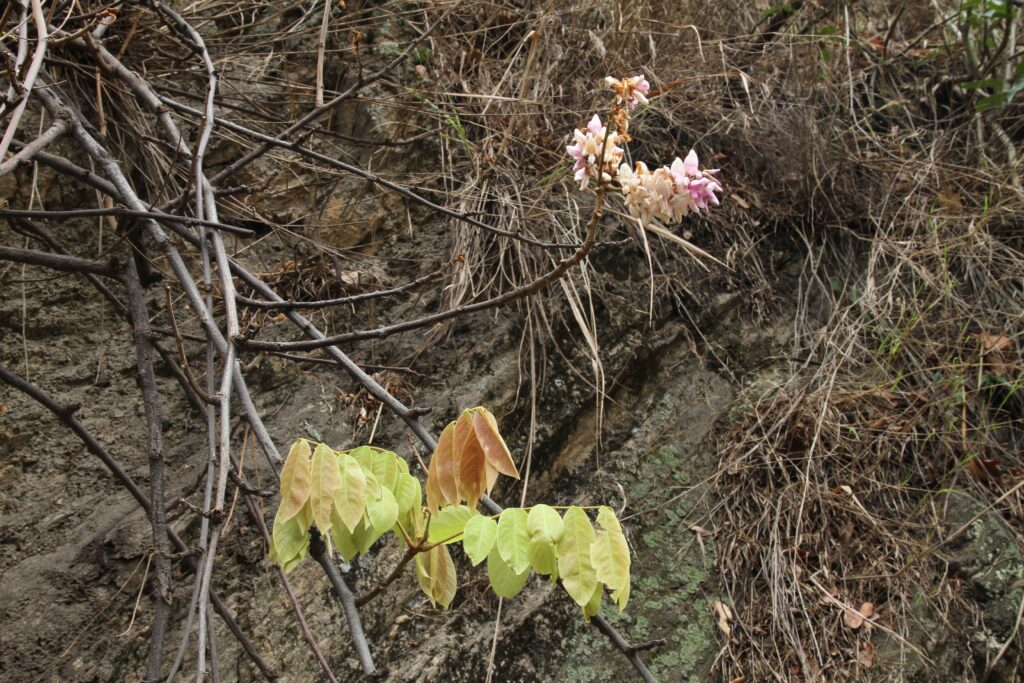
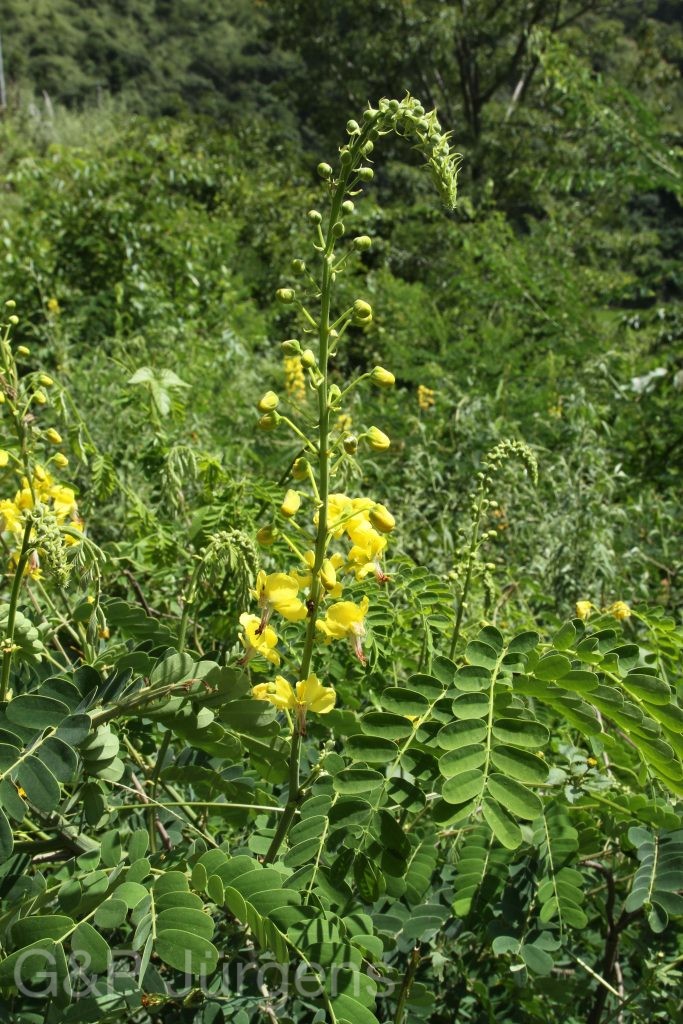
Biancaea decapetala (formerly Caesalpinia decapetala), the Mysore thorn, is a vigorous scrambling shrub native to tropical and subtropical Asia but now widely naturalised across the tropics; its 9040 GBIF occurrences span China, India and much of Asia together with Africa, Australia, the Americas and Pacific islands, reflecting an extensive introduced range. In its native Himalayan setting it grows in thickets, forest margins, riverbanks, scrub and waste ground from the lowlands to about 2700 m. The collection figured, from Wangdi in Bhutan at 2700 m in September, represents the upper subtropical edge of its range, where it forms dense thorny tangles on warm, disturbed valley slopes.
It is a robust, scandent shrub or liana with long arching woody branches armed with numerous stout, recurved prickles and a rusty-brown indumentum on young growth. The leaves are large, alternate and bipinnate, with several pairs of pinnae each bearing many small oblong leaflets. The inflorescence is an erect, elongate terminal raceme of showy flowers; the corolla is bright yellow with five slightly unequal petals (the epithet alluding to ten perianth parts), and the ten free stamens have hairy, reddish filaments. The fruit is a flattened, woody, oblong pod, beaked at the apex and indehiscent or tardily splitting, containing several seeds.
The genus on the source page is given as Caesalpinia; molecular and morphological studies have segregated this species into Biancaea (Fabaceae, subfamily Caesalpinioideae), the combination accepted by POWO. Used regionally for impenetrable hedges and in traditional medicine, the species is an aggressive coloniser and a serious invasive weed in South Africa, Australia and elsewhere, smothering native vegetation; it is consequently a biosecurity and conservation concern well beyond its native Asian range.
Author: (Roth) O.Deg. · Sources: POWO (Kew), GBIF, Flora of China, Flora of Bhutan, Legumes of the World (Caesalpinioideae)