
Lindl.
Description
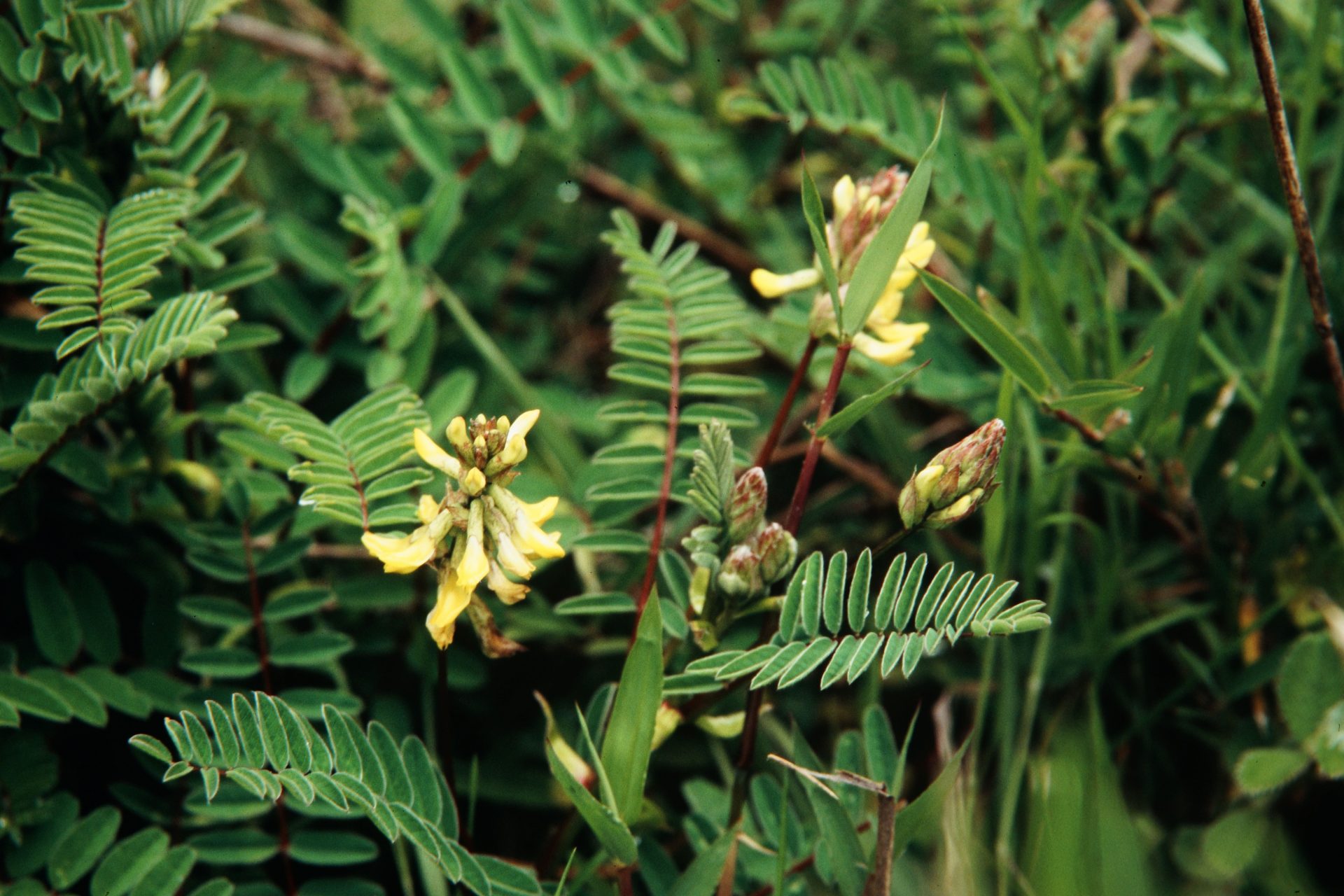
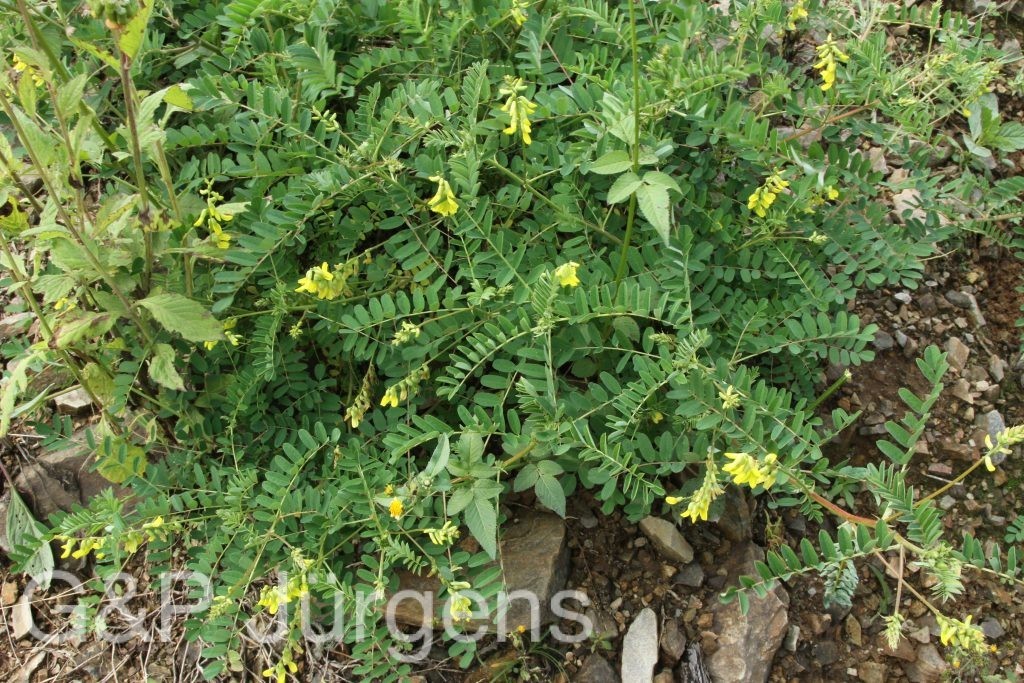
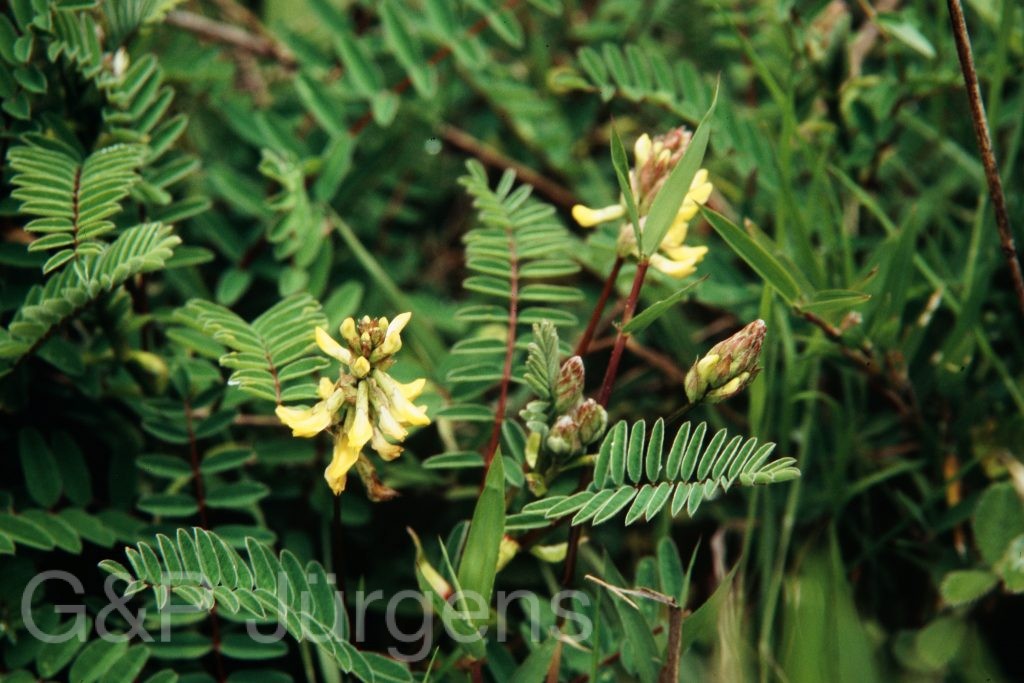
Astragalus chlorostachys is a perennial legume of the inner valleys and dry montane slopes of the Himalaya and Central Asia, ranging through India, Pakistan, Nepal, Bhutan, Afghanistan and China, with around 270 documented occurrences (records from Belgium and Switzerland representing herbarium and cultivated material). It favours open grassy slopes, forest margins, scrub and disturbed ground in the warm- to cool-temperate belt, broadly between about 2000 and 3000 m. The photographed plants were recorded in Bhutan at Phobjika at 2600 m in October and at the Kiki-La at 2100 m in June, indicating a long flowering and fruiting season through the growing months.
The species is an erect to ascending herb with several stems arising from a woody rootstock, the herbage finely appressed-pubescent. The leaves are imparipinnate with numerous opposite, oblong to elliptic leaflets. The flowers are crowded into dense, elongate, spike-like axillary racemes (the green-tinged inflorescence reflected in the epithet chlorostachys); the calyx is tubular and pubescent, and the papilionaceous corolla is small, yellowish to greenish-white or pale lilac. The fruit is a small, sessile or shortly stipitate pod, more or less inflated and pubescent, dehiscent at maturity.
Astragalus is among the largest genera of flowering plants, and its Himalayan members are taxonomically intricate; A. chlorostachys is placed among the densely spicate-flowered milkvetches of the region. Like many of its congeners it is a nitrogen-fixing pioneer of disturbed and grazed terrain, providing fodder and contributing to soil enrichment. It is common across a wide range and is not considered to be of conservation concern.
Author: Lindl. · Sources: POWO (Kew), GBIF, Flora of Bhutan, Flora of Pakistan, Astragalus monograph (Podlech & Zarre)