
(Franch.) Ling ex C.Shih
Description
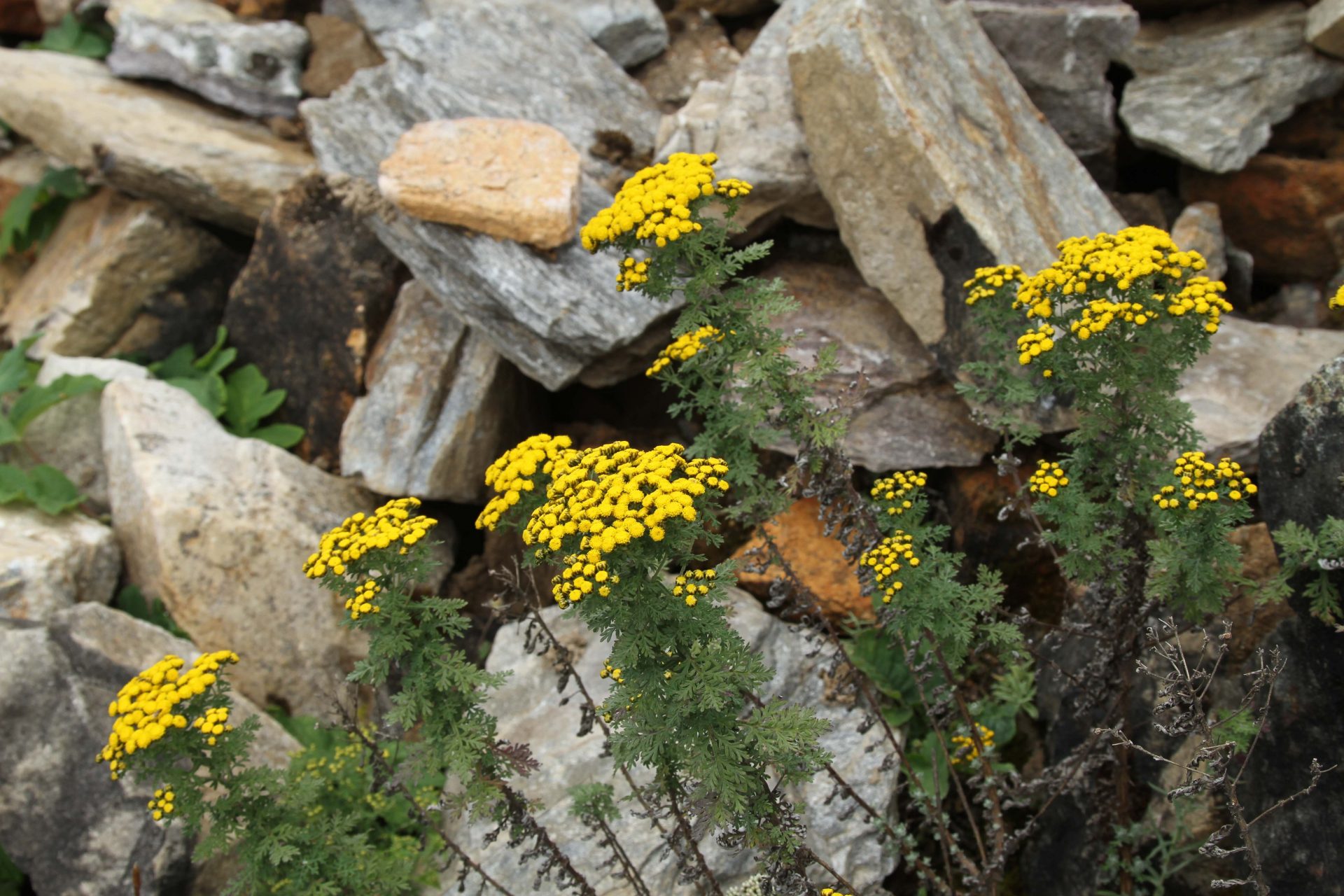
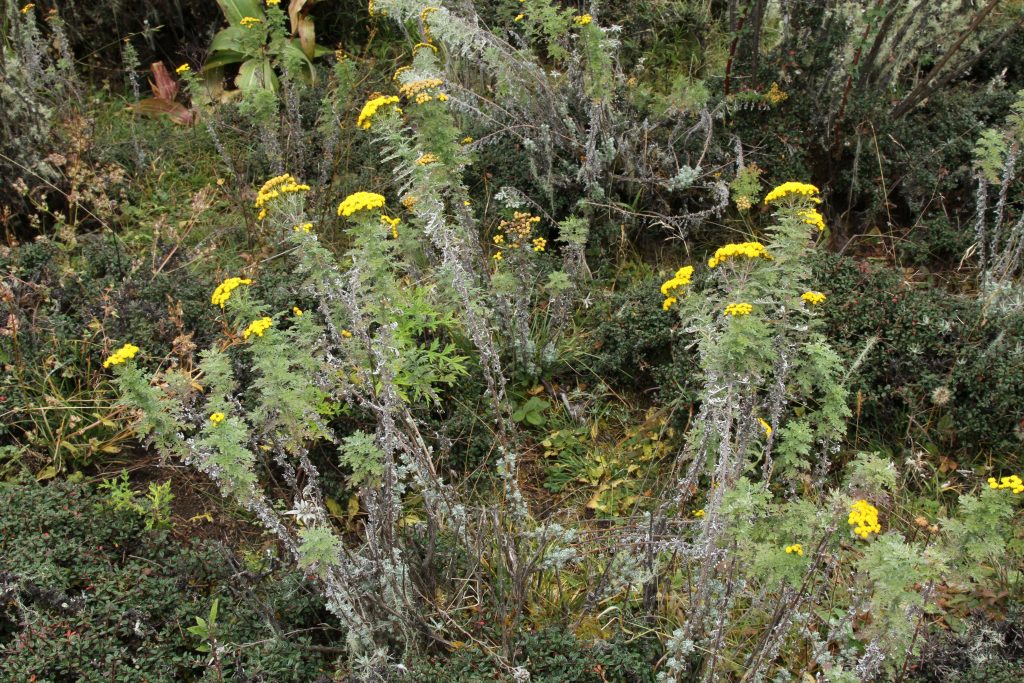
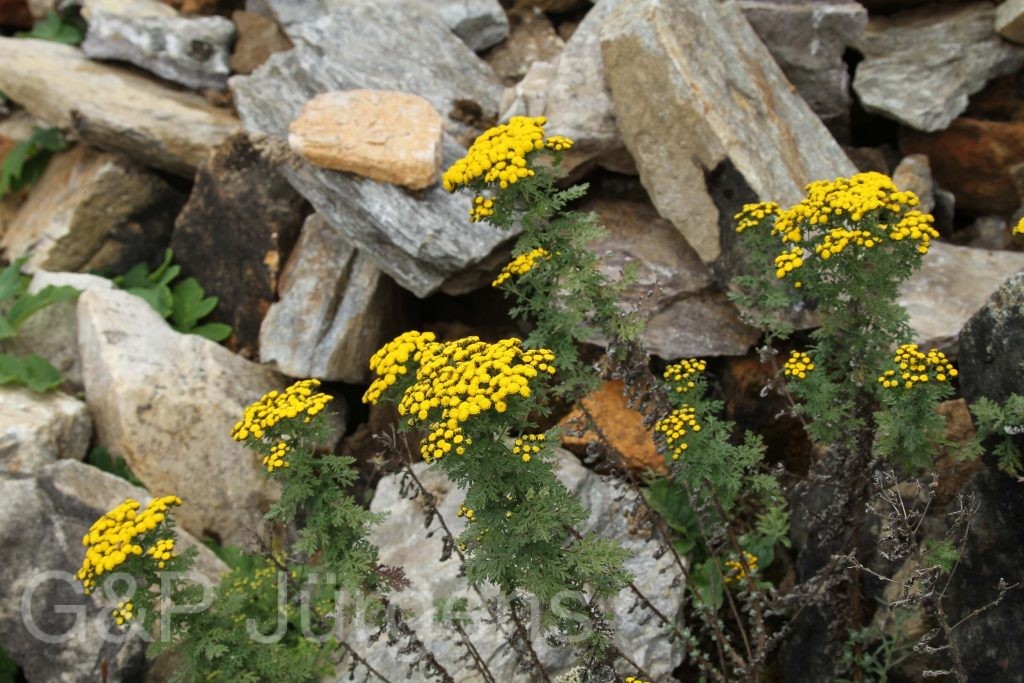
Ajania myriantha is a subshrubby composite of the Sino-Himalaya, native to China, Nepal, Bhutan and India and recorded by aggregated databases from a fair number of high-elevation localities. It is a plant of the upper subalpine and alpine zone, growing on dry, open stony slopes, rocky banks, cliff ledges and exposed pastures, generally between about 3000 and 4200 m. The individuals shown were photographed at Chele-La in Bhutan at 4000 m in October and at Shele-La at 3600 m in September, their autumn flowering being typical of this late-blooming high-mountain genus.
The plant forms a low, much-branched, somewhat woody-based perennial or dwarf subshrub, often grey-green with appressed silvery indumentum that reduces water loss in the exposed alpine environment. The leaves are alternate, ovate to obovate in outline and pinnately to bipinnately divided into small, narrow lobes, greyish-tomentose especially beneath. The capitula are small, numerous and discoid, lacking ray florets, and are aggregated into dense, flat-topped corymbose clusters, as the epithet myriantha (many-flowered) implies. Each head bears an involucre of imbricate, scarious-margined phyllaries enclosing yellow tubular florets; the achenes are small and ribbed and typically lack a conspicuous pappus.
Ajania is a Central and East Asian genus segregated from Chrysanthemum and its allies within the Chrysantheminae of tribe Anthemideae, distinguished by its discoid heads of tubular florets only. The generic limits of Ajania, Chrysanthemum and related taxa remain debated following molecular study, and some authors have proposed transfers. Locally common on dry alpine slopes, the species is not of conservation concern, though it is of interest as part of the aromatic Sino-Himalayan Anthemideae flora.
Author: (Franch.) Ling ex C.Shih · Sources: POWO (Kew), GBIF, Flora of China, Flora of Bhutan, Anthemideae systematic studies, Compositae of the Himalaya