
Gand.
Description
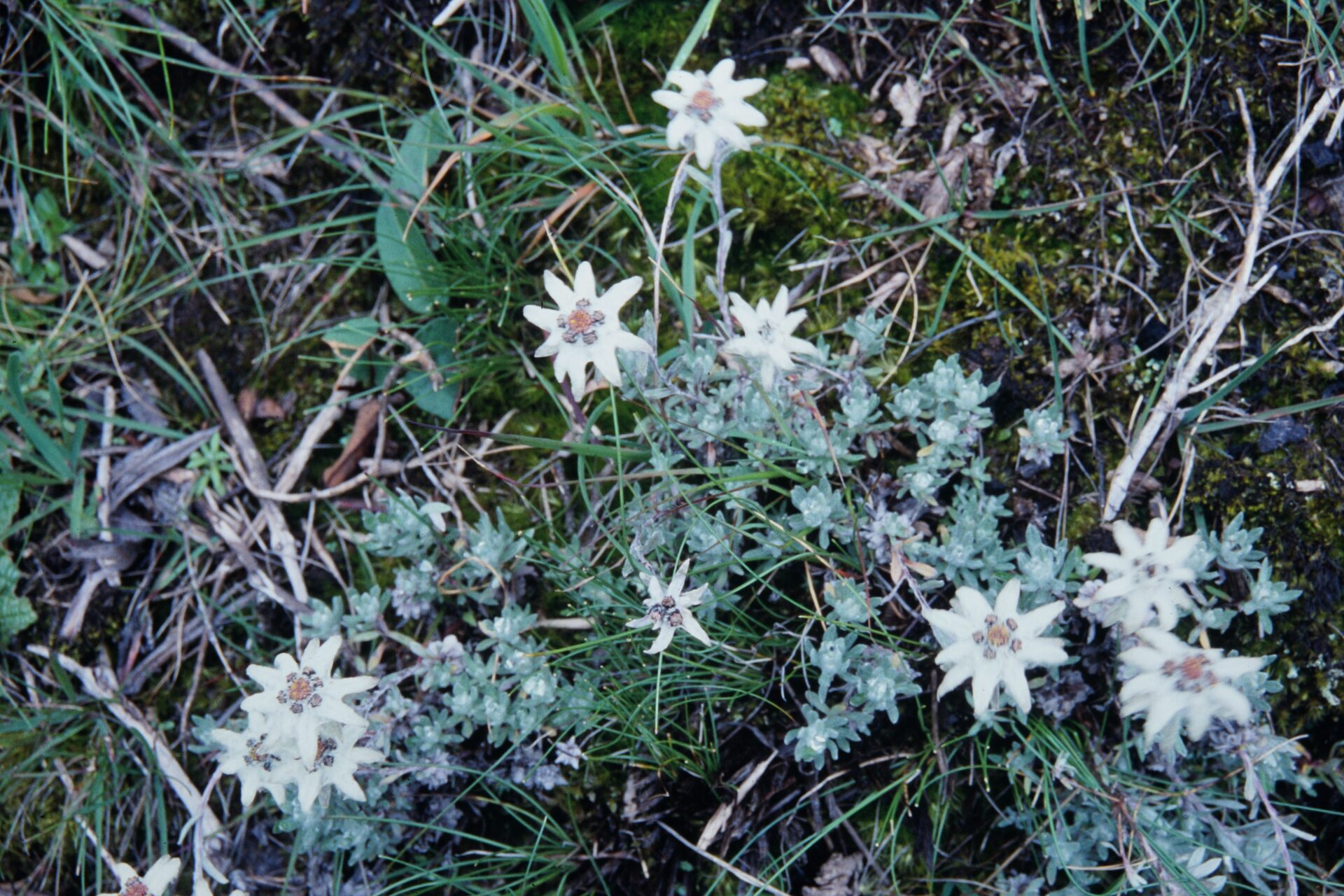
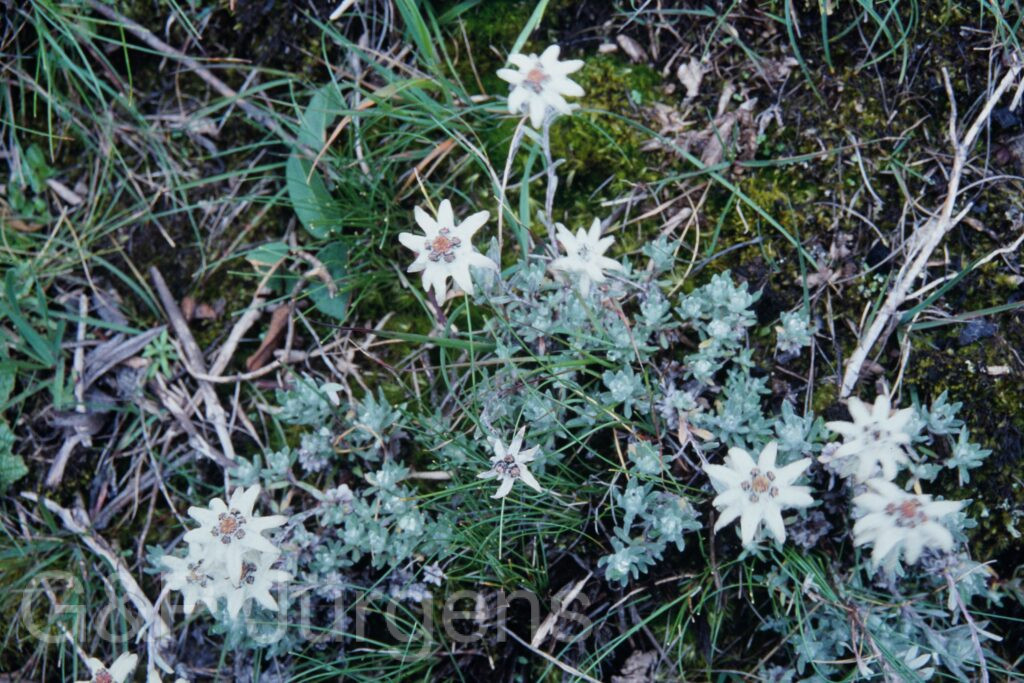
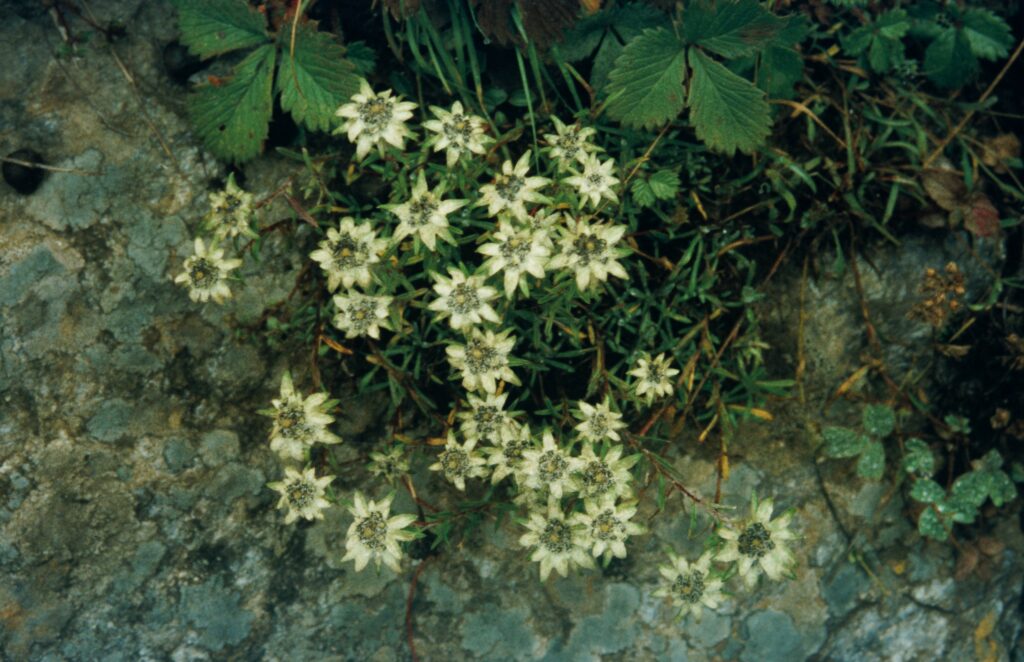
Leontopodium brachyactis is a high-alpine edelweiss of the Sino-Himalayan and Central Asian uplands, recorded from India, Pakistan, Nepal and China, with scattered occurrences extending west into Kyrgyzstan, Tajikistan, Afghanistan and Russia; the c. 92 georeferenced collections trace a distribution centred on the inner Himalaya and Tibetan margins. It inhabits open alpine turf, stony slopes, moraines and grazed meadows above the treeline, typically between 3500 and 4500 m. The species was photographed in the Sikkim Chopta Valley at 4100 m in August and in the Garhwal Valley of Flowers at 3550 m in October, sites representative of its preference for cold, well-drained, seasonally snow-covered ground.
It is a low, tufted, woolly perennial herb arising from a branched woody caudex, the stems erect to ascending and densely white-lanate. The leaves are linear to oblanceolate, entire, grey-green above and clothed beneath in a felt of appressed hairs that reflects intense montane irradiance. The capitula are small, several to many, aggregated into a dense terminal glomerule and subtended by a stellate ruff of leaf-like, densely tomentose floral bracts forming the characteristic edelweiss "star." The heads are heterogamous and disciform, with whitish corollas; the fruit is a small ribbed cypsela bearing a pappus of barbellate bristles.
The genus Leontopodium (tribe Gnaphalieae) is taxonomically intricate, its species delimited by indumentum, bract arrangement and capitulum structure, and L. brachyactis belongs to the compact-headed Himalayan element. Its dense white tomentum is a classic adaptation to alpine cold, desiccating winds and ultraviolet exposure. Though locally frequent across a wide range and not presently considered threatened, populations in accessible valleys face pressure from heavy summer grazing and increasing tourism in the Himalayan flower meadows.
Author: Gand. · Sources: POWO (Kew), GBIF, Flora of China, Flowers of the Himalaya (Polunin & Stainton), Handel-Mazzetti revision of Leontopodium