
Stapf
Description
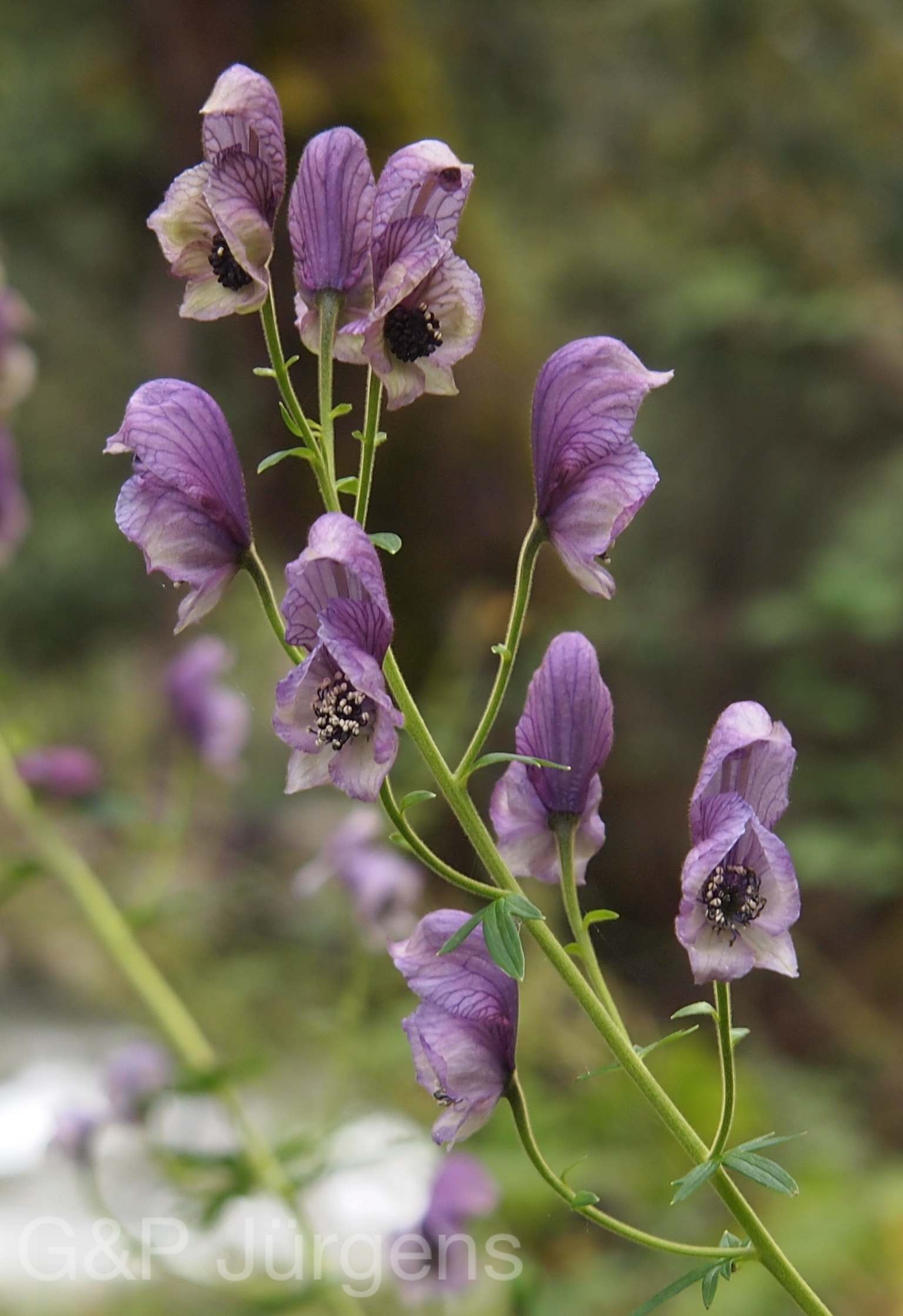
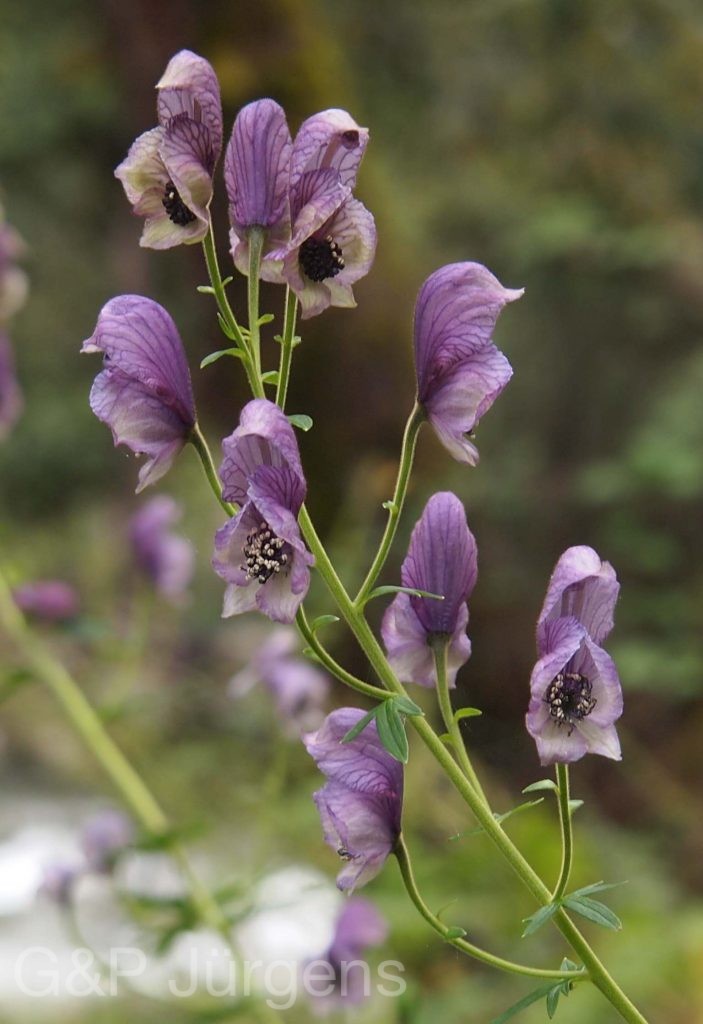
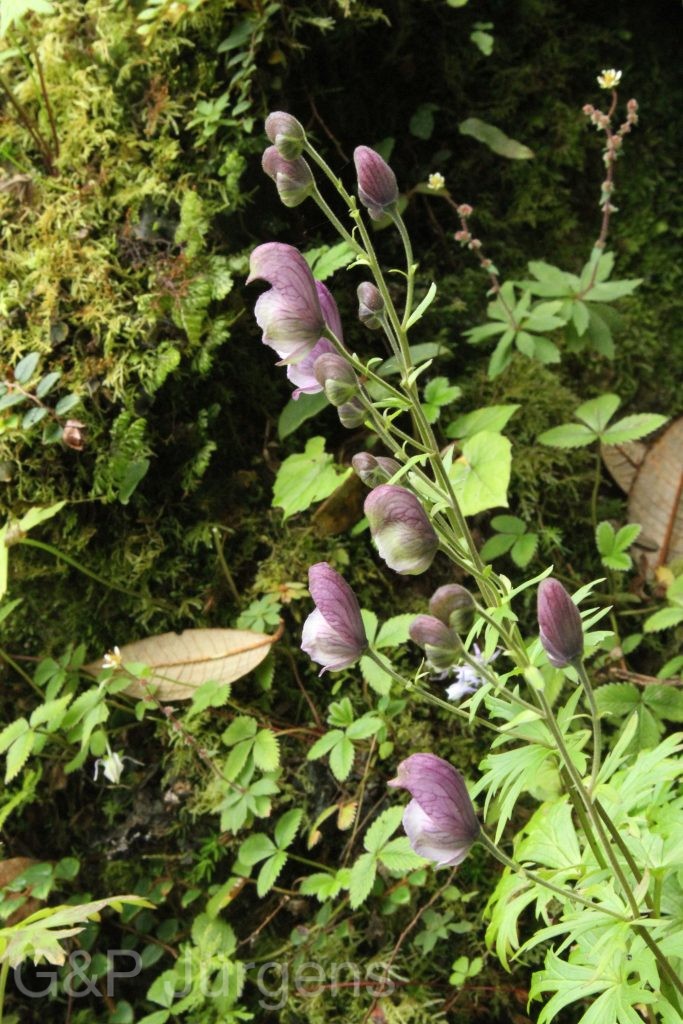
Aconitum heterophylloides is an eastern Himalayan monkshood distributed across Nepal, India, Bhutan and adjacent China, a comparatively narrowly known species with around 68 GBIF occurrences. It grows in subalpine and alpine habitats, on open grassy slopes, scrub margins, forest clearings and damp meadows in the upper temperate to subalpine zone, flowering late in the season. The images document it in Bhutan in the Haar Valley at about 3500 m and at Dochu-La near 3200 m, both in September, when its blue-purple hoods appear among the autumn meadow vegetation.
It is an erect perennial herb arising from paired tuberous roots, with a slender, often somewhat flexuous stem. The leaves are alternate, palmately divided into several lobes, the lower long-petiolate and the upper sessile, with the segments toothed. The inflorescence is a lax terminal raceme of zygomorphic flowers; the conspicuous perianth consists of petaloid sepals, the uppermost forming a tall, helmet- or hood-shaped galea that arches over the two concealed nectariferous petals. The flowers are violet-blue, and the fruit is a cluster of several many-seeded follicles.
Aconitum heterophylloides belongs to the large Sino-Himalayan radiation of the genus, which is taxonomically complex and includes many intergrading montane species; it is allied to the A. heterophyllum group. Like other monkshoods the plant contains diterpenoid alkaloids and is highly toxic, while the hooded flowers are adapted for buzz- and tongue-pollination by bumblebees foraging late in the alpine season. Several Himalayan Aconitum are heavily harvested for medicinal use, making range-restricted species potentially vulnerable to overcollection.
Author: Stapf · Sources: POWO (Kew), GBIF, Flora of China, Flora of Bhutan, Flora of Nepal, Tamura's treatment of Ranunculaceae