
Wall. ex DC.
Description
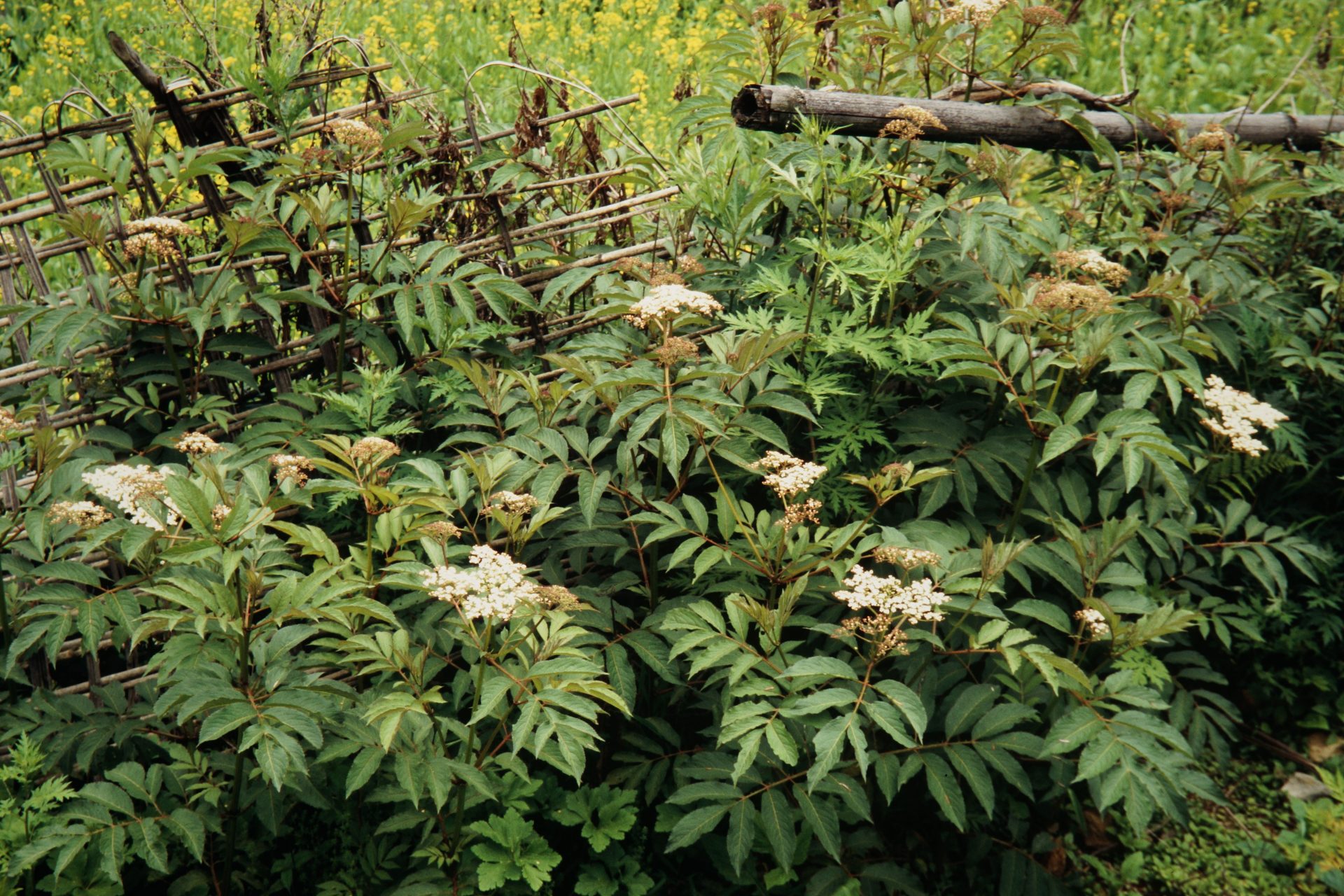
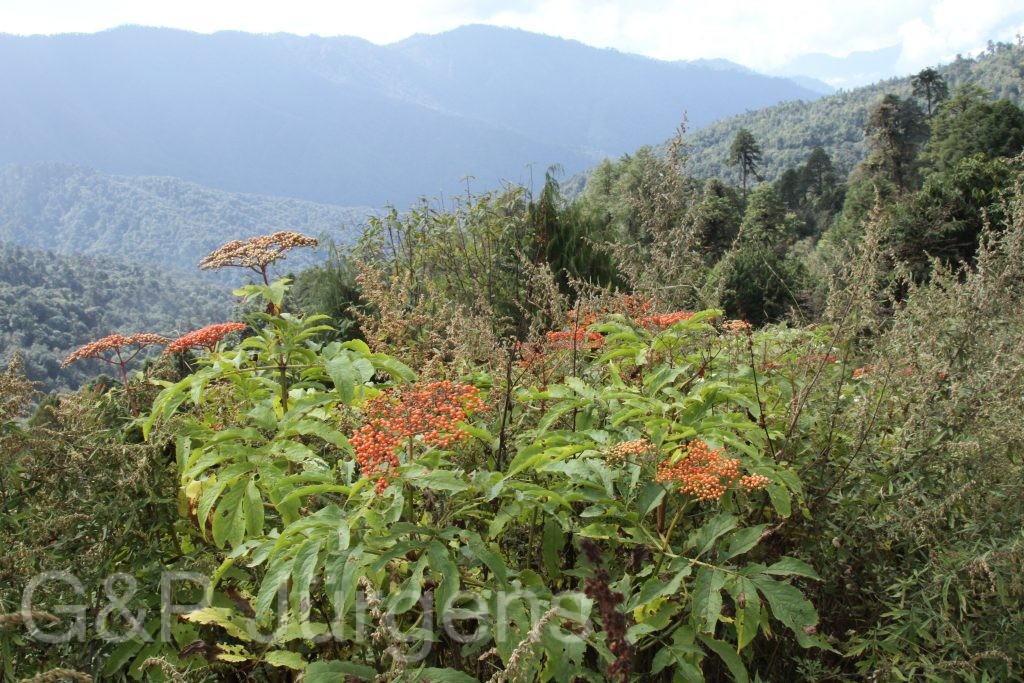
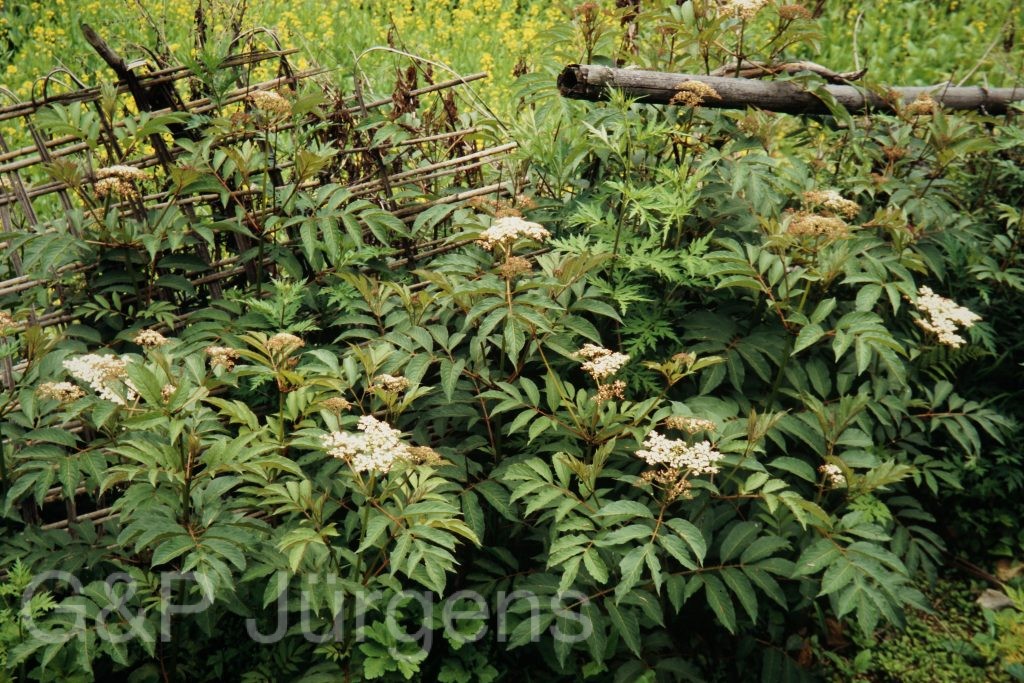
Sambucus adnata is a herbaceous elder distributed across the Himalaya and western to central China, occurring in Nepal, Bhutan, northern India and widely in China, with its very numerous GBIF records (over 1700) concentrated in this region; records from Germany, the United States, Austria, Japan and elsewhere reflect cultivation and herbarium accessions. It grows in moist forest clearings, on shrubby slopes, along stream banks, roadsides and at forest margins, generally between about 1600 and 3600 m. The photographed plants from Trongsa (2100 m, October) and Thimphu (2500 m, June) in Bhutan illustrate its range through the cool, humid mid-montane belt of the eastern Himalaya.
Unlike its woody relatives, S. adnata is a tall, robust perennial herb dying back to a thick, fleshy, creeping rhizome. The stout, erect, ridged stems bear large, opposite, imparipinnate leaves with several pairs of lanceolate, serrate leaflets, the lowest leaflets often adnate to the rachis or with adnate stipule-like outgrowths, a feature reflected in the epithet. The inflorescence is a large, flat-topped to convex compound cyme of numerous small flowers with a rotate, whitish to pinkish corolla and conspicuous reddish anthers or nectaries. The fruit is a small, globose, red drupe containing a few seed-like stones.
Sambucus, formerly placed in the Caprifoliaceae, is now referred with the genus Adoxa and Viburnum to the Adoxaceae on molecular and morphological grounds. S. adnata is distinctive among elders for its fully herbaceous, rhizomatous habit. It is widespread, common and weedy in disturbed montane habitats, and is of no conservation concern; the plant has a record of local medicinal use for bruises and swellings.
Author: Wall. ex DC. · Sources: POWO (Kew), GBIF, Flora of China, Flora of Bhutan, Annotated Checklist of the Flowering Plants of Nepal, Sambucus (Adoxaceae) monograph