
(Roth) Kuntze
Description
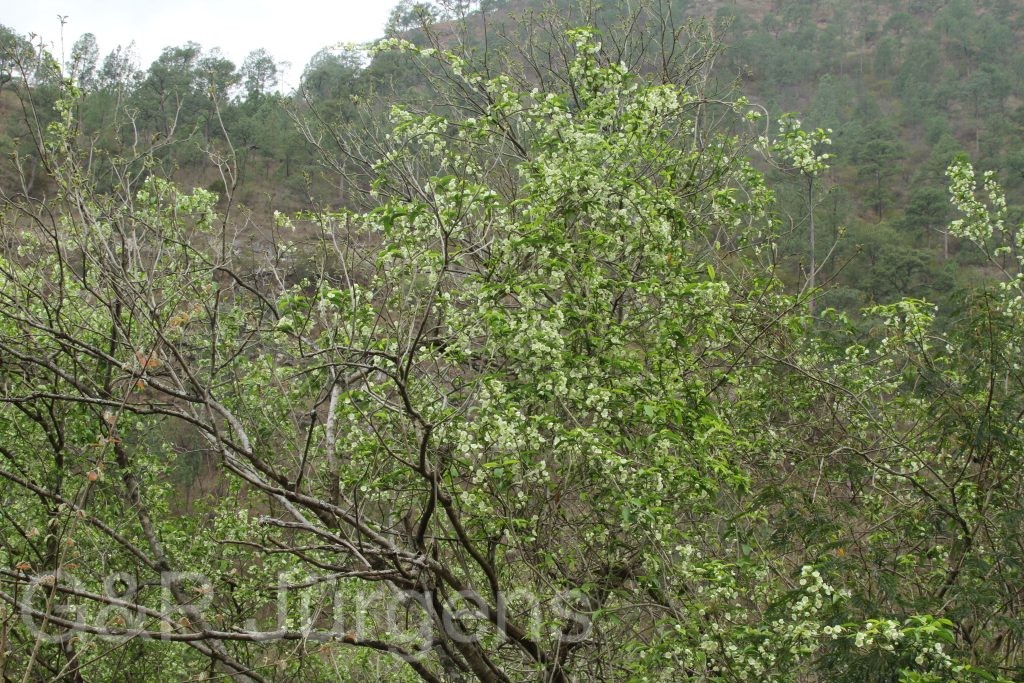
Vallaris solanacea is a woody climber of tropical and subtropical Asia, broadly distributed from the Indian subcontinent and the Himalayan foothills through Indochina, southern China and the Malesian region (gbif_countries: IN, TH, CN, NP, MM, US, ZZ, LK, MY, GP, KH, LA, BD, BT, VN, ID, PK, SC), with GBIF documenting some 536 occurrences. It grows in lowland and submontane forests, thickets, riverine scrub and forest margins, often scrambling over shrubs and small trees. The illustrated gatherings range from Dhoban in Nepal at about 735 m, flowering in April, up to Karu-Chu in Bhutan near 1800 m in May, reflecting its preference for warm, humid lower hill country.
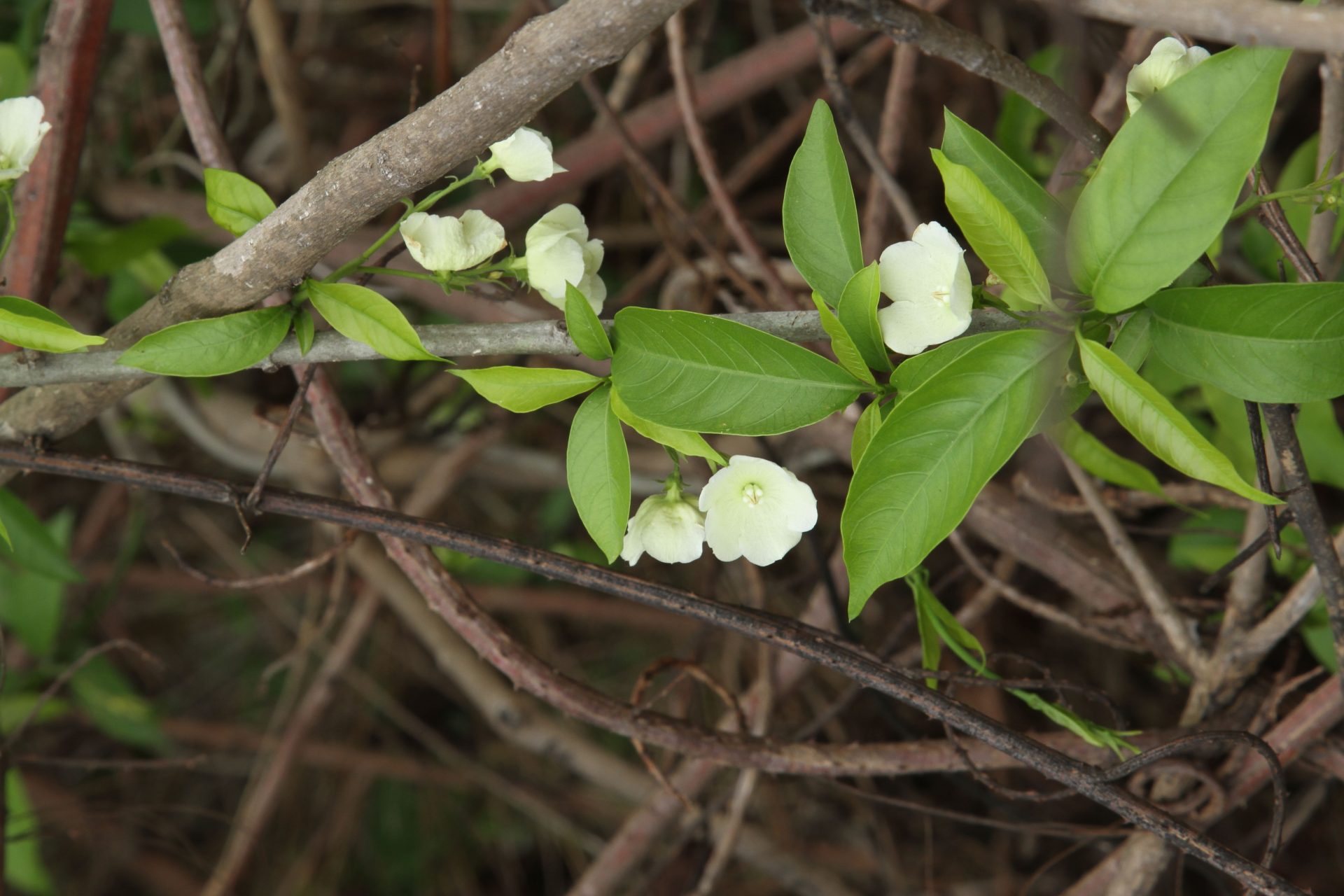
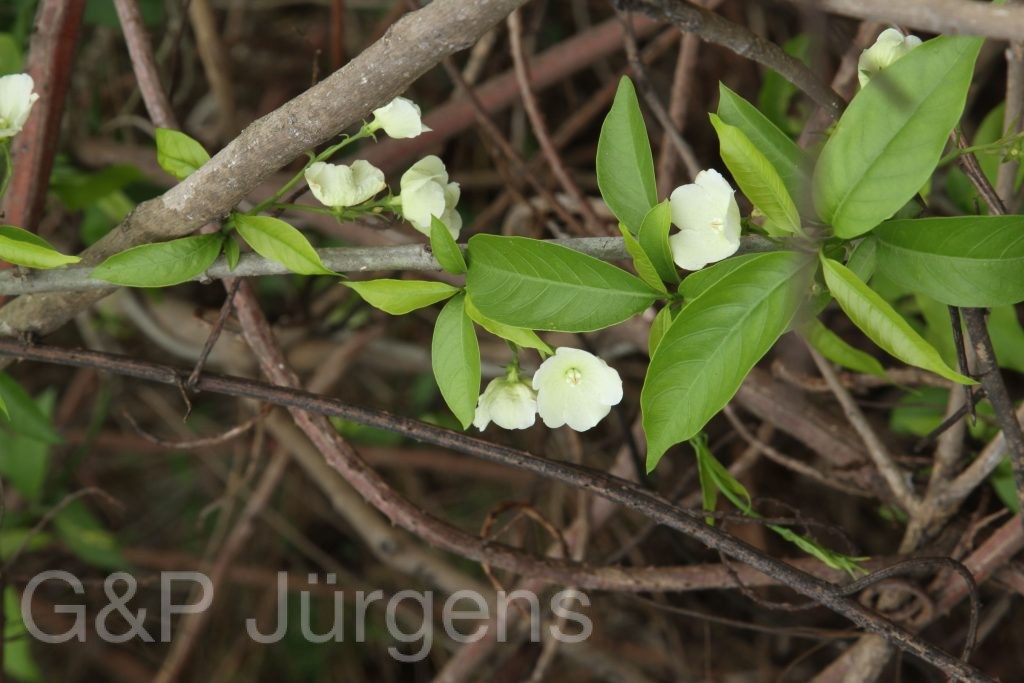
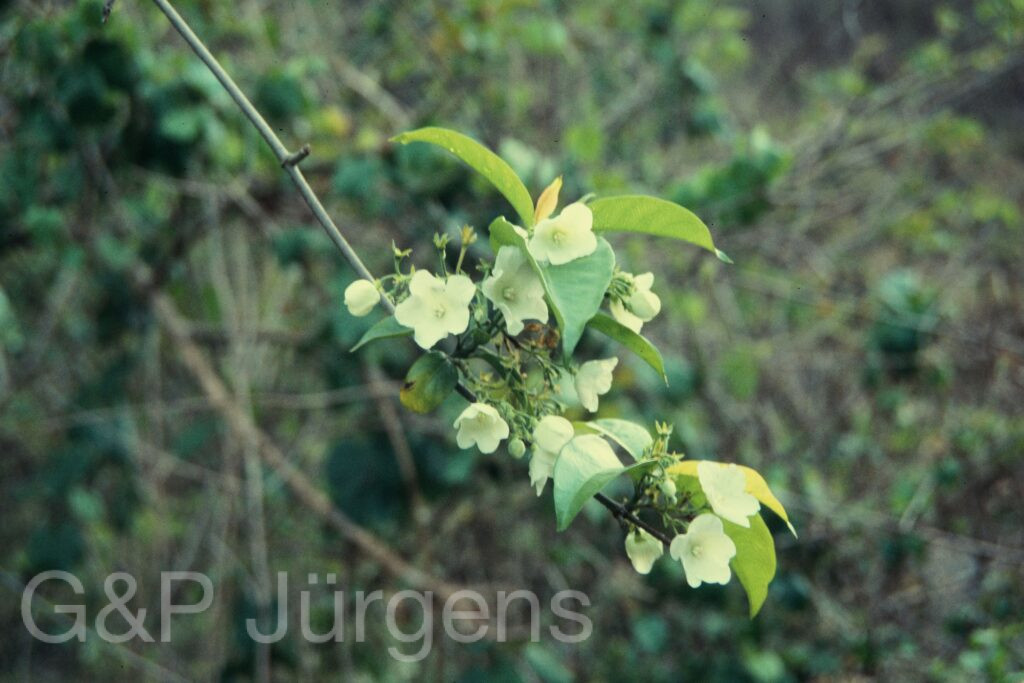
The plant is a glabrous to finely pubescent liana with milky latex and opposite, elliptic to ovate leaves that are entire, pinnately veined and shortly petiolate. The flowers are borne in axillary or terminal cymes and are fragrant, with a white, rotate to broadly campanulate corolla bearing five spreading lobes, the throat marked with hairy appendages; the floral form recalls a Solanum, the resemblance enshrined in the epithet. The androecium consists of five stamens with connivent anthers adhering to the stigmatic head, and the fruit is a pair of slender, spreading follicles releasing comose seeds adapted to wind dispersal.
A member of subfamily Apocynoideae, Vallaris is a small Indomalayan genus of latex-bearing twiners. V. solanacea is locally valued as an ornamental for its sweetly scented blossoms and is used in traditional medicine, while its latex and tissues, like those of many Apocynaceae, contain bioactive compounds. Widespread and adaptable, it is of no conservation concern across its extensive range.
Author: (Roth) Kuntze · Sources: POWO (Kew), GBIF, Flora of Nepal, Flora of China, Flora of British India, Flora Malesiana account of Apocynaceae