
(L.) R.Br. ex Roem. & Schult.
Description
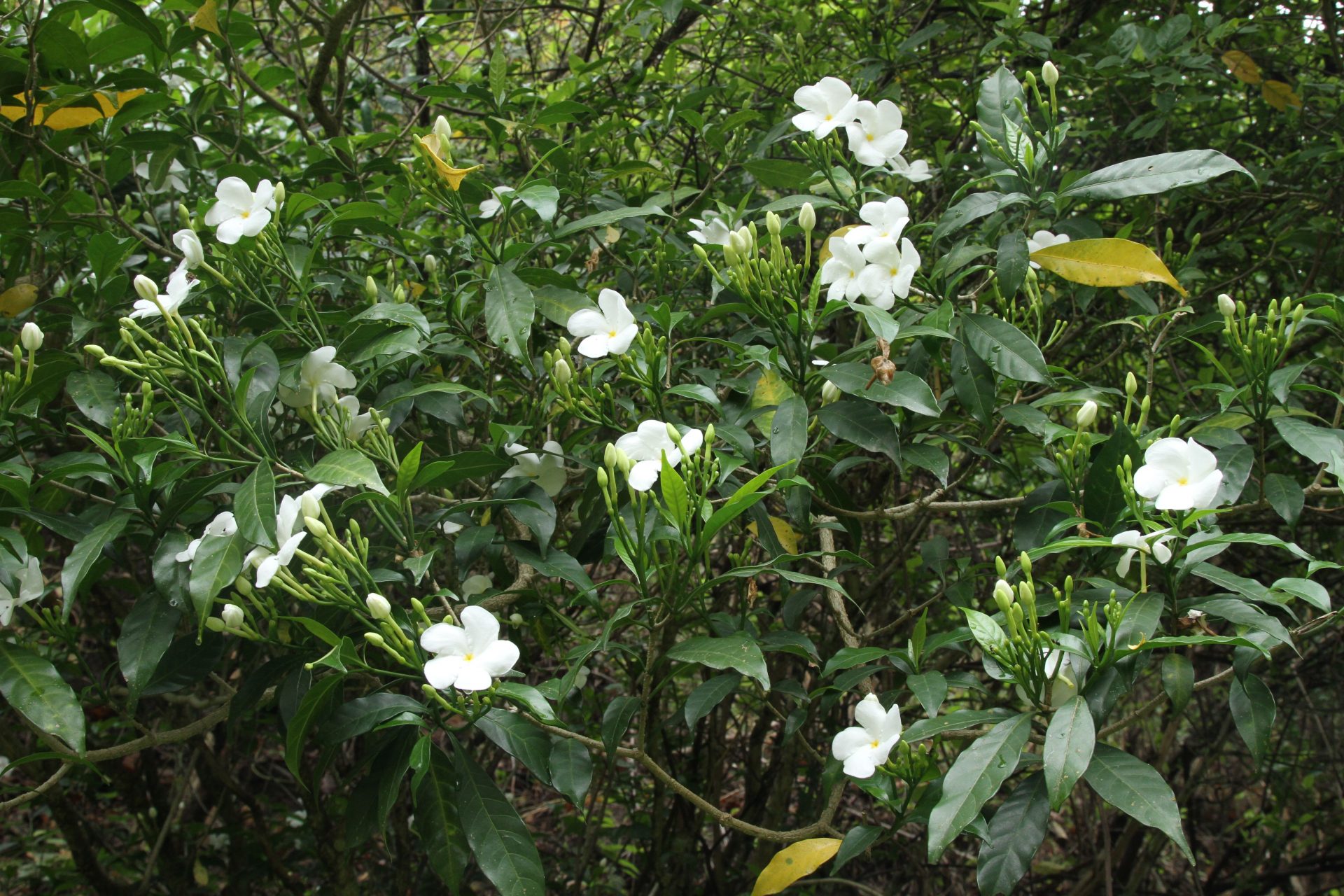
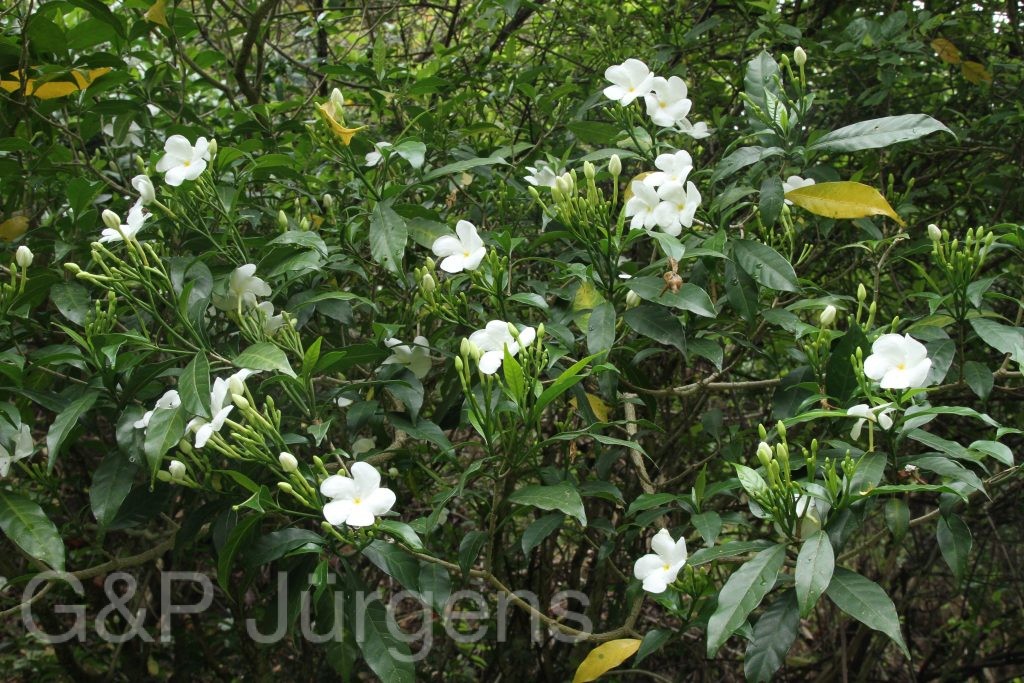
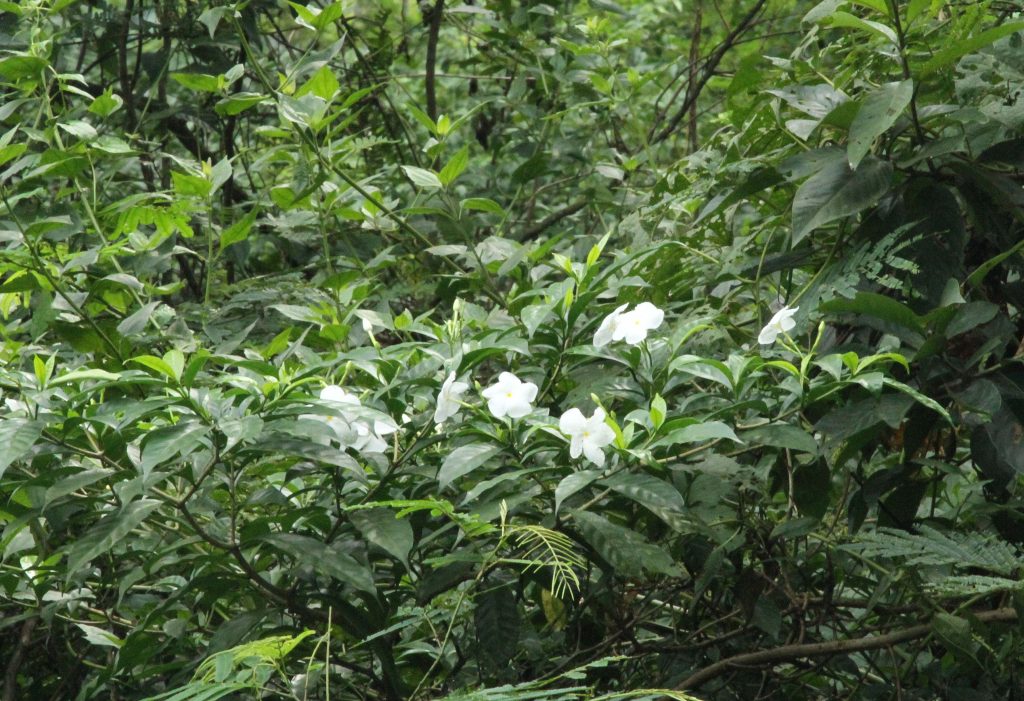
Tabernaemontana divaricata is a shrub of tropical and subtropical Asia, native to the Indian subcontinent and Southeast Asia and now pantropically cultivated and naturalised; GBIF records over 6500 occurrences across countries including India, China, Thailand, Sri Lanka, Bangladesh, Malaysia, Vietnam, the Philippines and many introduced ranges in the Americas and Pacific. In Bhutan it was photographed at Trashigang at 1250 m in May and at Galephu at 550 m in October, reflecting its occurrence in warm foothill forests, scrub and village surrounds, where it is also widely planted as the ornamental "crape jasmine."
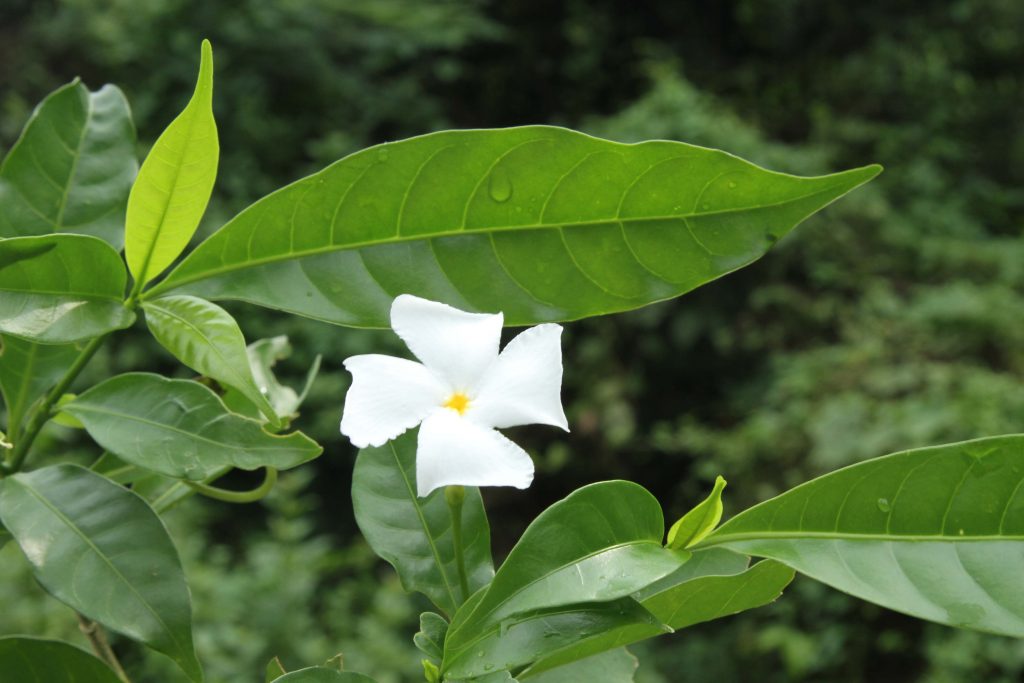
It is a glabrous, evergreen shrub with dichotomously branched (divaricate) stems exuding copious white latex when cut. The leaves are opposite, simple, elliptic to oblanceolate, glossy dark green, with a tapering apex and prominent lateral venation. The flowers are borne in few-flowered terminal or axillary cymes; each is salverform with a slender tube and five contorted, white, often pinwheel-twisted lobes, fragrant especially at night, and cultivated double-flowered forms are common. The fruit is a paired (often divaricate) follicle, somewhat curved and ridged, splitting to expose seeds embedded in a bright orange-red fleshy aril.
The species belongs to the Apocynaceae (subfamily Rauvolfioideae) and, like its relatives, is rich in indole and monoterpene alkaloids that underpin its use in traditional medicine and account for its toxicity. Long cultivated, it has accumulated many synonyms and horticultural forms. It is not threatened, being abundant in cultivation and naturalising readily; its presence in lowland Bhutan marks the subtropical Himalayan margin of a broadly Indomalayan range.
Author: (L.) R.Br. ex Roem. & Schult. · Sources: POWO (Kew), GBIF, Flora of Bhutan, Flora of China, Flora of British India, revision of Tabernaemontana (Leeuwenberg)