
Wight
Description
Ceropegia wallichii is a Himalayan twining herb distributed from northwest India (Uttarakhand, Himachal Pradesh) through Nepal to Myanmar. With only 35 occurrences documented on GBIF, it is among the less frequently recorded species of this large genus. The species inhabits margins of warm-temperate and subtropical broadleaved forests, open scrubby slopes, and rocky outcrops at elevations of 1,500–2,800 m. It is often found climbing through low shrubs or trailing over banks in partially shaded situations with moderate monsoon rainfall.
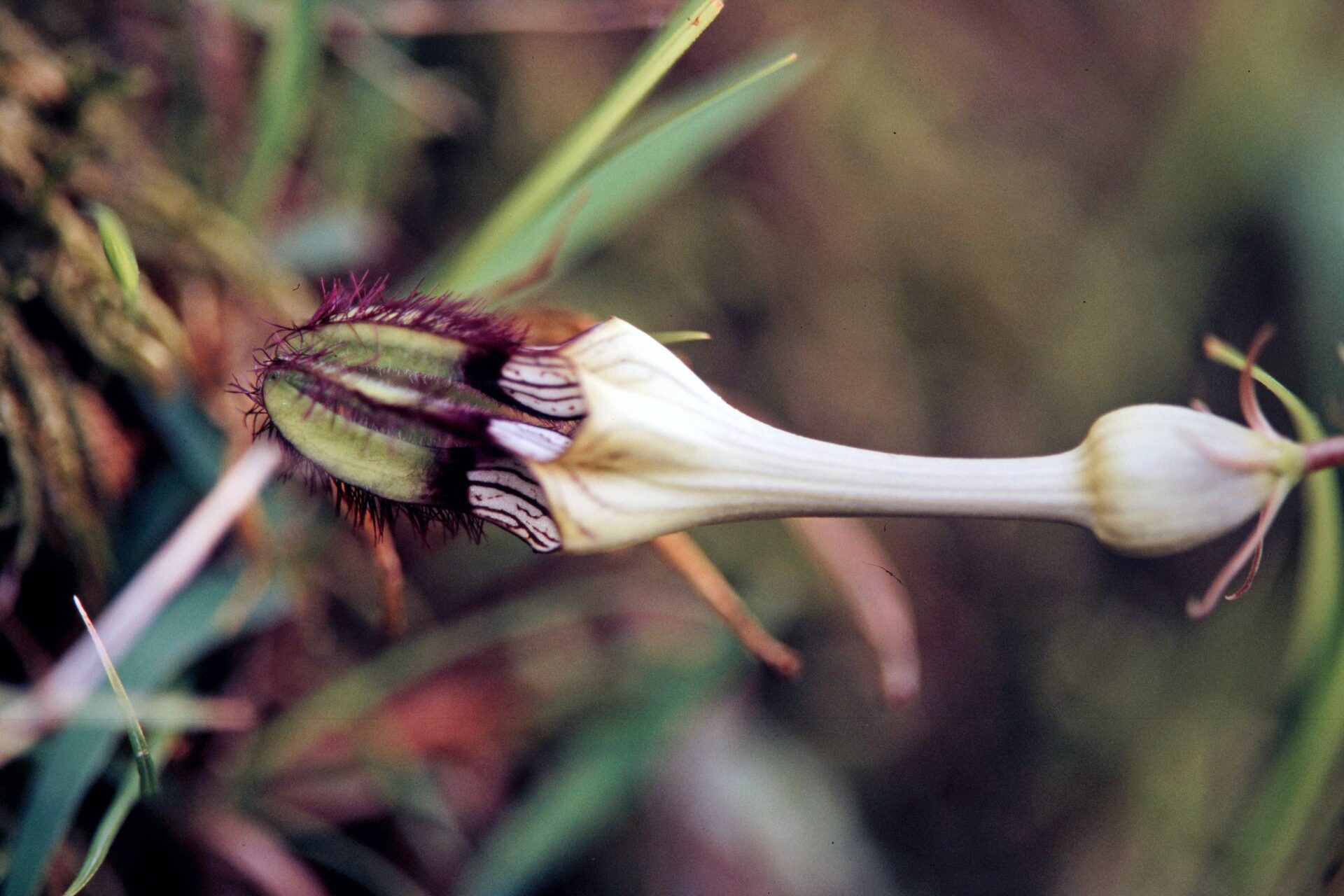
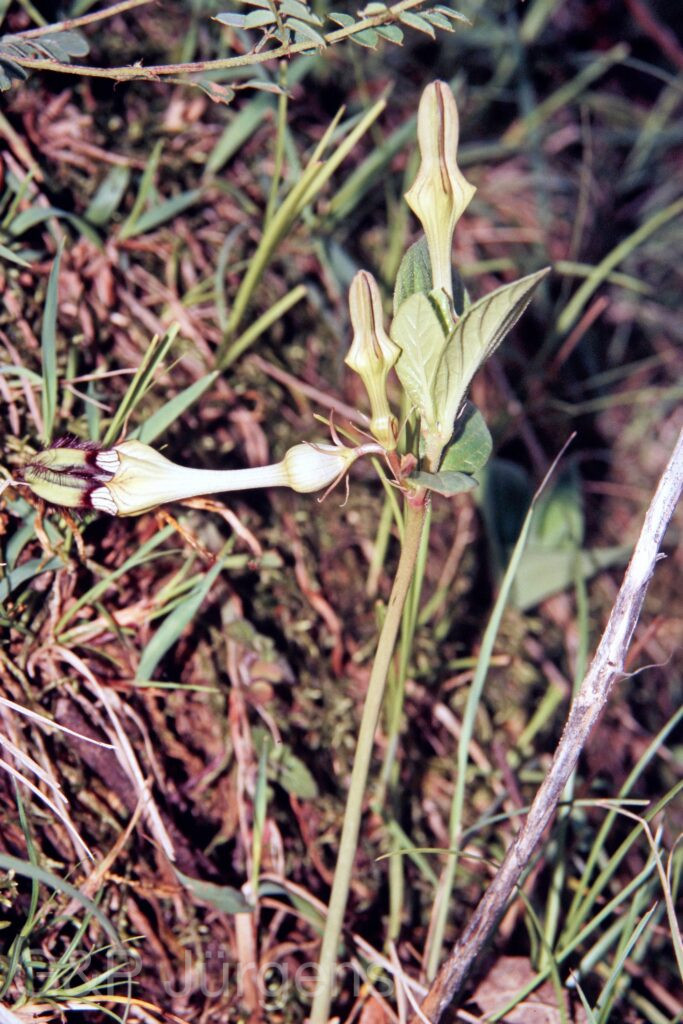
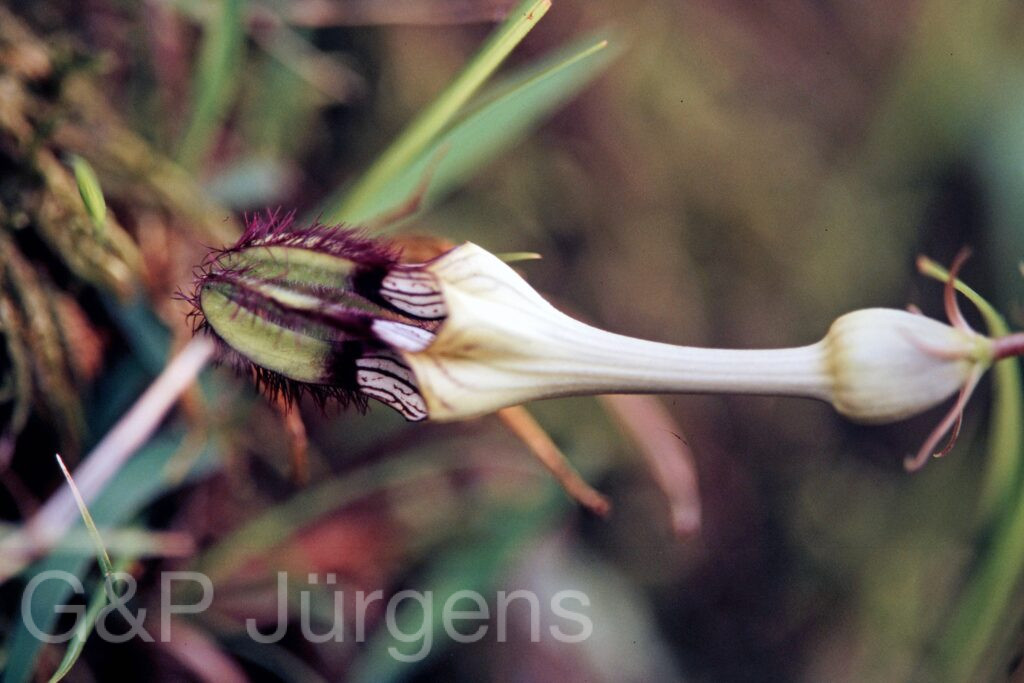
Ceropegia wallichii is a slender, herbaceous, twining perennial arising from a small, globose to ellipsoid tuber, 1.5–3 cm in diameter. Stems are wiry, glabrous or sparsely pubescent, reaching 1–2 m in length. Leaves are opposite, narrowly lanceolate to ovate-lanceolate, 3–8 cm long, acuminate at the apex, with short petioles. The inflorescence is an axillary, few-flowered umbelliform cyme bearing 2–6 flowers. The flowers are the most striking feature: the corolla tube is 2.5–4 cm long, slightly inflated at the base, curved, and pale green to yellowish with purple streaks; the five corolla lobes are linear, connate at the tips to form the characteristic cage-like structure (lantern flower) that functions as a temporary insect trap for pollination. The follicles are paired, slender, up to 12 cm long, containing comose seeds adapted for wind dispersal.
The species was described by Robert Wight based on material originally collected by Nathaniel Wallich. It belongs to Ceropegia section Ceropegia, a primarily Asian lineage of twining herbs with tuberous rootstocks. The photographed specimen from Bebra in Garhwal at 2,450 m documents an occurrence in the western Himalayan portion of the range. Ceropegia wallichii can be distinguished from the related C. pubescens by its glabrous or sparsely hairy stems and narrower leaf blades. Given its sparse occurrence records and reliance on relatively intact forest-edge habitats, the species may merit conservation attention, though a formal IUCN assessment is currently lacking.
Author: Wight · Sources: POWO (Kew), GBIF, Flora of British India Vol. 4, Ansari: Asclepiadaceae — Genus Ceropegia, Flora of India (1984), Bruyns et al. (2017)