
D.Don
Description
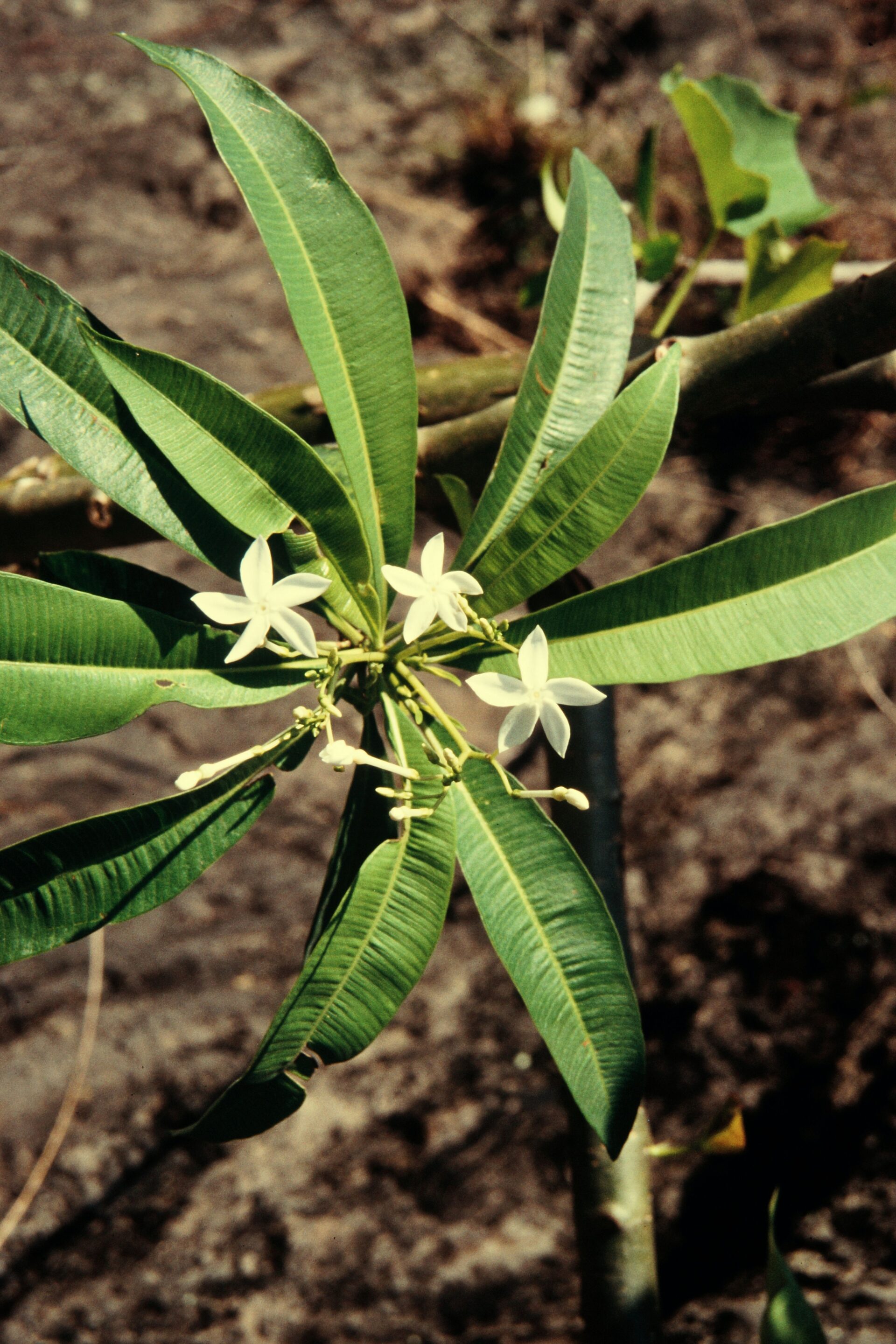
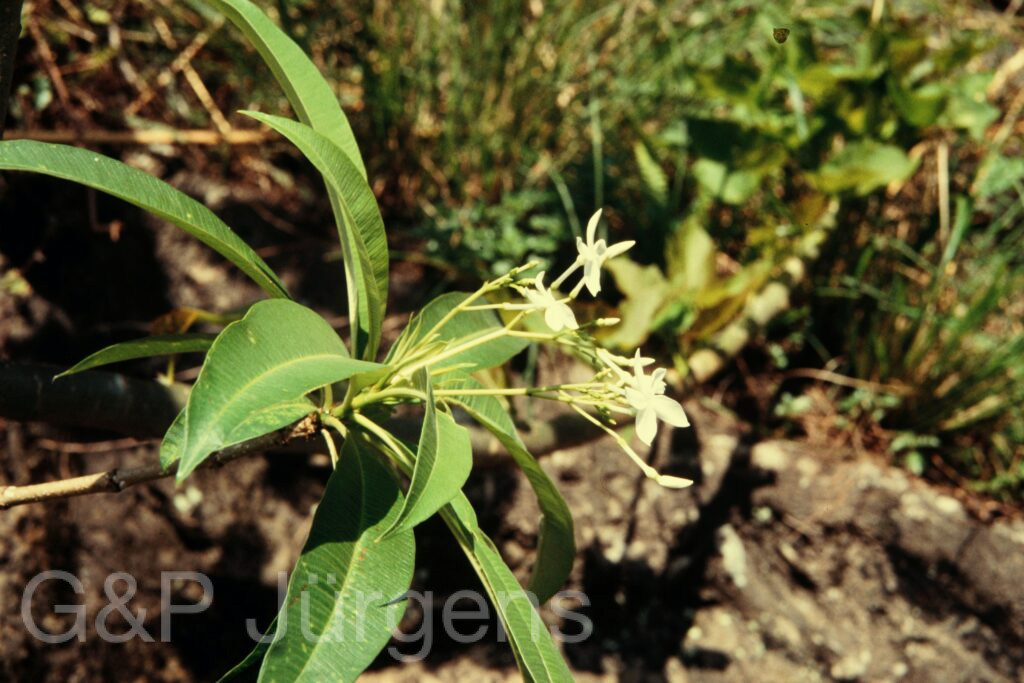
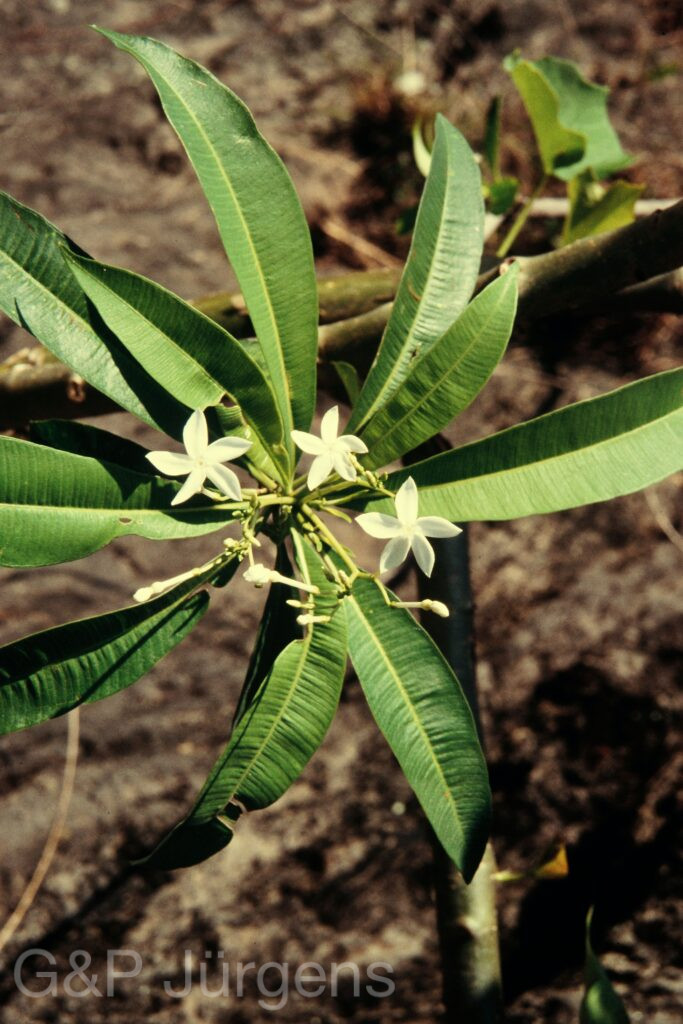
Alstonia neriifolia is a shrub or small tree of the warm, humid lower hills of the eastern Himalaya and Indo-Burmese region, recorded from India, Nepal, Bhutan, China and southwards into mainland and insular Southeast Asia including Vietnam, Indonesia and Singapore. It occupies subtropical broad-leaved forest, forest margins, stream banks and shaded ravines at low to moderate elevations. The specimen photographed at Mewa-Khola in eastern Nepal at 1100 m in April reflects its preference for the warm, moist foothill belt, where it flowers as the pre-monsoon temperatures rise.
Like other members of its genus it exudes a white latex when cut. The leaves are arranged in whorls of three or more, narrowly lanceolate to oblong and acuminate, recalling those of Nerium (oleander) and giving the species its epithet; the lamina is glabrous and leathery with numerous closely parallel lateral veins running to a marginal collecting vein. The flowers are borne in terminal cymose clusters, with a small five-lobed calyx and a salverform white to cream corolla whose lobes overlap to the left in bud. The fruit is a pair of slender, elongate follicles that split to release numerous flattened seeds bearing tufts of hairs at both ends for wind dispersal.
Alstonia is a pantropical genus of the Apocynaceae, subfamily Rauvolfioideae, well known for the indole alkaloids in its bark, several species of which are valued in traditional medicine and as timber. Alstonia neriifolia, described by D.Don, is distinguished from the better-known A. scholaris by its narrower, oleander-like leaves and smaller stature. Its comma-shaped, comose seeds and reliance on insect pollination of the fragrant flowers underpin its ecology in disturbed and successional foothill forest.
Author: D.Don · Sources: POWO (Kew), GBIF, Flora of China, Annotated Checklist of the Flowering Plants of Nepal, Flora of Bhutan, Middleton's revision of Asian Alstonia (Apocynaceae)