
Hook.f.
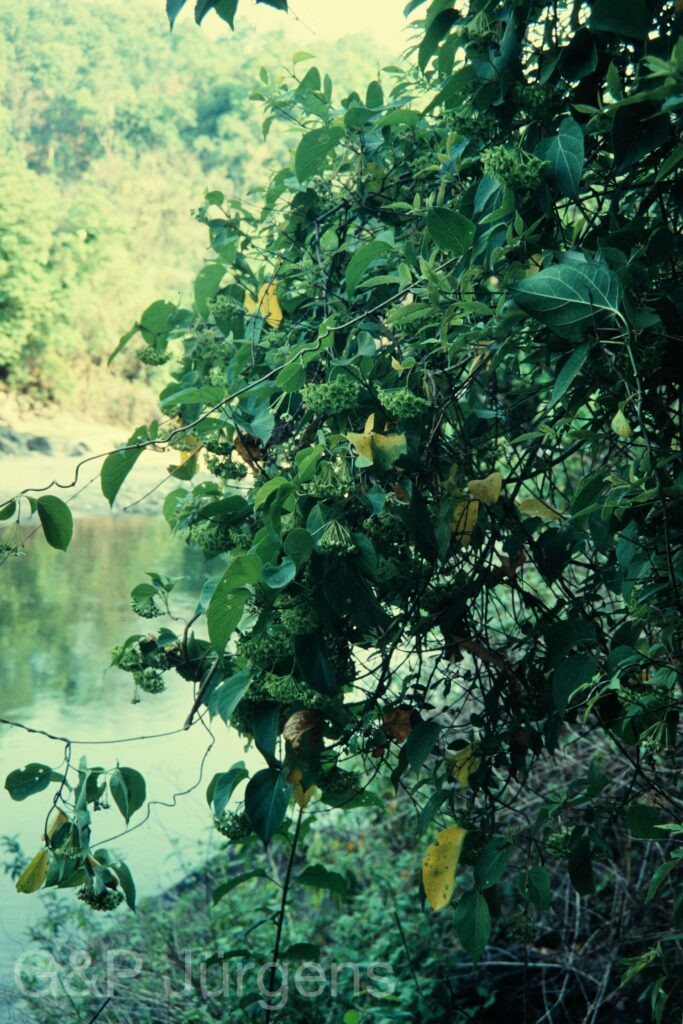
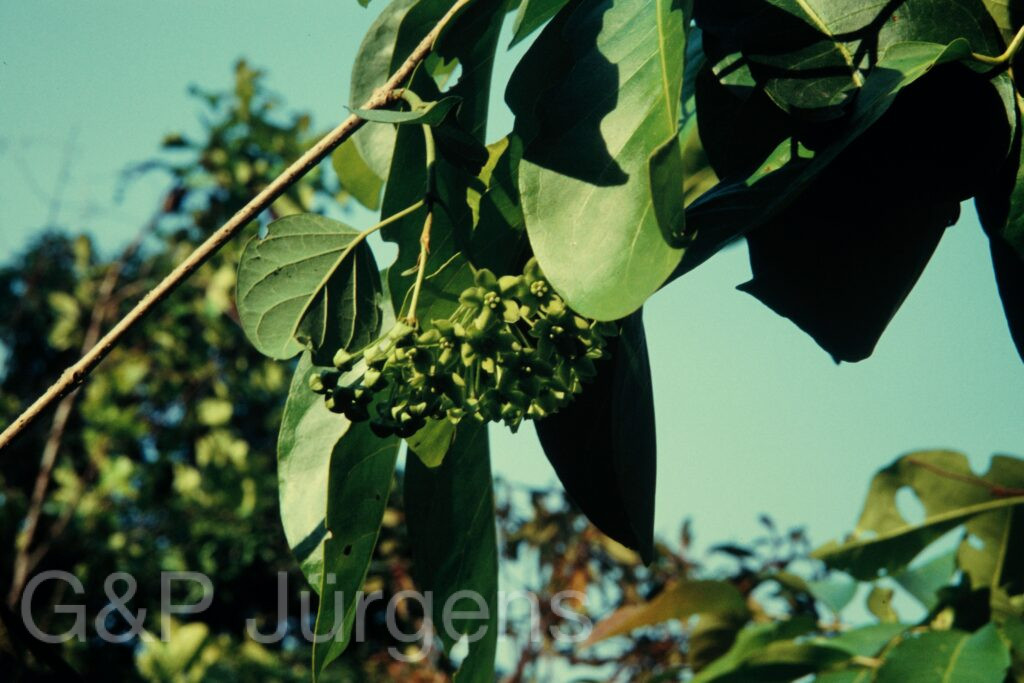
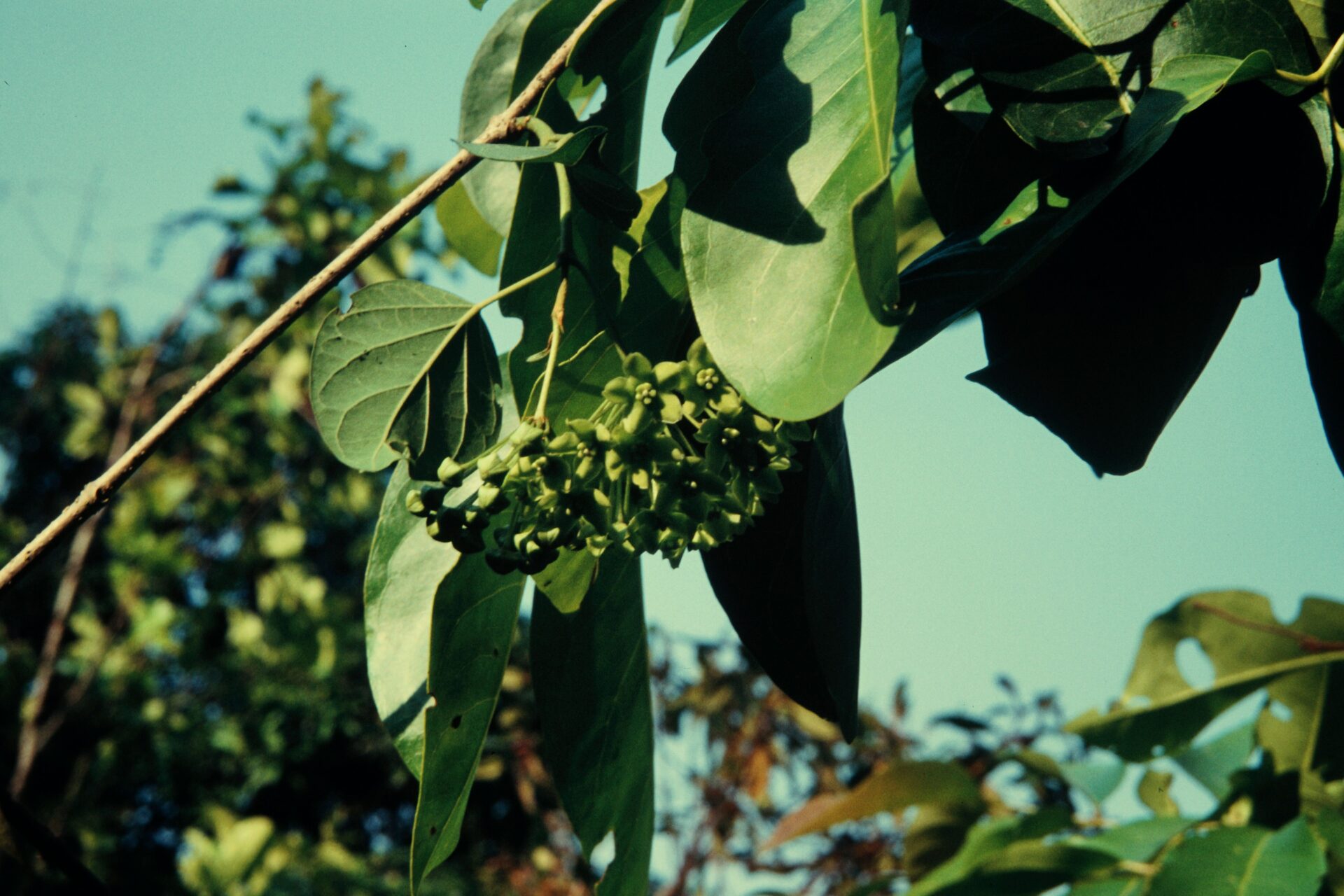
Description
Hoya obcordata is an epiphytic climber of the eastern Himalayan foothills and adjacent subtropical forests, documented from north-east India and Bhutan, with collections also referable to lowland Nepal. It is poorly recorded, GBIF holding only five georeferenced occurrences, reflecting both its restricted range and the difficulty of collecting canopy epiphytes. It grows as a twining liana or root-climber on tree trunks and rocks in humid broad-leaved and riverine forest at low elevations. The plant from Sabha Khola in eastern Nepal at 550 m in May occupies just such a warm, humid valley floor, flowering in the late dry season.
It is a glabrous, somewhat succulent vine with slender twining stems rooting adventitiously at the nodes and exuding milky latex. The leaves are opposite, thick and fleshy, obovate to obcordate with a notched or rounded apex (whence obcordata) and shortly petiolate. The flowers are borne in pendent, umbelliform cymes from extra-axillary peduncles, each umbel of many small star-shaped blooms. The corolla is rotate and five-lobed, pale and reflexed, surmounted by the fleshy five-parted corona typical of Hoya around the gynostegium of fused stamens and stigma. The pollen forms waxy pollinia, and the fruit is a slender paired follicle releasing comose, wind-dispersed seeds.
Hoya belongs to subfamily Asclepiadoideae of an expanded Apocynaceae, defined by the gynostegium, corona and pollinium-bearing flowers formerly placed in Asclepiadaceae. H. obcordata is among the less collected Himalayan members of this largely Malesian genus, and its scarcity in herbaria leaves its full distribution imperfectly known. Such epiphytes are vulnerable to lowland deforestation, and the species would merit targeted survey to clarify its conservation status.
Author: Hook.f. · Sources: POWO (Kew), GBIF, Flora of China Vol. 16, Flora of Bhutan Vol. 2, Annotated Checklist of the Flowering Plants of Nepal, Wallich revisions of Asiatic Hoya