
Alston
Description
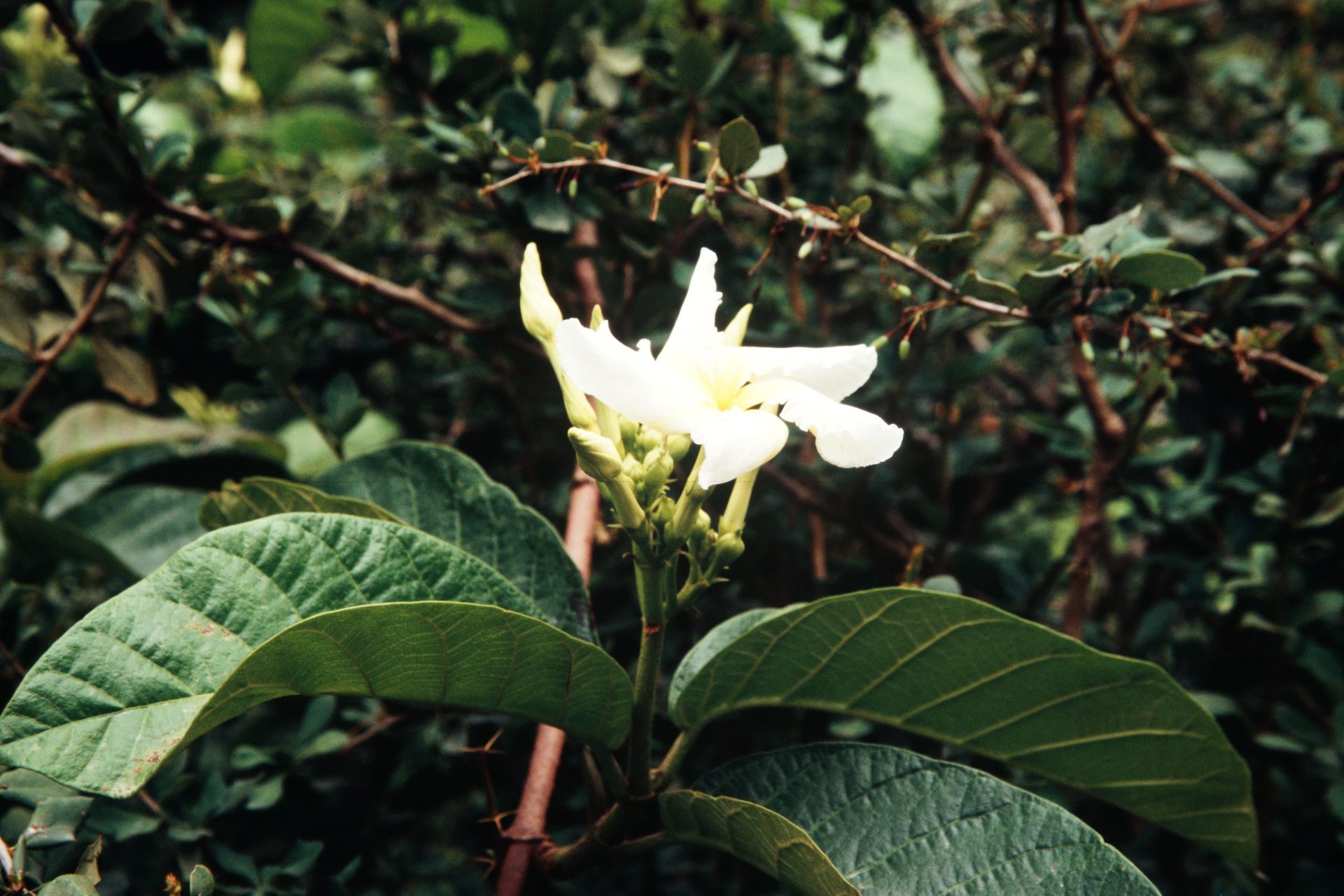
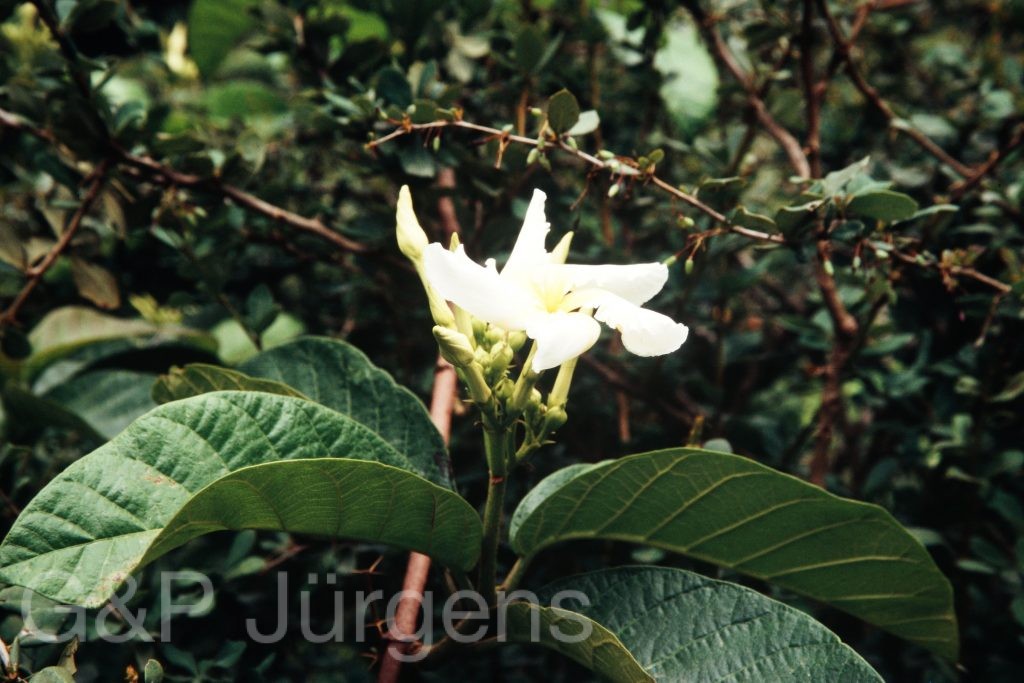
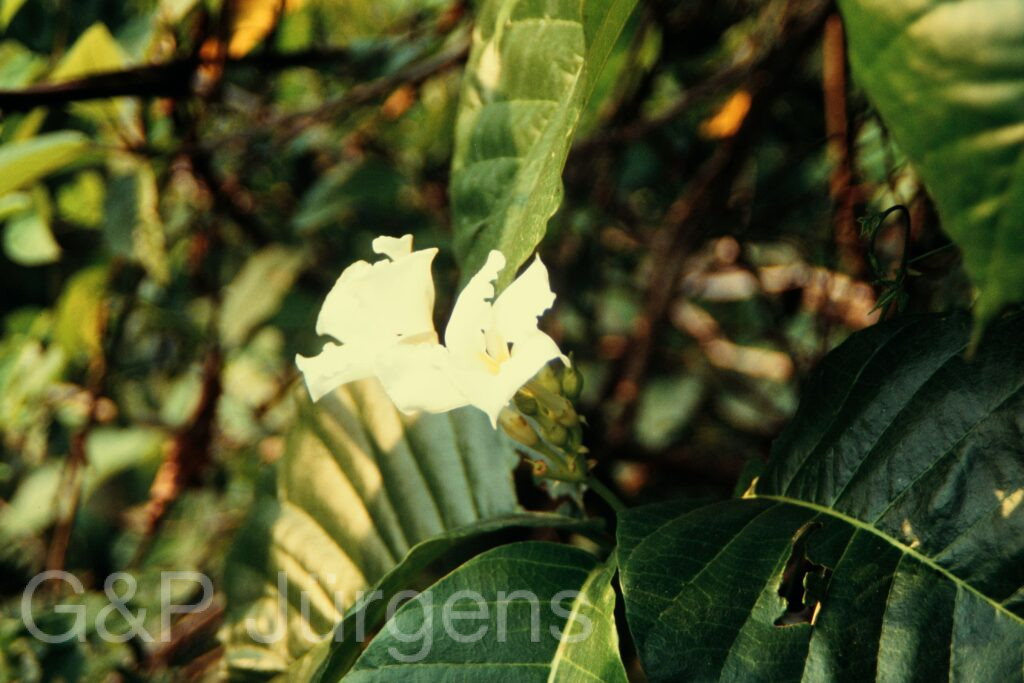
Chonemorpha fragrans Alston is a large woody climber of tropical and subtropical Asia, ranging from India, Nepal and Myanmar through southern China and Indochina to Thailand, Sri Lanka and western Malesia; GBIF documents about 769 occurrences across this Indo-Malesian span. It is a liana of moist forest, forest margins and riverine thickets, climbing into the canopy from low elevations into the lower hills. The photographed material spans this amplitude, from the Sabha-Khola in lowland Nepal at 550 m in May to Wangdi in Bhutan at 2,600 m in June, the latter an unusually high record for an essentially subtropical climber.
It is a robust, twining liana with stout woody stems exuding milky latex when cut, as is general in the family. The leaves are opposite, large, broadly ovate to obovate, often softly tomentose beneath, with an acuminate apex and entire margin. The flowers are large and showy, borne in terminal cymes; the salverform corolla is white with a yellow throat, fragrant, and 5-8 cm across, with five broad, asymmetric, overlapping lobes. The fruit is a pair of long, slender, cylindrical follicles that split to release numerous flattened seeds, each bearing an apical tuft of silky hairs (coma) for wind dispersal.
Chonemorpha belongs to the Apocynaceae (subfam. Apocynoideae), the woody twining members of the dogbane family. C. fragrans is grown as an ornamental for its large fragrant blooms and yields a stem fibre and medicinally used alkaloids. Widespread across forested Indo-Malesia and tolerant of forest-edge and disturbed habitats, it is not of conservation concern; its comose seeds and liana habit support effective dispersal and rapid colonisation of canopy gaps.
Author: Alston · Sources: POWO (Kew), GBIF, Flora of China, Flora of Nepal, Flora of Bhutan, Apocynaceae treatment in Flora Malesiana, Middleton studies of Asian Apocynaceae