
D. Don
Description
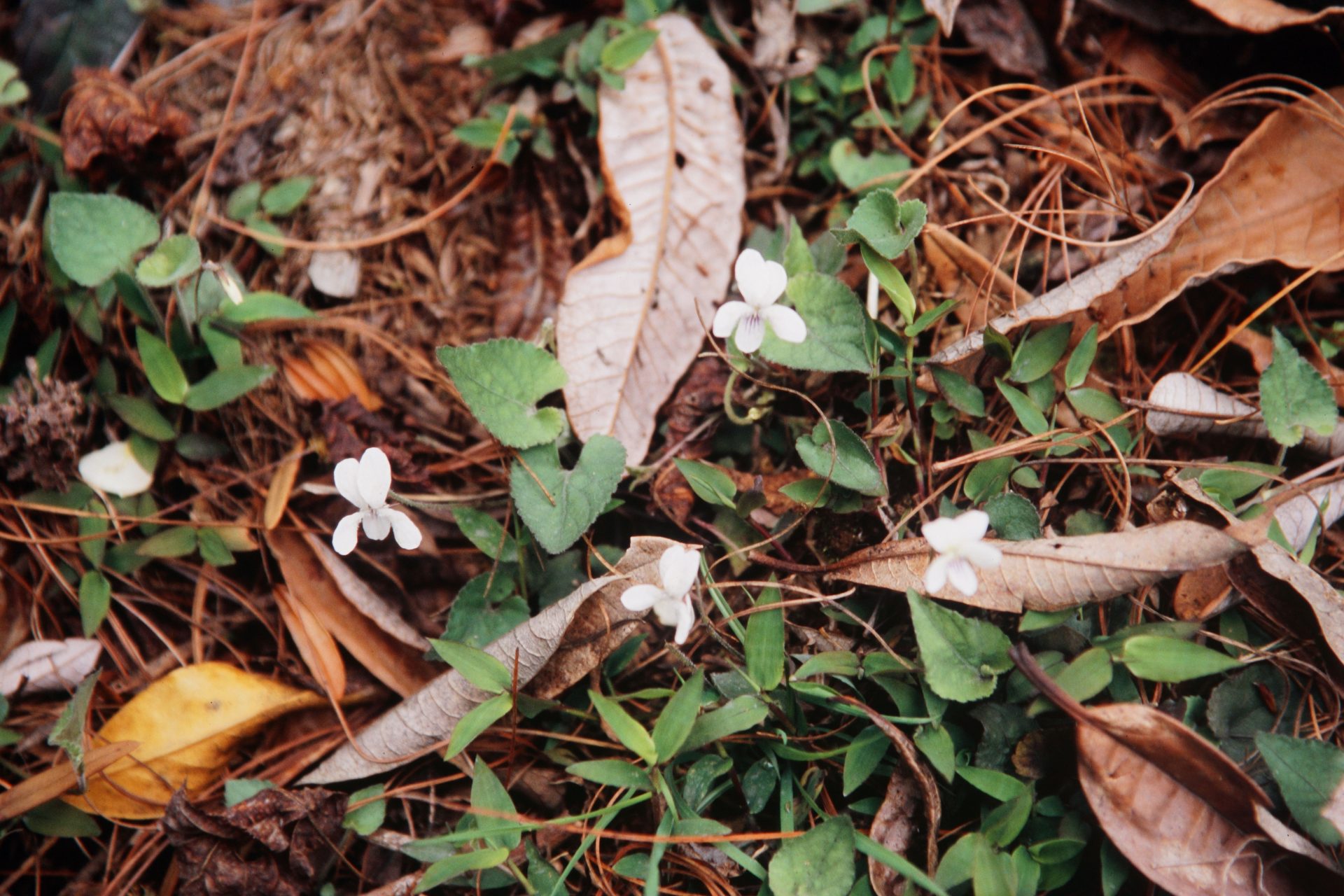
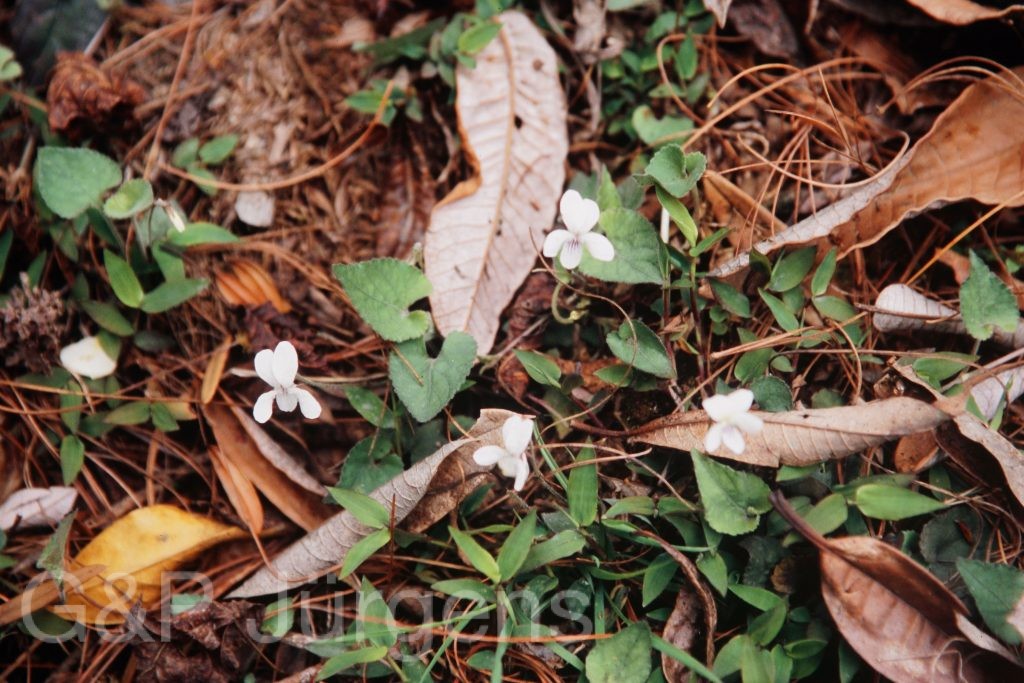
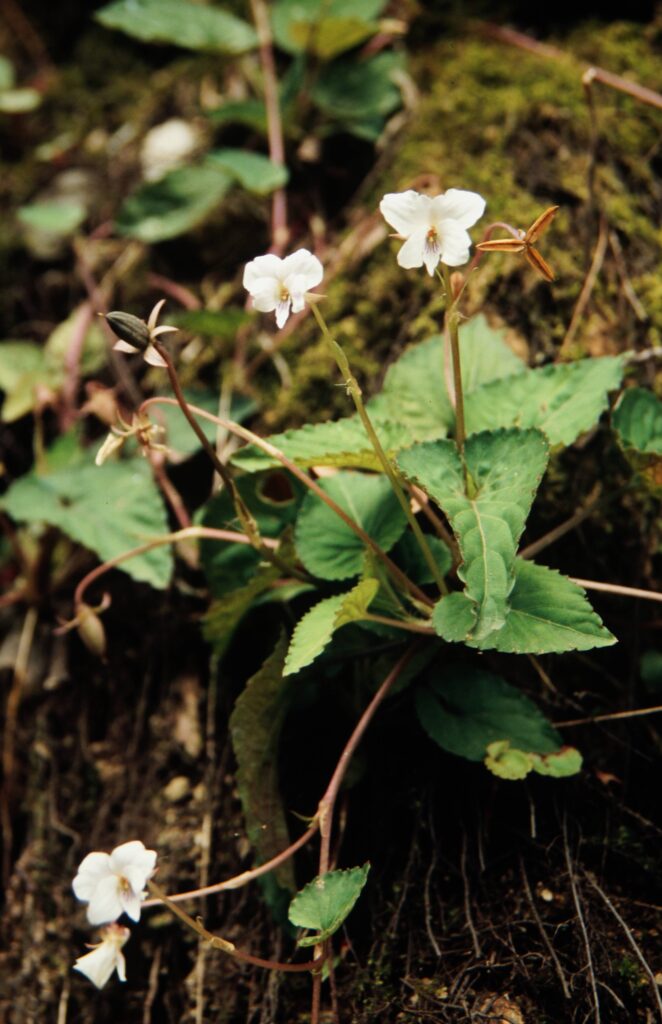
Viola hamiltoniana D.Don is a small perennial violet of the temperate Himalaya and East Asia. GBIF documents a broad distribution including Nepal, NE India, Bhutan, Bangladesh, Sri Lanka, China, Taiwan, Japan, Korea, the Russian Far East and Southeast Asia, with over 10,000 records, reflecting its place within a widespread and taxonomically intricate East Asian complex. In the Himalaya it grows in moist temperate forest, on grassy banks and shaded slopes; the illustrated plants are from Bhutan at Chendebji, 2,500 m, in April, and from West Bengal at Chaana, 1,700 m, in May, the flowering season of early spring.
The plant is a low, acaulescent or shortly stemmed herb arising from a slender rhizome, sometimes producing stolons. The leaves are basal in a loose rosette, the blades ovate to oblong-lanceolate or cordate with a crenate to serrate margin and a long, slender petiole, the stipules narrow and entire to fimbriate. Flowers are solitary on long axillary peduncles, zygomorphic and spurred in typical violet fashion, white to pale lilac or bluish with darker veining on the lower petal and a short blunt spur; cleistogamous flowers are commonly produced later in the season. The fruit is a three-valved loculicidal capsule that dehisces explosively to disperse the smooth seeds.
Viola section taxa of the Himalaya are notoriously variable, and V. hamiltoniana has been variously circumscribed and synonymised within the East Asian violet complex. The frequent cleistogamy ensures reliable seed set, contributing to its wide range and abundance. The species is common and of no conservation concern.
Author: D. Don · Sources: POWO (Kew), GBIF, Flora of China Vol. 13, Flora of Bhutan Vol. 1, Flora of Nepal, W. Becker: Violae Asiaticae