
L.
Description
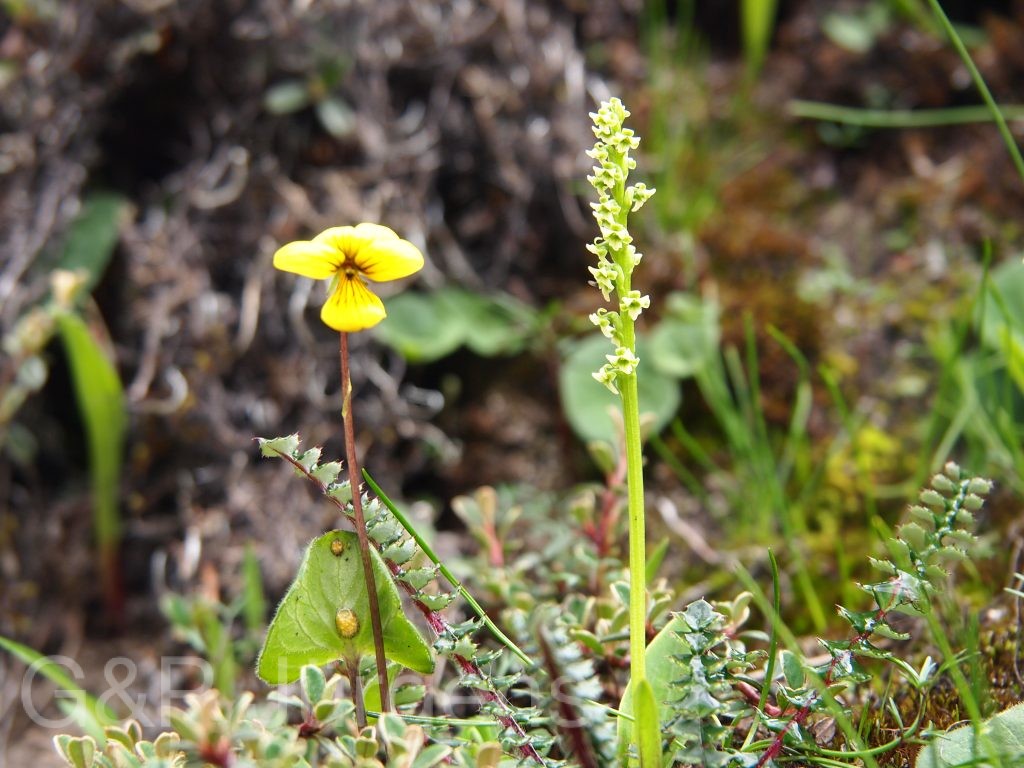
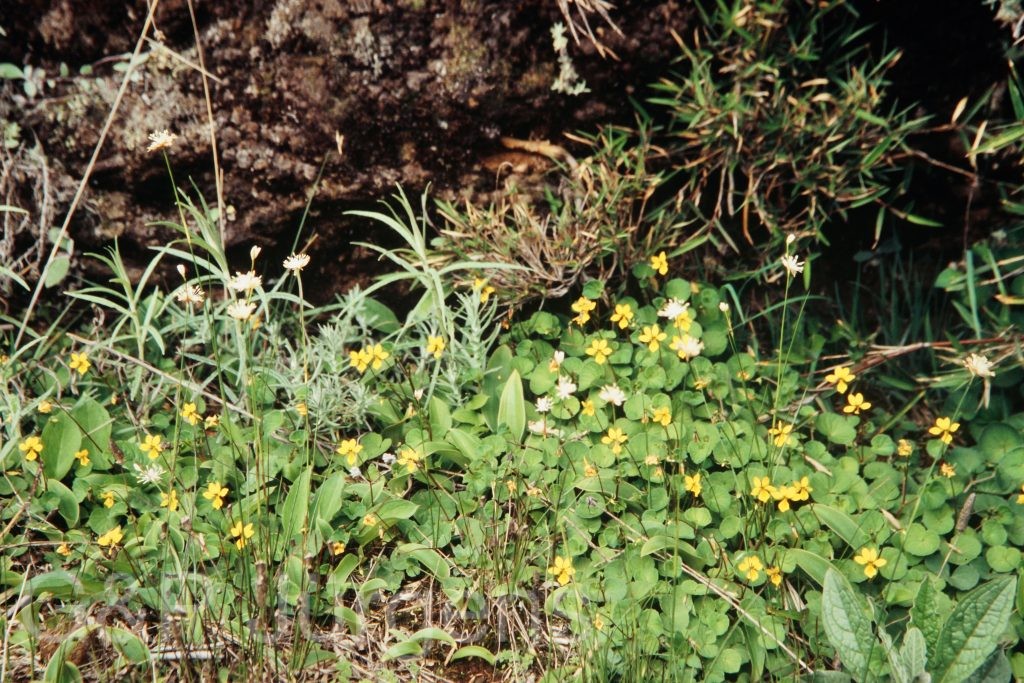
Viola biflora is a circumboreal, arctic-alpine herb with one of the widest distributions in the genus, the GBIF dataset of over 83000 records spanning the mountains of Europe (France, Switzerland, Austria, Germany, Italy, Spain, Scandinavia, Poland), Russia, China, Japan, Taiwan, Nepal and North America. It grows in cool, moist montane to alpine habitats: shaded rock ledges, streamsides, damp turf, mossy banks and conifer-forest margins, ascending well above the treeline. The photographed plant from the Pele-La in Bhutan at 3000 m in April, where it grew alongside the orchid Herminium duthiei, exemplifies its occurrence in high Himalayan meadow and rock-crevice communities flushed by snowmelt.
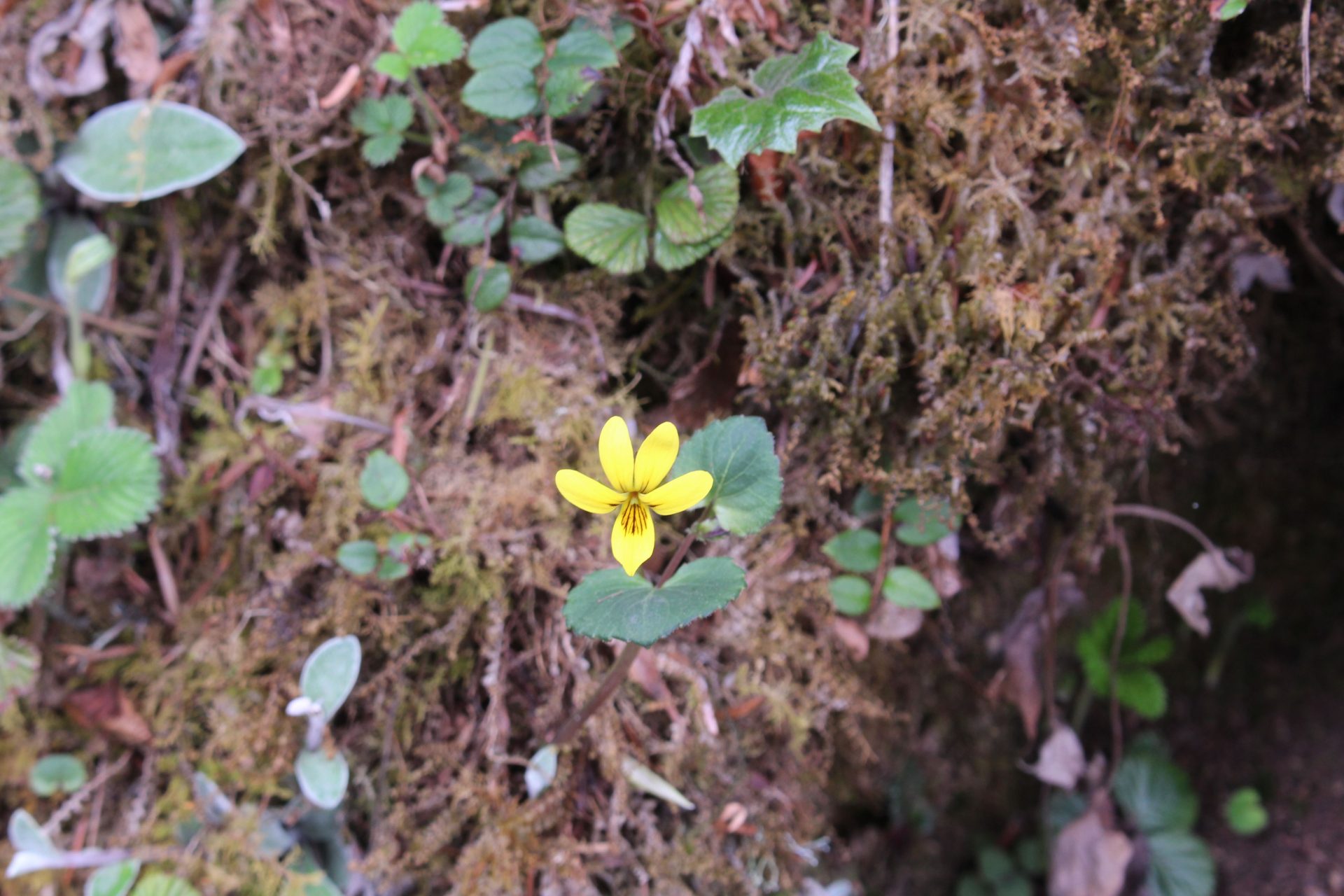
It is a small, delicate perennial herb arising from a slender creeping rhizome, with weak ascending stems 5–15 cm tall. The leaves are reniform to broadly cordate, crenate-margined, thin-textured and bright green, the basal ones long-petiolate. The flowers are characteristically borne one or two per axil (hence the epithet biflora) on slender pedicels; the corolla is small, bright yellow, with five petals, the lowest petal broadest and conspicuously veined with fine brown-purple nectar-guide striae, and produced into a short blunt spur. The five stamens surround a superior ovary maturing into a small loculicidal capsule that splits into three valves, ejecting the seeds.
Viola biflora is the type of section Chamaemelanium and is exceptional among violets for its yellow flowers and circumpolar range, with numerous regional varieties recognised across its vast area. The nectar-guided flowers attract small bees and hoverflies, and explosive capsule dehiscence aids seed dispersal. Widespread and abundant, it is of least conservation concern.
Author: L. · Sources: POWO (Kew), GBIF, Flora of China Vol. 13, Flora of Bhutan Vol. 1, Flora of Nepal, Violets of the World (Marcussen et al.)