
Franch.
Description
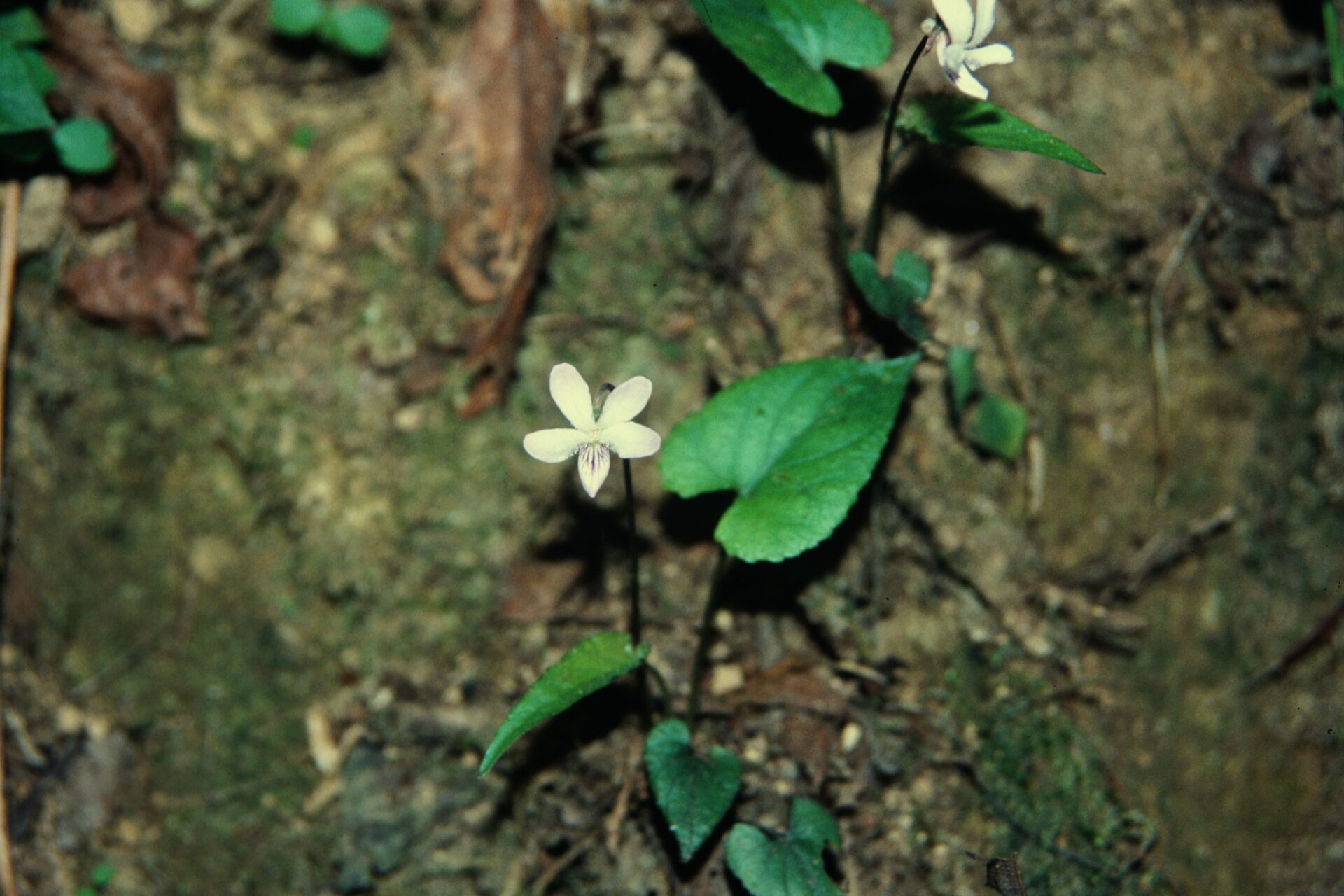
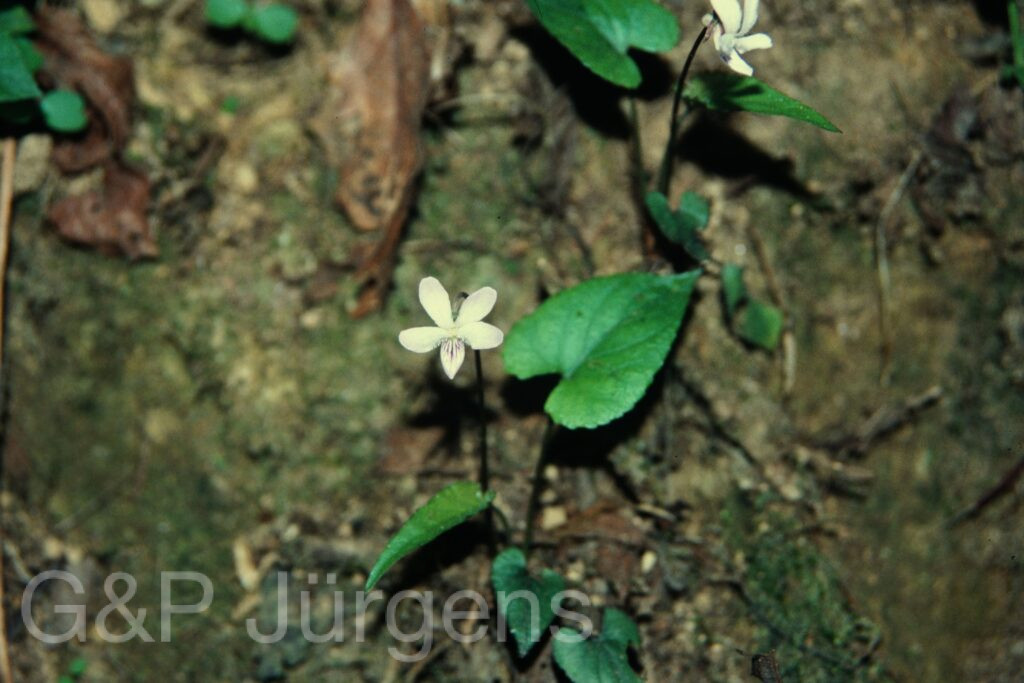
Viola moupinensis Franch. is a stemless perennial violet of the Sino-Himalayan mountains, distributed according to GBIF across China, India, Myanmar, Nepal and Bhutan. It inhabits cool, moist temperate and subalpine forests, shaded grassy slopes, forest margins and stream sides, typically between about 2,000 and 3,500 m. The May record from Choka in Sikkim at 3,000 m reflects its flowering during the spring monsoon onset in mossy, humus-rich woodland, where it grows among ferns and other shade-tolerant herbs in the understorey of mixed conifer and broad-leaved forest.
The species is an acaulescent (rosette-forming) perennial arising from a short, stout rhizome bearing fibrous roots. The leaves are basal, long-petiolate, with broadly cordate to reniform-cordate blades that are crenate-serrate at the margin and somewhat pubescent, often enlarging considerably after flowering. The solitary, long-pedunculate flowers are pale violet to whitish with darker purple veining on the lower petals; the lowermost petal bears a short, blunt spur. As is typical of Viola, the plant also produces self-pollinating cleistogamous flowers later in the season, and the fruit is an ellipsoid, three-valved capsule that dehisces explosively to disperse the seeds, which are further dispersed by ants via their elaiosomes.
Viola moupinensis belongs to section Viola and is closely allied to the temperate stemless violets of Eurasia. Its combination of showy chasmogamous and reliable cleistogamous flowers ensures reproductive success in shaded, insect-poor forest understoreys. As a frequent and adaptable woodland species across a broad elevational and geographic range, it is not of conservation concern but is a valued component of Himalayan spring flora.
Author: Franch. · Sources: POWO (Kew), GBIF, Flora of China Vol. 13, Flora of Bhutan Vol. 1, Wang Wencai: Violaceae monographic studies