
Wall.ex A.DC.
Description
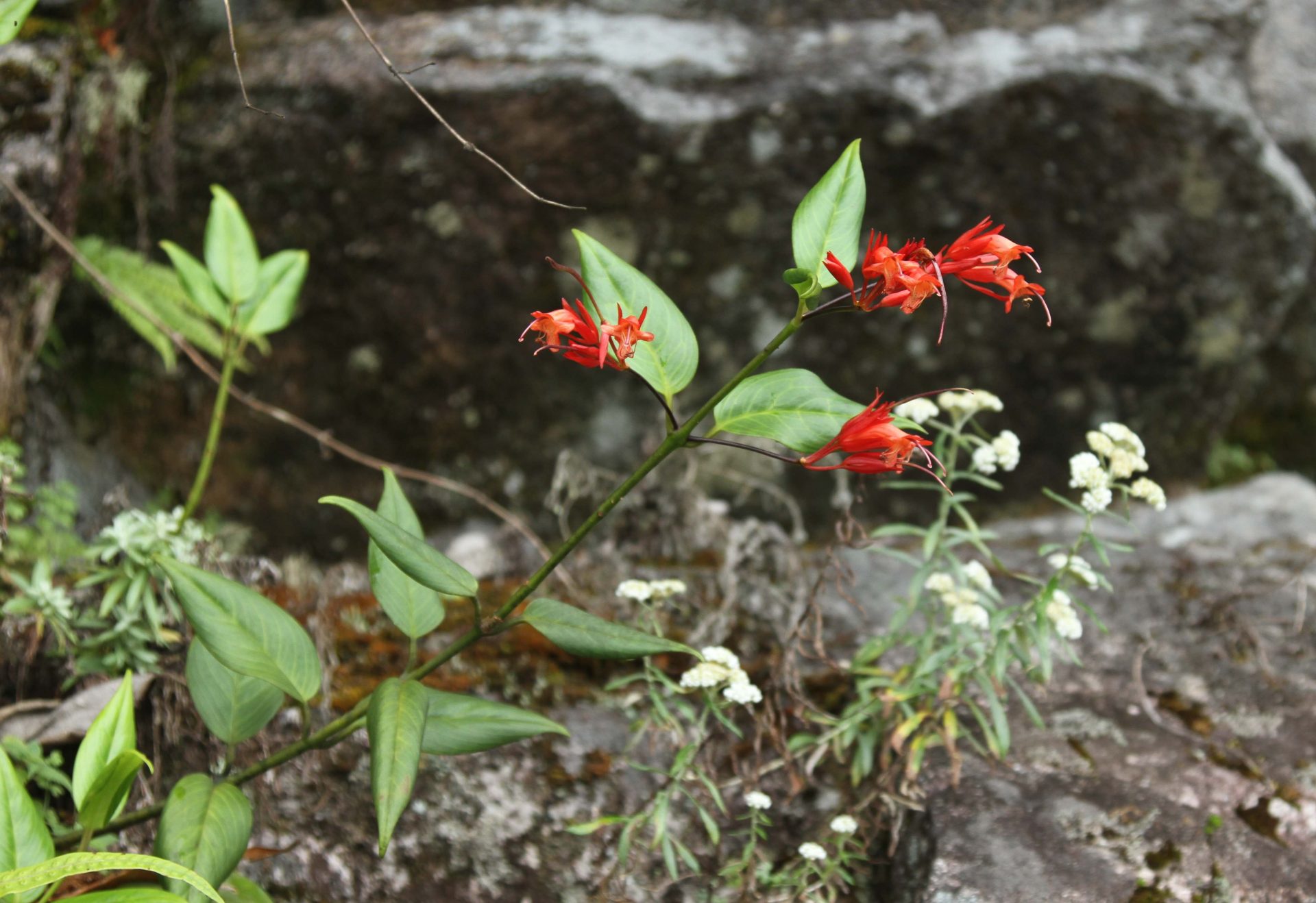
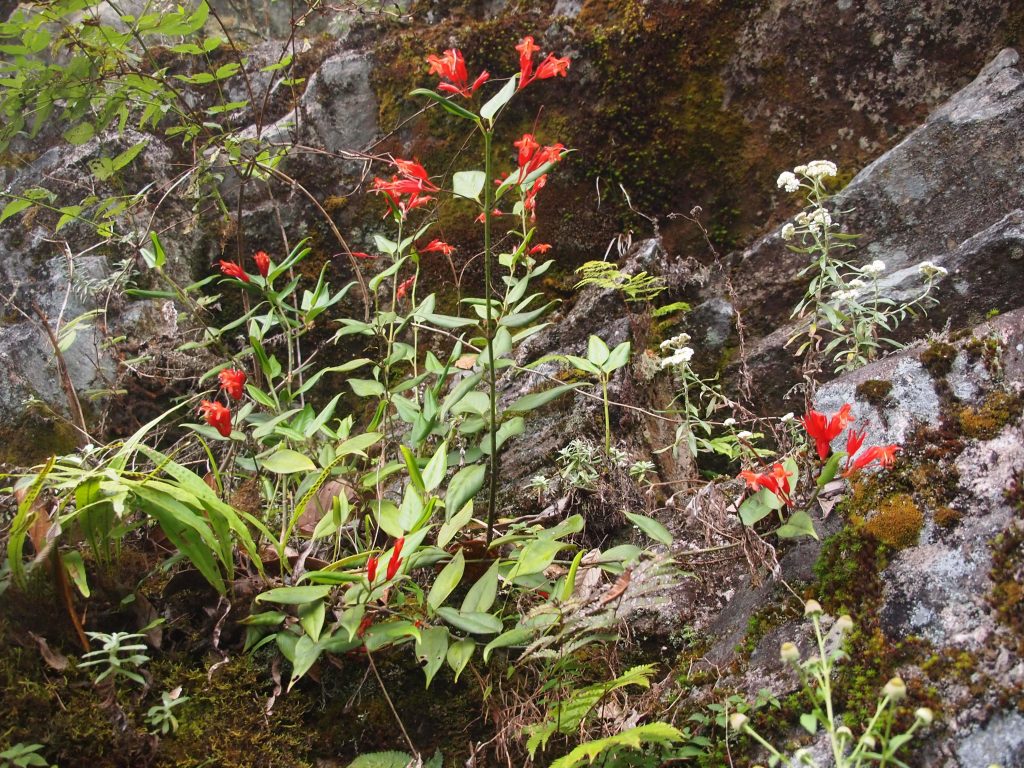
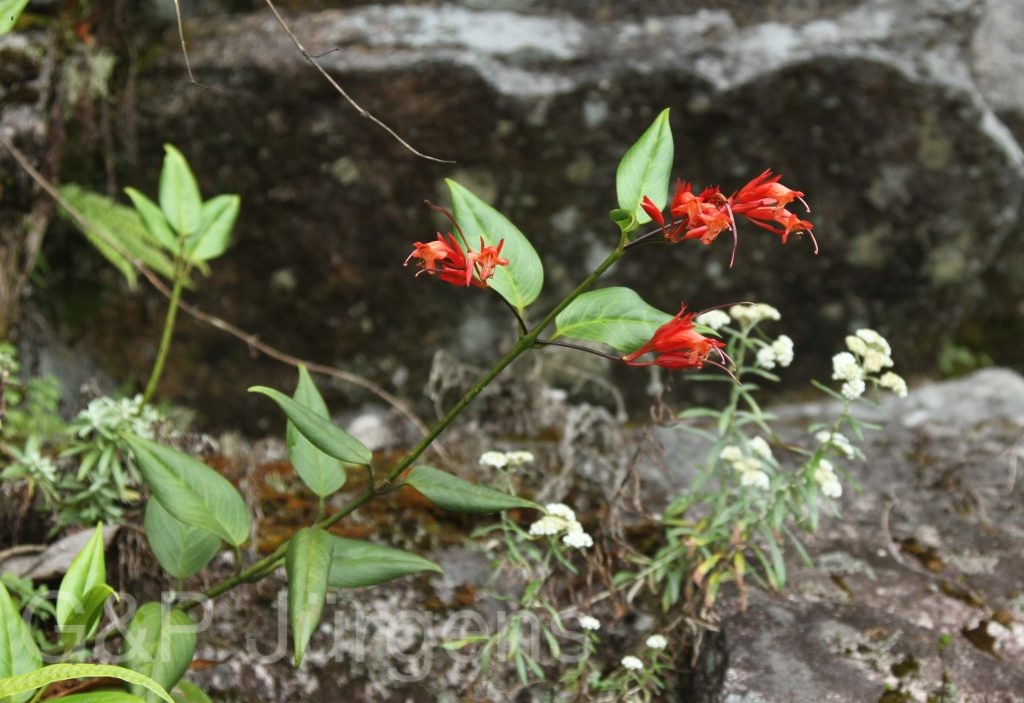
Aeschynanthus bracteatus is an epiphytic subshrub of the eastern Himalaya and Indo-Chinese region, distributed from Nepal and northern India through Bhutan and Bangladesh into Myanmar, south-western China, Laos and Vietnam, with around 906 occurrence records. It grows as an epiphyte or lithophyte on mossy tree trunks, branches and shaded rocks in humid evergreen broad-leaved montane forest, typically between about 1500 and 2500 m. The specimen photographed at Trithangbe in Bhutan at 2100 m in October illustrates its autumn flowering within the moist, mist-laden forests where epiphytic gesneriads thrive.
The plant has trailing to pendulous, somewhat fleshy stems rooting at the nodes, bearing opposite, thick, elliptic to lanceolate leaves that are entire and glabrous, with an obscurely veined, leathery texture suited to its epiphytic life. The inflorescences are terminal or axillary clusters subtended by conspicuous bracts, the feature reflected in the epithet bracteatus. The flowers have a tubular, often dark calyx and a curved, tubular two-lipped corolla in shades of red to orange-red, the throat sometimes marked within. The fruit is a long, slender, capsule splitting to release numerous small seeds furnished with hair-like appendages aiding wind dispersal.
Aeschynanthus (Gesneriaceae) is a large palaeotropical genus of climbing and epiphytic herbs and subshrubs; the input file places it under Didymocarpinae, a subtribal name within Gesneriaceae, whereas the genus is conventionally treated in subtribe Loxonia/Trichosporeae allies. The tubular red flowers and protruding stamens indicate bird (sunbird) pollination, while the plumose-appendaged seeds are wind-dispersed. The species is widespread across the Indo-Burmese hills and is of least conservation concern, serving as a characteristic epiphyte of eastern Himalayan cloud forest.
Author: Wall.ex A.DC. · Sources: POWO (Kew), GBIF, Flora of China, Flora of Bhutan, Annotated Checklist of the Flowering Plants of Nepal, Mendum revision of Aeschynanthus