
C.B. Clarke
Description
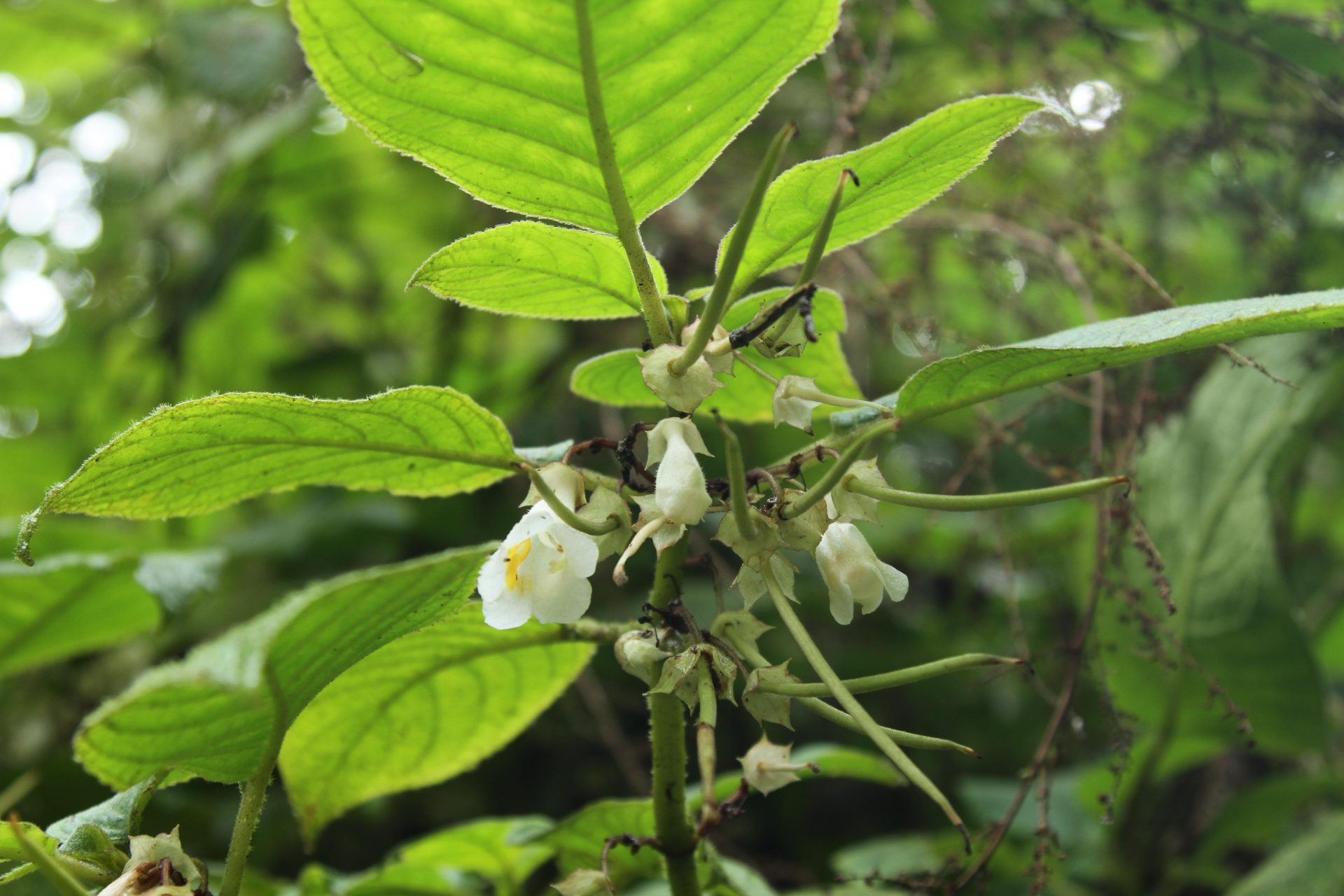
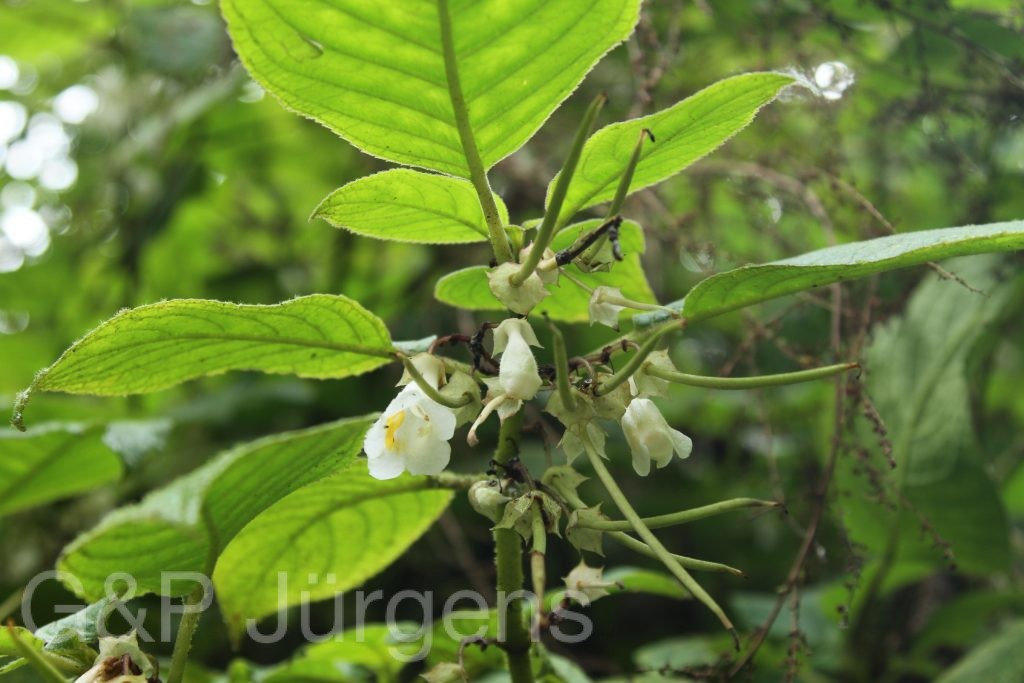
Lysionotus pubescens is an epiphytic or lithophytic gesneriad of the humid subtropical to lower montane forests of the eastern Himalaya and Indo-Burma, recorded from China, India, Bhutan, Myanmar, Vietnam and Sri Lanka. Its 75 georeferenced occurrences trace a belt of warm, moist evergreen forest where it grows perched on mossy tree trunks, branches and shaded rock faces. The plant photographed at Thritangebe in Bhutan at 1000 m in October reflects its preference for the warm, low-elevation forest zone, flowering in the post-monsoon period when humidity remains high beneath the canopy.
The plant is a small woody-based perennial with pendent or ascending stems bearing leaves in whorls of three or more, or sometimes opposite. The leaves are leathery, elliptic to oblong, with a toothed (serrate to crenate) margin, and as the epithet indicates the herbage is finely pubescent. The flowers are borne in short axillary cymes; the corolla is tubular and distinctly two-lipped (bilabiate), white to pale pink or pale violet, often with yellow or purple markings in the throat, with two fertile stamens. The diagnostic fruit is a long, slender, linear capsule that dehisces to release numerous minute seeds bearing fine appendages.
Lysionotus belongs to subtribe Didymocarpinae of the Gesneriaceae, the family group cited here, and is distinguished within it by its long siliqua-like capsule and frequently whorled leaves. The genus is centred on the Sino-Himalayan and Indo-Chinese region and is well represented in China. As an epiphyte dependent on intact humid forest, L. pubescens is locally common where suitable habitat persists but is sensitive to forest clearance.
Author: C.B. Clarke · Sources: POWO (Kew), GBIF, Flora of China, Flora of Bhutan, Gesneriaceae of the Old World monograph (Weber), Flowers of the Himalaya (Polunin & Stainton)