
(C.B.Clarke) B.L.Burtt.
Description
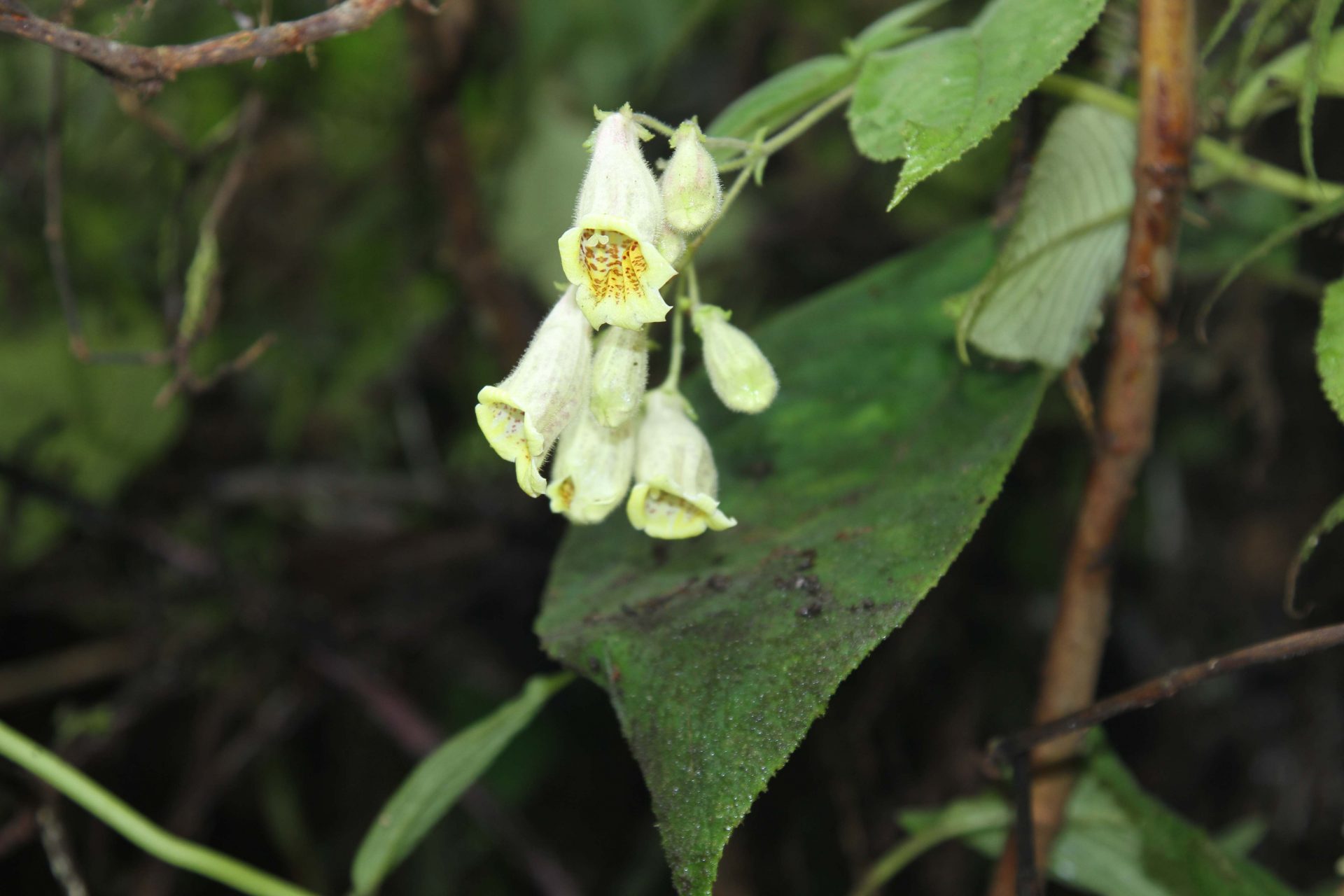
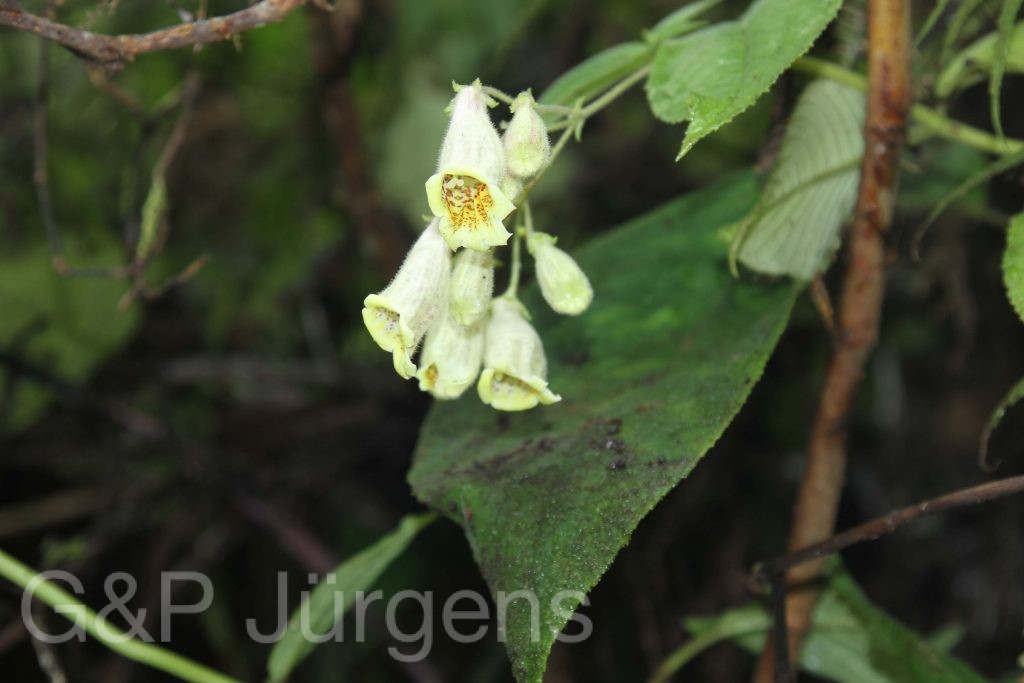
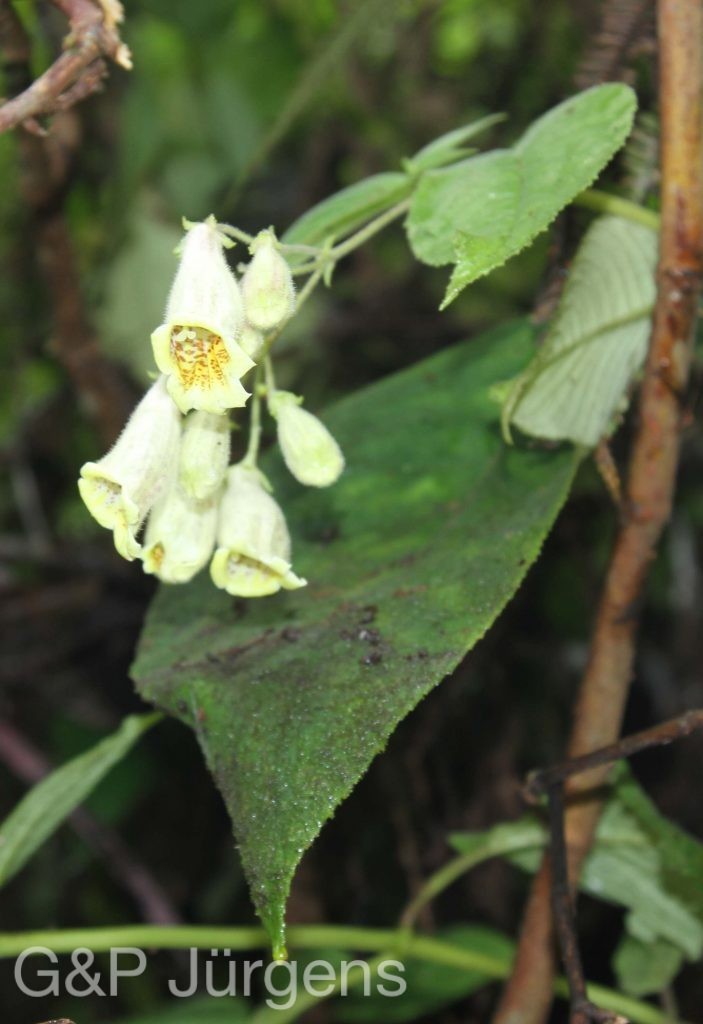
Loxostigma kurzii is an epiphytic or lithophytic gesneriad of the eastern Himalaya and the Sino-Himalayan borderlands, recorded by GBIF (about 165 occurrences) from China, India, Nepal, Bhutan and Myanmar. It inhabits the humid subtropical and warm-temperate forest belt, growing on mossy tree trunks, shaded cliffs and dripping rock faces in deep shade and high humidity. The illustrated plant was found in Bhutan at Trithangebe at about 900 m in October, a low, frost-free montane forest locality typical of the species, which descends well below the conifer zone into the broadleaved evergreen forests of the foothills.
The plant is a soft, somewhat fleshy herb with pendulous or ascending, often rooting stems clothed in soft hairs. The leaves are opposite, those of a pair frequently unequal, ovate to elliptic, with a crenate-serrate margin and a pubescent surface. The flowers are solitary or few in the leaf axils, each on a slender pedicel; the calyx is five-parted, and the corolla is large, tubular-funnelform and yellow, often marked within with purplish lines and slightly two-lipped at the mouth. There are four didynamous stamens with coherent anthers, and a superior ovary bearing the obliquely placed stigma from which the genus takes its name (Loxostigma). The fruit is a long, slender, twisted capsule splitting to release many minute seeds.
The taxon is sometimes treated as Briggsia kurzii, reflecting past uncertainty over generic limits within the didymocarpoid Gesneriaceae; molecular work has placed Loxostigma as a distinct lineage near Briggsia. As a forest epiphyte dependent on undisturbed, humid woodland it is sensitive to deforestation, though it remains locally frequent and is not formally assessed as threatened.
Author: (C.B.Clarke) B.L.Burtt. · Sources: POWO (Kew), GBIF, Flora of China, Flora of Bhutan, Annotated Checklist of the Flowering Plants of Nepal, Weber and Burtt's classification of the Gesneriaceae