
(Buch.-Ham. ex D.Don) A.Dietr
Description
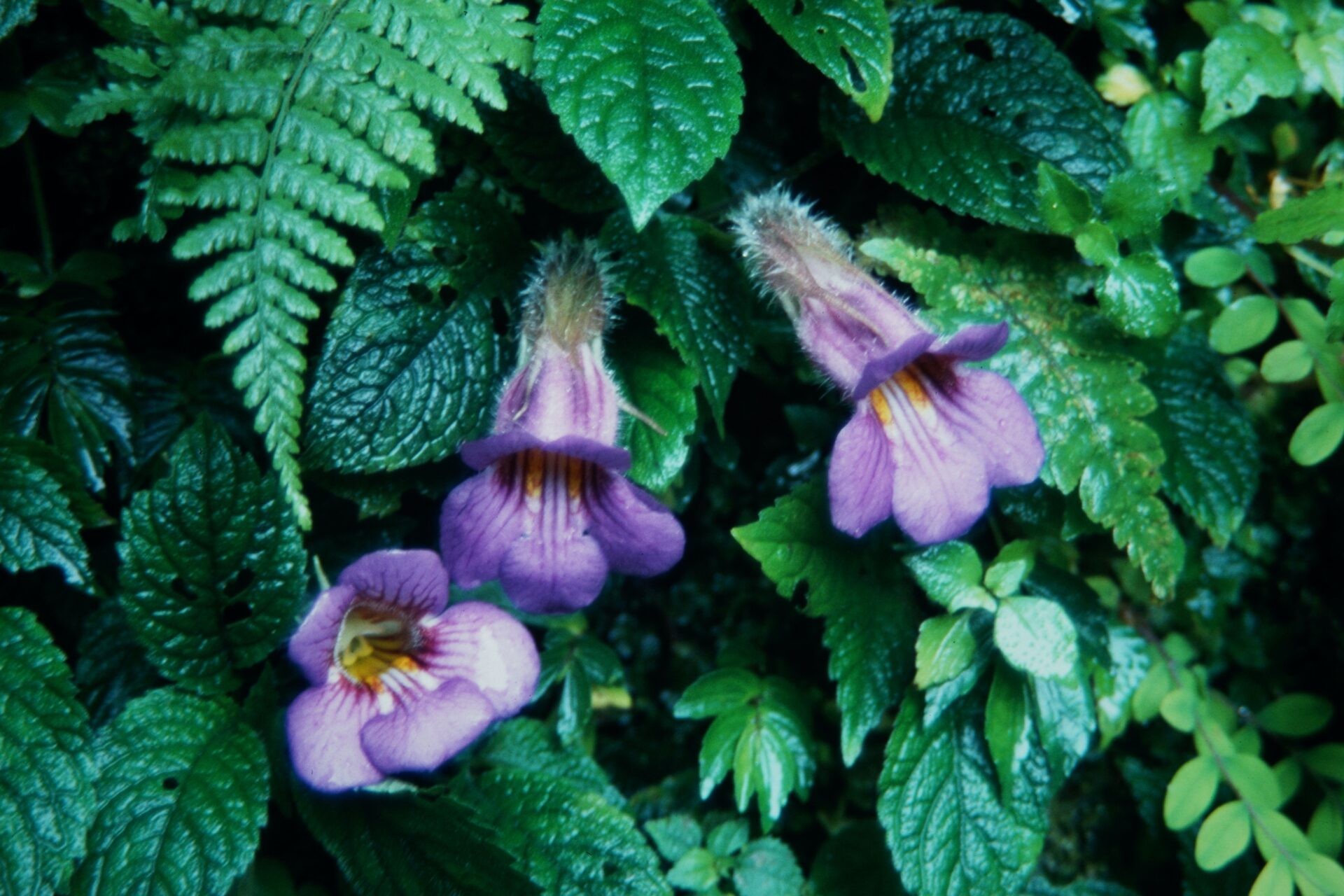
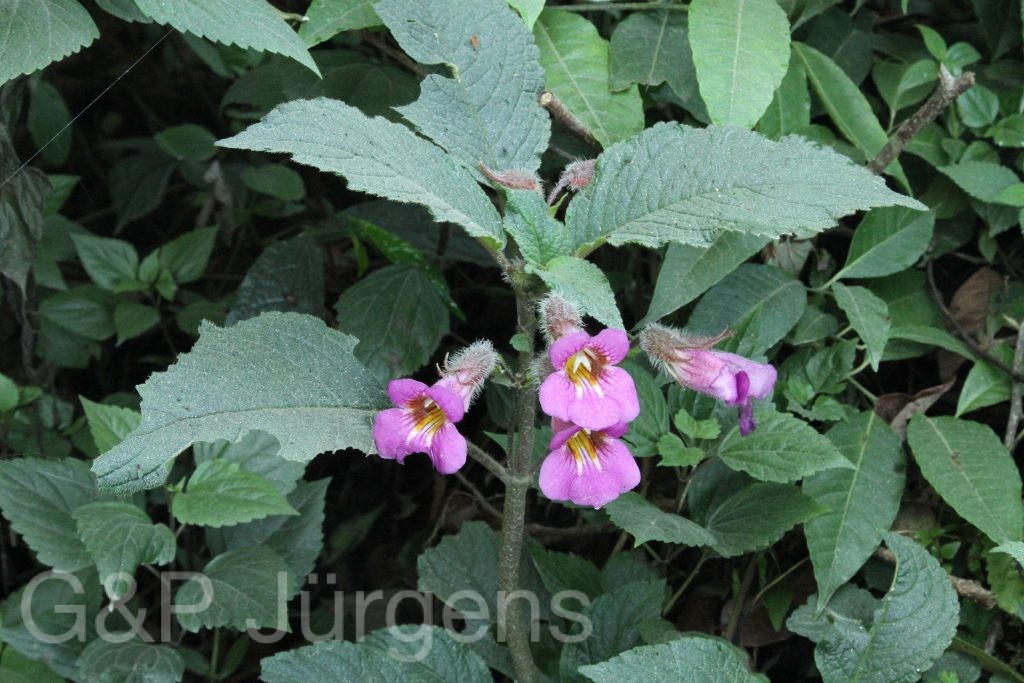
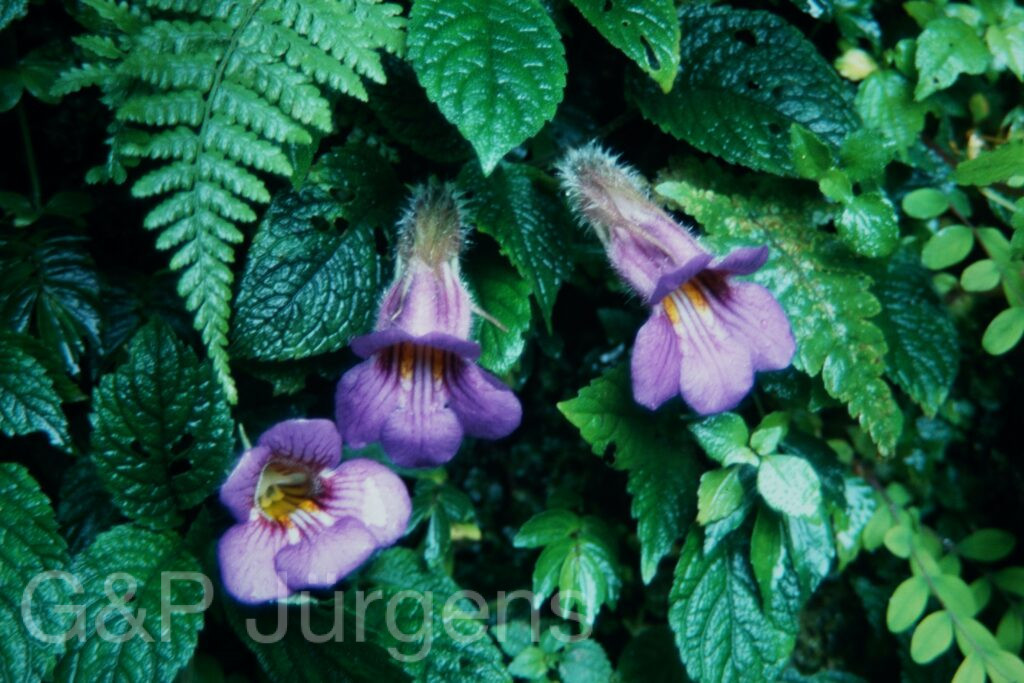
Henckelia urticifolia is a Himalayan gesneriad ranging through Nepal, China, India, Bhutan and Myanmar, the c. 212 georeferenced records concentrated along the humid southern Himalayan front. It is a plant of shaded, moist understorey habitats: it grows on damp banks, mossy rock faces, ravines and the margins of broadleaved and subtropical forest, generally between about 1200 and 2200 m. The illustrated material was gathered at Tserang in Bhutan at 1600 m in September and above Yoksam in Sikkim at 1880 m in August, locations typical of its preference for cool, dripping, sheltered sites that retain monsoon moisture.
It is a perennial herb with an erect to ascending, often softly hairy stem. As the epithet suggests, the leaves are nettle-like (urticifolia): opposite, ovate, coarsely toothed, thin-textured and pubescent, with prominent venation. The flowers are borne in axillary cymes; the calyx is five-parted and the corolla zygomorphic, tubular and bilabiate with a short two-lobed upper lip and a larger spreading three-lobed lower lip, pale violet to bluish-mauve, often with darker guidelines and a paler throat. There are two fertile stamens with cohering anthers, and the ovary is superior. The fruit is the characteristic elongate, narrowly cylindrical capsule of the genus.
Henckelia (Gesneriaceae) was recircumscribed in the molecular reclassification of the Old World didymocarpoid gesneriads, with many Asiatic species formerly placed in Didymocarpus and Chirita transferred to it; the supra-generic placement in subtribe Didymocarpinae reflects that scheme, so the family name given here, though listed as the subtribal name, properly resolves to Gesneriaceae. The genus is defined by its straight, undivided capsules and bilabiate corolla. Forest-dwelling and locally common, the species is not presently considered threatened, but it depends on intact humid forest cover.
Author: (Buch.-Ham. ex D.Don) A.Dietr · Sources: POWO (Kew), GBIF, Flora of China, Flora of Bhutan, Weber & Möller revision of Henckelia (Gesneriaceae)