
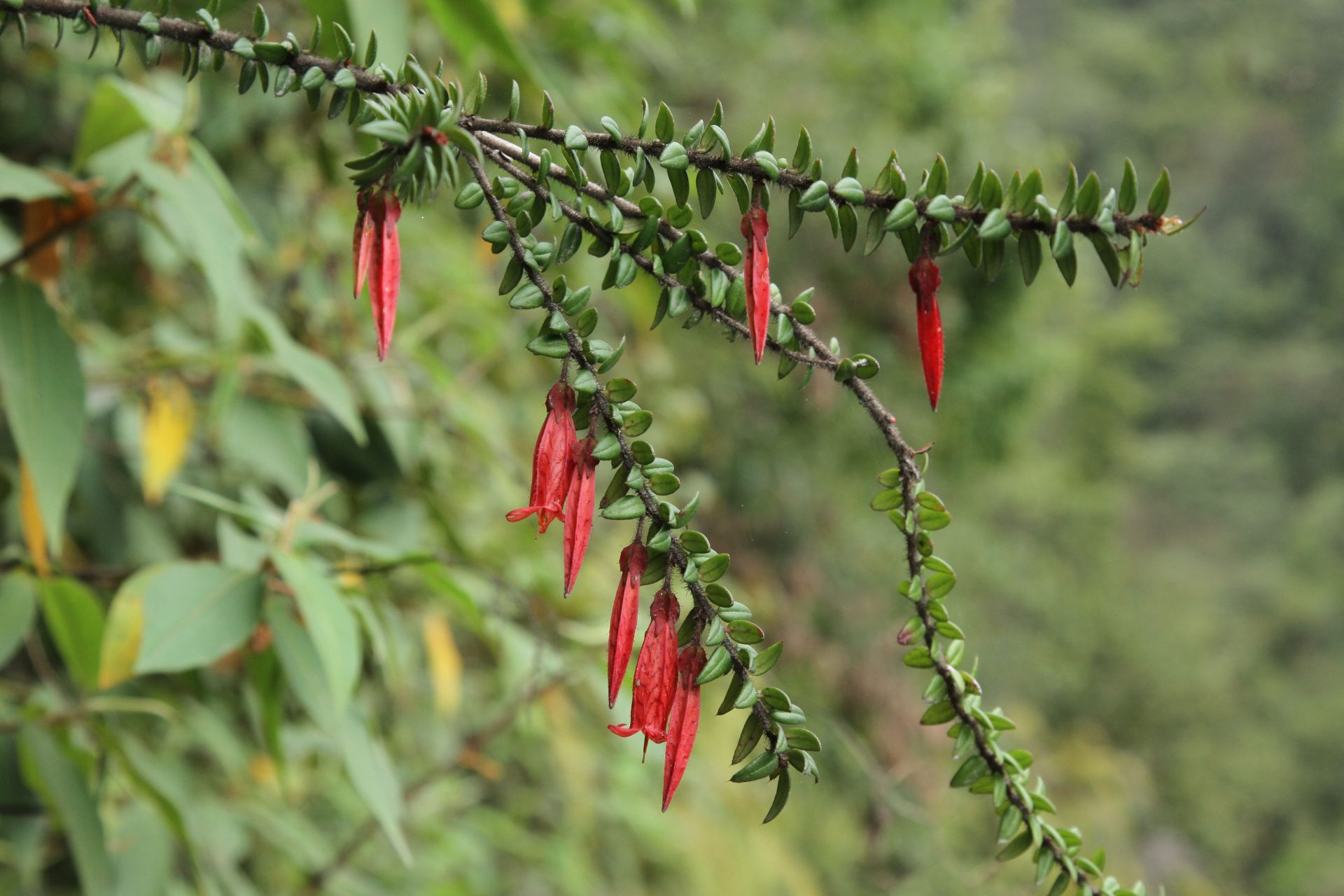
(Wight) Sleumer
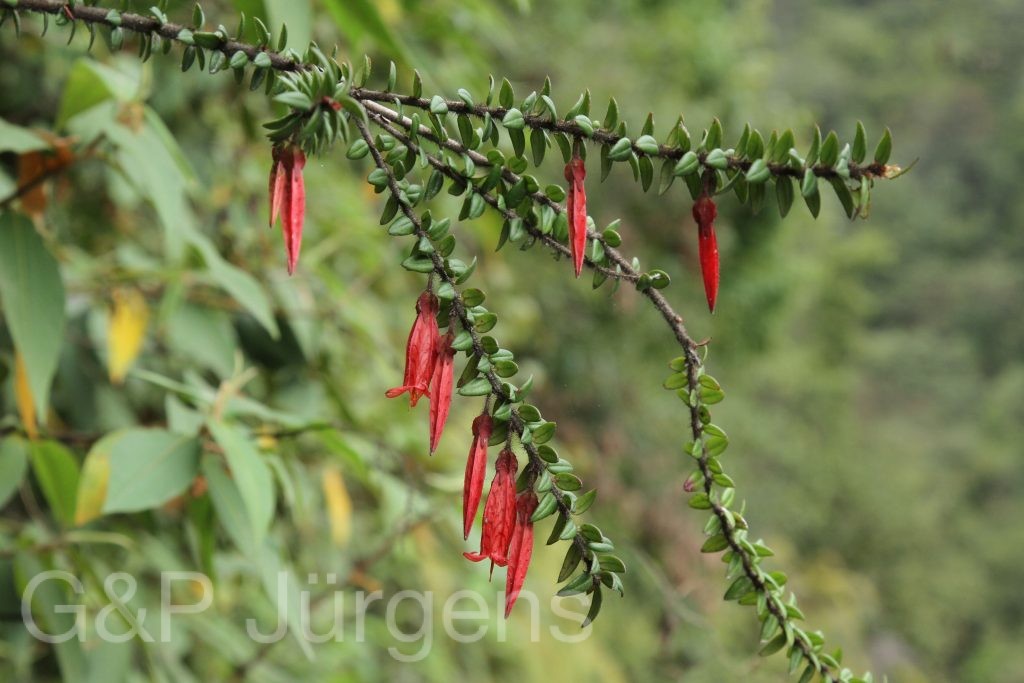
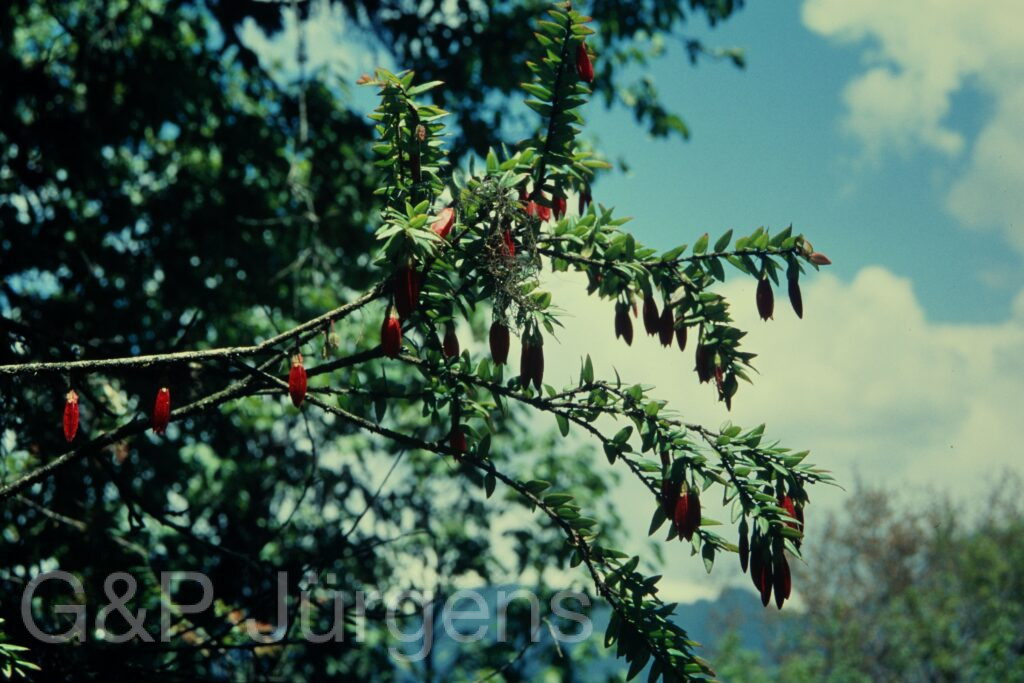
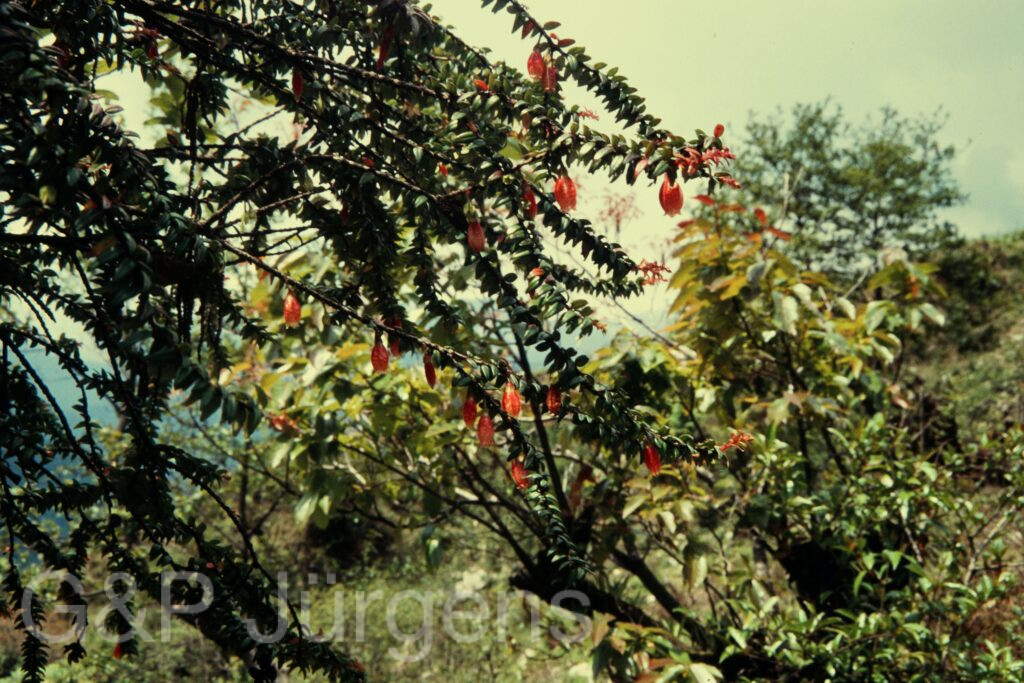
Description
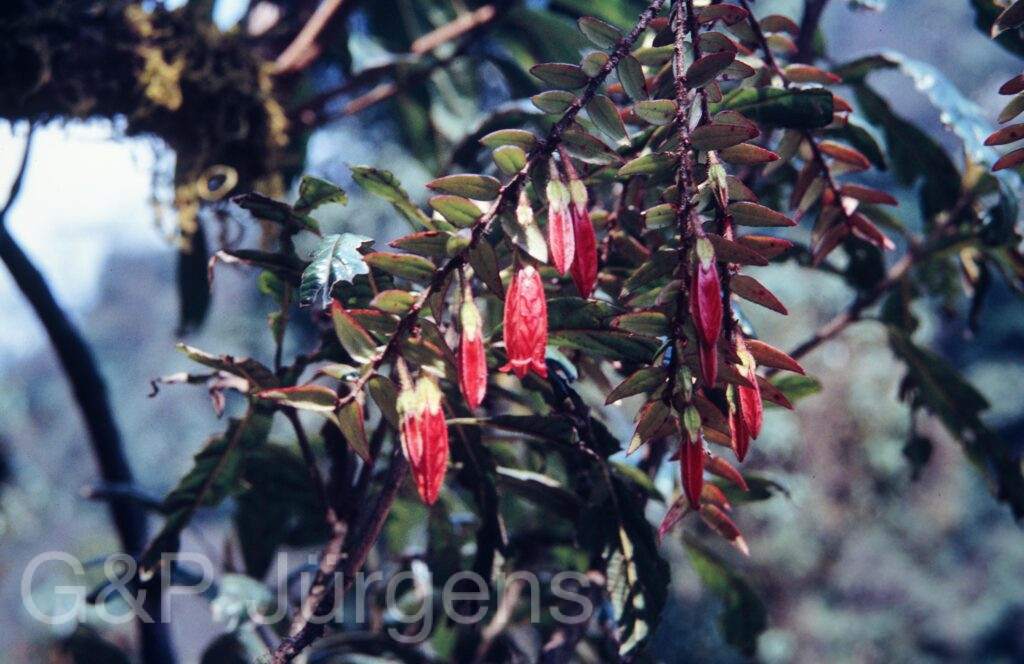
Agapetes serpens is an eastern Himalayan epiphytic shrub distributed across India, Bhutan, Nepal and adjacent China, with around 267 GBIF occurrences; long cultivated for its pendulous flowers, it is recorded in glasshouse collections from Great Britain, Germany, the United States and New Zealand. It grows in humid temperate broad-leaved and mixed forest, perched on mossy tree trunks, branches and shaded rock faces. The images document it across a broad elevational span: Bhutan at Tongsa around 2000 m in May, West Bengal at Bersay near 2700 m in April, and Nepal at Honggaon (2360 m) and the lower Simbua-Khola valley (1800 m).
It is a scrambling to pendent evergreen shrub arising from a swollen, tuberous, woody rootstock, with long arching, bristly-hairy stems. The leaves are small, numerous, lanceolate to elliptic, leathery and arranged distichously along the stems. The flowers hang in profusion from the leaf axils on slender pedicels; the corolla is tubular, five-angled, bright red and marked with darker chevron- or V-shaped lines, with five short reflexed lobes. The stamens are included and the ovary inferior. The fruit is a small fleshy berry.
Agapetes belongs to tribe Vaccinieae of the Ericaceae, the group that includes the blueberries, and the genus is centred on the Sino-Himalayan and Southeast Asian mountains. The tuberous lignotuber is an adaptation to the epiphytic habit, storing water and nutrients, while the tubular red flowers are adapted to bird pollination. Valued as an ornamental, A. serpens is widely grown; in the wild it is locally frequent and not currently regarded as threatened.
Author: (Wight) Sleumer · Sources: POWO (Kew), GBIF, Flora of China, Flora of Bhutan, Flora of Nepal, Airy Shaw revision of Agapetes