
(Wall.) Drude
Description
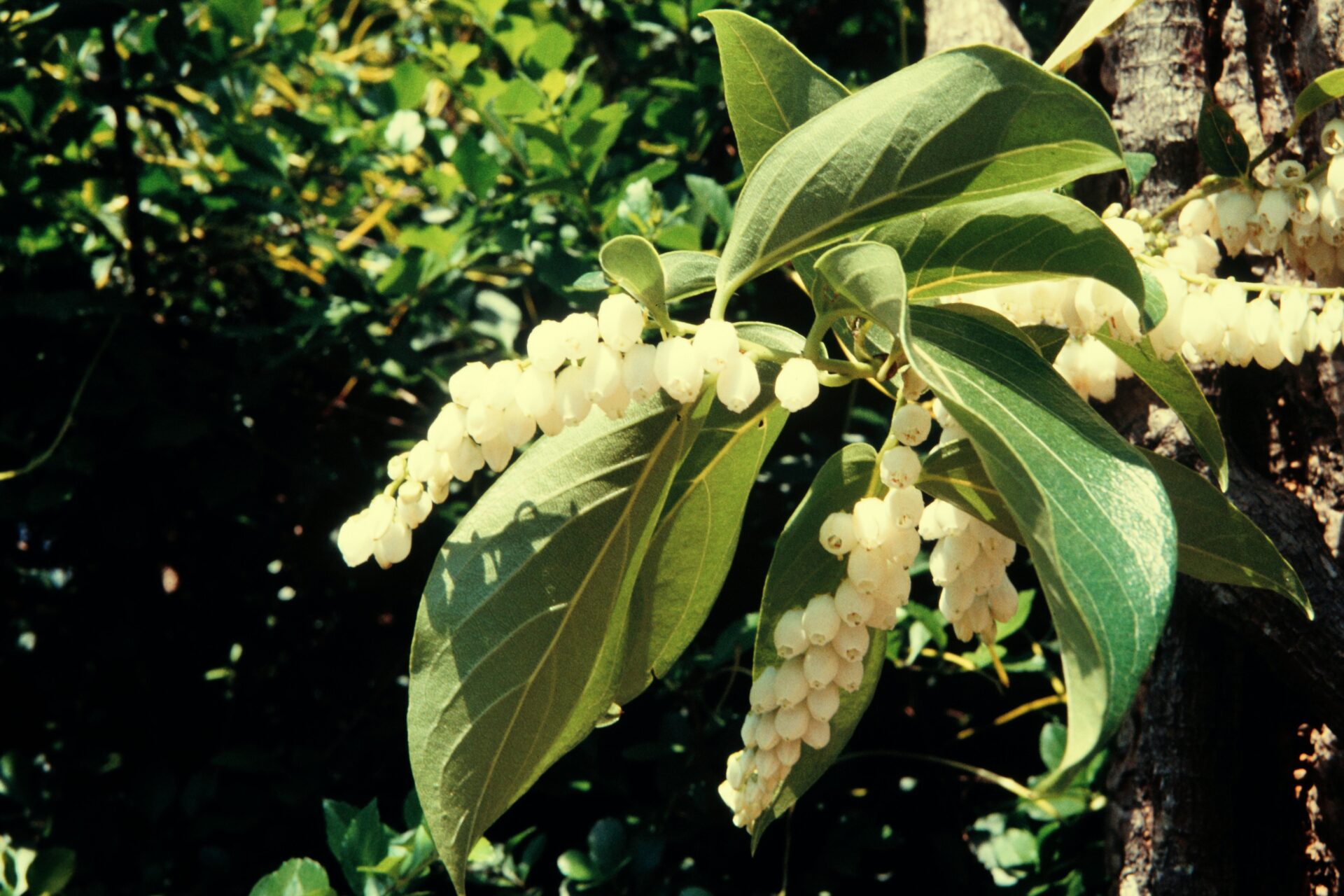
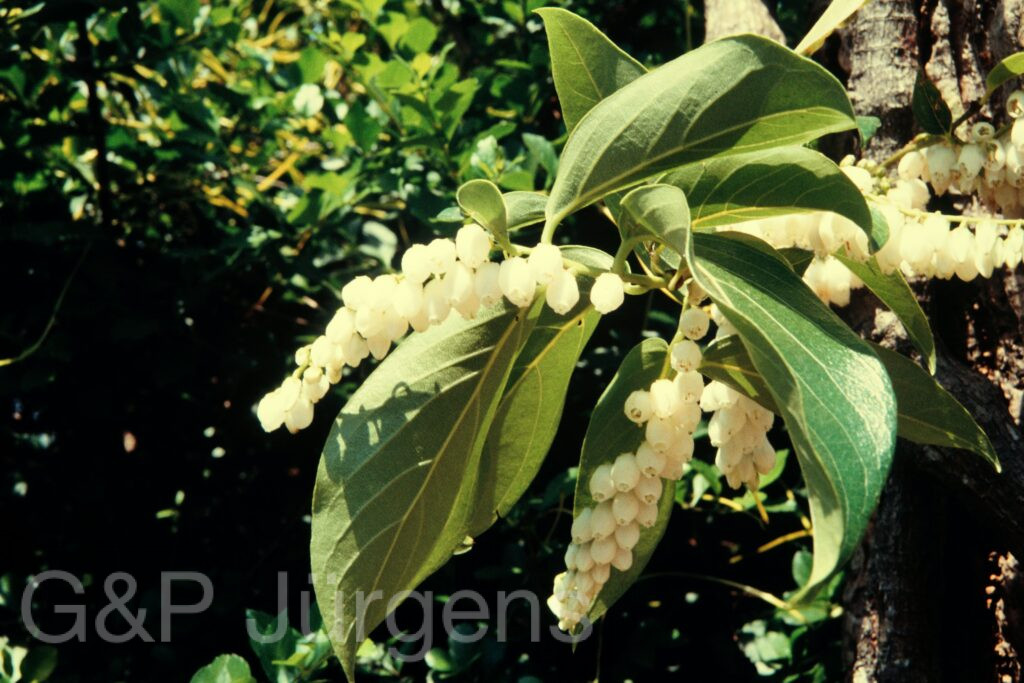
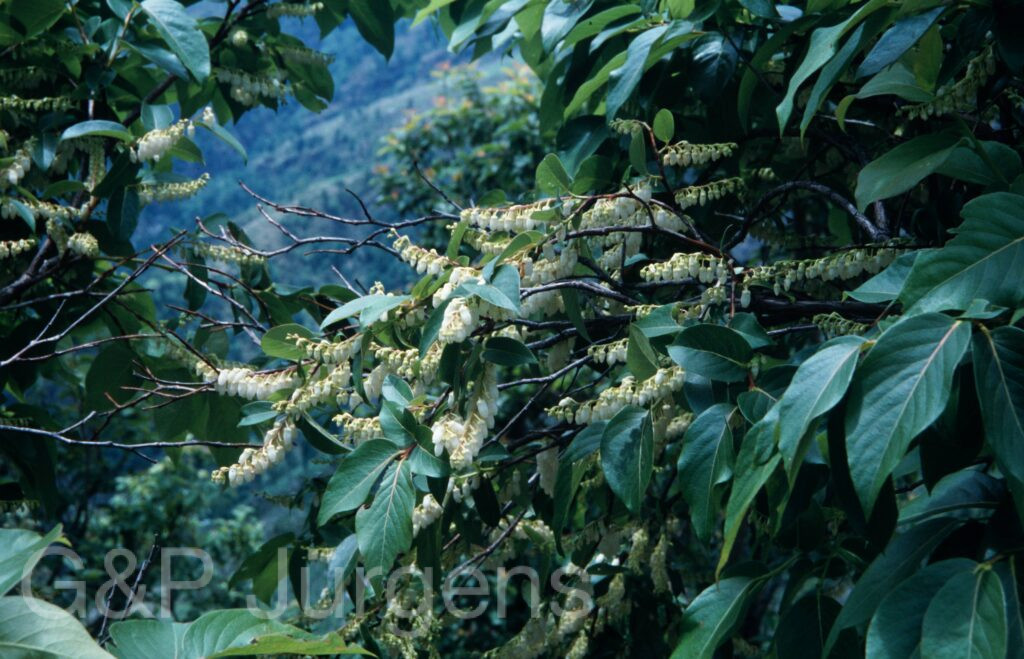
Lyonia ovalifolia is a widespread Sino-Himalayan and East Asian shrub or small tree distributed from China, Japan and Taiwan through Nepal, India, Bhutan, Pakistan, Myanmar, Thailand and Indochina, with a large GBIF dataset of over 13000 records. It grows on open hillsides, forest margins, thickets and in pine and oak forest understorey, typically between about 1000 and 3000 m. The illustrated plants from Chinchilla at 1950 m and Mulabari in Gorkha at 1360 m in Nepal, both flowering in May, are typical of its subtropical to temperate montane habitats, where it is a common component of the secondary scrub and open forest of the Himalayan midlands.
It is a deciduous to semi-evergreen shrub or small tree with reddish-brown, often somewhat zigzag young branchlets. The leaves are alternate, ovate to ovate-elliptic or ovate-lanceolate, with an entire margin, an acuminate apex and a rounded to subcordate base, with pinnate venation. The flowers are borne in axillary racemes along the shoots, each with a small five-lobed calyx and an urceolate (urn-shaped) white corolla with five short recurved lobes, ten included stamens and a superior ovary. The fruit is a small, ovoid, woody, five-valved loculicidal capsule with a persistent thickened placental axis, releasing numerous minute seeds.
Lyonia belongs to the subfamily Vaccinioideae of the Ericaceae and, in common with many members of that family, contains grayanotoxin-type diterpenes, making the foliage toxic to livestock; the plant has local uses as an insecticide and in folk medicine. The urn-shaped flowers are pollinated by bees and other insects, and the tiny seeds are wind-dispersed from the dehiscing capsules. As an abundant and ecologically tolerant species across a vast range, L. ovalifolia is of least conservation concern.
Author: (Wall.) Drude · Sources: POWO (Kew), GBIF, Flora of China Vol. 14, Flora of Bhutan Vol. 2, Flora of Nepal, Flora of Pakistan, Judd Revision of Lyonia (Ericaceae) monograph