Tag:

Montane (1500-2500 m)

(Wall.) Bogner & Mayo
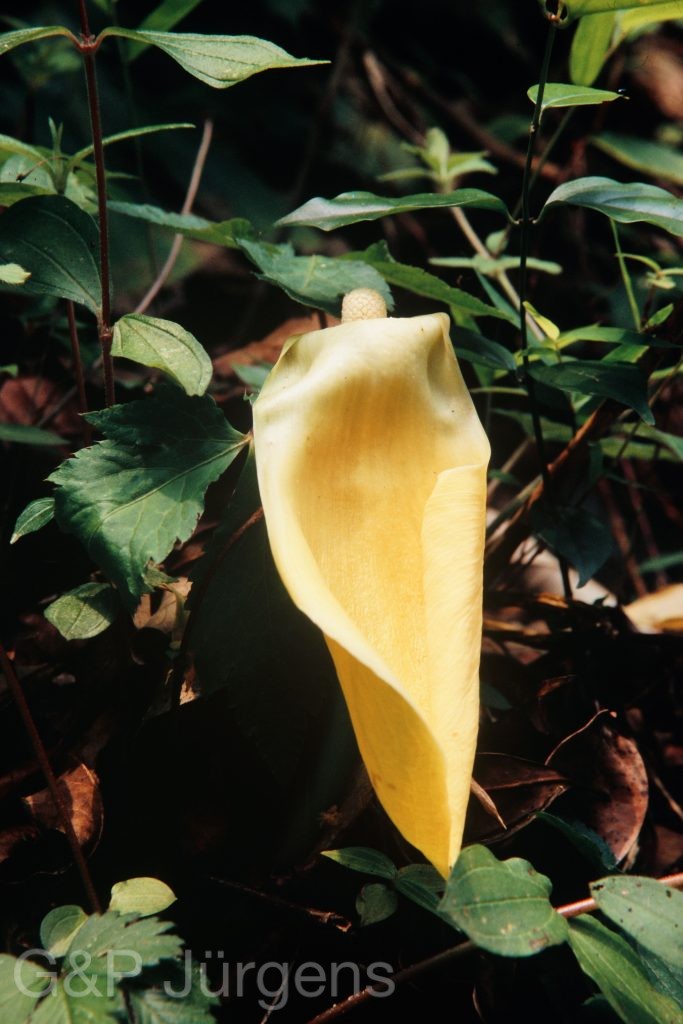
Bh2008 63 P103
Bhutan Punaka-Chu, 1500m April

Description

Amorphophallus napalensis is a tuberous aroid of the subtropical Himalaya and adjacent Southeast Asia, recorded from India, Nepal, Thailand, Bhutan, Myanmar and Bangladesh across some 80 GBIF occurrences. The photographed plant was found along the Punaka-Chu in Bhutan at about 1500 m in April. It grows in moist broad-leaved forest, on shaded slopes, ravines and forest floors, typically between roughly 500 and 1800 m, emerging with the pre-monsoon and monsoon rains from a dormant underground tuber.

The plant arises from a depressed-globose subterranean tuber and produces, in season, a single large solitary leaf with a long mottled petiole and a blade divided into numerous segments giving an umbrella-like, much-dissected appearance. The inflorescence, typical of the genus, is a spadix subtended by a spathe; the spadix bears a basal zone of female flowers below a zone of male flowers, topped by a sterile appendix. At anthesis the inflorescence emits a fetid odour and may generate heat (thermogenesis) to attract carrion-feeding flies and beetles, which effect pollination. The infructescence ripens into a cluster of fleshy berries.

Amorphophallus is a large palaeotropical genus notable for these protogynous, often malodorous inflorescences and their fly-and-beetle (sapromyophilous) pollination, with the berries subsequently dispersed by birds. The seasonal solitary leaf and dormant tuber adapt the species to the marked wet-dry rhythm of the monsoon forest. A. napalensis is widespread and not regarded as threatened, though, like many forest aroids, it depends on the maintenance of shaded, humid woodland habitat.

Author: (Wall.) Bogner & Mayo · Sources: POWO (Kew), GBIF, Flora of China, Flora of Bhutan, Flora of Nepal, Hetterscheid & Ittenbach – Revision of the Genus Amorphophallus
Planch.

Garw 2005 268 ergebnis
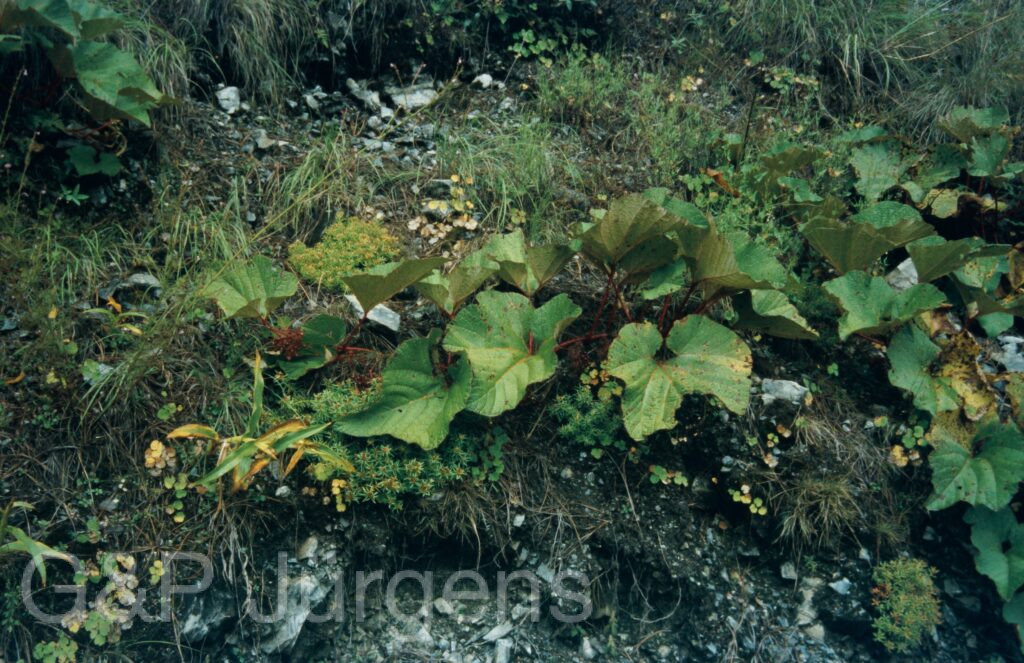
India Garhwal Kunol 2400m, September

Description

Ampelocissus rugosa is a tendril-climbing vine of the Himalaya and adjacent south-east Asia, recorded from Nepal, India, Bangladesh, Bhutan, China, Myanmar and Vietnam. Its roughly 95 georeferenced collections, the fewest in this group, indicate a relatively restricted and under-collected distribution along the subtropical-to-warm-temperate forest belt of the Himalayan foothills. It grows in forest margins, thickets, ravines and along streams, scrambling over shrubs and trees. The photographed plant from Garhwal at Kunol at 2400 m in September represents the upper part of its altitudinal range and its late-monsoon fruiting period, when the vine bears its grape-like infructescences.

It is a robust herbaceous to woody climber with leaf-opposed tendrils characteristic of the grape family. The simple leaves are broadly ovate to cordate in outline, sometimes shallowly lobed, with a toothed margin and a rugose (wrinkled) upper surface that gives the species its epithet; the lower surface is often tomentose. The inflorescence is a leaf-opposed, compound cyme or panicle, typically with a basal tendril, bearing many small, greenish flowers with a four- to five-merous calyx and corolla and a fleshy disc around the ovary. The fruit is a small, globose, fleshy berry, ripening dark purple to black and containing one or few hard seeds, the cluster superficially resembling a wild grape.

Ampelocissus is a pantropical genus of the Vitaceae closely allied to Vitis, distinguished by its tendril-bearing inflorescences and frequently tuberous rootstock. Several Asian species are gathered locally for their edible, acidic fruits and have potential as wild relatives of the cultivated grape. A. rugosa is a sparsely documented Himalayan vine; while not formally assessed, its limited collection record warrants attention to forest-margin habitats under pressure from clearance.

Author: Planch. · Sources: POWO (Kew), GBIF, Flora of China Vol. 12, Flora of Bhutan Vol. 2, Flora of Nepal, Latiff's Revision of Asian Ampelocissus

Hook.f.

Bhutan2015 325
Bhutan Trongsa 2000m, October
Bhutan2012 294
Bhutan Shele-La, 3900m September
Bhutan2012 892
Bhutan Tumching-La, 3700m October
Bhutan2012 893
Bhutan Tumching-La, 3700m October

Description

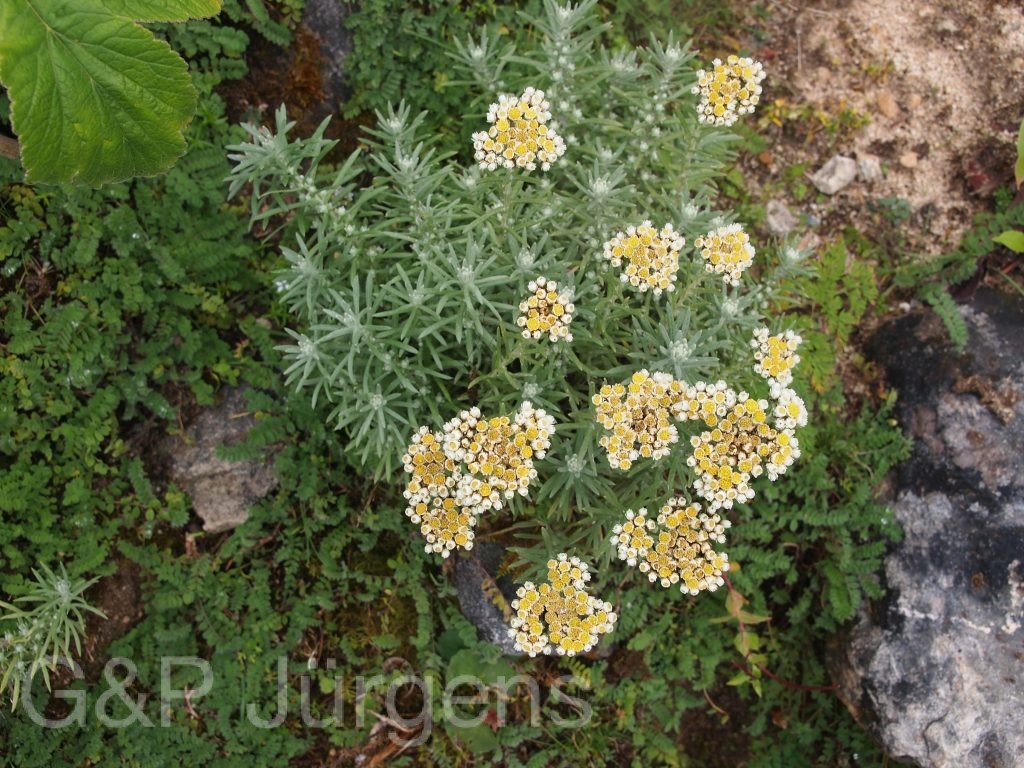
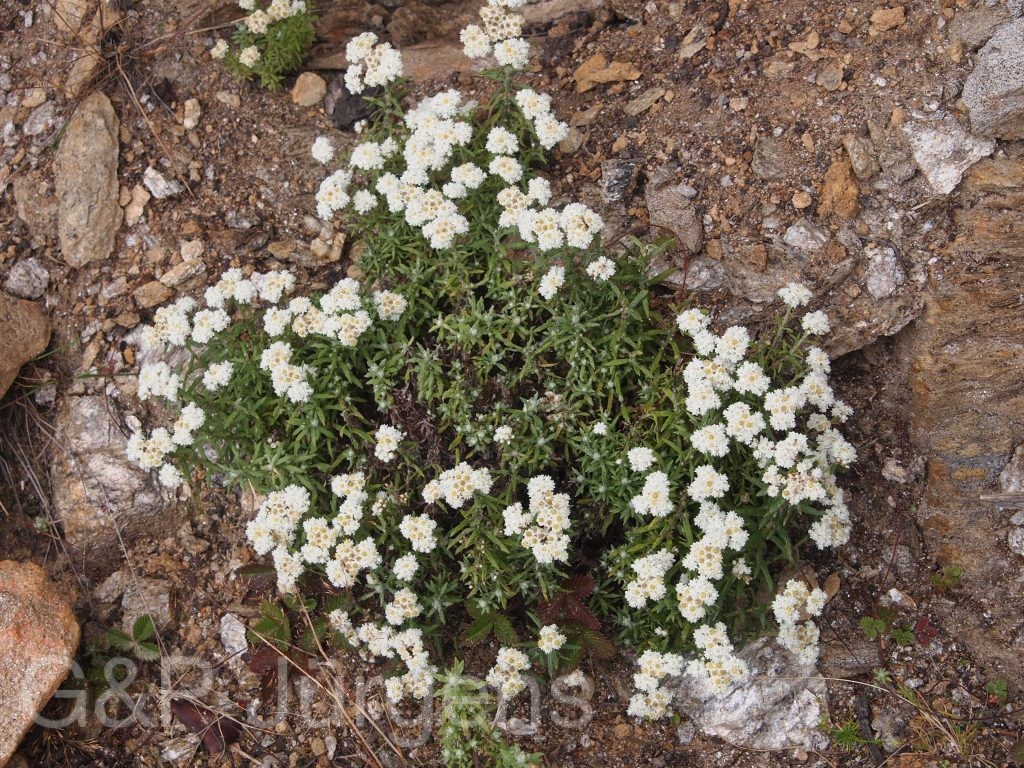
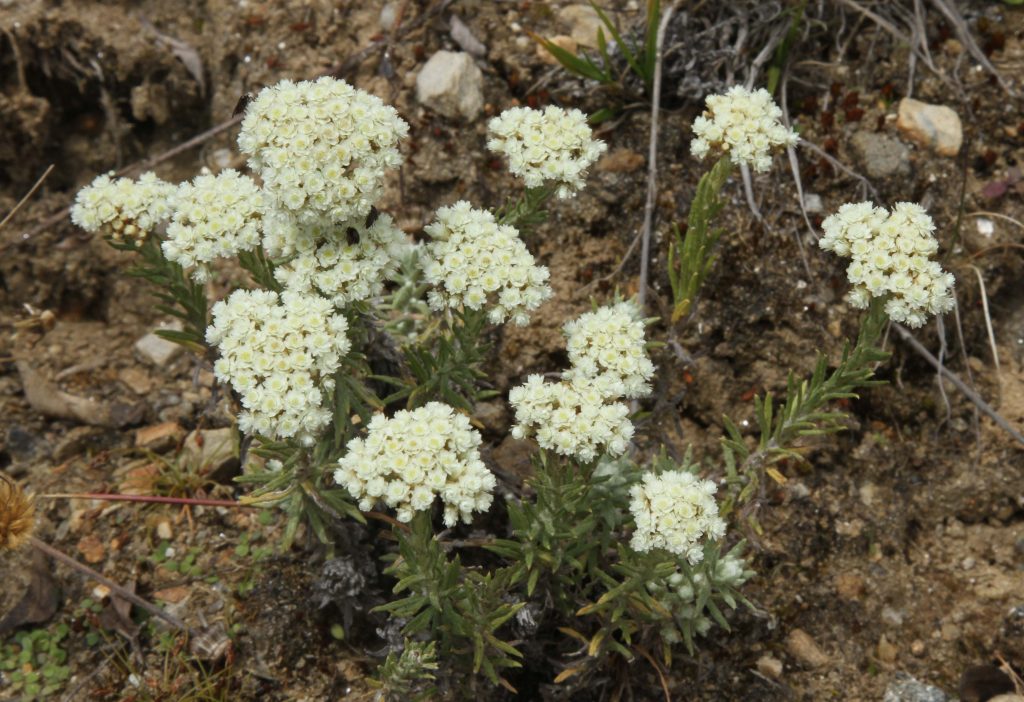
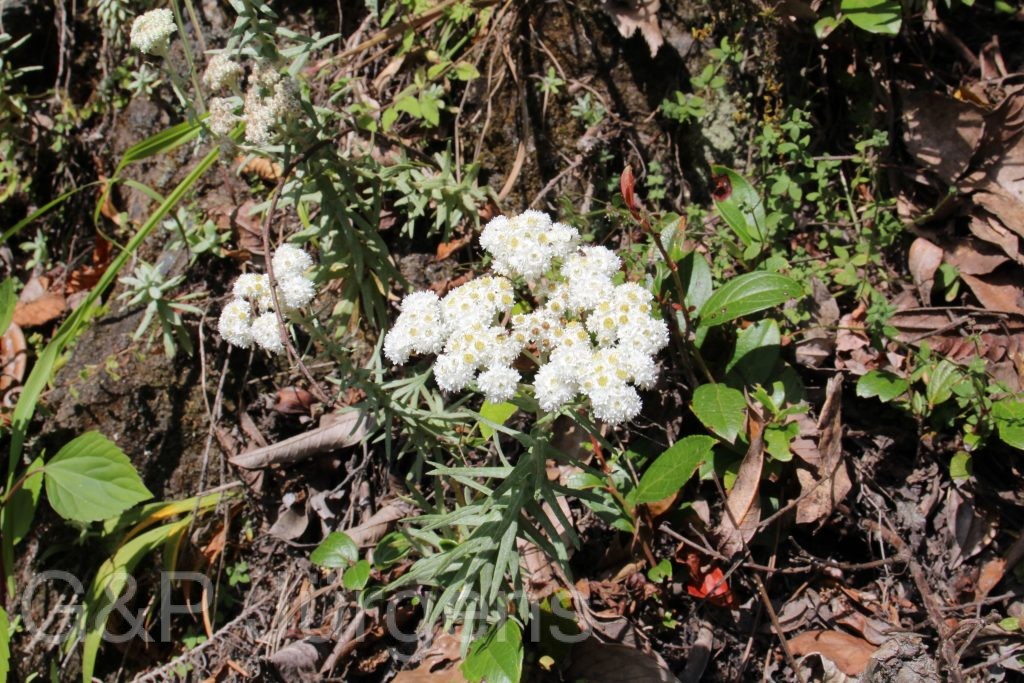
Anaphalis contorta is a widespread Asian everlasting distributed from Nepal, India and Bhutan through China to the Philippines, Taiwan, Pakistan, Bangladesh and Afghanistan, with GBIF recording over 1280 occurrences across this broad range. It is a plant of open, sunny, often dry and stony ground, favouring grassy slopes, banks, rocky pasture, trackside verges and forest margins from the temperate zone up into the subalpine. The cited Bhutanese localities span this breadth, from Trongsa at 2000 m in October to the Shele-La at 3900 m in September and the Tumching-La at 3700 m in October, demonstrating its occurrence from mid-montane forest country to high subalpine passes where it persists and flowers into the autumn.

It is a perennial herb forming tufts from a woody rootstock, the erect stems and the linear to narrowly lanceolate leaves clothed in dense white or greyish woolly tomentum, the leaf margins frequently revolute and somewhat contorted, a feature alluded to in the epithet. The capitula are small and numerous, aggregated into dense terminal corymbose clusters. Each head is surrounded by an involucre of dry, papery, persistent white phyllaries that constitute the showy part of the inflorescence, the plant being functionally dioecious with male and female heads on separate individuals. The minute tubular florets give rise to tiny cypselae bearing a pappus of slender barbellate bristles.

A member of tribe Gnaphalieae, Anaphalis comprises numerous Himalayan and East Asian species whose papery white "everlasting" bracts are an adaptation to exposed, drought-prone montane habitats and aid in attracting pollinators to the small florets. The dried inflorescences are long-lasting and locally gathered for decoration. Tolerant of poor soils and disturbance and very widely distributed, A. contorta is a secure species of no conservation concern.

Author: Hook.f. · Sources: POWO (Kew), GBIF, Flora of Bhutan, Flora of China, Annotated Checklist of the Flowering Plants of Nepal, Hilliard's revision of Anaphalis (Gnaphalieae)

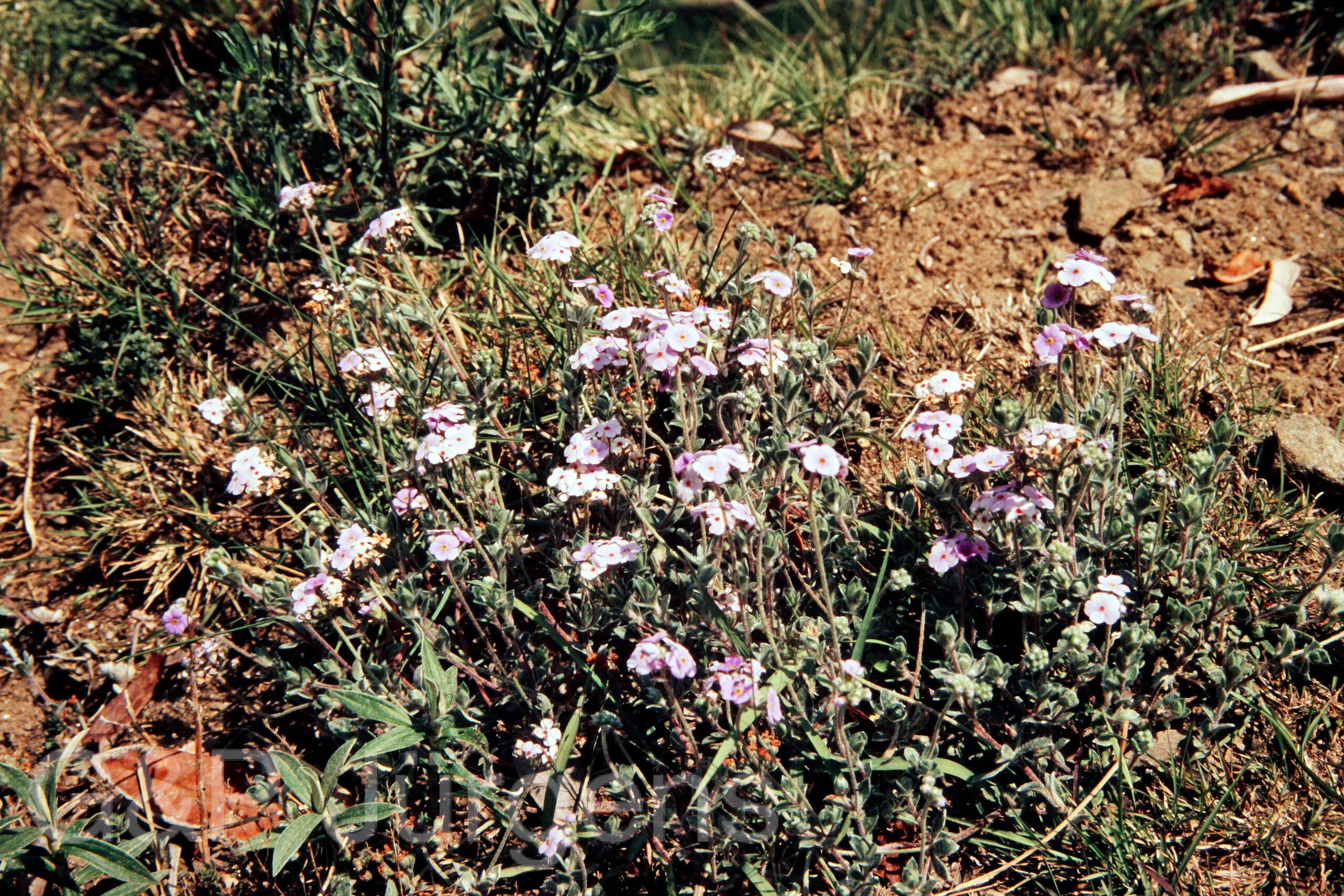
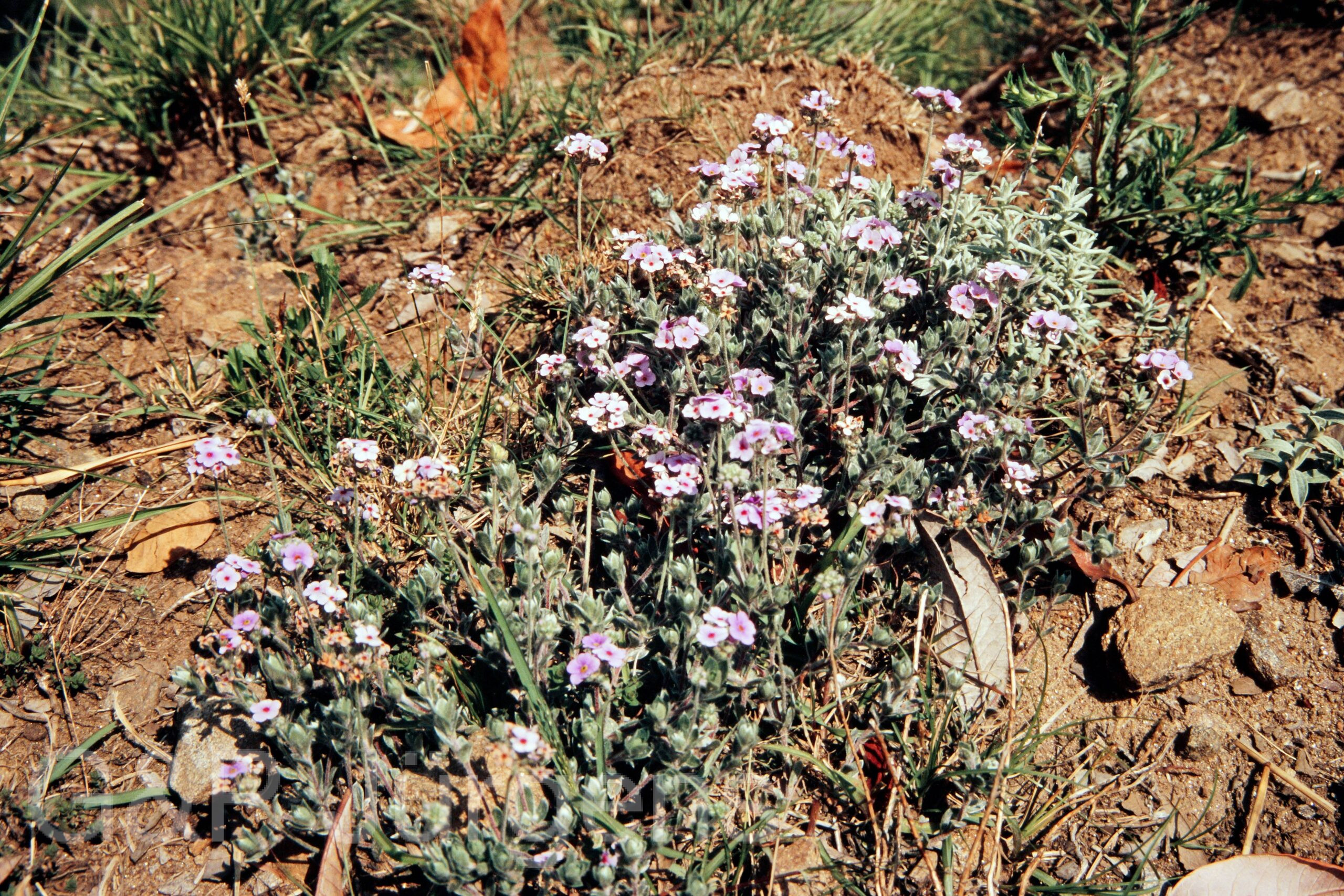
Wall.

Nepal 99 60 ergebnis
West-Nepal Nyor Gaad 2800m, June

Description

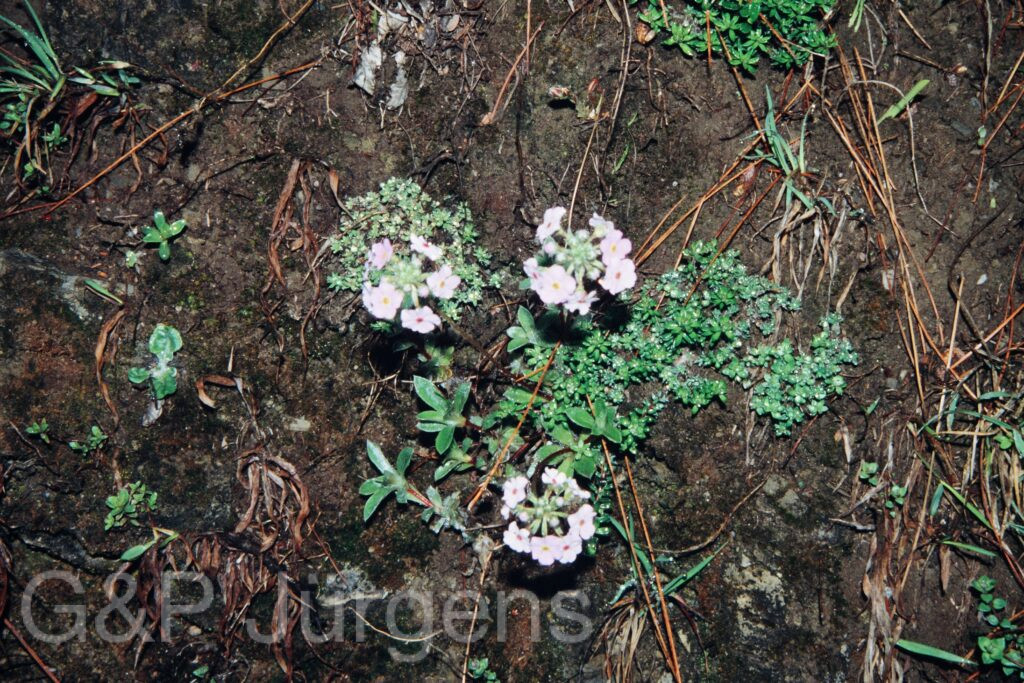
Androsace lanuginosa is a Western and Central Himalayan endemic distributed from Pakistan and the Indian states of the Garhwal and Kumaon Himalaya eastward through Nepal, with collections also referred to adjoining Chinese territory. The species occupies open, rocky slopes, grassy banks and the margins of moist forest at montane to lower-subalpine elevations, generally between roughly 2300 and 3600 m. The photographed populations were recorded in West Nepal at Nyor Gaad around 2800 m and in Indian Garhwal at Nanu Mandakini near 2360 m, both flowering in June; the GBIF dataset records 277 occurrences across IN, NP, CN, PK and several countries (US, CA, DE) reflecting its cultivation as a rock-garden ornamental.

The plant is a mat-forming or trailing perennial with slender, prostrate to ascending stems radiating from a central rosette and rooting at the nodes. The leaves are crowded, oblong-lanceolate to obovate, entire, and densely clothed on both surfaces with long, soft, silky-villous hairs that give the foliage a silvery-grey, lanuginose aspect. Inflorescences are few-flowered umbels borne on softly hairy peduncles, subtended by an involucre of small bracts. Each flower has a hairy, lobed calyx and a salverform corolla, pink to rose-lilac with a yellow to greenish eye, the five obcordate lobes spreading from a short tube. The fruit is a small, few-seeded globose capsule.

Within the large genus Androsace, the species belongs to the perennial, stoloniferous rock-jasmines allied to A. sarmentosa, distinguished by its conspicuously woolly indumentum and trailing habit. It is an indicator of well-drained, sunny Himalayan slopes and is widely grown in temperate rock gardens, where several cultivars exist. Though locally common and not assessed as threatened, populations are sensitive to overgrazing and trampling at accessible elevations.

Author: Wall. · Sources: POWO (Kew), GBIF, Flora of Pakistan, Annotated Checklist of the Flowering Plants of Nepal, Smith & Lowe monograph of Androsace (Primulaceae)

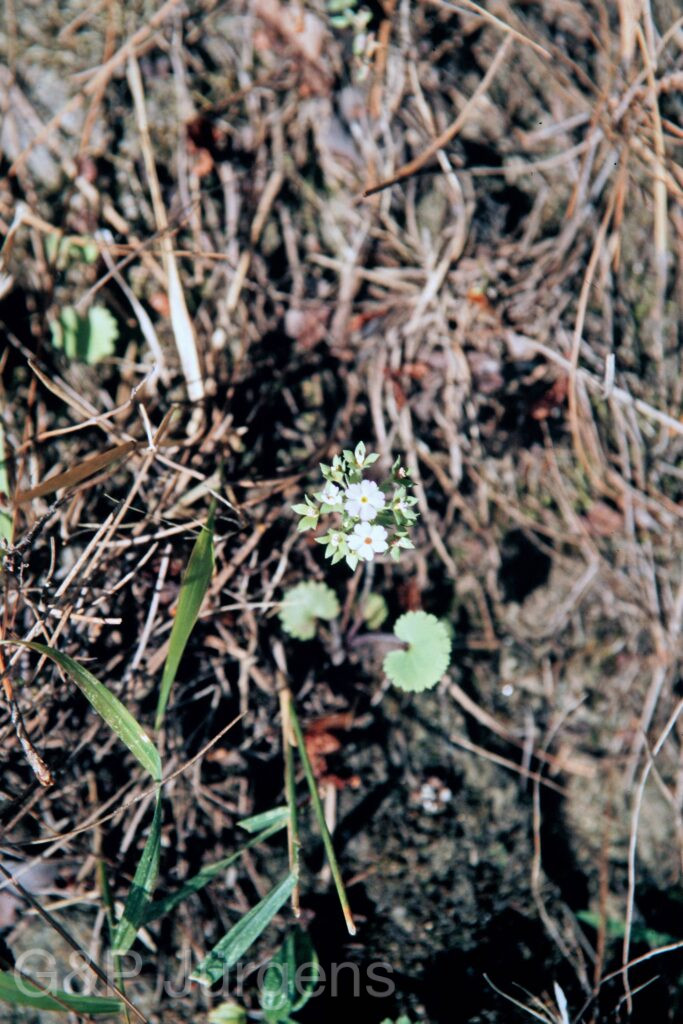
(Lour.) Merr.

Garh 07 23 ergebnis
India Garhwal Ransi at Mandakini 1850m, June

Description

Androsace umbellata is a widespread East and South Asian annual ranging from the Himalaya across China, Korea, Japan, Taiwan and Southeast Asia to the Russian Far East; GBIF documents over 4000 occurrences, reflecting its abundance and broad ecological tolerance. It is a plant of open, disturbed and grassy ground, occurring on banks, terraces, field margins, roadsides, lawns and forest clearings from the foothills into the lower temperate zone. The image from Ransi by the Mandakini in Garhwal (India) at about 1850 m in June shows it in a typical mid-montane setting, where it forms scattered rosettes on moist, sunny slopes early in the growing season.

It is a small, soft, hairy annual herb forming a basal rosette of leaves close to the ground. The leaves are broadly ovate to orbicular or suborbicular, shallowly toothed to crenate at the margin, narrowed to a winged petiole and clothed in articulated multicellular hairs. From the rosette arise several slender, leafless scapes bearing terminal umbels of few to several small flowers, each subtended by an involucre of small bracts. The corolla is white, occasionally pinkish, with a short tube, yellow eye and five spreading lobes; the calyx is deeply lobed and accrescent. The fruit is a globose, five-valved capsule containing numerous small, angular brown seeds.

The species belongs to the annual, rosette-forming section of Androsace, contrasting with the perennial cushion species of the high alpine zone. Its weedy, self-compatible annual strategy and prolific seed production underlie its remarkable distribution and frequency in anthropogenic habitats. It is of no conservation concern, being among the commonest lowland and montane androsaces, and is sometimes used in traditional medicine across its East Asian range.

Author: (Lour.) Merr. · Sources: POWO (Kew), GBIF, Flora of China (Primulaceae), Flowers of the Himalaya (Polunin & Stainton), Smith & Lowe monograph of Androsace

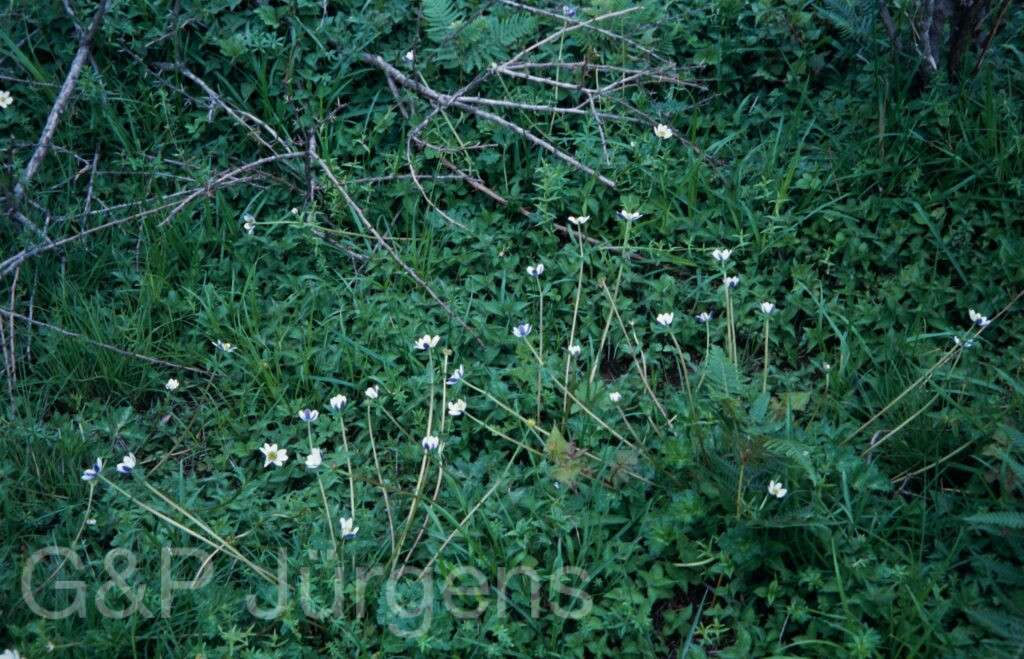
(D.Don) Holub

Nepal 2001 432 ergebnis ergebnis
Nepal (Gorkha) Laprak 1900m, May

Description

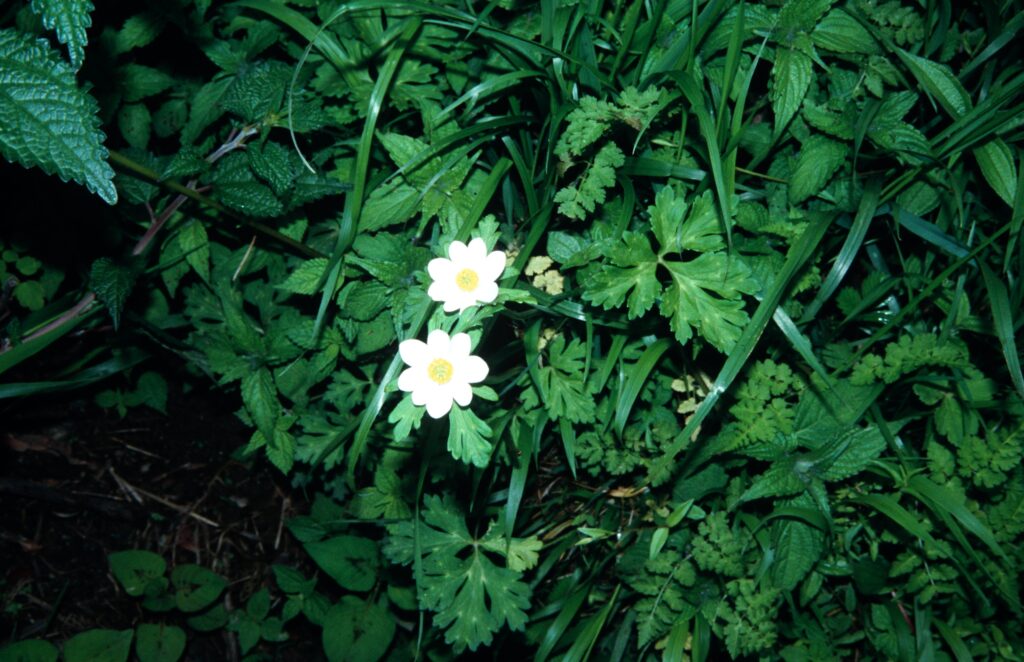
Anemonastrum elongatum is a perennial herb of the temperate and subalpine Himalaya and adjacent Sino-Himalayan ranges, distributed from Nepal and India eastward through China and southward to Myanmar, with peripheral records in Sri Lanka and beyond (gbif_countries: NP, IN, CN, CA, LK, MM, ZZ); GBIF documents some 113 occurrences. It favours moist forest margins, shaded banks, grassy slopes and streamsides, ranging from warm-temperate woodland into the lower subalpine zone. The illustrated collections span a broad elevational gradient, from Laprak in Gorkha at about 1900 m to Nasem Pati in Helambu near 3550 m, both flowering in May at the onset of the monsoon.

The plant arises from a stout, ascending rhizome and produces erect, hairy stems bearing long-petiolate basal leaves that are palmately three- to five-lobed, the lobes coarsely toothed and clothed in appressed hairs. An involucre of similar but shorter-stalked leaves subtends the inflorescence, which is an elongate, few- to several-flowered cyme borne on slender, villous peduncles. The flowers lack true petals; the showy perianth consists of white to faintly tinged sepals surrounding numerous yellow stamens and a central cluster of carpels. The fruit is an aggregate of compressed, laterally winged achenes tipped with a short persistent style.

Long placed in a broadly circumscribed Anemone, the species is now referred to the segregate genus Anemonastrum, reflecting molecular and morphological recognition of natural lineages within tribe Anemoneae. Its elongating fruiting axis, evoked by the epithet, distinguishes it from allied taxa. Widespread and locally common, it is of no conservation concern, and its broad ecological amplitude makes it a characteristic component of Himalayan herb communities.

Author: (D.Don) Holub · Sources: POWO (Kew), GBIF, Flora of Nepal, Flora of China, Annotated Checklist of the Flowering Plants of Nepal, Tamura's monograph of Ranunculaceae

Wall. ex Meisn.

Bhutan2012 1173
Bhutan Tashiyangtse 2000m, October

Description

Anisadenia saxatilis is a slender herb of the eastern Himalaya and adjacent Southeast Asia, distributed from Nepal through NE India, Bhutan and southern China to Myanmar, Thailand, Bangladesh and Malaysia, with 69 GBIF occurrences reflecting its rather localised, forest-dwelling habit. It grows in shaded, humid broad-leaved and mixed forest, on mossy banks, rock ledges and along streamsides in the temperate to warm-temperate zone. The Bhutanese collection from Tashiyangtse at about 2,000 m in October corresponds to its autumn flowering in cool, moist montane forest understorey.

It is a perennial herb with a slender rootstock and erect, wiry stems. The leaves are mostly clustered or subrosulate toward the base and along the lower stem, ovate to elliptic, with prominent parallel-converging venation and crenate to serrate margins, the upper leaves much reduced and bract-like. The flowers are borne in a slender, lax, terminal spike-like raceme; each small flower has five sepals (the outer often glandular-fringed), five pink to pale purple petals, and a characteristic androecium with unequal or appendaged (anisadenous) staminal glands, from which the genus takes its name. The fruit is a small dry capsule.

Anisadenia is a small Asian genus of two or three species, here correctly placed in Linaceae though distinctive within the family for its spicate inflorescence and herbaceous habit. GBIF treats the name as accepted. As a shade- and humidity-dependent forest herb of limited occurrence, it is sensitive to forest clearance; it is not formally assessed but its narrow ecological amplitude merits attention.

Author: Wall. ex Meisn. · Sources: POWO (Kew), Flora of China Vol. 11, Flora of Bhutan Vol. 1, GBIF, Robson: Linaceae in Flora Zambesiaca and comparative studies (1963)

Apios carnea

by GP Jürgens

(Wall.) Benth.

Bhutan2012 990
Bhutan Trithangebe, 1100m October
Bhutan2012 991
Bhutan Trithangebe, 1100m October
Bh09 242 P405
Bhutan Wangdi, 2000m June

Description

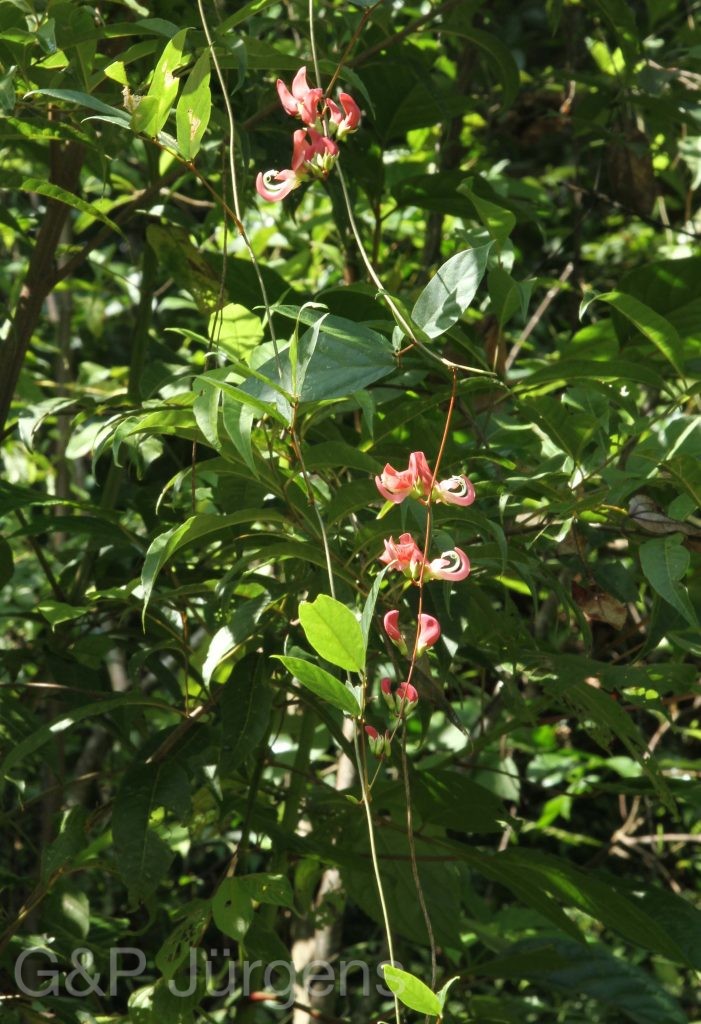
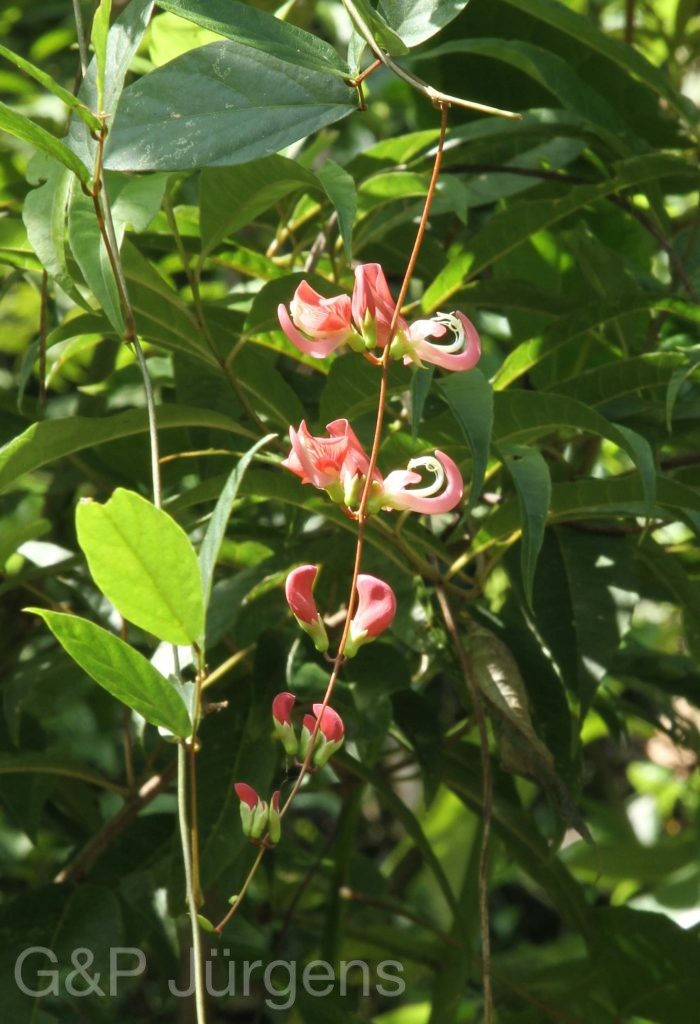
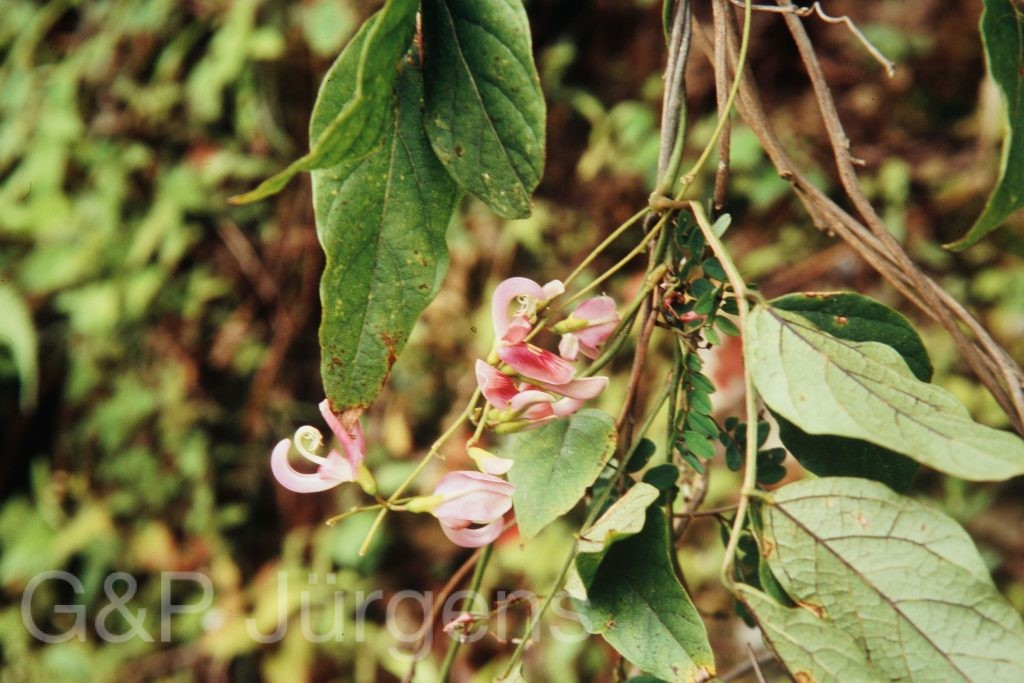
Apios carnea is widely distributed through the Himalaya and into south-east and east Asia, recorded from Nepal, north-east India, Bhutan, Myanmar, China, Thailand, Laos, Vietnam, Malaysia, Korea and Japan among its 887 georeferenced occurrences. It is a climbing herb of forest margins, thickets, streamsides and clearings in warm-temperate to subtropical settings, scrambling over shrubs and into the lower canopy. The Bhutan records at Trithangebe (1100 m, October) and Wangdi (2000 m, June) illustrate a broad altitudinal tolerance from about 1000 to 2400 m, flowering through the warm wet season.

It is a perennial twining vine arising from a tuberous, fleshy rootstock, with slender, herbaceous, somewhat woody-based stems. The leaves are pinnately compound (imparipinnate) with usually five to seven ovate-lanceolate, acuminate leaflets. The flowers are borne in dense axillary racemes and are typical papilionate legumes, flesh-pink to dull reddish or salmon, with a broad standard, incurved keel and the characteristic coiled keel-and-style of the genus. The fruit is a slender, elongate, dehiscent legume containing several seeds.

The genus Apios belongs to tribe Phaseoleae of subfamily Faboideae, allied to climbing beans, and the twisted keel enclosing the spirally coiled style and stamens is a notable floral specialisation promoting cross-pollination by bees. As a nitrogen-fixing legume it contributes to soil enrichment, and its tubers have been used locally as food. Common and widespread across its range, it is of no conservation concern, though it is regionally valued both as an ornamental climber and a wild food plant.

Author: (Wall.) Benth. · Sources: POWO (Kew), GBIF, Flora of Bhutan, Flora of China, Flora of Nepal, Lackey Phaseoleae revision (Advances in Legume Systematics)

Royle

Nepal 99 65 ergebnis
West-Nepal Nyor Gaad 2700m, June
Garh 07 245 ergebnis
India Garhwal Barron Chatti 2450m, June

Description

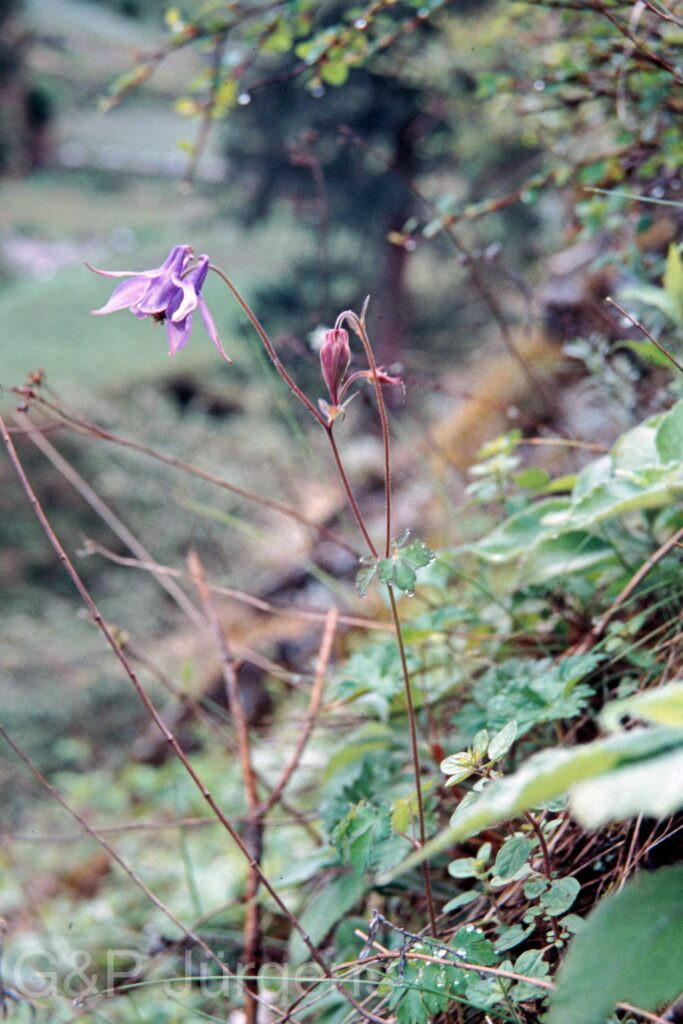
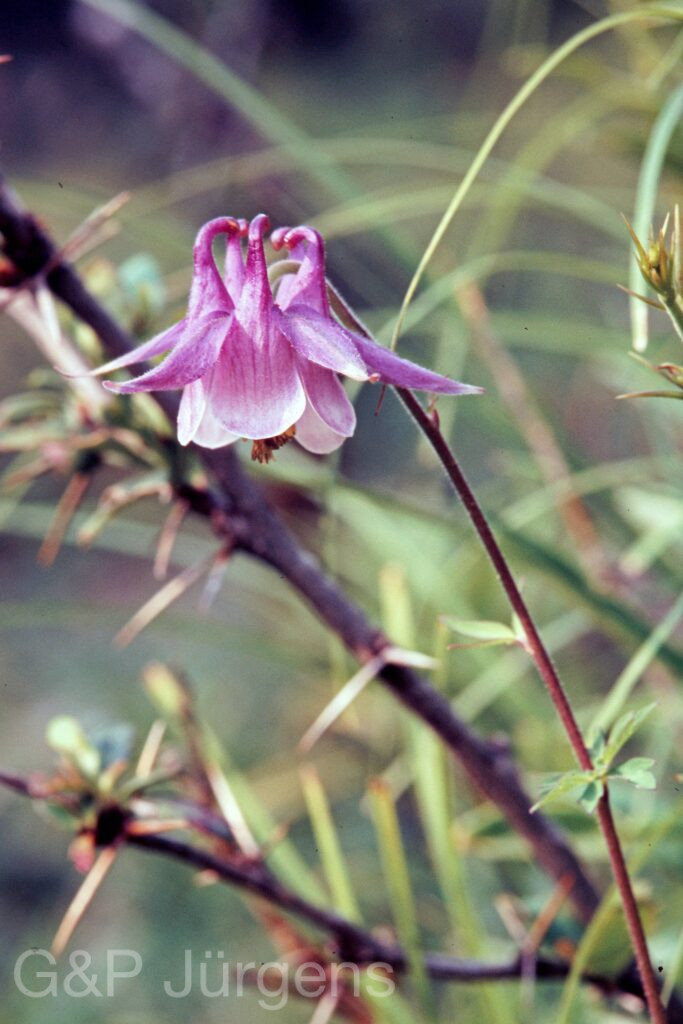
Aquilegia pubiflora is a columbine of the western and central Himalaya, recorded from Afghanistan, Pakistan, India, Nepal and adjacent China. It grows in shady forest, scrub, grassy slopes, stream banks and rocky places in the temperate montane belt, generally between about 2000 and 3600 m. The photographed plants come from Nyor Gaad in West Nepal at around 2700 m and from Barron Chatti in Indian Garhwal at about 2450 m, both flowering in June. With around 240 georeferenced occurrences it is a moderately well-documented and characteristic Himalayan member of its genus along forest margins and in semi-open habitats of the inner valleys.

It is an erect perennial herb up to about 1 m, arising from a stout rootstock, the stems branched above and finely pubescent. The leaves are mostly basal and biternate, the leaflets obovate and lobed, glaucous and softly hairy especially beneath. The nodding to half-nodding flowers are borne on slender pedicels; each has five petaloid sepals and five petals, the petals prolonged backward into prominent hooked or incurved nectar spurs that are the diagnostic feature of Aquilegia. The flowers are pale to deep purple, lilac or whitish, finely pubescent on the outside, as the epithet pubiflora indicates. The numerous stamens are exserted, the inner ones forming membranous staminodes, and the carpels are five and free, ripening into erect, pubescent, many-seeded follicles.

Aquilegia pubiflora belongs to the Asian assemblage of the genus and is distinguished by its softly hairy, spurred flowers and biternate foliage; it intergrades with related Himalayan columbines and has been treated under varying circumscriptions. Like other columbines it is pollinated by long-tongued insects attracted to the nectar spurs. As a widespread temperate herb it is of least conservation concern.

Author: Royle · Sources: POWO (Kew), GBIF, Flora of China, Flora Iranica, Munz monograph of Aquilegia

J.Wen

Bh2008 330 P510
Bhutan Tongsa 2400m, April

Description

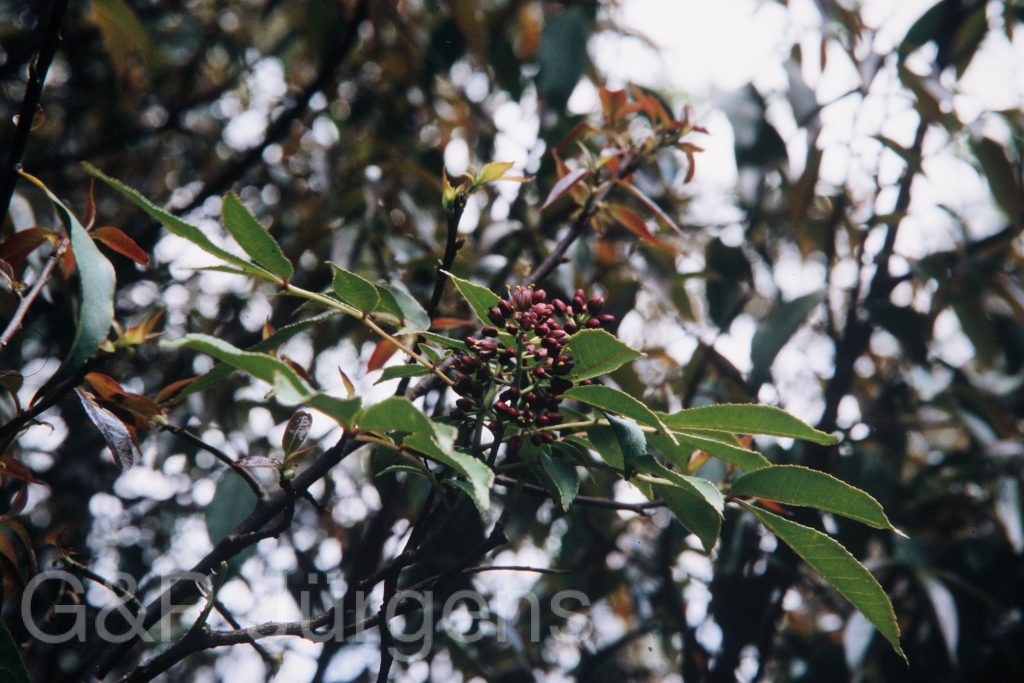
Aralia gigantea is a large herbaceous to subwoody member of the ginseng family ranging across the eastern Himalaya and adjacent uplands, with GBIF logging 145 occurrences in China, Nepal, India, Myanmar and Bhutan. It grows in moist temperate broad-leaved and mixed forest, along ravines, forest clearings and damp shaded slopes, generally between roughly 2000 and 3000 m. The illustrated plant was recorded in Bhutan near Tongsa (Trongsa) at about 2400 m in April, a representative mid-montane forest station for the species, where it springs up among tall-herb communities as the growing season begins.

The plant is a robust, sparsely prickly herb with stout, somewhat pithy stems arising from a thickened rootstock. Leaves are very large, alternate and two- to three-pinnately compound, the numerous ovate leaflets serrate and acuminate, borne on prickly rachides. The inflorescence is a massive terminal panicle of many small umbels, the individual flowers small, greenish-white and five-merous, with a reduced calyx, five petals, five stamens and an inferior ovary crowned by free or basally united styles. The fruit is a small subglobose drupe, ribbed and dark when ripe, containing several flattened pyrenes and attractive to birds.

The species belongs to a group of giant herbaceous Aralia centred on East and Southeast Asia, distinguished from woody congeners by its large compound foliage and herb-like habit. POWO and GBIF accept the name as currently circumscribed. Its size and rapid seasonal growth make it a conspicuous component of Himalayan tall-herb forest understorey, and like related Aralia it has minor ethnobotanical use.

Author: J.Wen · Sources: POWO (Kew), GBIF, Flora of China, Flora of Bhutan, Annotated Checklist of the Flowering Plants of Nepal, Systematics of Aralia (Araliaceae monograph)