Tag:

Montane (1500-2500 m)

Hook.f. & Thomson ex Duch.
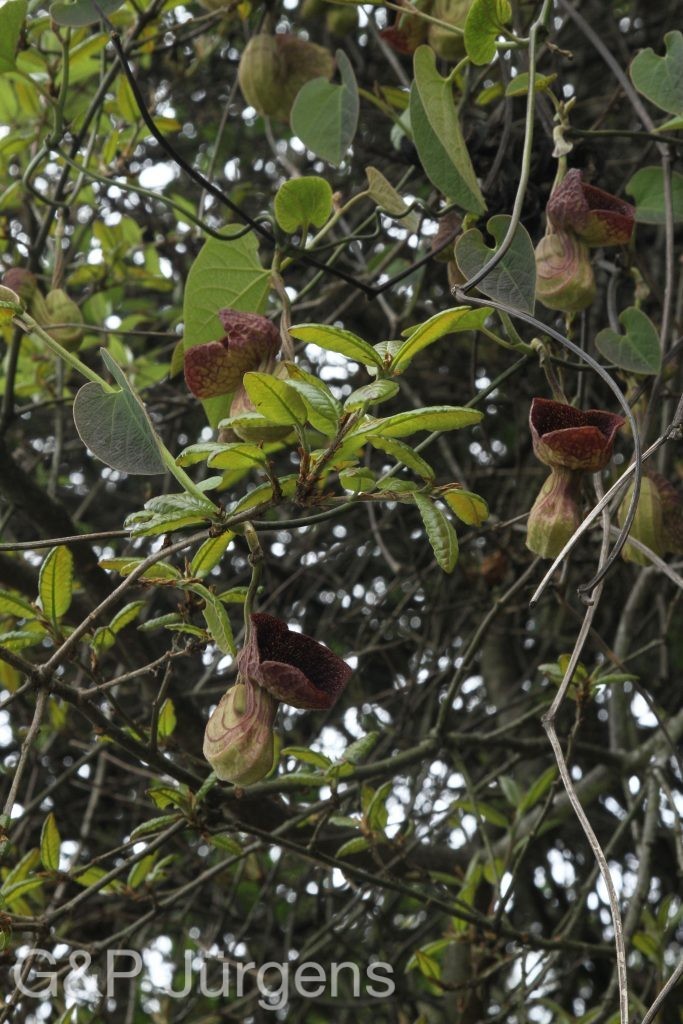
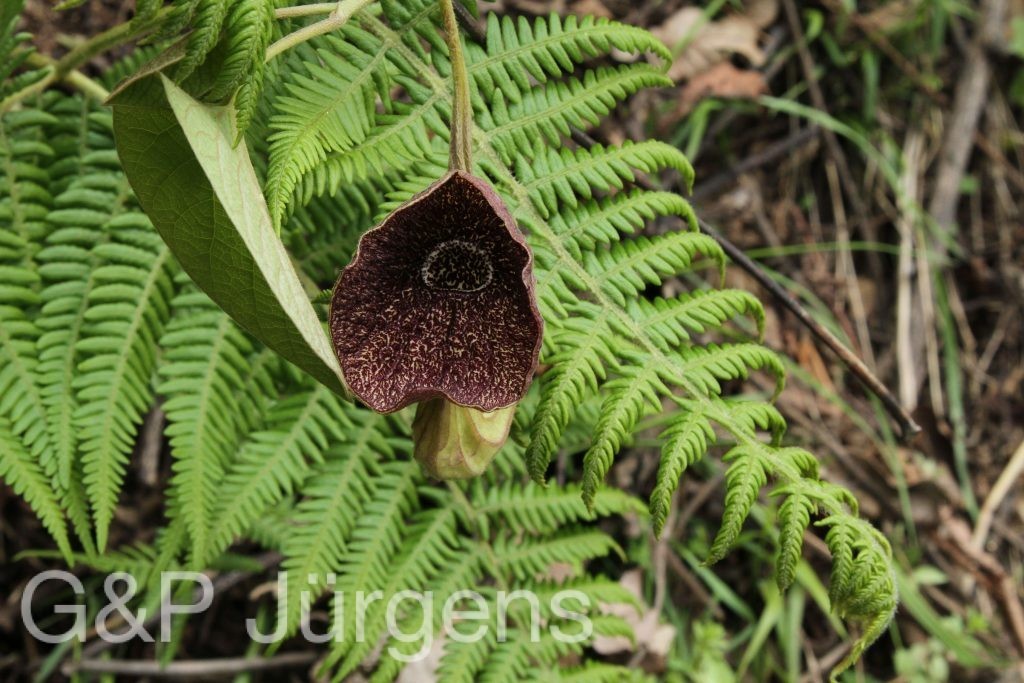
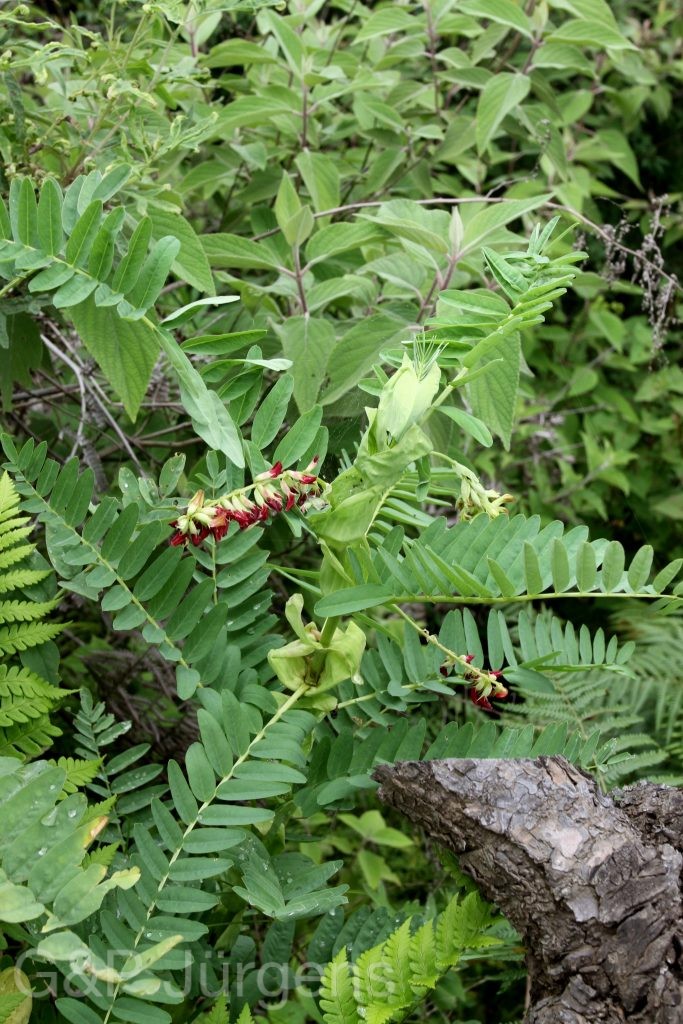
Bhutan2014 454
Bhutan Tongsa 2000m, May
Bhutan2014 456
Bhutan Tongsa 2000m, May
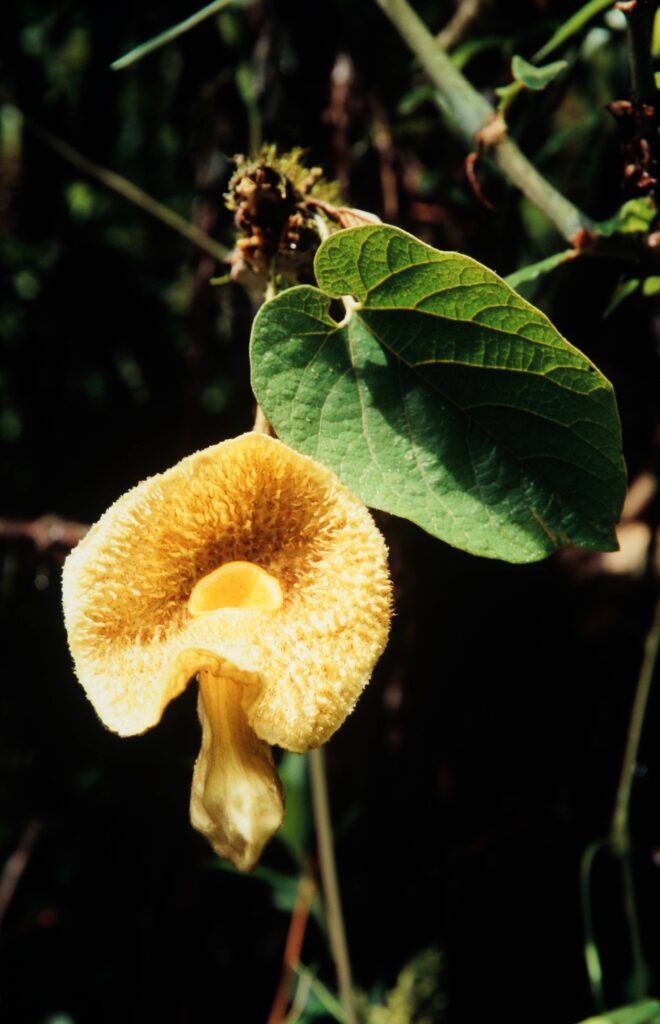
Sikkim 2006 340 ergebnis
India West-Bengal, Tolung 2450m, May

Description

Aristolochia griffithii is an eastern Himalayan woody climber distributed through Nepal, Bhutan, north-east India and south-western China (Xizang, Yunnan), with scattered records extending into northern Myanmar and Thailand. In current taxonomic treatments the name returned as a synonym is referred to the accepted Aristolochia griffithii, under which the species is here treated. It grows in moist temperate broadleaved forest, climbing through trees and shrubs along forest margins and stream gorges, generally between about 1,800 and 3,000 m. The photographs from Tongsa in Bhutan at 2,000 m and from Tolung in West Bengal, India, at 2,450 m, both taken in May, document its late-spring flowering in this mid-montane forest belt.

It is a robust perennial liana with woody, twining stems and large, alternate, ovate-cordate leaves with deeply auriculate bases and entire margins. The flowers are solitary and exceptionally large and showy: the perianth is a strongly inflated, S-curved or globose tube expanding into a broad, spreading, conspicuously netted-veined limb mottled dark purple-brown and yellowish, terminating in a long tail-like appendage. The structure functions as a temporary insect trap, with inwardly directed hairs detaining pollinators (chiefly flies) until the anthers dehisce. The fruit is a pendulous, six-valved, septicidal capsule splitting basipetally into a parachute-like structure releasing flat winged seeds.

Aristolochia (Aristolochiaceae) is notable for its specialised kettle-trap pollination and for the aristolochic acids that render the tissues toxic; the genus includes important larval hosts for swallowtail butterflies. A. griffithii, among the largest-flowered Himalayan species, is prized horticulturally and is locally uncommon, its dependence on intact montane forest making it sensitive to habitat loss.

Author: Hook.f. & Thomson ex Duch. · Sources: POWO (Kew), Flora of China Vol. 5, Flora of Bhutan Vol. 1, GBIF, Hwang, Kelly & Gilbert: Aristolochiaceae in Flora of China
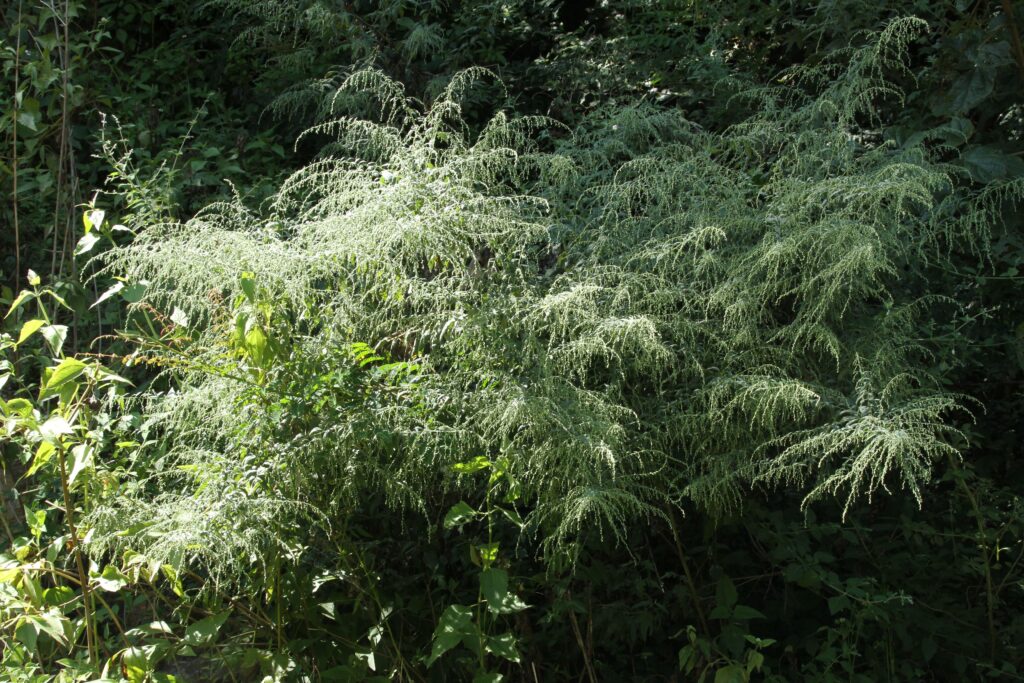
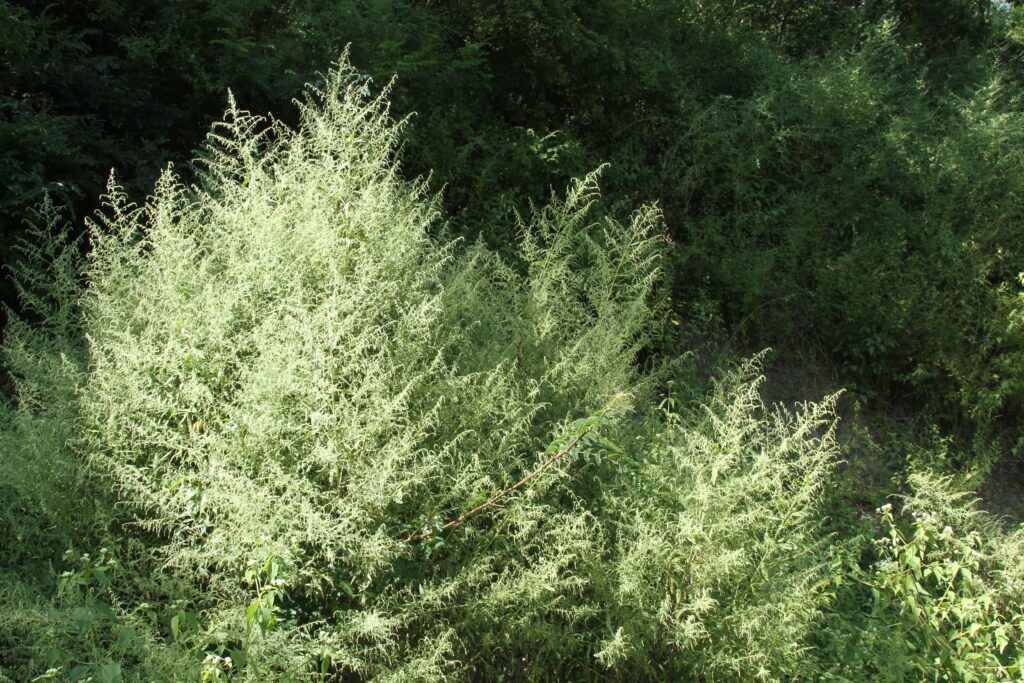
Griersson & Spring.

Bhutan2015 310 ergebnis
Bhutan Trongsa 1800m, October
Bhutan2015 311 ergebnis
Bhutan Trongsa 1800m, October

Description

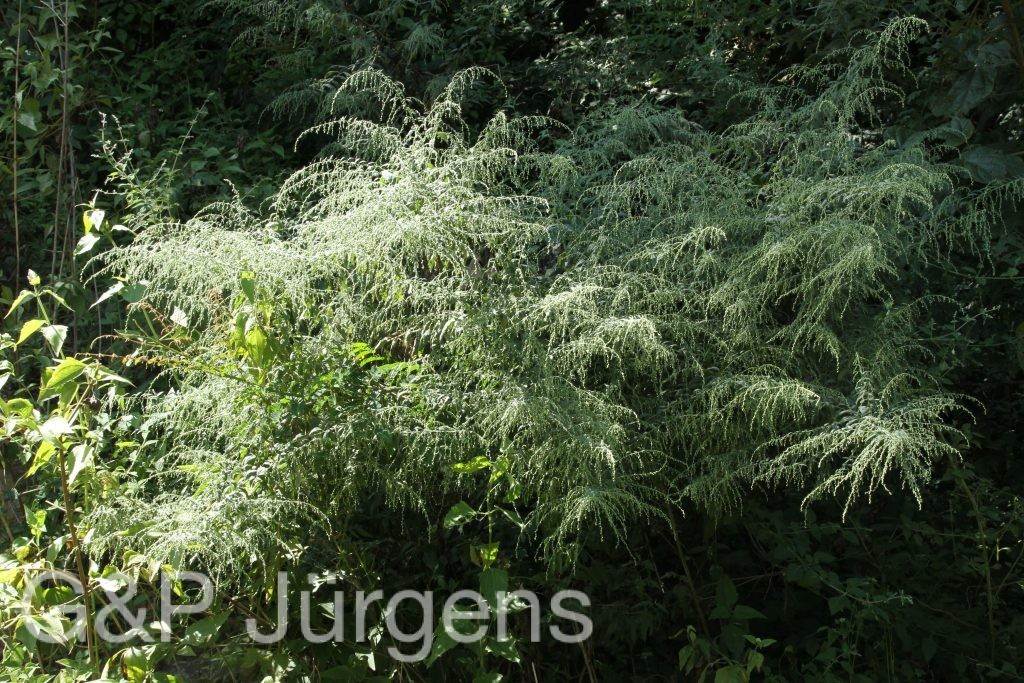
Artemisia bhutanica is a perennial herbaceous species endemic or near-endemic to Bhutan, where it inhabits warm-temperate and subtropical forest margins, roadsides, and disturbed slopes at elevations of approximately 1,200–2,500 m. The species is recorded from the central valleys of Bhutan, including the Trongsa district at around 1,800 m, where it has been photographed flowering in October. With only nine occurrence records documented in GBIF, all confined to Bhutan, the species appears to have a highly restricted distribution and is one of the lesser-known members of this large, cosmopolitan genus in the eastern Himalayan region.
The plant forms erect to ascending, somewhat woody-based stems 40–100 cm tall, branching in the upper portion. The leaves are alternate, deeply pinnatisect to bipinnatisect, with narrowly linear to filiform segments, greyish-green above and more densely tomentose beneath with appressed T-shaped trichomes characteristic of the genus. The capitula are small, nodding, ovoid to subglobose, 2–3 mm in diameter, arranged in lax, paniculate synflorescences. Each capitulum contains few tubular florets; the outer florets are pistillate and the inner ones bisexual. The involucral bracts are imbricate, scarious-margined. Achenes are minute, obovoid, and glabrous.
Artemisia bhutanica was described by Grierson and Springate in the Flora of Bhutan and represents part of the considerable Artemisia diversity in the eastern Himalayas. Its taxonomic placement within the genus requires further molecular study, as morphological boundaries among eastern Himalayan Artemisia species can be unclear. Given its extremely limited documented range and low number of collections, A. bhutanica may warrant conservation assessment, particularly as road construction and land-use change continue to alter warm-temperate habitats in Bhutan's central valleys.

Author: Griersson & Spring. · Sources: POWO (Kew), GBIF, Grierson & Long: Flora of Bhutan Vol. 2 (2001)

Ling & Y.R.Ling

Bhutan2015 310
Bhutan Trongsa 2000m, October

Description

Artemisia austroyunnanensis Ling & Y.R.Ling is a Sino-Himalayan and South-East Asian wormwood distributed from south-western China (notably southern Yunnan, whence the epithet) through Bhutan, India, Myanmar, Laos, Vietnam, Thailand and Japan, with about 70 georeferenced occurrences in GBIF. It grows on dry slopes, forest margins, roadsides, riverbanks and disturbed ground in warm-temperate to lower montane country. The plant recorded at Trongsa at 2000 m in October is consistent with its occurrence in the mid-elevation valleys of the Bhutan Himalaya, flowering toward the close of the growing season.

It is an aromatic perennial herb or subshrub with erect, ribbed and branching stems clothed, like the foliage, in a fine grey or whitish tomentum. The leaves are alternate, once or twice pinnatifid into narrow, often lobed segments, with the lower surface more densely tomentose than the upper. The minute, nodding capitula are numerous and crowded in elongate, paniculate inflorescences; each ovoid to subglobose head has imbricate, woolly-margined phyllaries and is disciform, with outer female florets surrounding inner bisexual disc florets, all wind-pollinated and lacking rays. The fruit is a small, smooth, ellipsoid cypsela without a pappus.

Artemisia is among the largest genera of Asteraceae, and A. austroyunnanensis sits within the subgenus Artemisia of anemophilous, capitulum-clustered species. Its delimitation rests on indumentum, leaf dissection and capitulum structure within a difficult species complex. A regionally distributed plant of disturbed and seasonally dry habitats, it is of no conservation concern.

Author: Ling & Y.R.Ling · Sources: POWO (Kew), GBIF, Flora of China, Flora of Bhutan, Ling taxonomic studies of Artemisia

(D.Don) Hochr.

Bhutan2012 523
Bhutan Wangdi Phodrang 2400m, September
Bhutan2015 247
Bhutan Zhemgang 1000m, October

Description

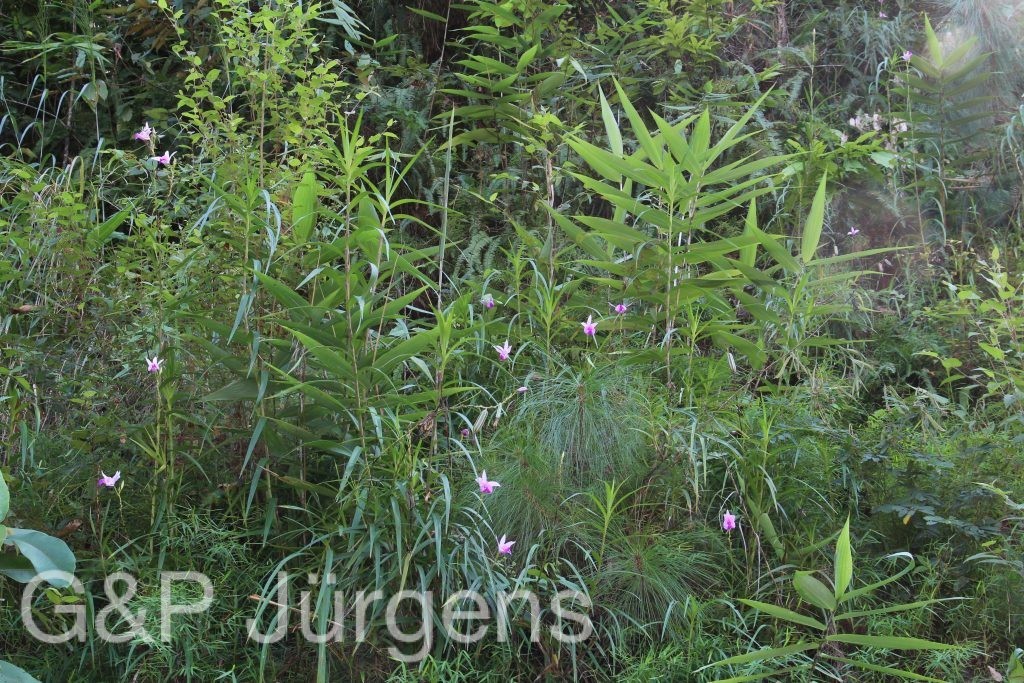
Arundina graminifolia, commonly known as the bamboo orchid, is a robust terrestrial species with a remarkably wide distribution from the Himalayas (Nepal, India, Bhutan) through Southeast Asia to southern China, the Malay Archipelago, and the Pacific Islands. It has become naturalised in parts of tropical America, Hawaii, and the Caribbean. In the Himalayas, it grows on exposed banks, road cuttings, landslide scars, and open grasslands at 200–2,800 m elevation, favoring well-drained, acidic soils with good light exposure.

The plant forms dense clumps of erect, reed-like stems 60–150 cm tall, bearing linear-lanceolate, grass-like leaves 10–20 cm long that are arranged distichously. Flowers are produced terminally, 5–8 cm across, resembling small Cattleya blooms: the sepals and petals are white to pale pink, while the lip is deep rose-purple with a tubular base and a broad, ruffled apical lobe. Flowers open successively over an extended period, with individual blooms lasting only 2–3 days. In the eastern Himalayas, flowering peaks from August to November.

Arundina graminifolia is one of very few orchids that thrives as a pioneer species on disturbed ground. Its wide ecological amplitude and capacity for rapid colonisation are facilitated by its production of numerous wind-dispersed seeds. The species exhibits considerable morphological variation across its vast range, and several subspecific taxa have been proposed.

Author: (D.Don) Hochr. · Sources: POWO (Kew), Flora of Bhutan Vol. 3, GBIF, Seidenfaden: The Orchids of Indochina (1992)

Turcz.

Bhutan2012 866
Bhutan Jakar 2200m, October

Description

Aster ageratoides Turcz. is a widespread and variable East Asian aster ranging through China, Japan, Korea, Taiwan, Russia, Vietnam, Thailand, Nepal, India and Bhutan, with more than 14,000 georeferenced occurrences in GBIF and an increasing presence as an introduction in parts of Europe and North America. It occupies forest margins, grassy slopes, thickets, streamsides and roadside banks across a broad altitudinal range. The plant recorded at Jakar at 2200 m in October is typical of its late-season flowering in the mid-elevation temperate zone of the Bhutan Himalaya.

It is a rhizomatous perennial herb with erect, often branched stems that are scabrid to pubescent. The leaves are alternate, ovate-lanceolate to elliptic, with a serrate to coarsely toothed margin, three more or less prominent main veins, and a rough surface; the lower leaves are petiolate and the upper ones become sessile. The capitula are arranged in a lax corymbose array; each radiate head has an involucre of imbricate, graduated phyllaries, a single series of white to pale violet or purplish ray florets, and numerous yellow disc florets. The fruit is a compressed, hairy cypsela crowned by a pappus of reddish bristles.

A.ageratoides is notoriously polymorphic, and numerous subspecies, varieties and forms have been described across its range based on leaf shape, indumentum and head size. Modern molecular systematics has reorganised the broad genus Aster, but this Asian species is retained in Aster sensu stricto. Common and ecologically flexible, it is of no conservation concern.

Author: Turcz. · Sources: POWO (Kew), GBIF, Flora of China, Flora of Bhutan, Nesom systematic studies of Astereae

Aster neoelegans

by GP Jürgens

Grierson

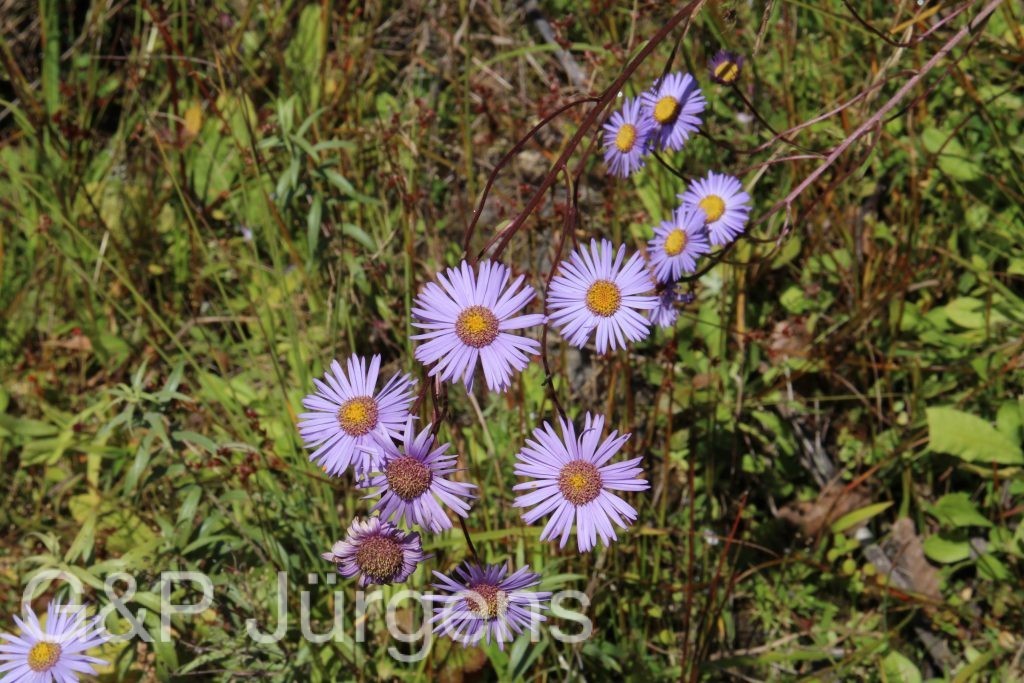
Bhutan2014 411
Bhutan Jakar 2400m, May

Description

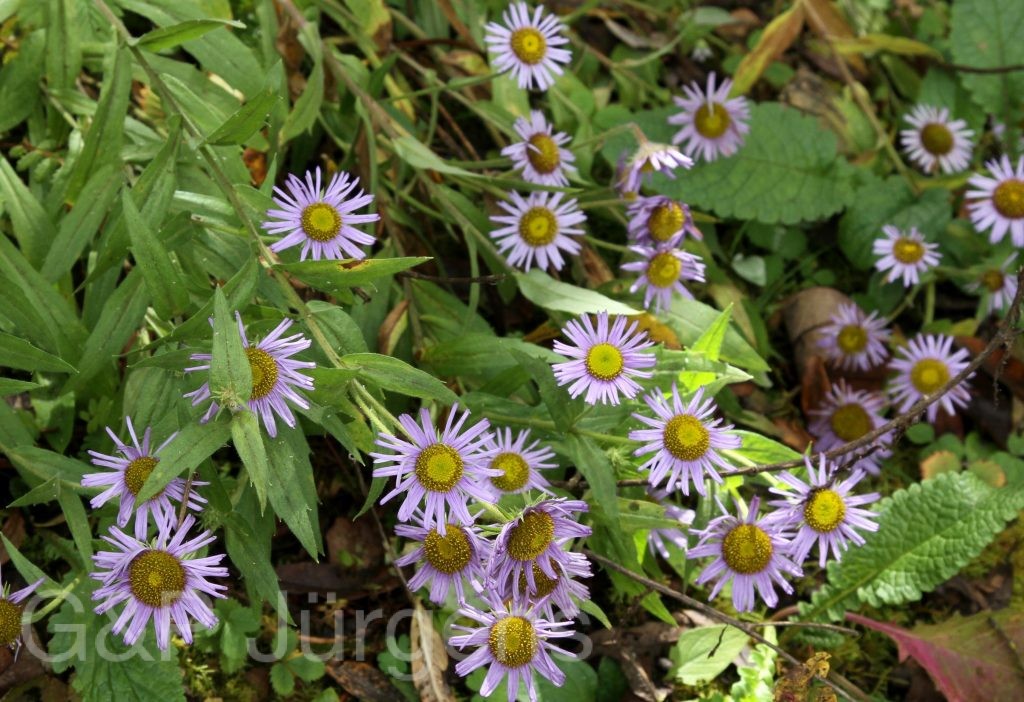
Aster neoelegans is an eastern Himalayan composite native to Bhutan, China (Tibet), India and Nepal, with 53 georeferenced occurrences indicating a fairly localised distribution along the main range. It grows on open grassy slopes, in scrub, forest clearings and on rocky banks in the temperate montane zone. It was photographed near Jakar in central Bhutan at 2400 m in May, flowering in spring on warm, well-drained slopes of the mid-montane belt, where it is a component of meadow and open-woodland communities.

It is an erect perennial herb arising from a short rhizome, with simple or sparingly branched, leafy, finely hairy stems. The alternate leaves are oblong to lanceolate or oblanceolate, entire to slightly toothed, narrowing to a sessile or clasping base and roughly pubescent. The flower heads are radiate and solitary or few in a loose corymb at the stem tips; each head has a hemispherical involucre of imbricate green phyllaries, an outer ring of spreading ligulate ray florets that are pale blue, lilac or mauve, and a central disc of yellow tubular florets. The fruit is a flattened, hairy cypsela bearing a pappus of barbellate bristles.

The genus Aster s.str. belongs to tribe Astereae and, following the segregation of numerous American and Asian species into other genera, comprises a predominantly Eurasian group well represented in the Sino-Himalaya. Aster neoelegans, described by Grierson, is one of several closely related Himalayan asters distinguished by subtle differences in leaf shape, indumentum and phyllary form. Ecologically it is an insect-pollinated meadow species. Owing to its restricted range it warrants monitoring, though it is not currently assessed as threatened.

Author: Grierson · Sources: POWO (Kew), GBIF, Flora of Bhutan, Flora of China, Asteraceae of the Himalaya (Grierson & Long studies)

C.B.Clarke

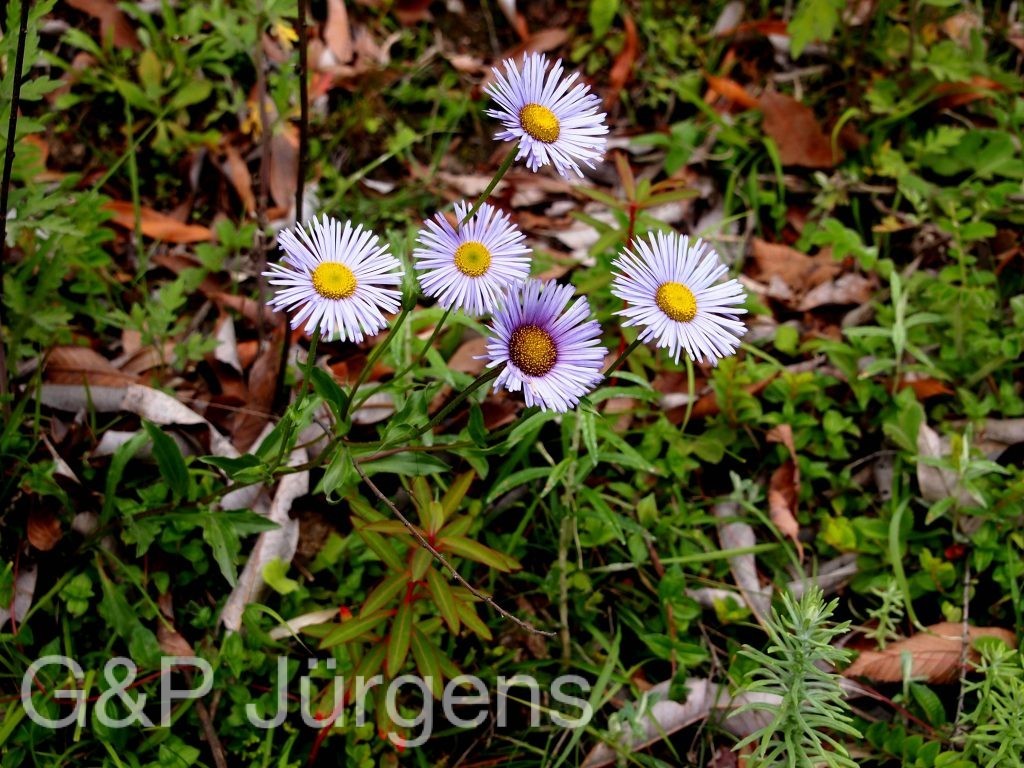
Bhutan2015 326
Bhutan Trongsa 2200m, October
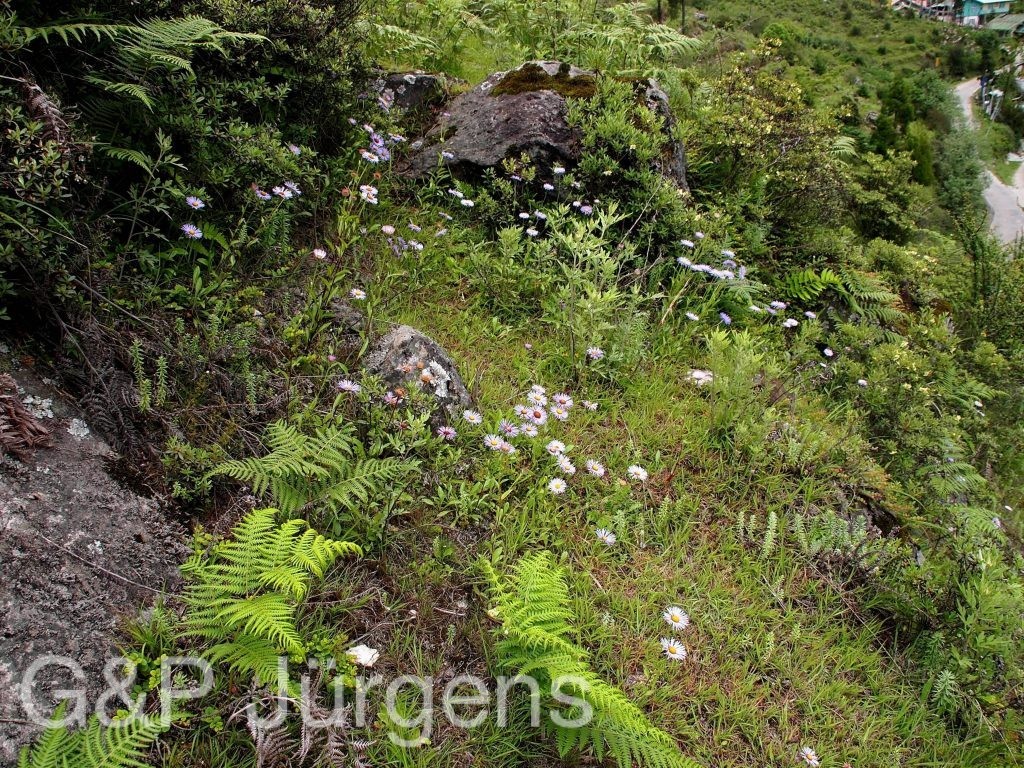
Sikkim2011 182
Sikkim Lachung 2600m, June
Sikkim2011 188
Sikkim Lachung 2600m, June
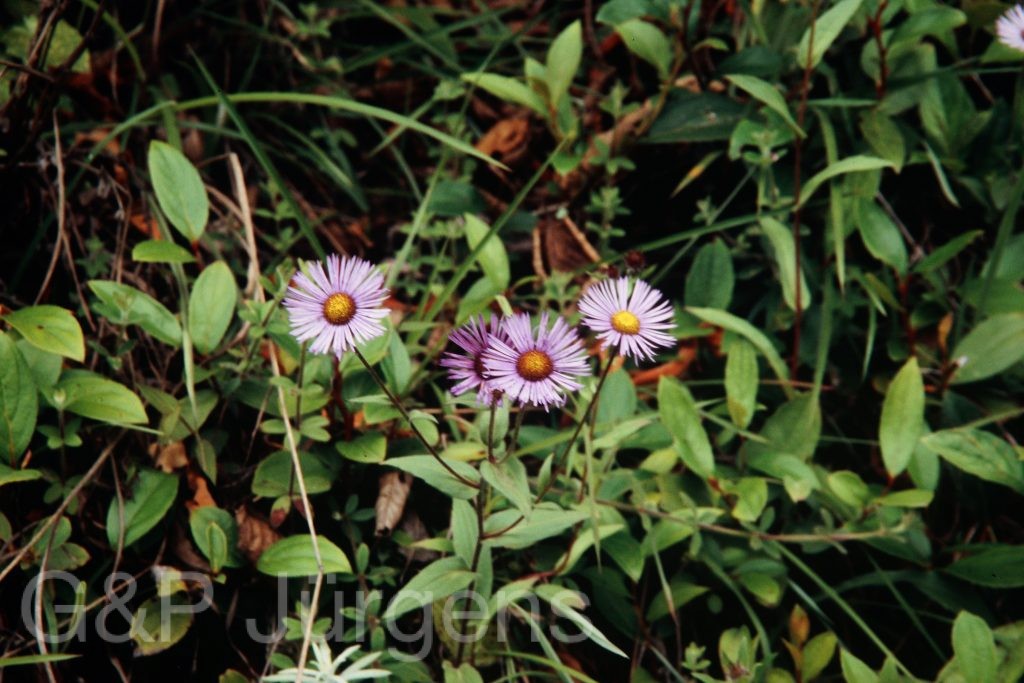
Bh09 311 G477
Bhutan Yetong-La, 2900m June

Description

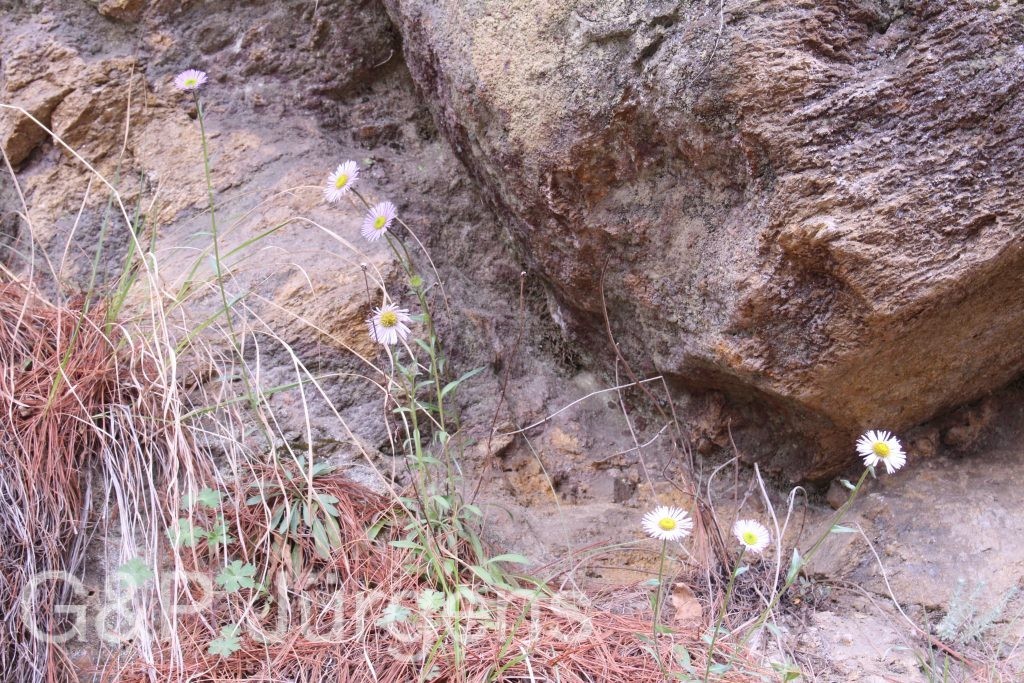
Aster tricephalus is a Himalayan species ranging through India, Nepal, Pakistan, China and Bhutan, GBIF recording some 87 occurrences along the temperate Himalayan chain. It grows on open grassy and shrubby slopes, in forest clearings, along banks and in subalpine meadows where it benefits from full sun and moist, well-drained soils. The cited gatherings span its altitudinal range: Trongsa in central Bhutan at 2200 m in October, Lachung in Sikkim at 2600 m in June, and the Yetong-La at 2900 m in June. This spread of localities, flowering from early summer through to autumn, reflects its presence across the temperate to lower subalpine belt of the Eastern Himalaya.

It is a perennial herb arising from a short rhizome, with erect, leafy, often pubescent stems. The leaves are alternate, the lower ones oblanceolate and narrowed to the base, the upper smaller, sessile and somewhat clasping, with entire or slightly toothed margins and scabrid or hairy surfaces. The capitula are radiate and few, sometimes clustered into a small terminal group as the epithet suggests; the involucre is campanulate with imbricate, herbaceous phyllaries in several rows. The ray florets are female and ligulate, mauve to purplish-blue, surrounding numerous yellow tubular disc florets. The cypselae are flattened and hairy, bearing a pappus of fine barbellate bristles.

Aster in the strict modern sense (tribe Astereae) is centred on Eurasia, and many Himalayan species formerly placed here have been variously reassigned among segregate genera, so the generic placement of montane taxa such as A. tricephalus remains under continuing taxonomic scrutiny. Attributed to C. B. Clarke, it is treated as an accepted species. Its violet-rayed heads attract a range of bees, hoverflies and butterflies. As a widespread plant of open montane habitats it is not regarded as threatened.

Author: C.B.Clarke · Sources: POWO (Kew), GBIF, Flora of Bhutan, Flora of China, Annotated Checklist of the Flowering Plants of Nepal, Grierson's revision of Himalayan Aster (Astereae)

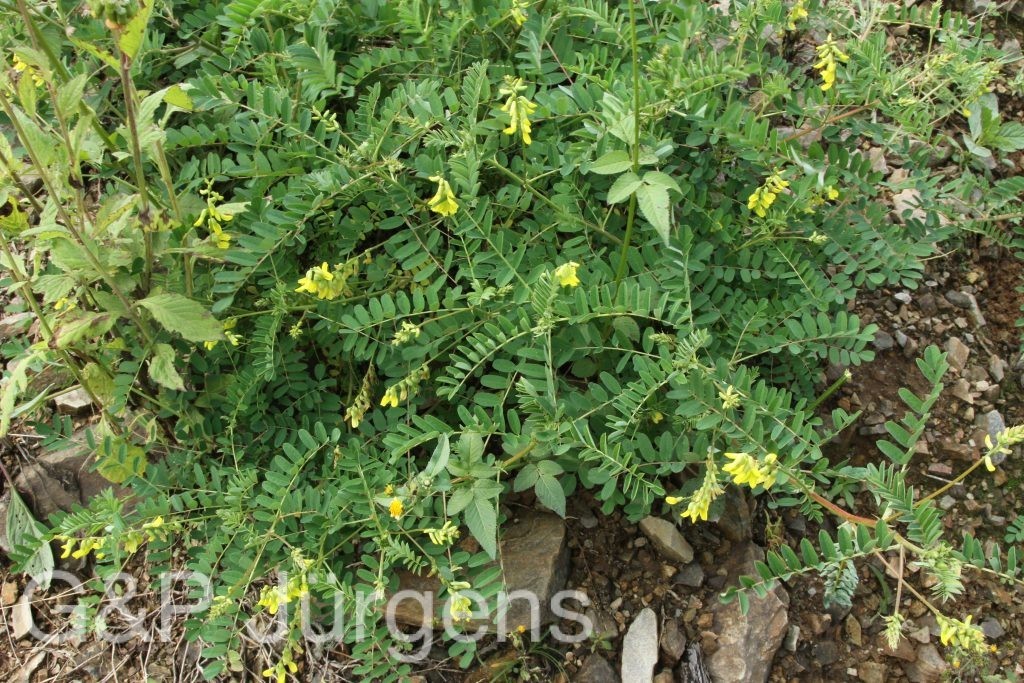
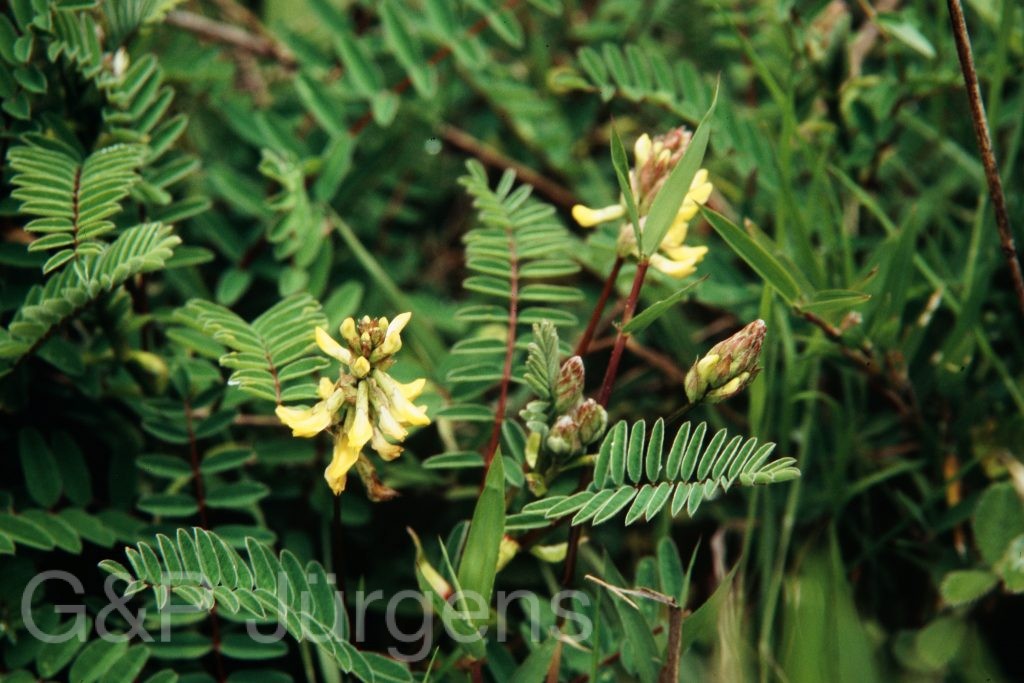
Lindl.

Bhutan2015 515
Bhutan Phobjika 2600m, October
Bh09 300 G494
Bhutan Kiki-La, 2100m June

Description

Astragalus chlorostachys is a perennial legume of the inner valleys and dry montane slopes of the Himalaya and Central Asia, ranging through India, Pakistan, Nepal, Bhutan, Afghanistan and China, with around 270 documented occurrences (records from Belgium and Switzerland representing herbarium and cultivated material). It favours open grassy slopes, forest margins, scrub and disturbed ground in the warm- to cool-temperate belt, broadly between about 2000 and 3000 m. The photographed plants were recorded in Bhutan at Phobjika at 2600 m in October and at the Kiki-La at 2100 m in June, indicating a long flowering and fruiting season through the growing months.

The species is an erect to ascending herb with several stems arising from a woody rootstock, the herbage finely appressed-pubescent. The leaves are imparipinnate with numerous opposite, oblong to elliptic leaflets. The flowers are crowded into dense, elongate, spike-like axillary racemes (the green-tinged inflorescence reflected in the epithet chlorostachys); the calyx is tubular and pubescent, and the papilionaceous corolla is small, yellowish to greenish-white or pale lilac. The fruit is a small, sessile or shortly stipitate pod, more or less inflated and pubescent, dehiscent at maturity.

Astragalus is among the largest genera of flowering plants, and its Himalayan members are taxonomically intricate; A. chlorostachys is placed among the densely spicate-flowered milkvetches of the region. Like many of its congeners it is a nitrogen-fixing pioneer of disturbed and grazed terrain, providing fodder and contributing to soil enrichment. It is common across a wide range and is not considered to be of conservation concern.

Author: Lindl. · Sources: POWO (Kew), GBIF, Flora of Bhutan, Flora of Pakistan, Astragalus monograph (Podlech & Zarre)

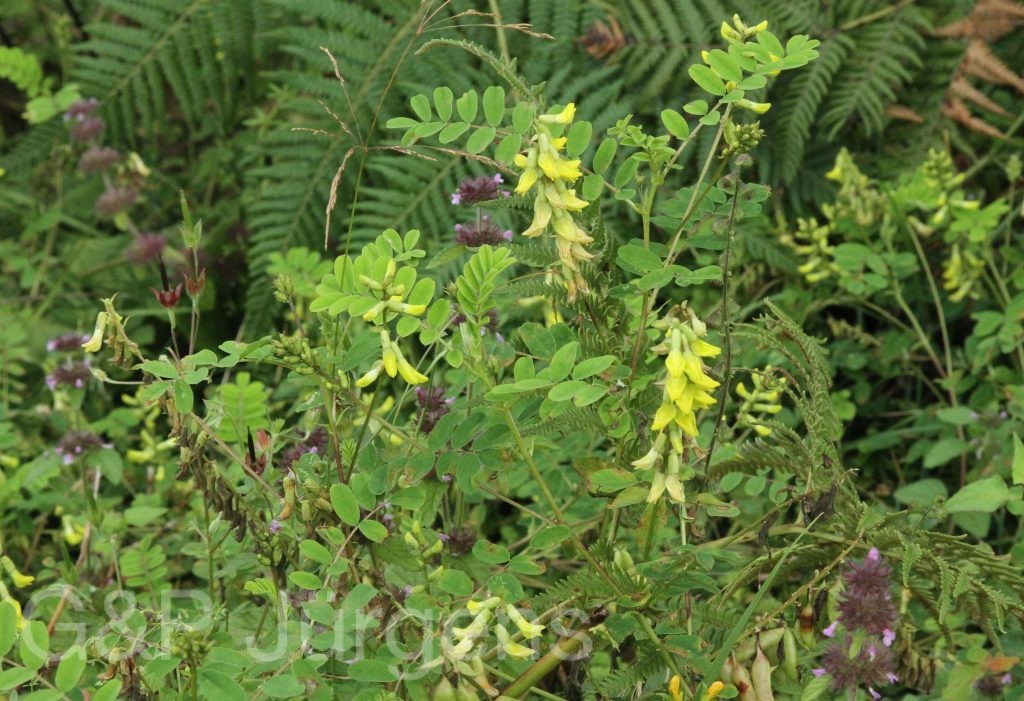
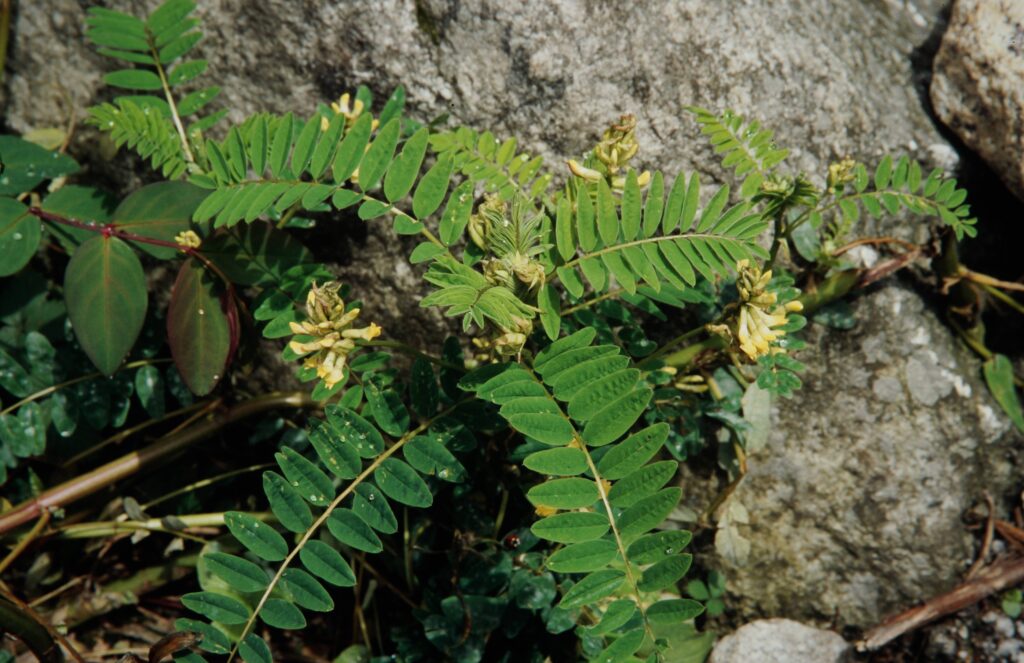
Benth.

Bhutan2012 349
Bhutan Wangdi 2000m, September
Sikkim 2006 466 ergebnis
India West-Bengal, Ruhig-Chu 2100m, May

Description

Astragalus concretus is a Himalayan milkvetch recorded from Nepal, India, China, Pakistan and Bhutan, with about 147 georeferenced occurrences concentrated along the central and eastern ranges; scattered records from the United States, Russia and Belgium derive from herbarium and database holdings rather than wild populations. It favours open, sunny banks, dry slopes, scrub margins and disturbed ground in the subtropical to lower temperate zone, broadly between 1500 and 2500 m. The cited gatherings from Wangdue in Bhutan at 2000 m in September and from the Rishi Chu valley in West Bengal at 2100 m in May indicate a tolerance of warm mid-elevation habitats.

It is a perennial or robust herb with ascending to spreading stems. The leaves are imparipinnate with several pairs of oblong to elliptic leaflets, the foliage typically appressed-pubescent. The flowers are borne in axillary racemes; the papilionaceous corolla, of purplish to pale colouring, shows the standard, wing and keel petals characteristic of the genus, subtended by a campanulate, toothed calyx. The fruit is a legume pod, in this species somewhat inflated and incompletely two-celled by intrusion of the ventral suture, the feature reflected in the epithet.

Astragalus is among the largest of all plant genera, and its Himalayan members are taxonomically intricate, separated largely on pod and indumentum characters. As a nitrogen-fixing legume, A. concretus contributes to soil enrichment on poor, eroding slopes. It is not regarded as threatened, occurring widely across disturbed and natural openings throughout its range.

Author: Benth. · Sources: POWO (Kew), GBIF, Flora of China, Flora of Bhutan, Astragalus and Oxytropis monographs of Podlech and Maassoumi

D.Don ex. Sims

BhutanPG2011 849
Bhutan Paro-Chu, 2400m July

Description

Astragalus stipulatus is a Himalayan milk-vetch distributed across Nepal, India, China and Bhutan, with around 83 GBIF occurrences. It is a plant of open, sunny situations in the temperate to lower subalpine zone, occupying dry grassy slopes, rocky banks, riverside terraces and disturbed ground, generally between about 2000 and 3500 m. The plant illustrated from the Paro Chu valley in Bhutan at 2400 m, flowering in July, is typical of its occurrence along well-drained, gravelly valley sides during the monsoon season.

It is a perennial or sometimes biennial herb with ascending to spreading, often somewhat straggling stems arising from a branched rootstock. The leaves are imparipinnate with several pairs of small elliptic to oblong leaflets and conspicuous, often connate stipules that give the species its epithet. The pea-like flowers are borne in axillary racemes; the papilionaceous corolla is purplish to pale violet or whitish, with the standard exceeding the wings and keel, and the calyx is tubular-campanulate with subequal teeth. The fruit is an oblong, often somewhat curved and inflated legume that may be bilocular through intrusion of the lower suture.

Astragalus, the largest genus of flowering plants, is richly represented in the Himalaya and Central Asia. A. stipulatus (D. Don ex Sims) belongs to the diverse Himalayan assemblage of the genus; it is widespread and of no conservation concern, contributing to early-successional and grazing-disturbed communities and, as a legume, to soil nitrogen enrichment through root nodulation.

Author: D.Don ex. Sims · Sources: POWO (Kew), GBIF, Flora of Bhutan, Flora of China, Podlech & Zarre monograph of Old World Astragalus