C.B.Clarke
Description
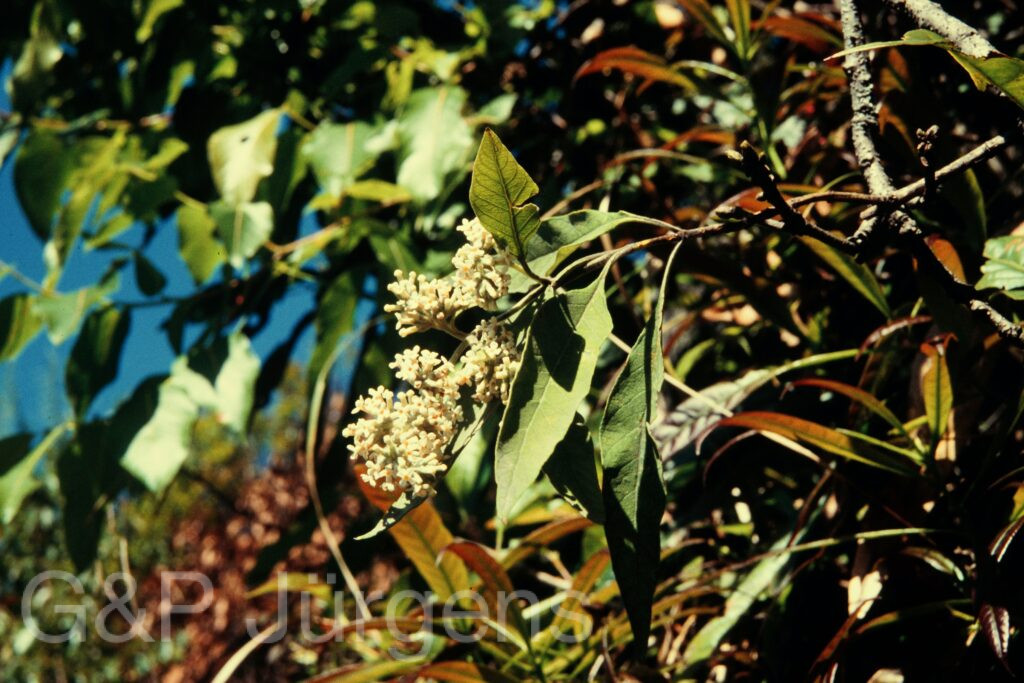
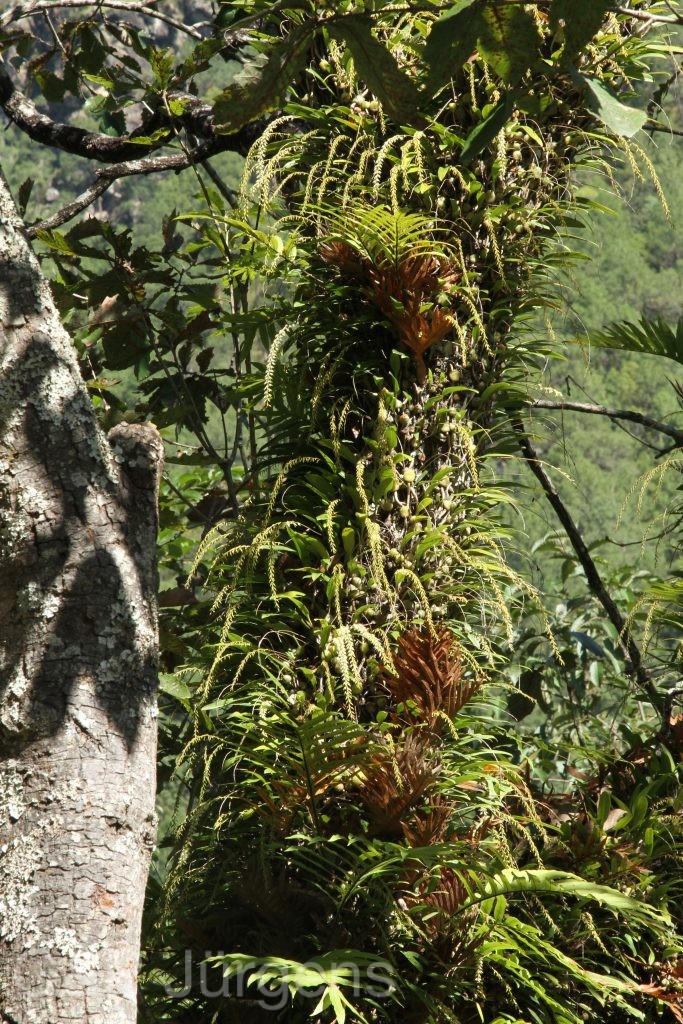
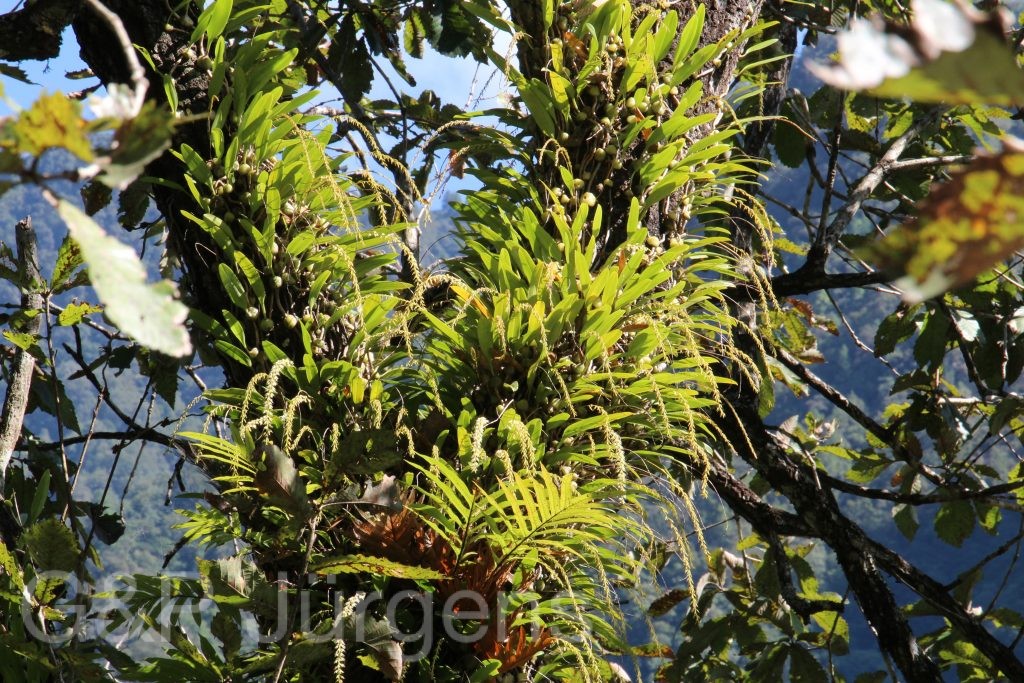
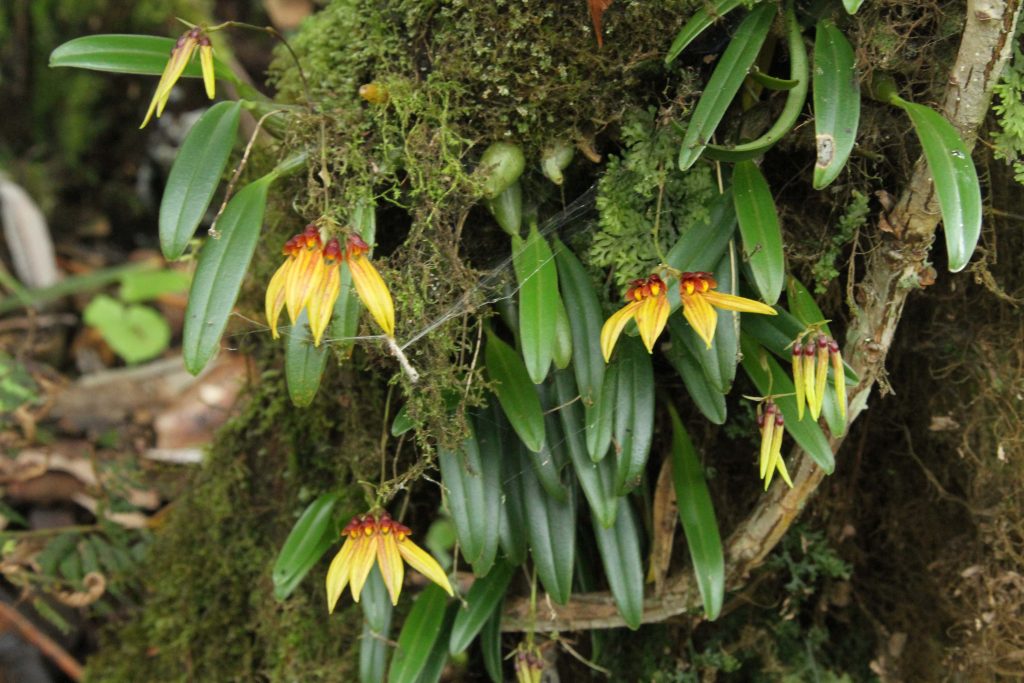
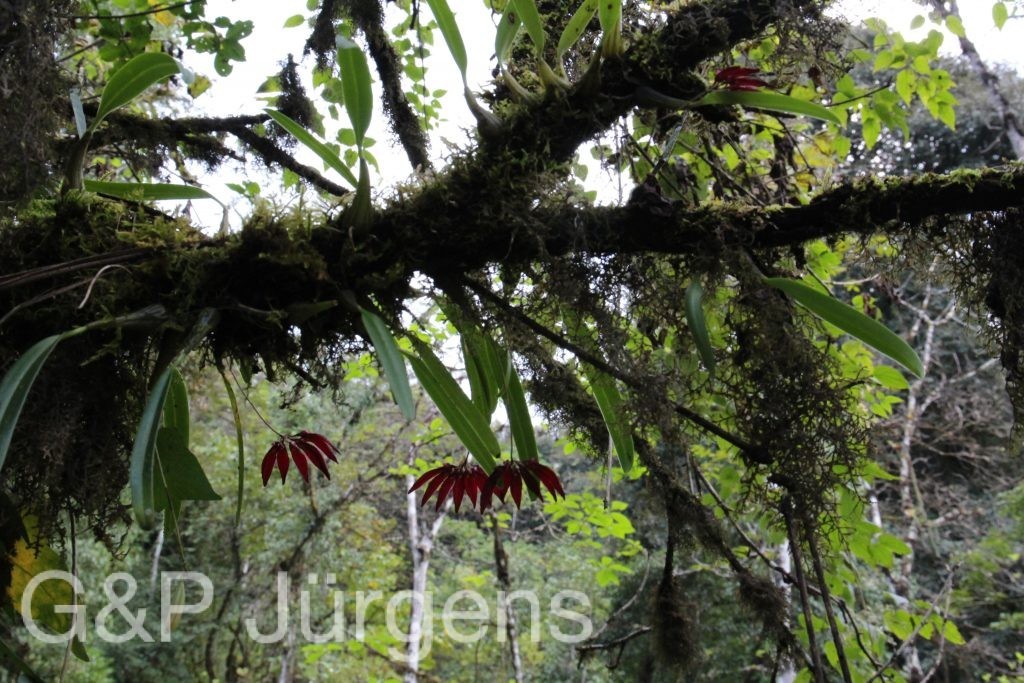
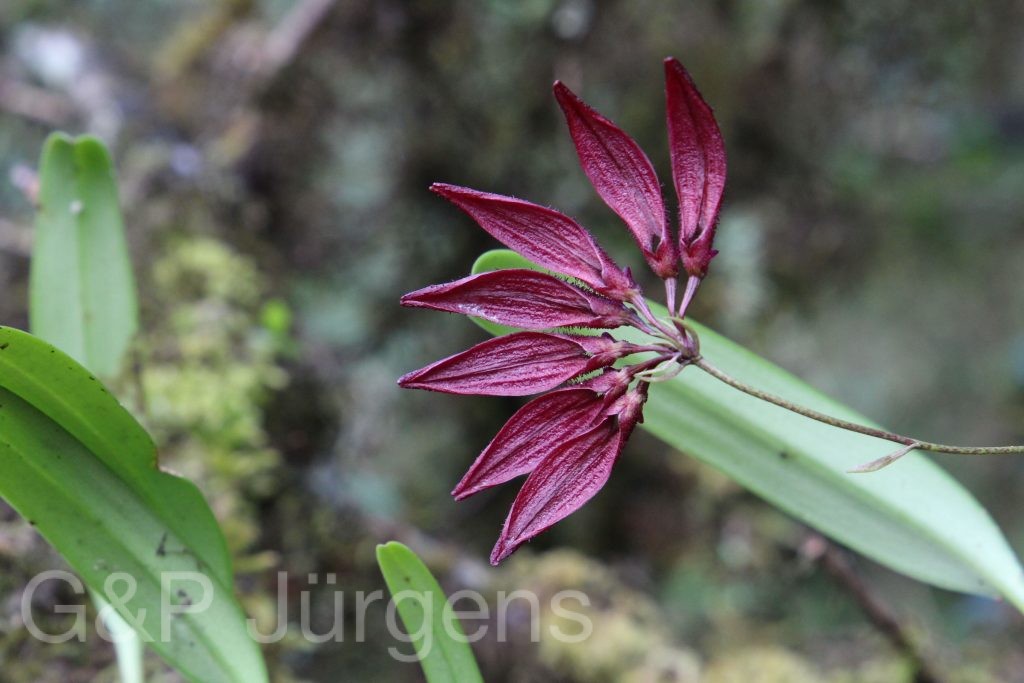
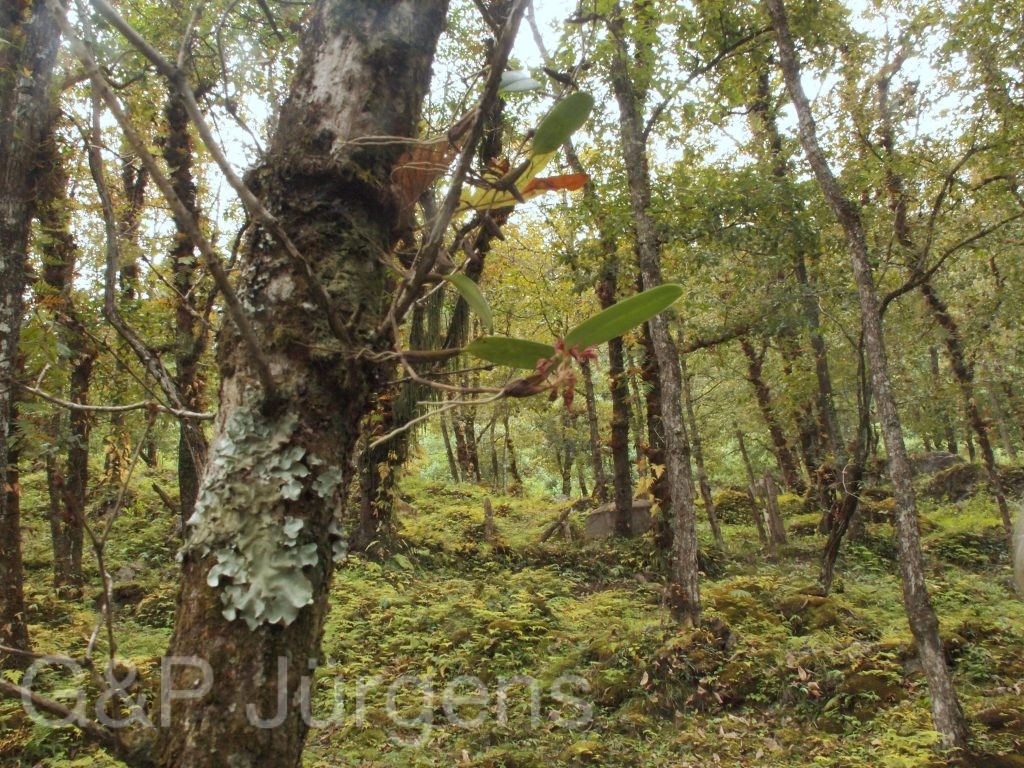
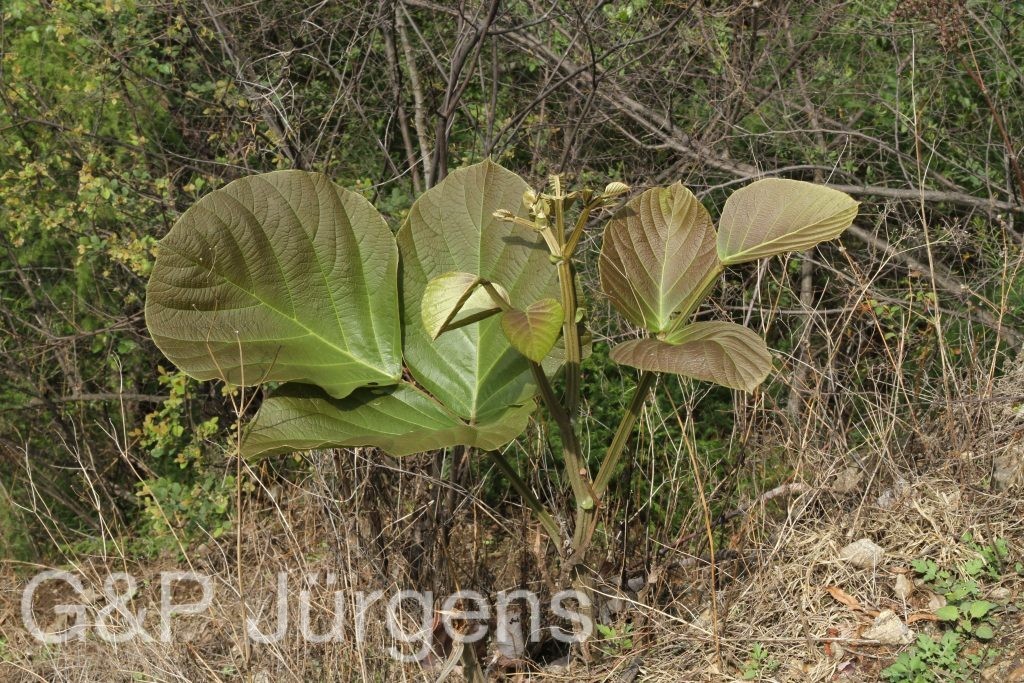
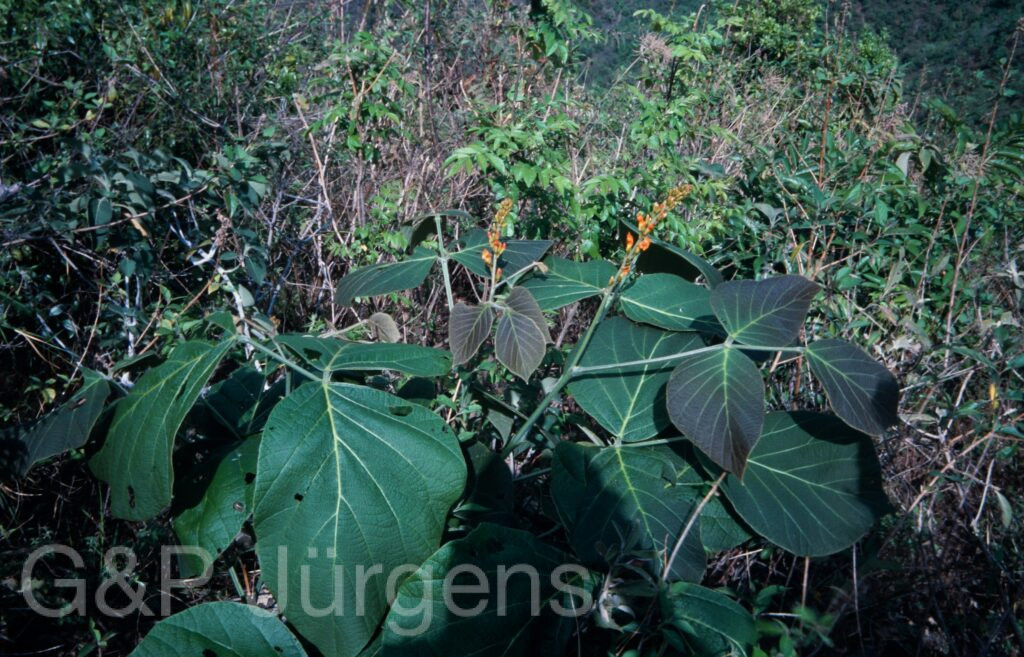
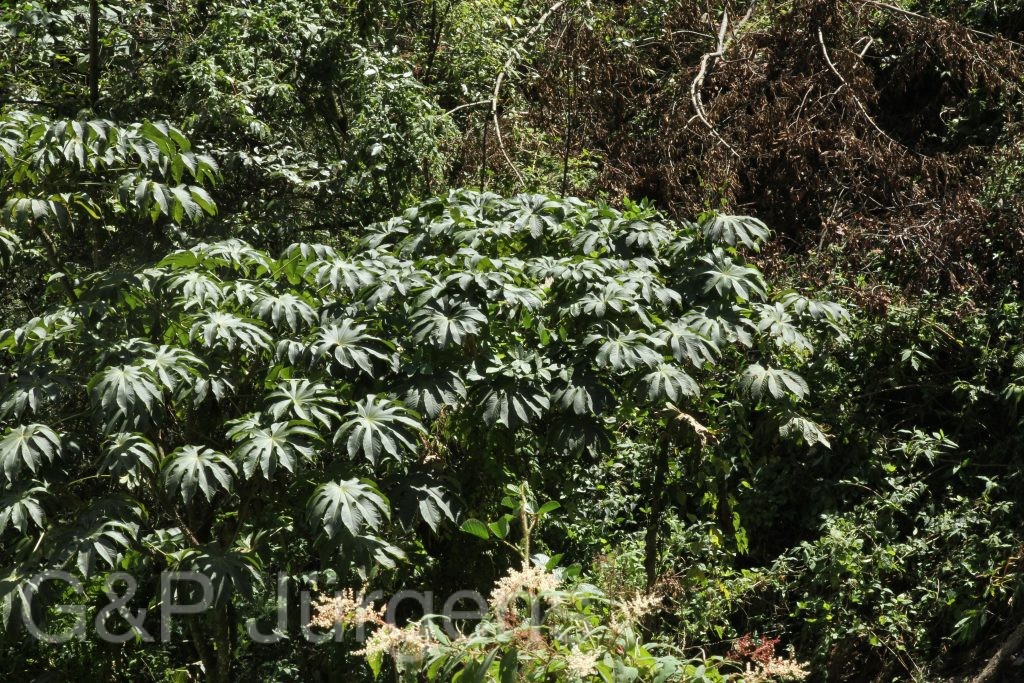
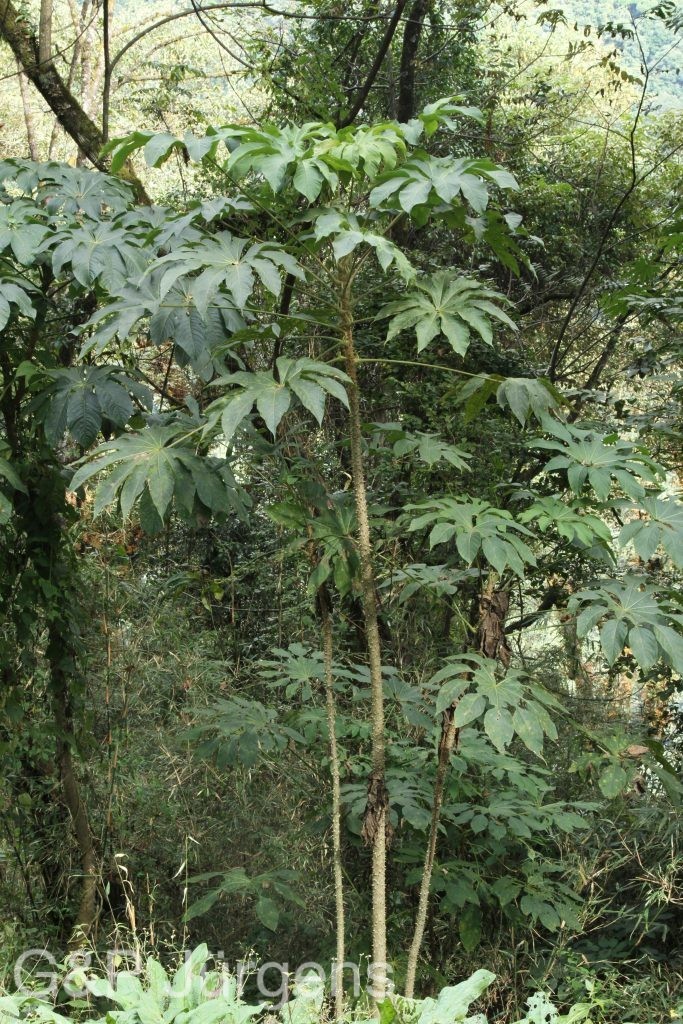
Brassaiopsis mitis is an East Himalayan small tree or large shrub of the ginseng family, GBIF holding only about 61 occurrences from India, Bhutan, Nepal and Myanmar. It inhabits humid, shaded broadleaved and evergreen montane forest, occurring along stream gullies, ravine slopes and forest margins generally between about 1500 and 2500 m. The individuals photographed from the Gasa district of northern Bhutan at 2000 and 2200 m, in October, are typical of its occurrence in cool, moist mid-montane forest of deep shade and high humidity, the autumn date corresponding to its fruiting season.
It is an evergreen shrub or small tree to several metres tall, the stems and petioles often prickly, as in many species of Brassaiopsis. The leaves are large, long-petiolate and palmately lobed or palmately compound, the lobes or leaflets entire to serrate, giving the crown a coarse, tropical aspect. The minute, greenish flowers are five-merous with an inferior ovary and are aggregated into umbels grouped into large terminal panicles. The fruit is a small, fleshy, more or less globose drupe crowned by the persistent stylopodium, ripening dark and containing a few flattened pyrenes.
Described by C. B. Clarke, B. mitis belongs to the predominantly Sino-Himalayan and Southeast Asian genus Brassaiopsis within Araliaceae, characterised by prickly, large-leaved understorey trees. With its few records and restricted East Himalayan range it is of regional biogeographic interest, dependent on intact mid-montane forest. Ecologically its umbellate inflorescences attract generalist insects, while its drupaceous fruit is dispersed by frugivorous birds and mammals of the forest interior.
Author: C.B.Clarke · Sources: POWO (Kew), GBIF, Flora of Bhutan, Flora of China, Lowry & Frodin studies of Brassaiopsis (Araliaceae)