
Lindl.
Description
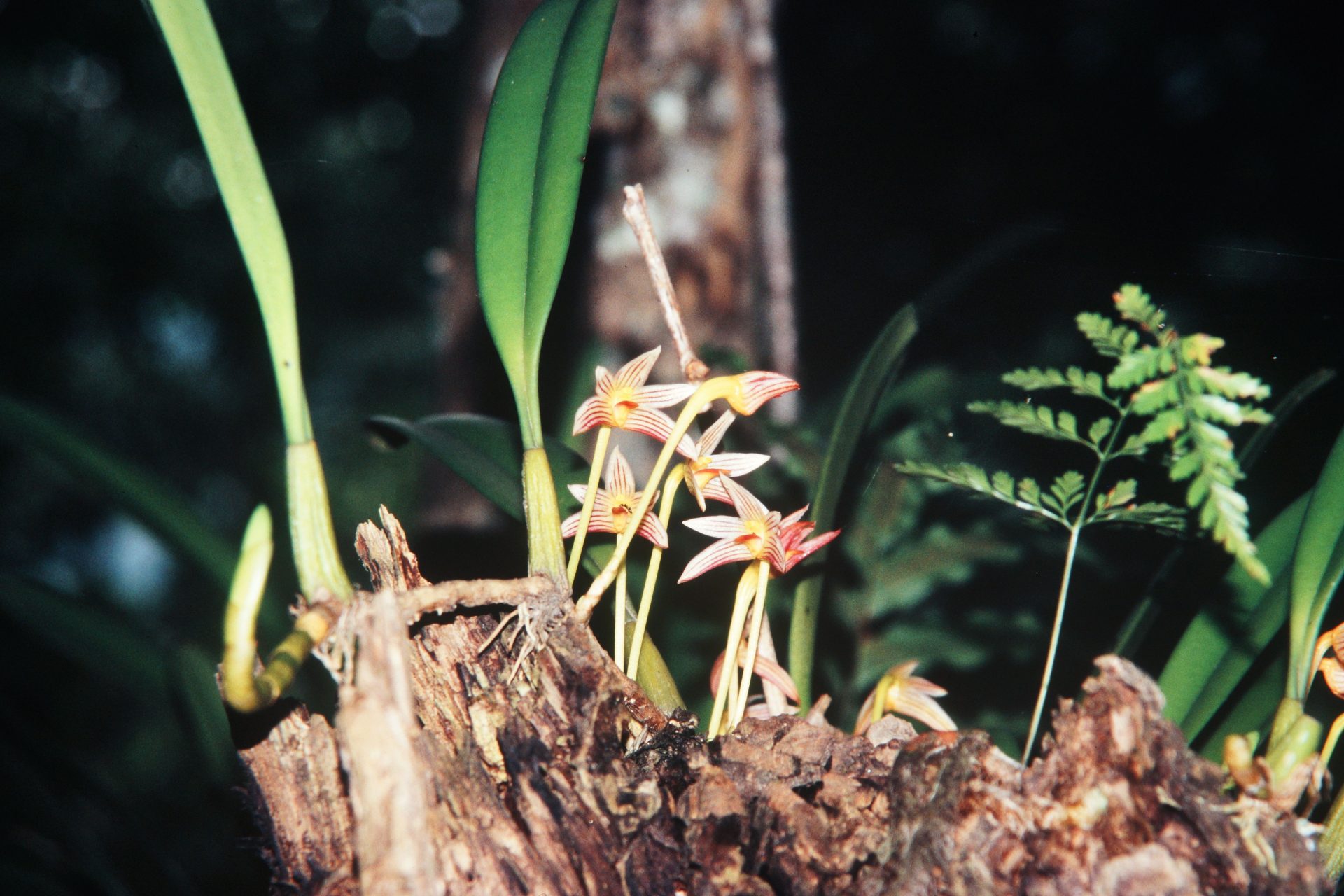
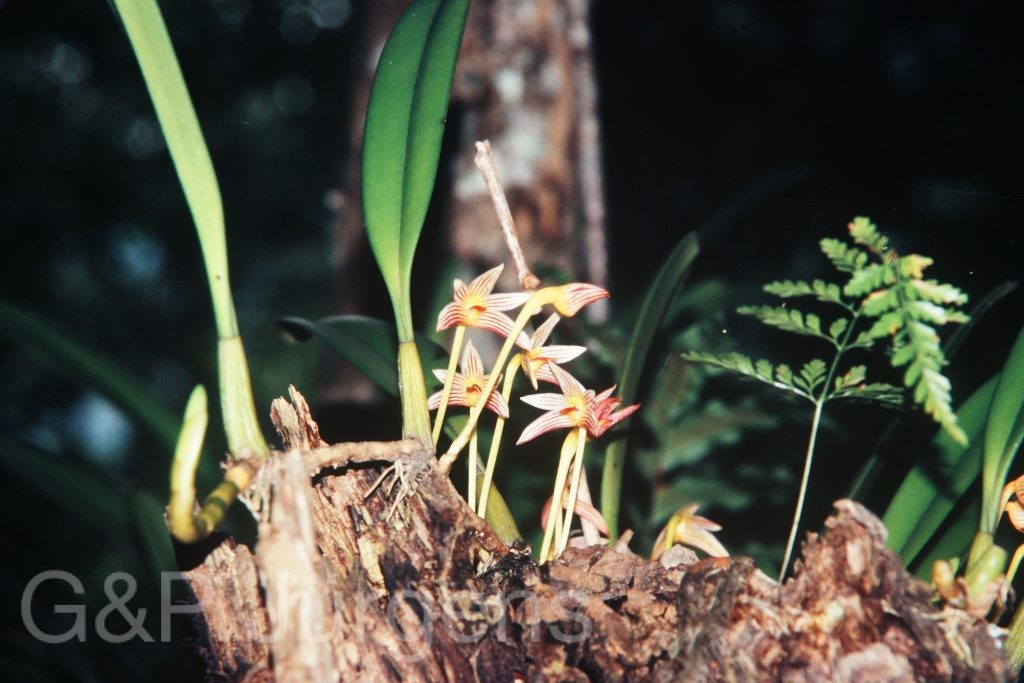
Bulbophyllum affine is an epiphytic orchid widely distributed across East and Southeast Asia, from Nepal and northeast India (Sikkim, Assam) through Bhutan, Myanmar, and southern China to Taiwan, Vietnam, and Thailand. It inhabits humid broadleaved and mixed forests at 500–2,500 m elevation, growing on mossy trunks and branches, occasionally on rocks (lithophytic).
The plant produces ovoid to conical pseudobulbs 2–4 cm tall, set 3–8 cm apart on a stout, creeping rhizome. Each pseudobulb bears a single, leathery, elliptic to oblong leaf 8–15 cm long. The inflorescence is a nodding, densely many-flowered raceme 5–15 cm long, emerging from the base of the pseudobulb. The flowers are small, 5–8 mm across, yellowish-green to pale brown, densely arranged in a cylindrical spike. Sepals are lanceolate and acuminate; the lip is small, fleshy, and recurved, mobile on a thin strap connecting it to the column foot — a characteristic feature of Bulbophyllum enabling pollination by small flies.
Bulbophyllum is the largest genus in the Orchidaceae, comprising over 2,200 described species. B. affine belongs to section Cirrhopetalum and is distinguished from similar congeners by its densely flowered, cylindrical raceme and the prominent column stelidia.
Author: Lindl. · Sources: POWO (Kew), Flora of Bhutan Vol. 3, GBIF, Seidenfaden: Orchid Genera in Thailand XIV: Bulbophyllum (1979)