
Wall. ex Lindl.
Description
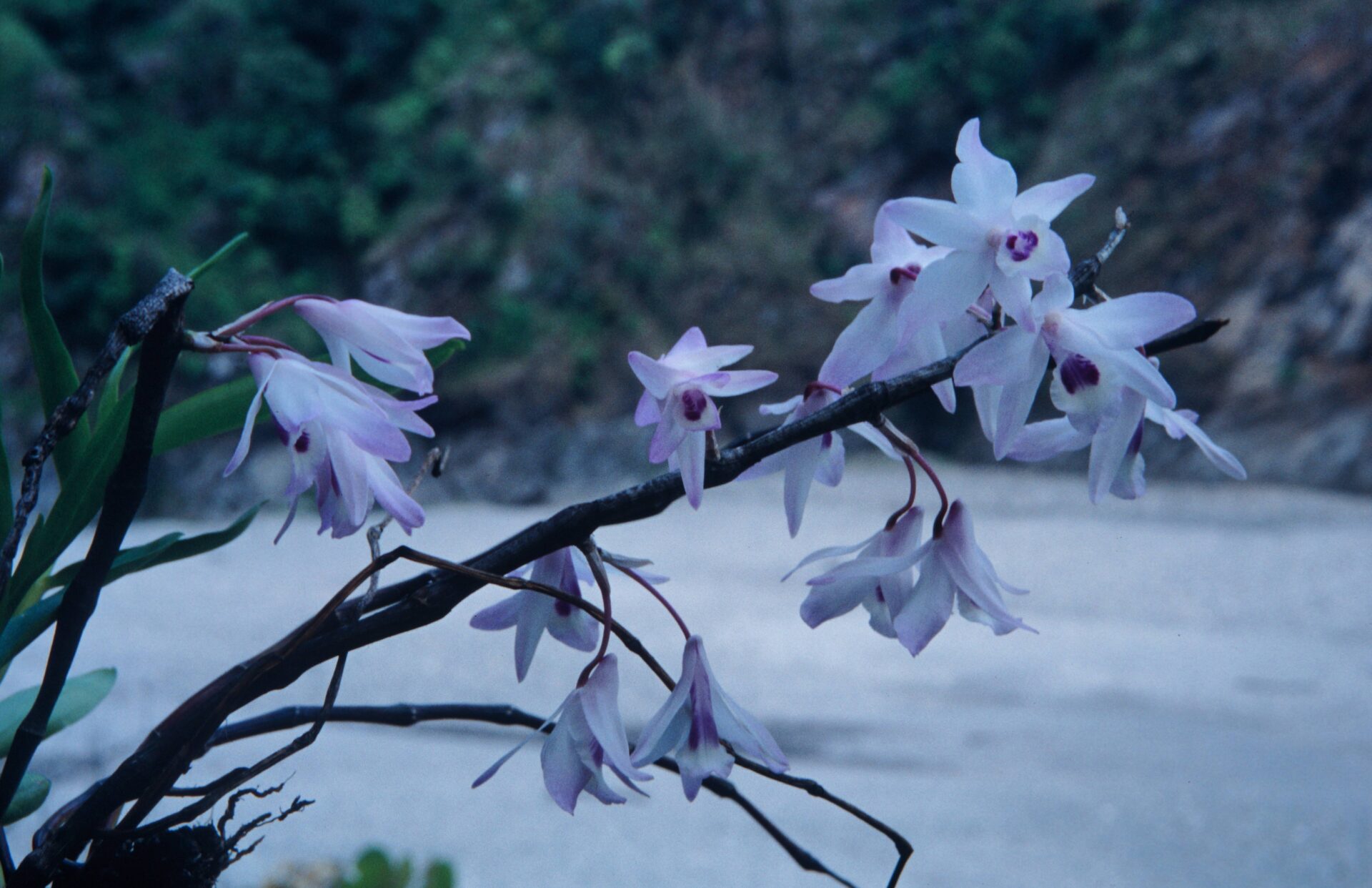
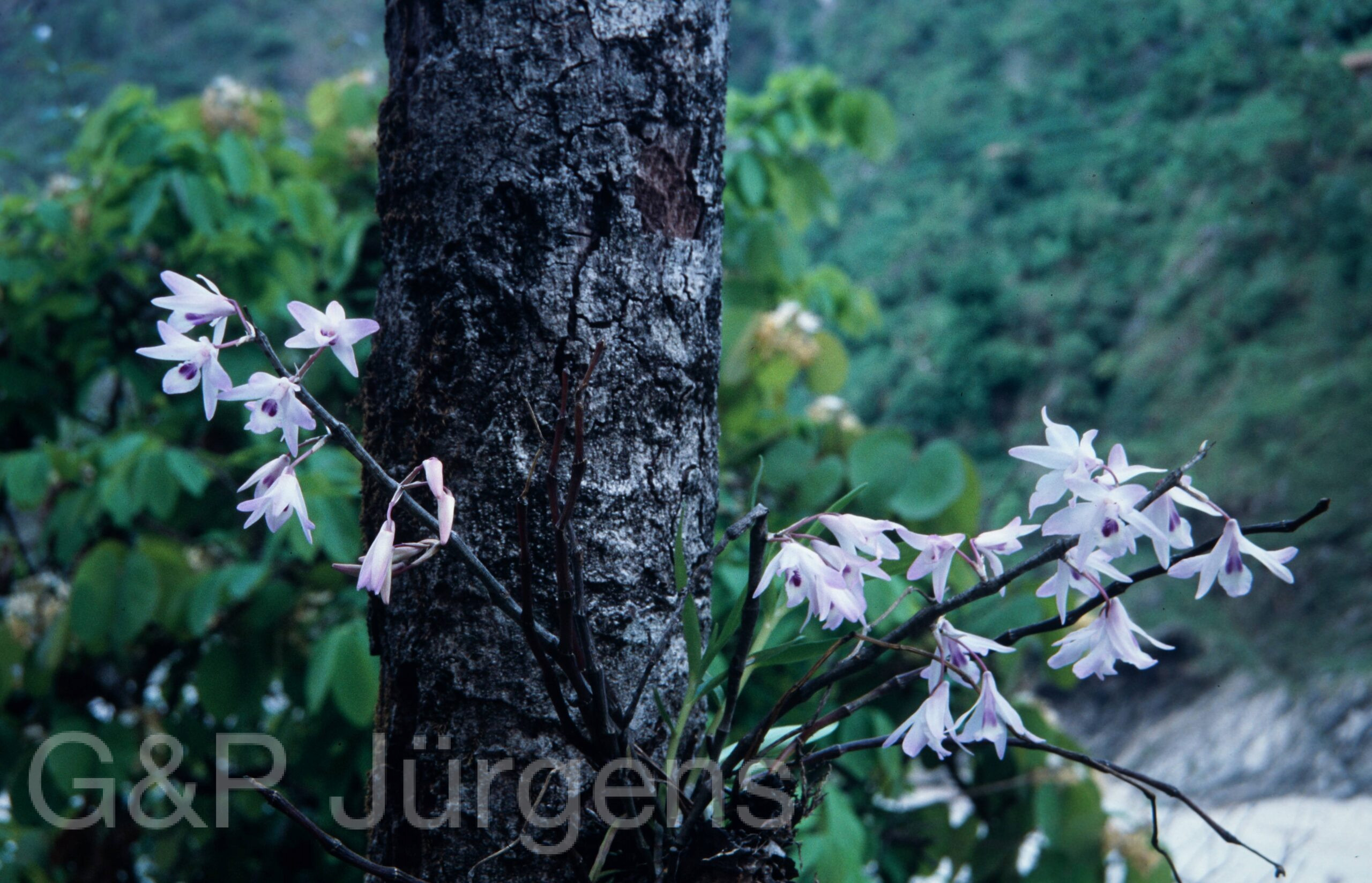
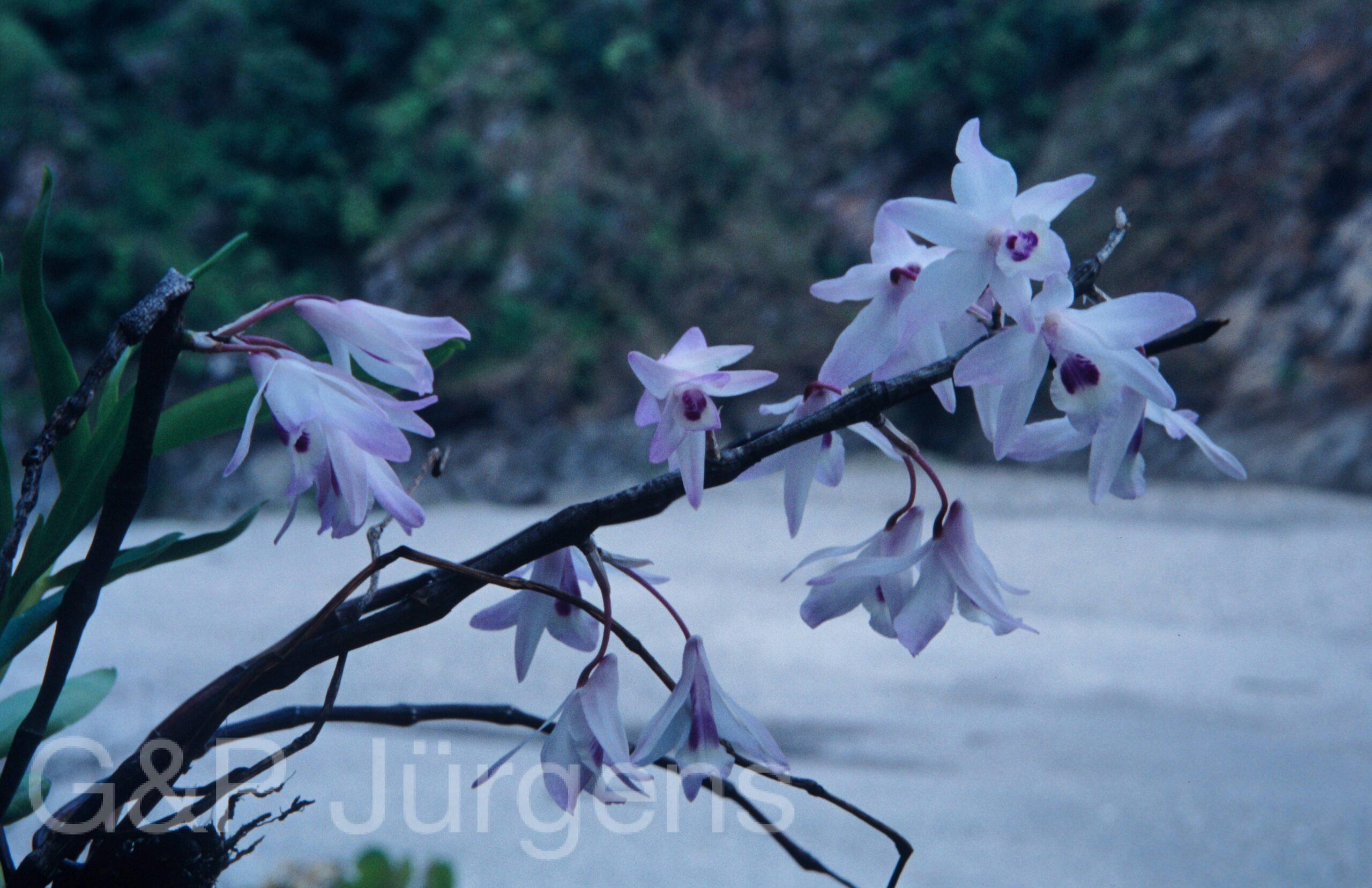
Dendrobium transparens is an epiphytic orchid distributed across the eastern and central Himalaya and into the Indo-Burmese region, recorded from India, Nepal, Bhutan, China, Myanmar and Thailand, with introduced or cultivated occurrences in western Europe. The species favours warm-temperate to subtropical broad-leaved forest, growing on tree trunks and mossy branches between roughly 800 and 1800 m. The photographed plant from Gorkha at Labubhesi, central Nepal, around 1200 m and flowering in May, is typical of its preferred mid-elevation, humid forested ravines where seasonal monsoon moisture and bright filtered light coincide.
The plant forms slender, pendent or sub-erect, cane-like stems that are somewhat flattened and longitudinally grooved, sheathed by membranous leaf-bases. The leaves are distichous, narrowly lanceolate, thin-textured and deciduous, leaving the leafless canes to bear flowers. Inflorescences are short, lateral, two- to three-flowered fascicles from the nodes of older stems. The flowers are translucent white to pale rose, the sepals and petals delicate and spreading; the labellum is broadly obovate to sub-orbicular, often marked with two deep magenta to purple blotches at the throat, and the short mentum gives the bloom its semi-pendent posture.
The specific epithet transparens alludes to the thin, almost translucent perianth segments. Within Dendrobium it belongs among the deciduous-leaved, soft-caned sections allied to D. nobile, a complex of considerable horticultural interest. As with most Himalayan epiphytic orchids, it is dependent on intact forest cover and mycorrhizal associations, and is vulnerable to habitat clearance and collection pressure, though it remains locally frequent across its broad range.
Author: Wall. ex Lindl. · Sources: POWO (Kew), GBIF, Flora of China Vol. 25, Flora of Bhutan Vol. 3, Flora of Nepal, The Genus Dendrobium (Wood)