Tag:

Montane (1500-2500 m)

A.DC.

Nepal 97 413 P797 ergebnis
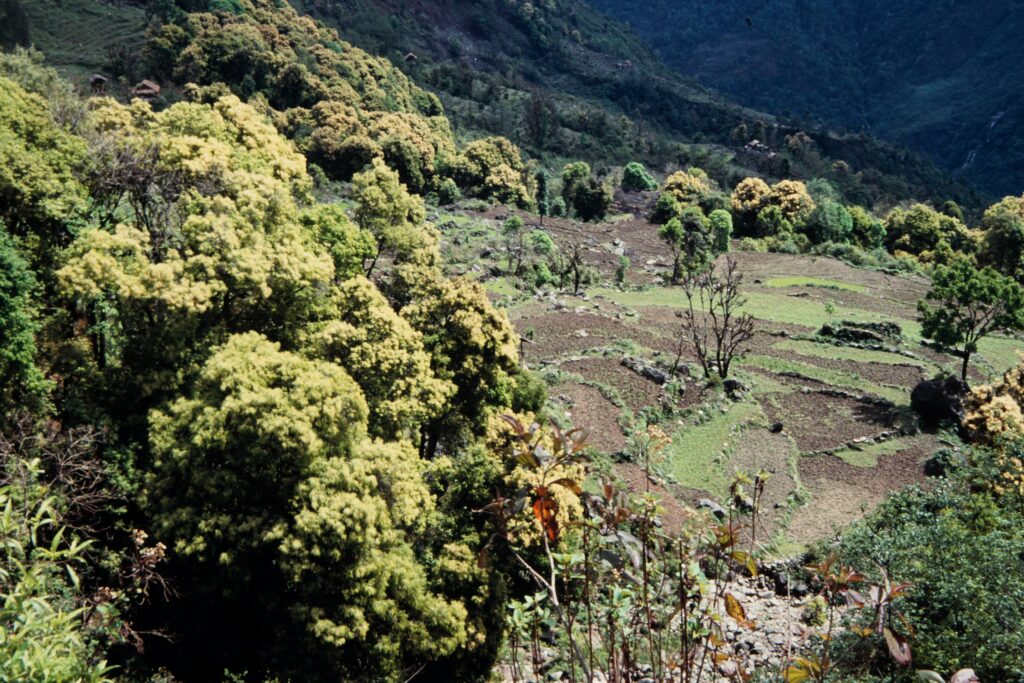
Nepal Tashigang 2230m, May
Nepal 97 414 P800 ergebnis
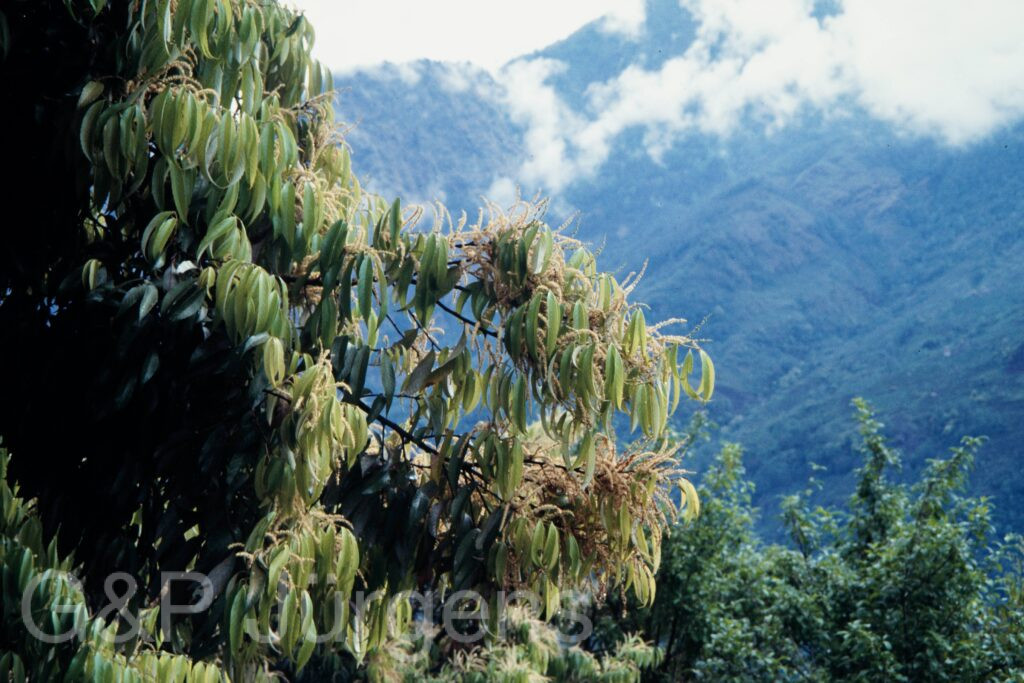
Nepal Tashigang 2230m, May
Nepal 97 417 G804 ergebnis
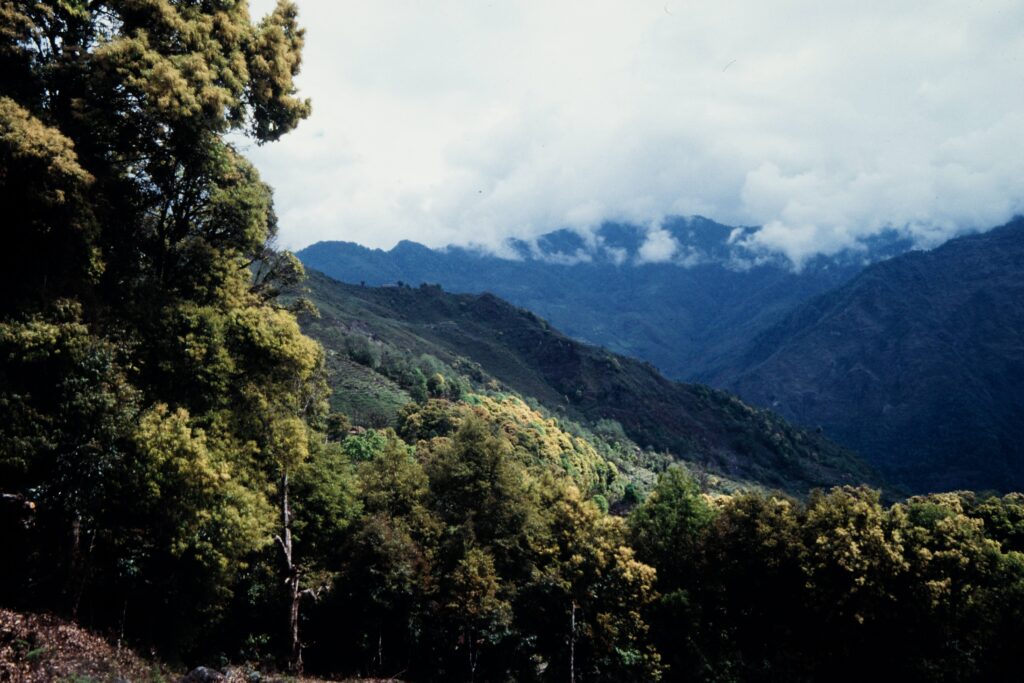
Nepal Tashigang 2230m, May

Description

Castanopsis hystrix A.DC. is an evergreen forest tree of the Fagaceae, widespread through the eastern Himalaya and Indo-Burmese region into southern China and Taiwan; native occurrences span India, Nepal, Bhutan, Myanmar, Vietnam, Laos, Thailand and China, with introduced records in Japan and elsewhere, and over 1,100 georeferenced collections overall. It is a dominant or codominant canopy species of subtropical and lower-temperate broad-leaved evergreen forest, often forming mixed stands with Quercus, Lithocarpus, Schima and laurels on humid montane slopes. The photographed tree from Tashigang in eastern Nepal at about 2,230 m in May lies within the species' characteristic mid-elevation belt, typically between roughly 1,000 and 2,500 m.

It is a medium to large tree with a straight bole and greyish, longitudinally fissured bark. The leaves are alternate, simple, leathery, lanceolate to oblong, entire or finely toothed toward the apex, glossy above and often coppery-tomentose beneath. The plant is monoecious: erect catkin-like spikes bear the small unisexual flowers, the staminate above and pistillate below. The defining feature is the densely spiny cupule (whence the epithet hystrix, 'porcupine'), an indehiscent or tardily splitting involucre clothed in branched echinate spines and enclosing a single ovoid, brown nut.

Castanopsis is a large Asian genus centred on the Sino-Himalayan and Malesian regions, and C. hystrix is among its most economically important members, valued for durable timber and as a keystone of montane evergreen forest ecosystems. The acorns are an important wildlife food. Although the species remains widespread and is not globally threatened, primary stands have been depleted by logging and shifting cultivation, and it is increasingly used in reforestation.

Author: A.DC. · Sources: POWO (Kew), Flora of China Vol. 4, Flora of Bhutan Vol. 1, GBIF, Soepadmo: Fagaceae in Flora Malesiana (1972)
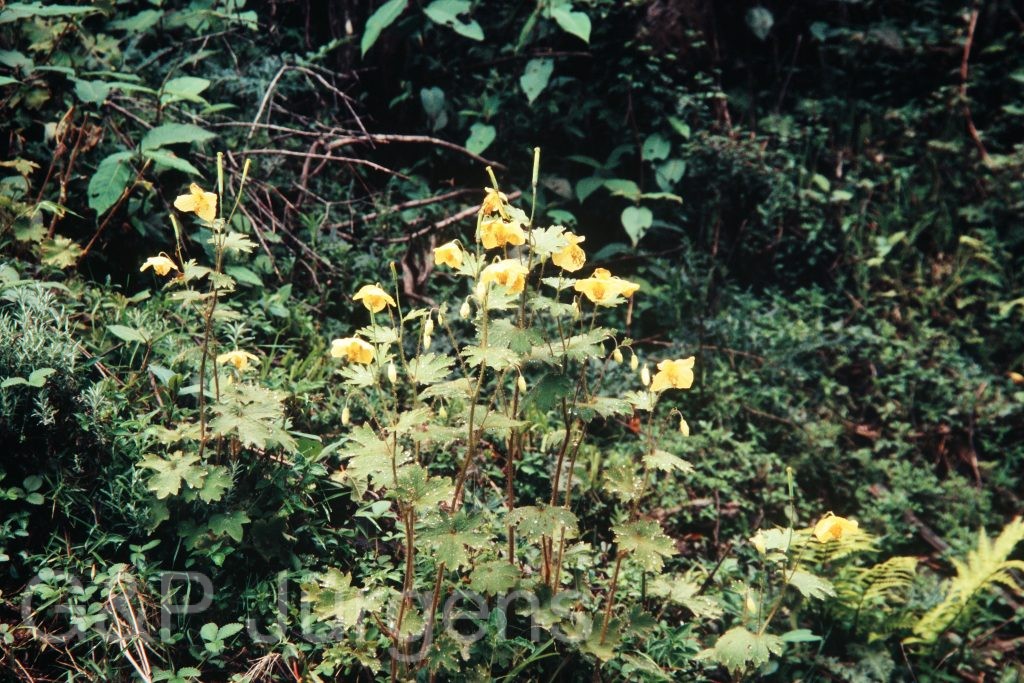
Hook.f.

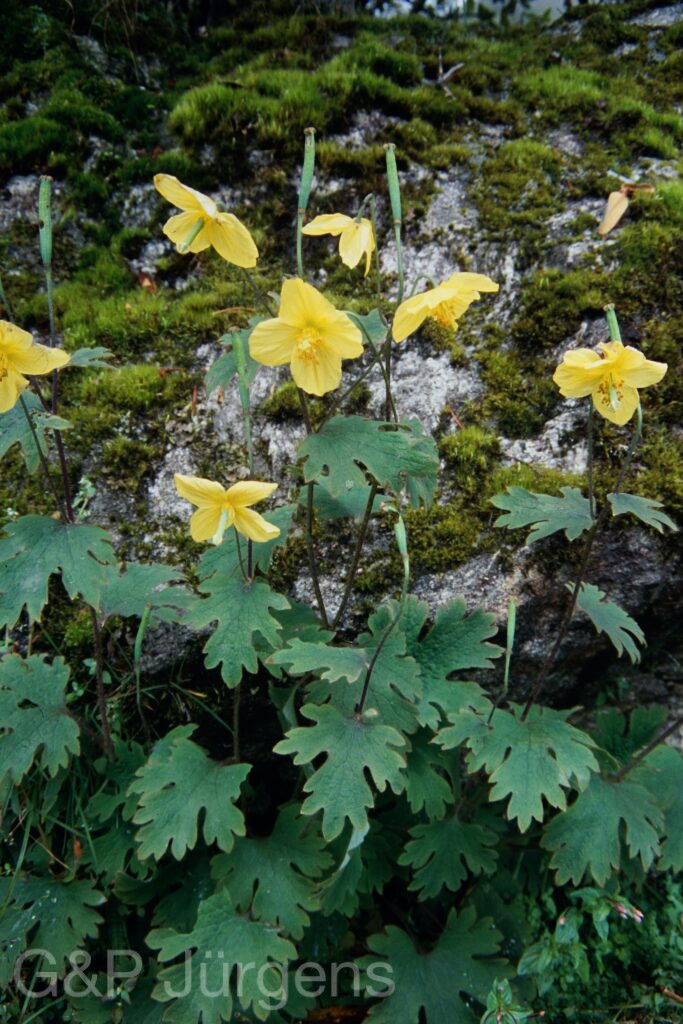
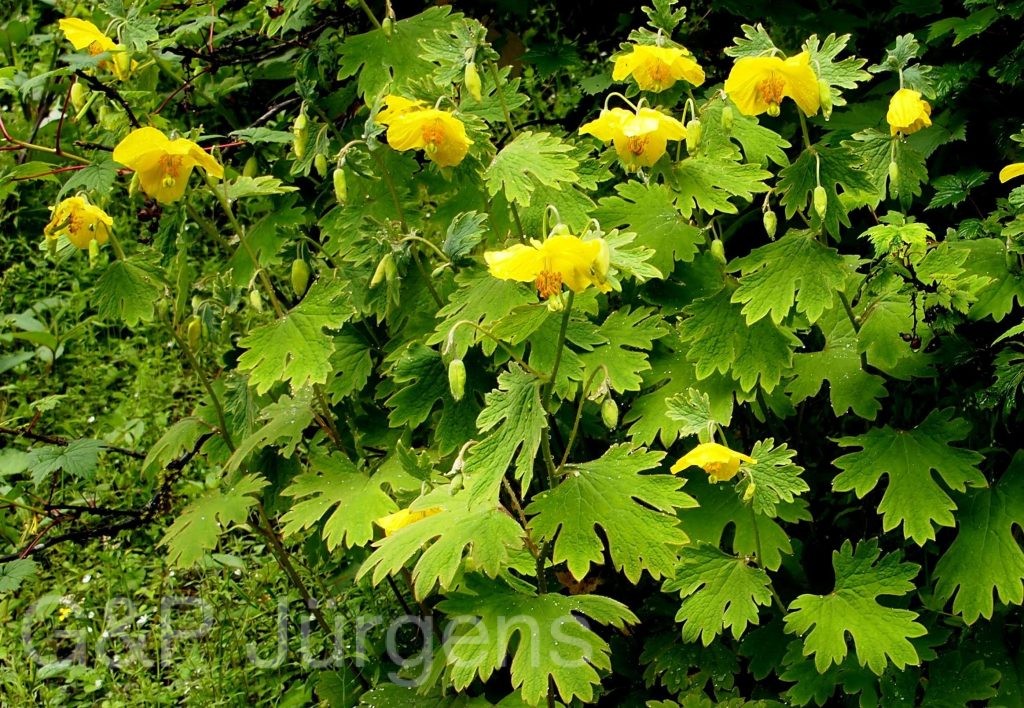
BhutanPG2011 681 01 01
Bhutan Luksor, 3000m July
Bh09 293 G482
Bhutan Tongsa 2400m, June
Sikkim2003 152 G203
Sikkim Dzongri 4000m 08.2003

Description

Cathcartia villosa is an eastern Himalayan poppywort distributed through India, Nepal, Bhutan and southern Tibet (China), the GBIF dataset holding about 110 records (codes for Canada and Great Britain reflect cultivated and herbarium material). It grows in cool, humid montane and subalpine settings: shaded forest margins, mossy rocks, ravine sides and damp banks, broadly between about 2400 and 4000 m. The collections illustrated span this gradient, from Tongsa in Bhutan at around 2400 m and Luksor at 3000 m to Dzongri in Sikkim near 4000 m, recorded between June and August.

It is a softly villous perennial herb clothed throughout in long, spreading yellowish-brown hairs. The leaves are mostly basal, long-petiolate, the blade rounded and palmately lobed to crenate, the whole densely hairy and yielding a coloured latex when broken, as is typical of the poppy family. One or a few nodding, golden-yellow flowers are borne on slender hairy scapes; each has two caducous sepals, four broad spreading petals, numerous stamens and a superior ovary. The fruit is an elongate, hairy capsule dehiscing by valves to shed many small seeds.

Long treated within Meconopsis, this plant is now widely referred to the segregate genus Cathcartia, a Sino-Himalayan group of yellow-flowered, villous poppyworts distinguished from true Meconopsis by molecular and morphological evidence; older sources and the source URL still use the name Meconopsis villosa. It is valued in temperate gardens as an elegant woodland perennial. The species is locally frequent across its range and is not formally assessed as threatened, but it depends on cool, moist forest-edge habitats susceptible to deforestation and to climatic warming.

Author: Hook.f. · Sources: POWO (Kew), GBIF, Flora of Bhutan, Flora of China, Annotated Checklist of the Flowering Plants of Nepal, Grey-Wilson The Genus Meconopsis

(Sm.) Dandy

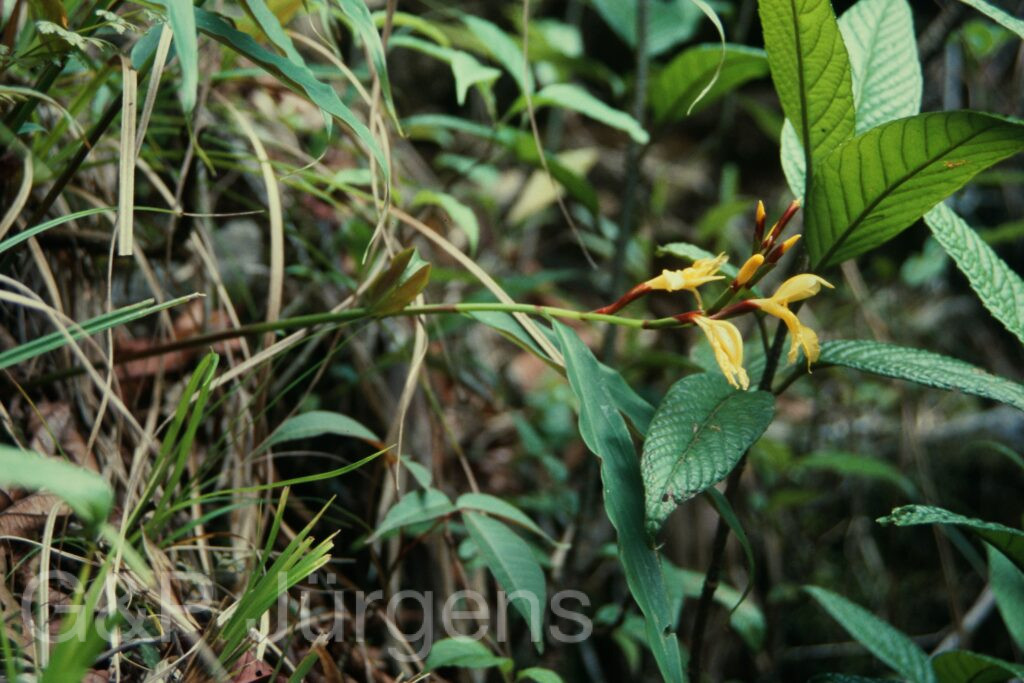
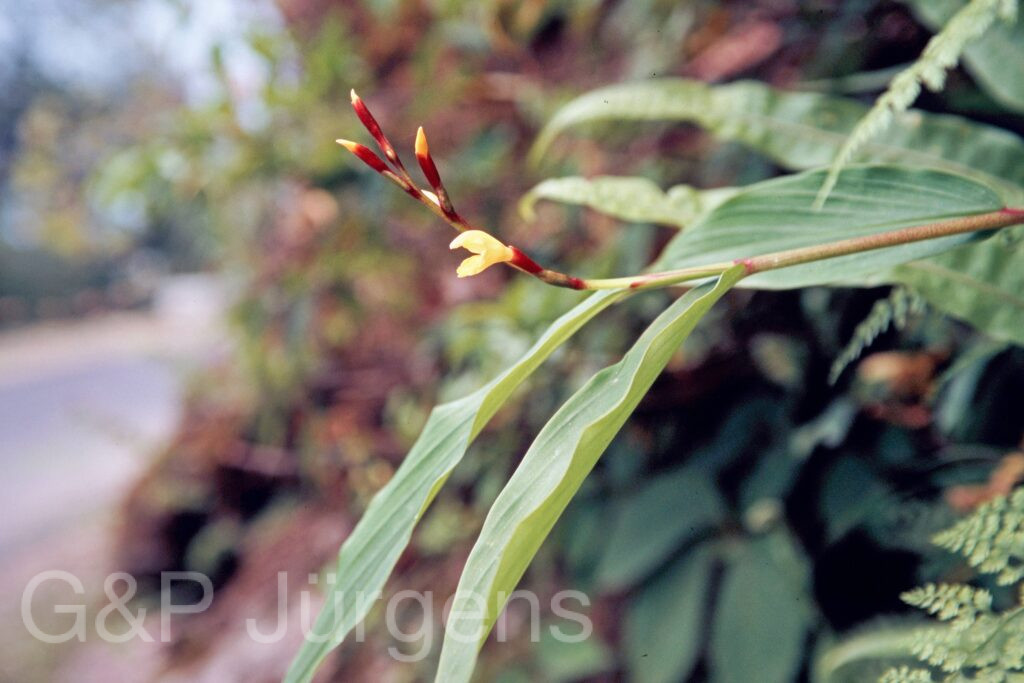
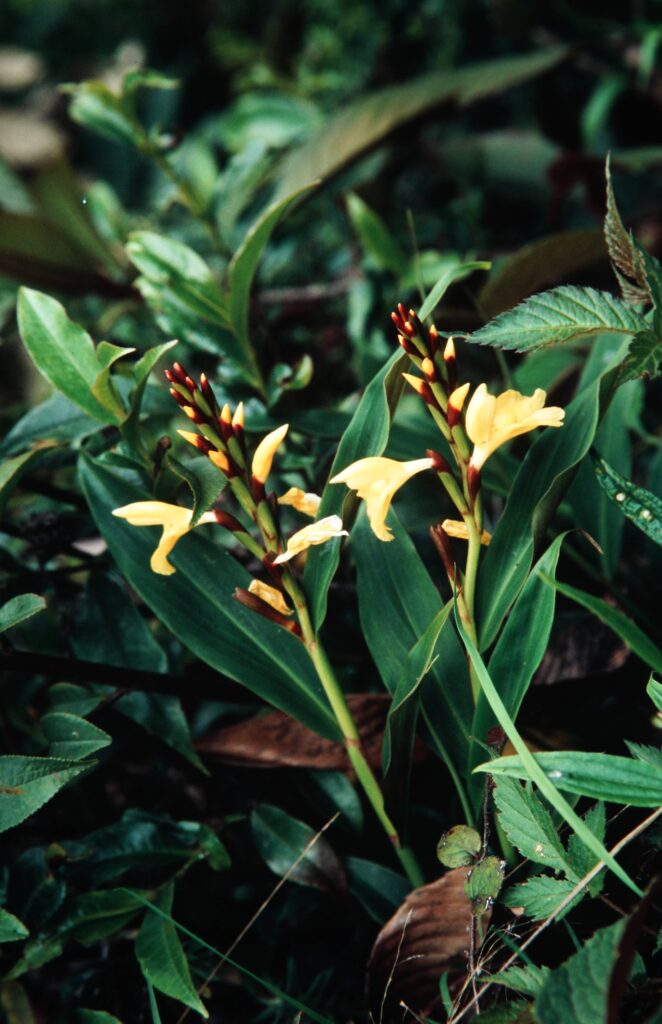
Sikkim2004 336 P598
Sikkim/India Choka 3000m May
Garh 07 92 ergebnis
India Garhwal Trijugi Narayan 2500m, June
Sikkim 2006 210 ergebnis
India West-Bengal, Samadan 2300m, May

Description

Cautleya gracilis is a slender ginger widely distributed through the Sino-Himalayan region, documented by GBIF from China, India, Nepal, Bhutan, Myanmar and adjacent Southeast Asia, with well over 650 occurrences making it the best-recorded species of its genus. It is frequently epiphytic or lithophytic, growing on mossy tree trunks, dripping cliffs and humid bank ledges in temperate broadleaved and mixed forest. The illustrated gatherings span Sikkim at Choka around 3000 m, Garhwal near Trijugi Narayan at 2500 m, and West Bengal at Samadan near 2300 m, flowering from May to June; the species generally favours the 1500-3000 m belt under monsoon humidity.

The plant grows from a short, fibrous-rooted rhizome producing a graceful leafy shoot to about 30-60 cm. The distichous leaves are lanceolate to oblong-lanceolate, acuminate, narrowed to a sheathing base, glabrous and often glaucous beneath. The inflorescence is a terminal, lax spike of few to several yellow flowers subtended by green or reddish bracts; each flower bears a slender corolla tube, a hooded dorsal lobe, prominent lateral staminodes and a bilobed labellum, with a single fertile stamen typical of the family. The fruit is a capsule splitting to reveal arillate seeds.

Cautleya is a small genus of perhaps two to three species centred on the Himalaya and southern China, closely allied to Roscoea but distinguished by its often epiphytic habit and capsular fruit. The yellow flowers are visited by long-tongued bees and the seeds dispersed when capsules open. Widespread and locally common, C. gracilis is of least concern, though epiphytic populations depend on intact, humid forest canopies vulnerable to logging and desiccation.

Author: (Sm.) Dandy · Sources: POWO (Kew), GBIF, Flora of China, Flora of Bhutan, Zingiberaceae of the Indian Subcontinent (Sabu)

(L.) Fritsch

Bhutan2014 398
Bhutan Jakar 2400m, May
Bh2008 556 P840
Bhutan Paro 1950m April

Description

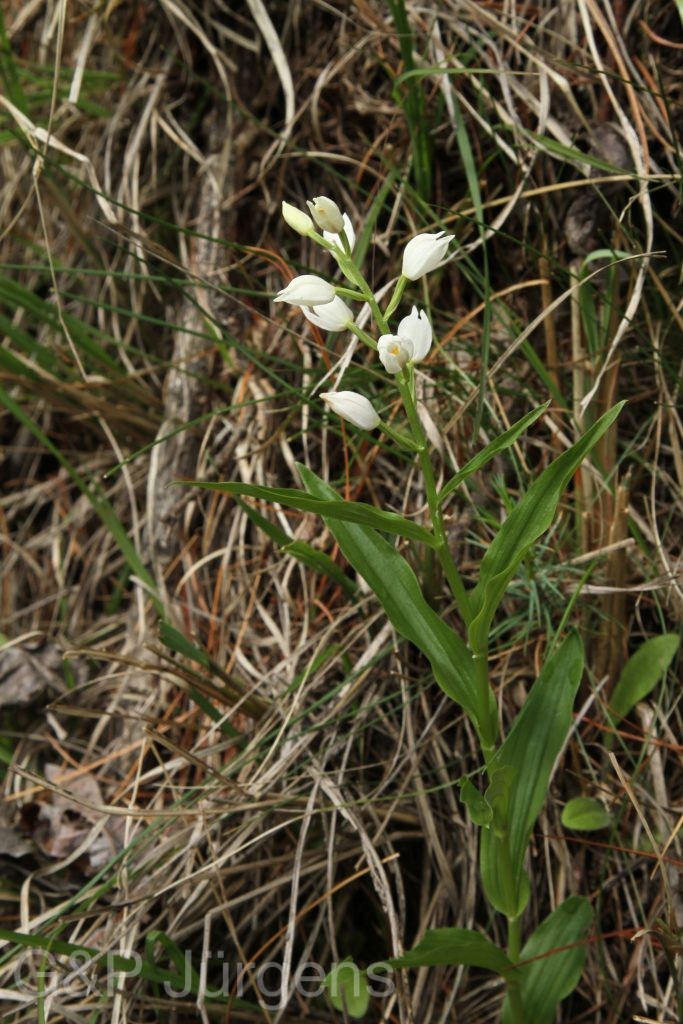
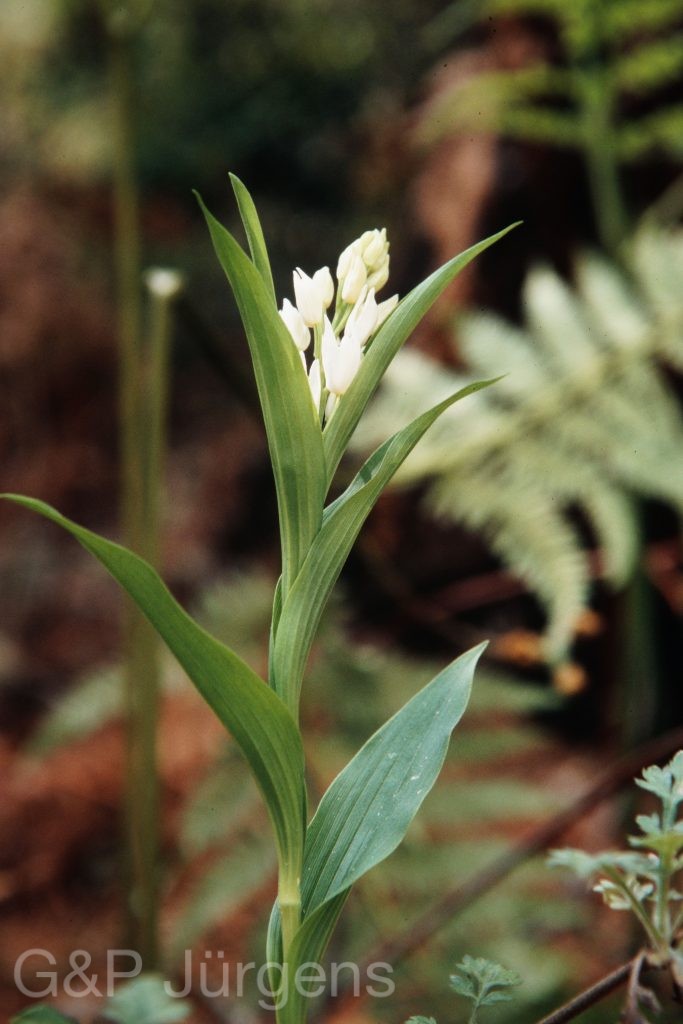
Cephalanthera longifolia (L.) Fritsch is a terrestrial orchid with one of the widest ranges in its genus, extending from western Europe and North Africa across temperate Asia to the Himalaya. GBIF records it from France, Switzerland, Austria, Germany, Spain, Italy, Sweden, Britain, Greece, China and many other countries, with over 141000 occurrences reflecting its abundance in the western part of its range. It grows in dappled shade in deciduous and coniferous woodland, scrub and grassy banks, often on calcareous soils, from near sea level to about 2500 m. In the eastern Himalaya it reaches the montane forests of Bhutan, recorded at Jakar around 2400 m in May and at Paro near 1950 m in April.

The plant arises from a short rhizome with fleshy roots and produces an erect, leafy stem. The leaves are numerous, narrowly lanceolate to linear-lanceolate, sheathing at the base, longer than the internodes and noticeably keeled. The lax terminal raceme bears several pure white flowers that scarcely open, remaining narrowly campanulate; the sepals and petals are lanceolate and acute, and the labellum is shorter, divided into a basal hypochile with a small spur-like sac and an apical epichile marked with orange-yellow ridges that guide pollinators. The ovary is twisted and glabrous, ripening into an erect capsule.

Cephalanthera belongs to subtribe Limodorinae of tribe Neottieae and, like its relatives, is partially mycoheterotrophic, drawing carbon from ectomycorrhizal fungi associated with forest trees. Cephalanthera longifolia is globally secure given its enormous range, but it is locally scarce and legally protected in parts of northern Europe where suitable woodland is fragmented. Its trans-Palaearctic distribution makes it a notable example of a widespread orchid reaching its eastern limit in the Himalayan forests.

Author: (L.) Fritsch · Sources: POWO (Kew), GBIF, Flora Europaea, Flora of Bhutan, Flora of China, Delforge monograph of Orchids of Europe

C.B.Clarke

Bhutan2012 315
Bhutan Paro-Chu, 2400m September
Bhutan2012 316
Bhutan Paro-Chu, 2400m September

Description

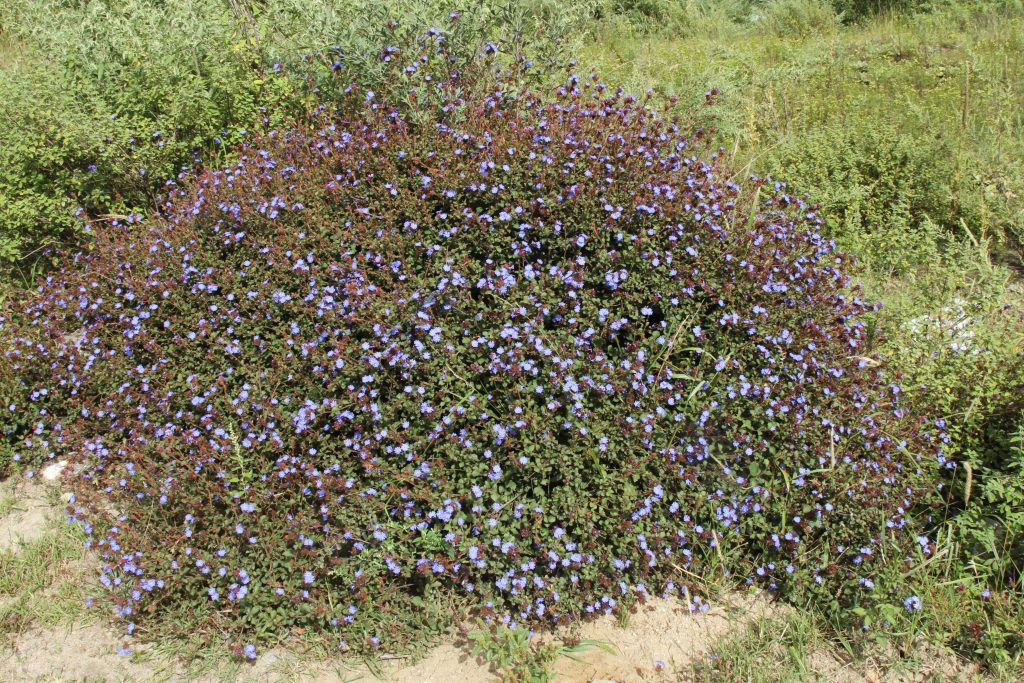
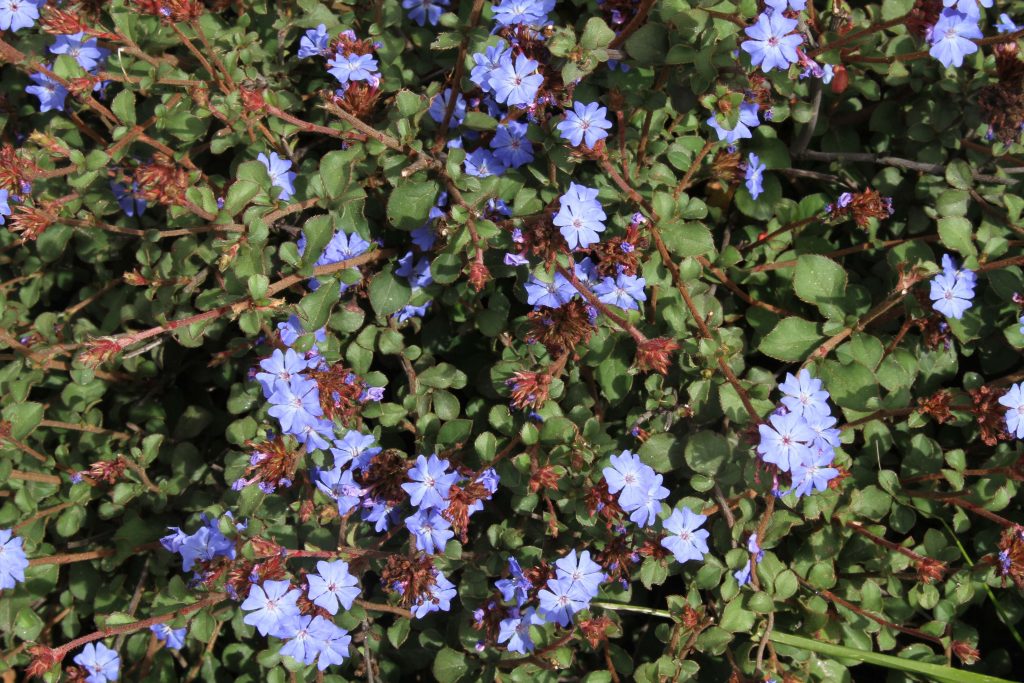
Ceratostigma griffithii is a shrub of the dry inner valleys of the eastern Himalaya and southwestern China, recorded from China, Bhutan, India and Myanmar, with cultivated and naturalised occurrences in the United States, Canada, Spain and Korea; GBIF holds about 163 georeferenced records. It grows on dry, sunny, stony slopes, rocky banks, scrub and the margins of cultivation in the rain-shadowed montane valleys, tolerating drought and strong insolation. The photographed plant from the Paro Chu valley in Bhutan at 2400 m in September is characteristic of these semi-arid inner-Himalayan habitats, where it flowers in late summer and autumn on open hillsides.

It is a low, much-branched, semi-evergreen shrub up to about 1 m, with stiff, reddish-tinged twiggy branches that turn bronze-red in autumn. The leaves are small, alternate, obovate to spathulate, entire, bristle-margined and somewhat leathery, often colouring red before falling. The flowers are clustered in dense terminal and lateral heads subtended by bristly bracts; each flower has a tubular, glandular-ribbed calyx and a slender salverform corolla with five spreading lobes of brilliant deep blue. There are five stamens and a five-branched style with stigmatic surfaces along the inner side; the fruit is a small membranous capsule enclosed in the persistent calyx, whose stiff bristles aid epizoochorous dispersal.

The genus Ceratostigma, described by Bunge, comprises a few Asian and African shrubs and subshrubs of Plumbaginaceae noted for their intense blue flowers and autumn foliage, the type collection of this species made by Griffith and named by C.B. Clarke. The bright corollas attract butterflies and bees, and the bristle-armed calyces cling to passing animals. Valued in horticulture for autumn colour, the wild plant is locally common in its dry-valley niche and not considered threatened.

Author: C.B.Clarke · Sources: POWO (Kew), GBIF, Flora of China Vol. 15, Flora of Bhutan Vol. 2, Flora of Nepal, A Revision of the Genus Ceratostigma (Plumbaginaceae)

Wight

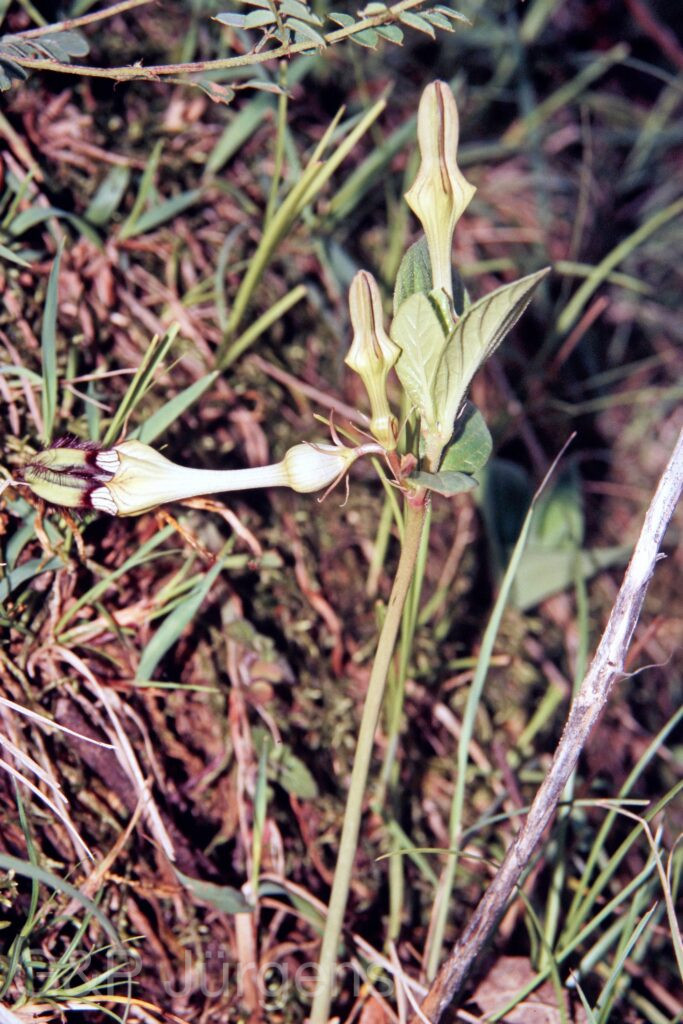
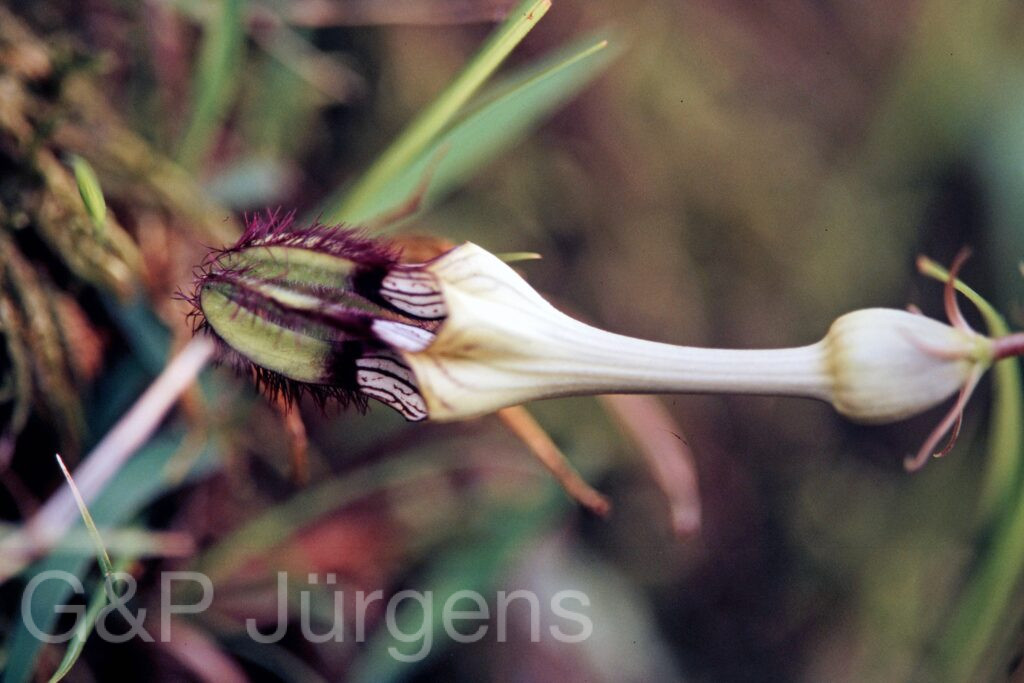
Garh 07 312 ergebnis
Garhwal Bebra, 2450m, June

Description

Ceropegia wallichii is a Himalayan twining herb distributed from northwest India (Uttarakhand, Himachal Pradesh) through Nepal to Myanmar. With only 35 occurrences documented on GBIF, it is among the less frequently recorded species of this large genus. The species inhabits margins of warm-temperate and subtropical broadleaved forests, open scrubby slopes, and rocky outcrops at elevations of 1,500–2,800 m. It is often found climbing through low shrubs or trailing over banks in partially shaded situations with moderate monsoon rainfall.
Ceropegia wallichii is a slender, herbaceous, twining perennial arising from a small, globose to ellipsoid tuber, 1.5–3 cm in diameter. Stems are wiry, glabrous or sparsely pubescent, reaching 1–2 m in length. Leaves are opposite, narrowly lanceolate to ovate-lanceolate, 3–8 cm long, acuminate at the apex, with short petioles. The inflorescence is an axillary, few-flowered umbelliform cyme bearing 2–6 flowers. The flowers are the most striking feature: the corolla tube is 2.5–4 cm long, slightly inflated at the base, curved, and pale green to yellowish with purple streaks; the five corolla lobes are linear, connate at the tips to form the characteristic cage-like structure (lantern flower) that functions as a temporary insect trap for pollination. The follicles are paired, slender, up to 12 cm long, containing comose seeds adapted for wind dispersal.
The species was described by Robert Wight based on material originally collected by Nathaniel Wallich. It belongs to Ceropegia section Ceropegia, a primarily Asian lineage of twining herbs with tuberous rootstocks. The photographed specimen from Bebra in Garhwal at 2,450 m documents an occurrence in the western Himalayan portion of the range. Ceropegia wallichii can be distinguished from the related C. pubescens by its glabrous or sparsely hairy stems and narrower leaf blades. Given its sparse occurrence records and reliance on relatively intact forest-edge habitats, the species may merit conservation attention, though a formal IUCN assessment is currently lacking.

Author: Wight · Sources: POWO (Kew), GBIF, Flora of British India Vol. 4, Ansari: Asclepiadaceae — Genus Ceropegia, Flora of India (1984), Bruyns et al. (2017)

Wight

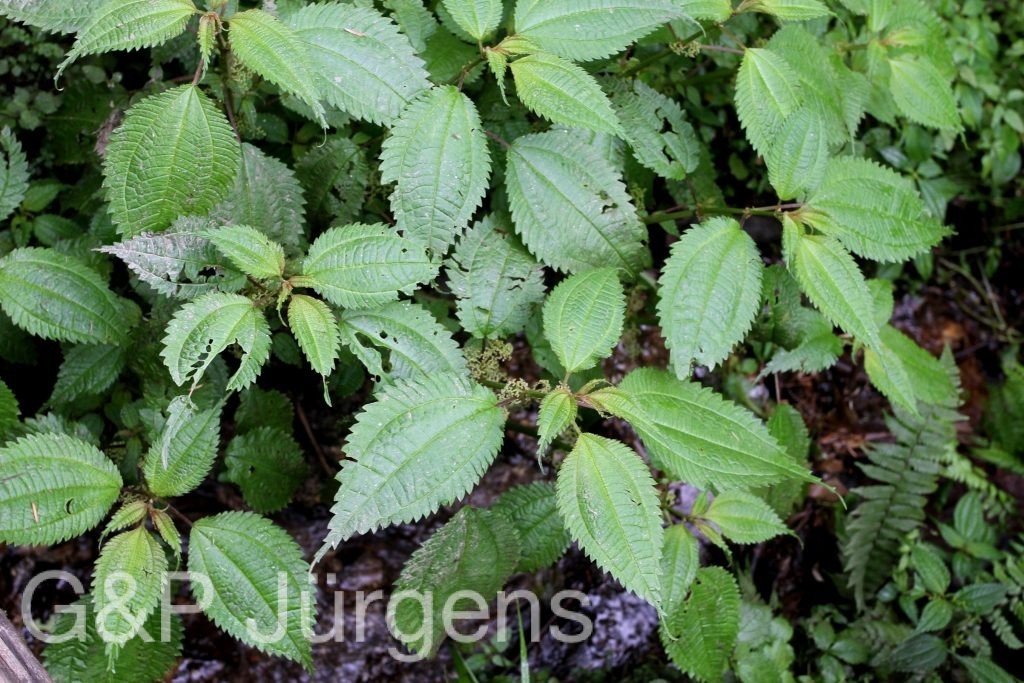
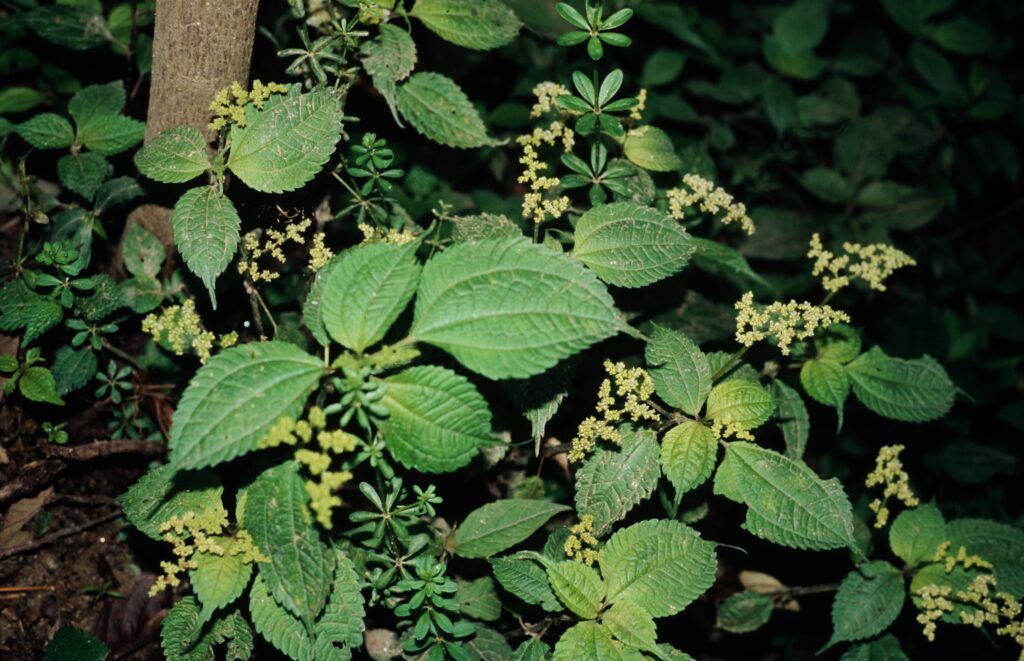
BhutanPG2011 92 ergebnis
Bhutan Chogcham, 3250m June
Sikkim2011 6
Bhutan Chogcham, 3250m June
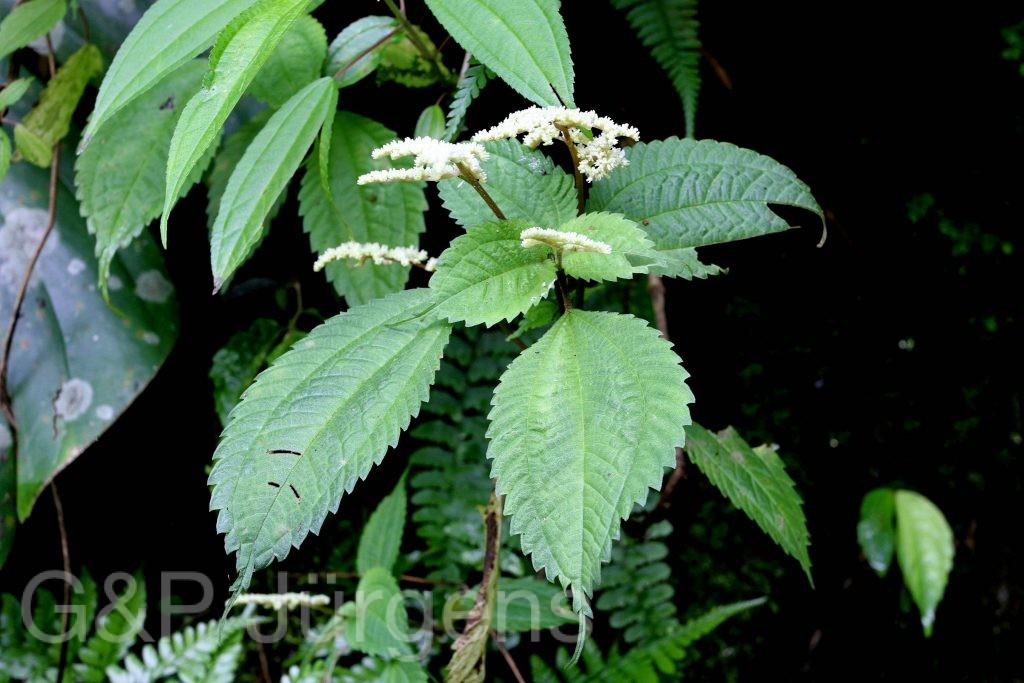
Sikkim 2006 228 ergebnis
India West-Bengal, Ramman 2100m, May

Description

Chamabainia cuspidata is a small creeping member of the nettle family ranging widely through the Himalaya, southern China, Taiwan and Southeast Asia to Sri Lanka and Indonesia; GBIF records around 713 occurrences across China, Taiwan, Nepal, India, the Philippines, Bhutan and other tropical Asian countries. It is a plant of moist, shaded temperate and subtropical forest, carpeting damp banks, rocks, mossy ground and stream sides beneath the canopy. The images from Chogcham in Bhutan at 3250 m in June and from Ramman in West Bengal at 2100 m in May show it across a broad altitudinal span in cool, humid montane forest, where it forms low, spreading mats on the forest floor.

It is a slender, prostrate to creeping perennial herb with filiform stems rooting at the nodes and forming extensive ground-hugging patches. The leaves are small, opposite, ovate to broadly ovate, with a distinctly cuspidate apex (the source of the epithet) and a crenate-toothed margin, three-veined from the base and, like much of the family, lacking the stinging hairs of true nettles. The plant is monoecious, the minute, apetalous unisexual flowers borne in small dense axillary clusters; staminate flowers with a few stamens and pistillate flowers with a single ovary. The fruit is a small ovoid achene enclosed by the persistent perianth.

Chamabainia is a small genus within the Urticaceae, related to Pilea and the broader Elatostema alliance of shade-loving, mostly herbaceous forest plants; this species is the most widespread member and the type of the genus. Its creeping, mat-forming habit, reduced wind- or self-pollinated flowers and nodal rooting suit it to the humid, low-light understorey it occupies. It is common and widespread, of no conservation concern, but characteristic of well-shaded, moisture-retaining montane forest floors across tropical and subtropical Asia.

Author: Wight · Sources: POWO (Kew), GBIF, Flora of Bhutan, Flora of China (Urticaceae), Friis treatment of Urticaceae

Rolfe

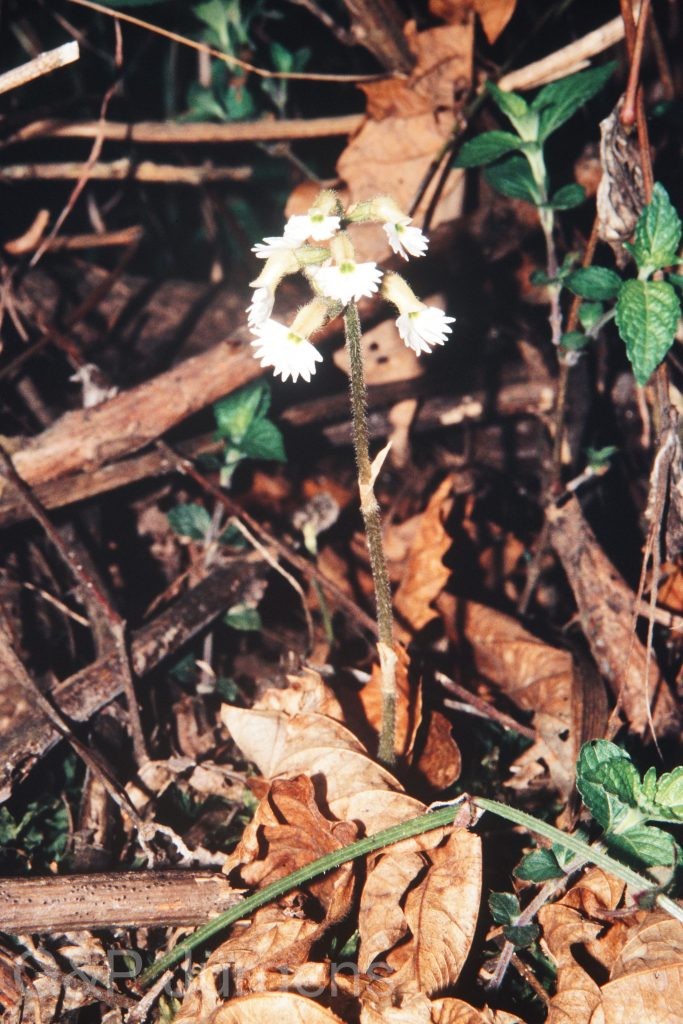
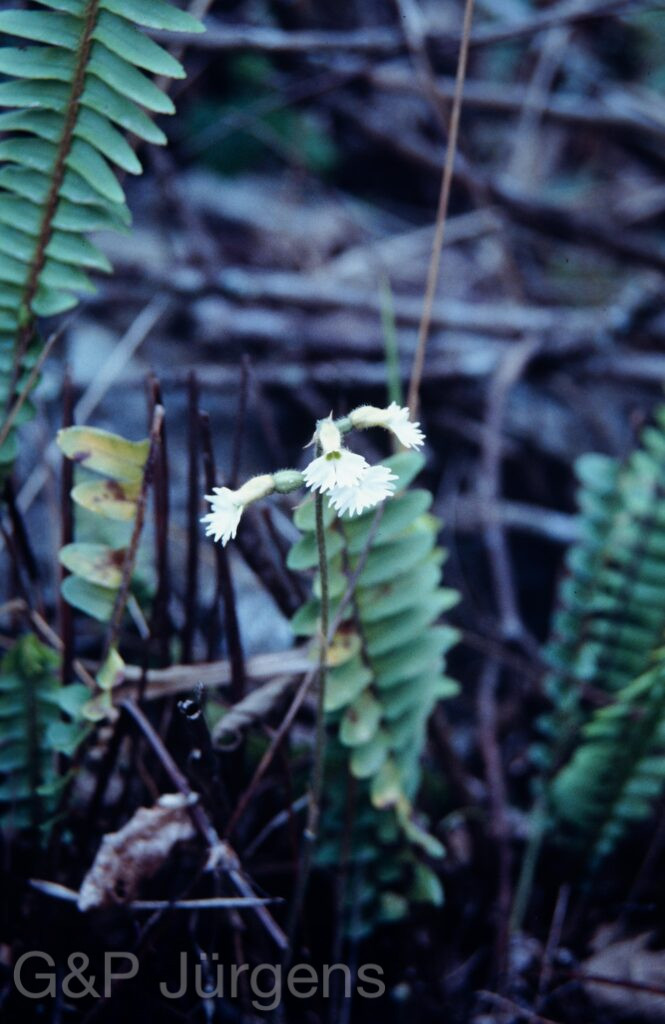
Bh2008 488 G757 1
Bhutan Puna Tsang-Chu 1600m, May
Nepal1992 75 P108 ergebnis
Nepal Chirwa 1260m March 

Description

Cheirostylis yunnanensis is a small terrestrial jewel orchid of the eastern Himalaya and adjacent Southeast Asia, recorded by GBIF (129 occurrences) from China, Vietnam, Hong Kong, India, Bhutan, Myanmar and Thailand. It inhabits shaded, humus-rich forest floors, mossy banks and rocky slopes in warm-temperate to subtropical broad-leaved and evergreen forest, broadly between 1000 and 2000 m. The documented plants from the Puna Tsang-Chu valley in Bhutan at 1600 m (May) and from Chirwa in eastern Nepal at 1260 m (March) bracket its lower-montane range and reveal a spring flowering period coinciding with the pre-monsoon flush of forest growth.

The species is a diminutive, creeping herb arising from a fleshy, jointed, often reddish rhizome that runs along the substrate surface, rooting at the nodes. The few small leaves are ovate, clustered toward the stem base, sometimes withering by flowering, with a velvety green to bronzed lamina. The inflorescence is a short, few-flowered terminal raceme on a glandular-pubescent peduncle. The small white flowers have connate sepals forming a tube; the diagnostic lip (labellum) bears a saccate base enclosing two glandular calli and an apex that is broadened and divided into two fan-shaped, fringed or toothed lobes, the generic name referring to this hand-like column structure. The fruit is a small ribbed capsule.

Described by Rolfe, the species belongs to genus Cheirostylis (subfamily Orchidoideae, tribe Cranichideae, subtribe Goodyerinae), the rhizomatous jewel orchids prized for foliage and intricate floral architecture. Like all terrestrial orchids it relies on mycorrhizal fungi and on shaded, undisturbed forest floor microhabitats, making it sensitive to forest clearance. Its inconspicuous size means populations are easily overlooked; though not formally assessed, it is CITES-listed as an orchid and locally uncommon.

Author: Rolfe · Sources: POWO (Kew), GBIF, Flora of China, Flora of Bhutan, Genera Orchidacearum: Orchidoideae (Pridgeon et al.)

(L.) R.M.King & H.Rob.

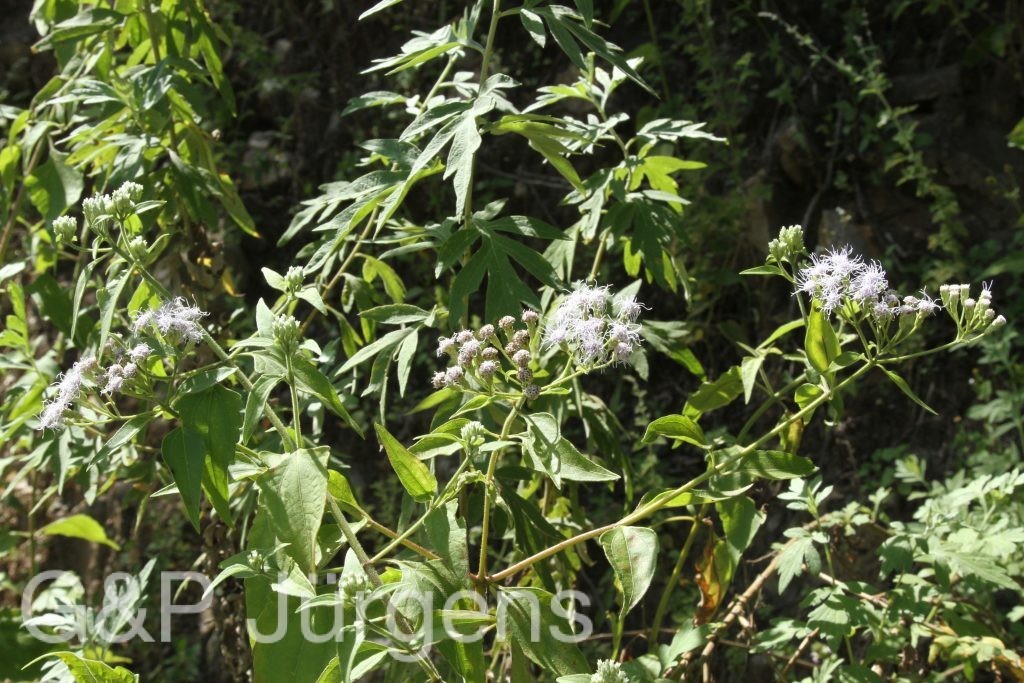
Bhutan2015 309
Bhutan Trongsa 1900m, October

Description

Chromolaena odorata, Siam weed, is native to the Neotropics (Mexico, Central America, the Caribbean and tropical South America) but is now one of the world's most aggressive invasive weeds, reflected in its enormous GBIF dataset of 63,557 occurrences spanning the Americas, sub-Saharan Africa, South and Southeast Asia, Australia and the Pacific. It colonises disturbed ground, forest margins, abandoned fields, roadsides and plantations in the seasonal tropics and lower subtropics. The photograph was taken at Trongsa in central Bhutan at 1900 m in October, near the upper elevational limit of its spread into warm Himalayan valleys, where it forms dense post-monsoon thickets.

It is a scrambling, much-branched perennial shrub or subshrub reaching 1.5-3 m, with brittle, pubescent stems and opposite, triangular to ovate-deltoid leaves that are three-veined from the base, coarsely toothed, and aromatic when crushed. The numerous small, cylindrical capitula are grouped in flat-topped corymbose clusters and contain only tubular (disc) florets, lacking rays; the pale lilac to whitish corollas have exserted styles giving a fluffy appearance. The cypselae are slender, blackish and angled, each crowned by a pappus of barbellate bristles enabling abundant wind dispersal.

Described as Eupatorium odoratum by Linnaeus, it was transferred to Chromolaena by R.M. King & H. Robinson during the dismemberment of the broad genus Eupatorium. Allelopathic, fire-promoting and prolific, it suppresses native vegetation and pasture and is the subject of biological-control programmes worldwide. Its appearance in Bhutan signals the ongoing upslope advance of a serious tropical invasive of major economic and ecological concern.

Author: (L.) R.M.King & H.Rob. · Sources: POWO (Kew), GBIF, Flora of Bhutan, Flora of China, CABI Invasive Species Compendium, Eupatorieae of the World (King & Robinson)

(L.) Banfi

Bhutan2014 1028
Bhutan Paro 2400m, May
Nepal 97 73 P115
Nepal above Meta-Khola 1600m April

Description

Chrysojasminum humile, the yellow Italian jasmine, is a shrub native from the Mediterranean and Southwest Asia eastward through the Himalaya into China, with GBIF recording about 1850 occurrences and many cultivated or naturalised collections worldwide. In its Asian range it grows on open hillsides, forest edges, dry rocky slopes and scrub on calcareous or well-drained soils. The illustrated material comes from Bhutan at Paro near 2400 m, flowering in May, and from Nepal above Meta-Khola at about 1600 m in April; across the Himalaya the species typically occupies the warm-temperate zone between roughly 1200 and 2800 m.

The plant is an erect or somewhat sprawling, evergreen to semi-evergreen shrub with green, angled, glabrous twigs. The leaves are alternate and pinnately compound with three to seven (sometimes more) leaflets, the terminal leaflet largest, elliptic to ovate, glabrous and shining. The flowers are borne in terminal cymes and are bright yellow, fragrant, with a slender corolla tube expanding into five spreading lobes; the calyx is small with short teeth. The fruit is a shining black, ellipsoid to globose berry, two-lobed when both carpels develop.

Long treated within Jasminum, this species and its allies were segregated into Chrysojasminum on molecular and morphological grounds, the yellow-flowered jasmines forming a distinct lineage within Oleaceae. Highly variable, it encompasses numerous named forms and is much grown as an ornamental, accounting for its scattered records far outside the native range. Widespread and adaptable, it is of no conservation concern, and its nectar-rich flowers attract bees and butterflies.

Author: (L.) Banfi · Sources: POWO (Kew), GBIF, Flora of China, Flora of Bhutan, Oleaceae revision (Green)