
(Sm.) Dandy
Description
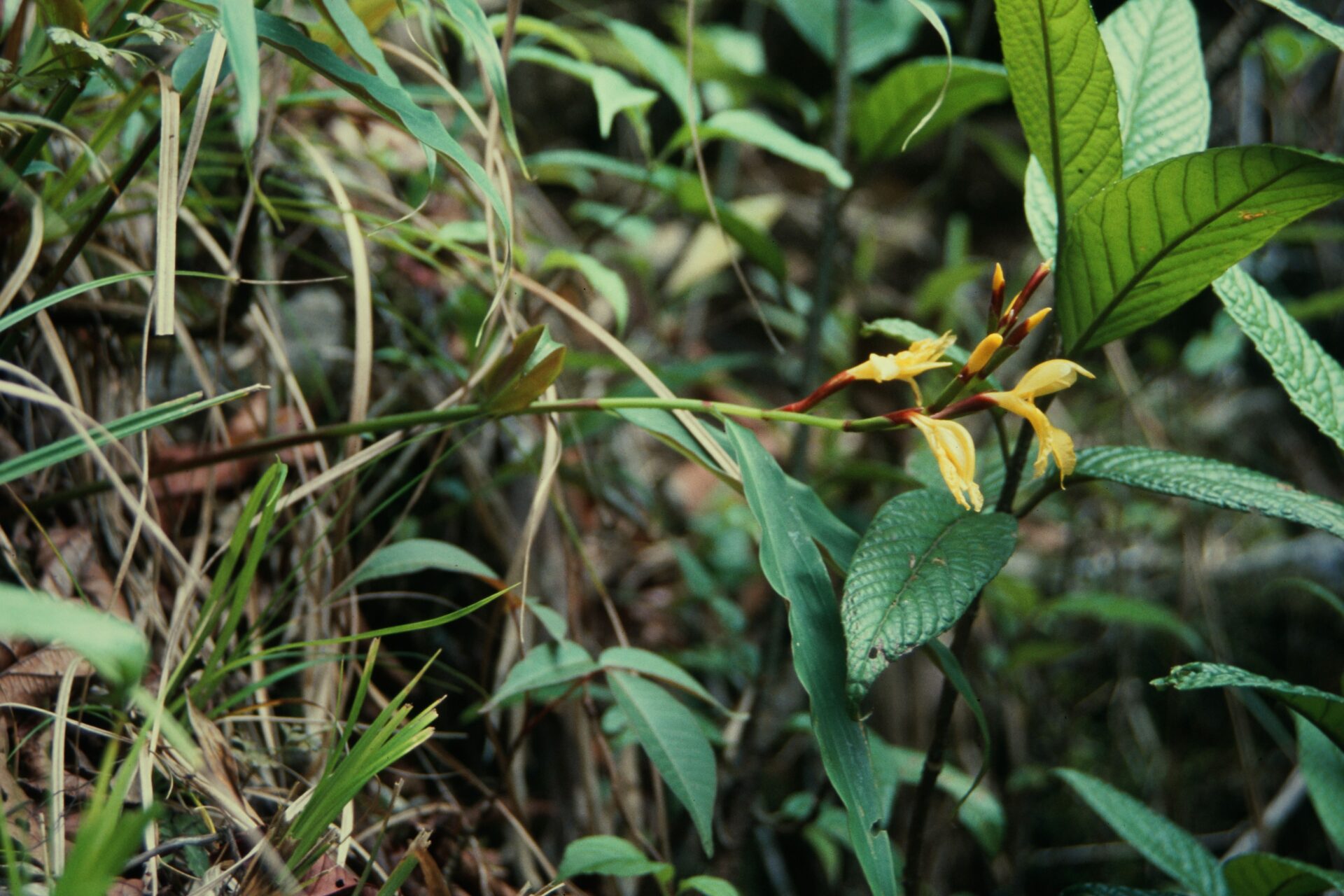
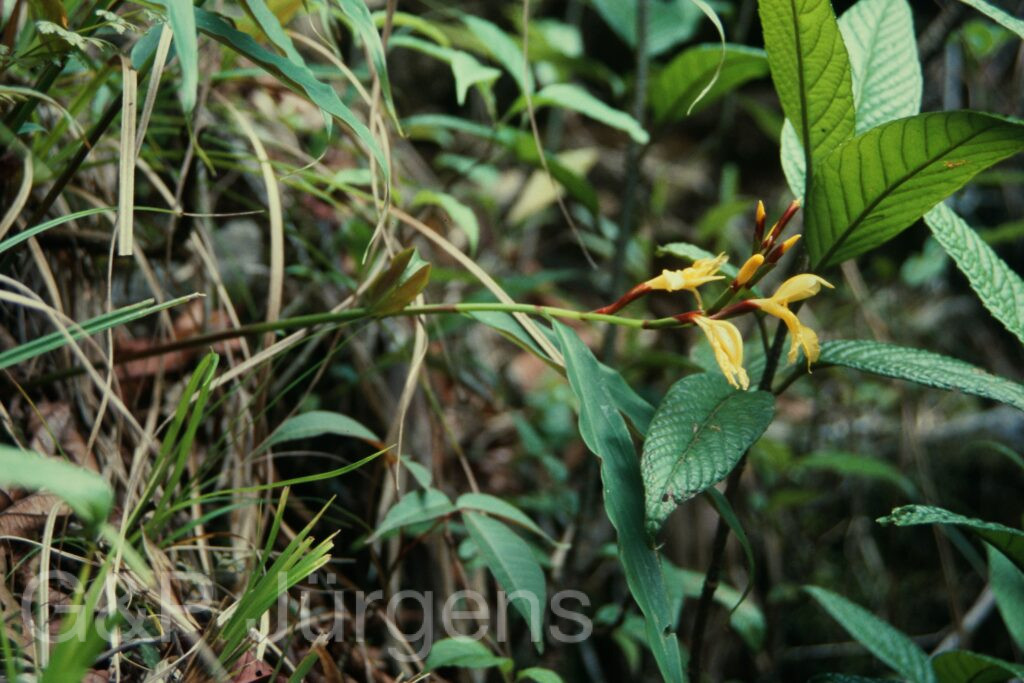
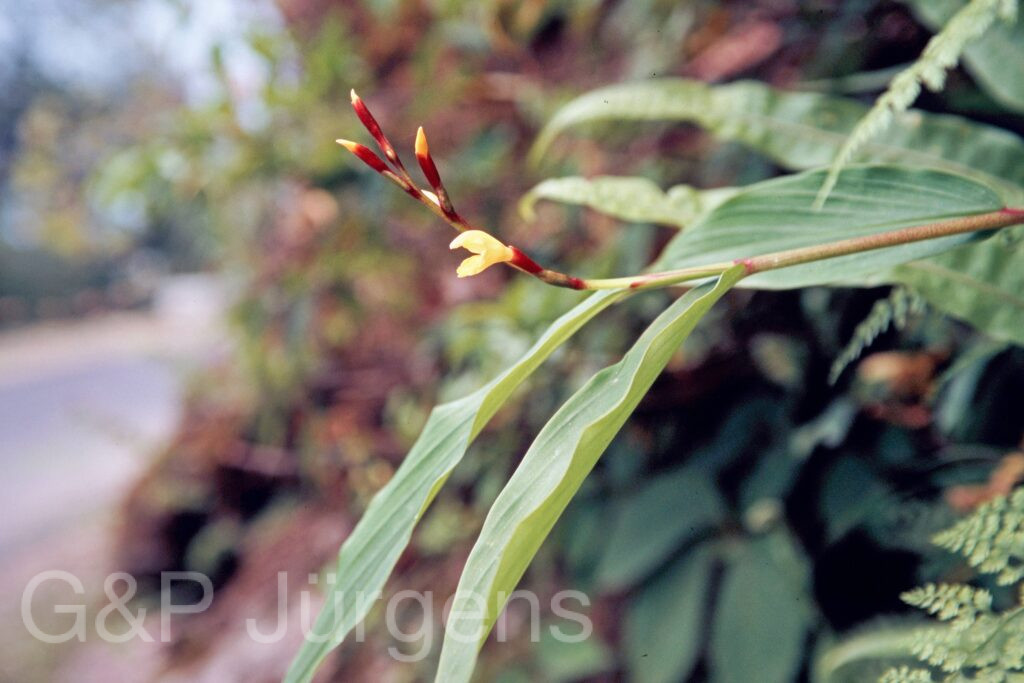
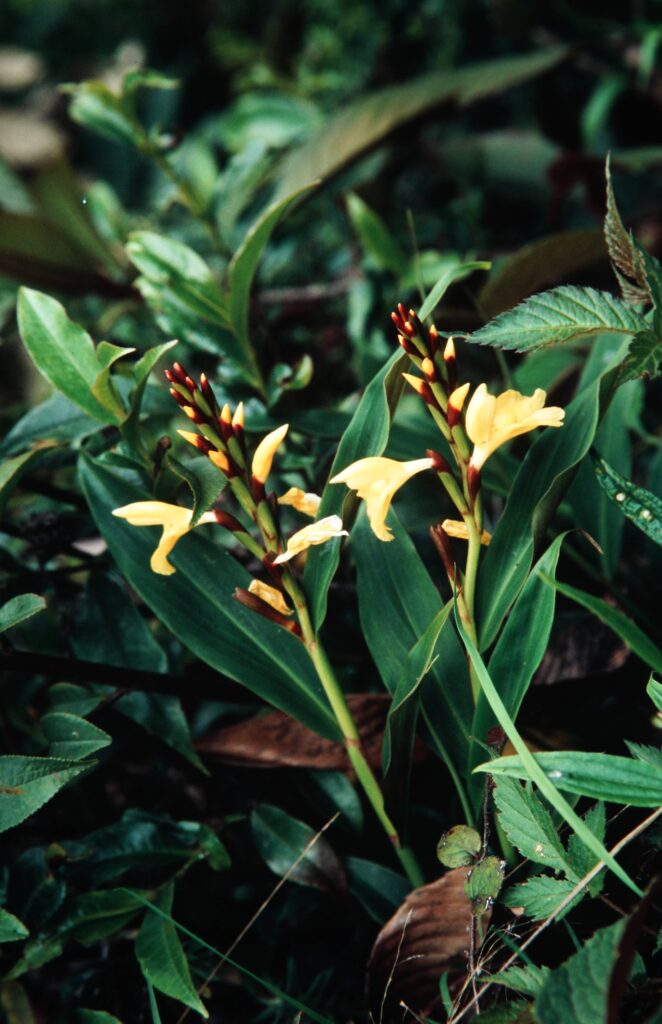
Cautleya gracilis is a slender ginger widely distributed through the Sino-Himalayan region, documented by GBIF from China, India, Nepal, Bhutan, Myanmar and adjacent Southeast Asia, with well over 650 occurrences making it the best-recorded species of its genus. It is frequently epiphytic or lithophytic, growing on mossy tree trunks, dripping cliffs and humid bank ledges in temperate broadleaved and mixed forest. The illustrated gatherings span Sikkim at Choka around 3000 m, Garhwal near Trijugi Narayan at 2500 m, and West Bengal at Samadan near 2300 m, flowering from May to June; the species generally favours the 1500-3000 m belt under monsoon humidity.
The plant grows from a short, fibrous-rooted rhizome producing a graceful leafy shoot to about 30-60 cm. The distichous leaves are lanceolate to oblong-lanceolate, acuminate, narrowed to a sheathing base, glabrous and often glaucous beneath. The inflorescence is a terminal, lax spike of few to several yellow flowers subtended by green or reddish bracts; each flower bears a slender corolla tube, a hooded dorsal lobe, prominent lateral staminodes and a bilobed labellum, with a single fertile stamen typical of the family. The fruit is a capsule splitting to reveal arillate seeds.
Cautleya is a small genus of perhaps two to three species centred on the Himalaya and southern China, closely allied to Roscoea but distinguished by its often epiphytic habit and capsular fruit. The yellow flowers are visited by long-tongued bees and the seeds dispersed when capsules open. Widespread and locally common, C. gracilis is of least concern, though epiphytic populations depend on intact, humid forest canopies vulnerable to logging and desiccation.
Author: (Sm.) Dandy · Sources: POWO (Kew), GBIF, Flora of China, Flora of Bhutan, Zingiberaceae of the Indian Subcontinent (Sabu)